
 10.57647/pibm.2025.1402.80
Analysis and Evaluation of Micro-tensile Bond Strength of Indirect Nanocomposite to Deep Dentin with Various Bonding Agents
- Parvin Mirzakouchaki Boroujeni*
 1
1
- Department of Aesthetic and Restorative Dentistry, Faculty of Dentistry, Isf. C., Islamic Azad University, Isfahan, Iran
- Department of Operative Dentistry, Faculty of Dentistry, Isf. C., Islamic Azad University, Isfahan, Iran

Received: 2025-03-11
Accepted: 2025-05-27
Published in Issue 2025-06-30
Copyright (c) 2025 Shamim Kiaei, Parvin Mirzakouchaki Boroujeni, Mehrdad Kazemian (Author)

This work is licensed under a Creative Commons Attribution 4.0 International License.
How to Cite









Abstract
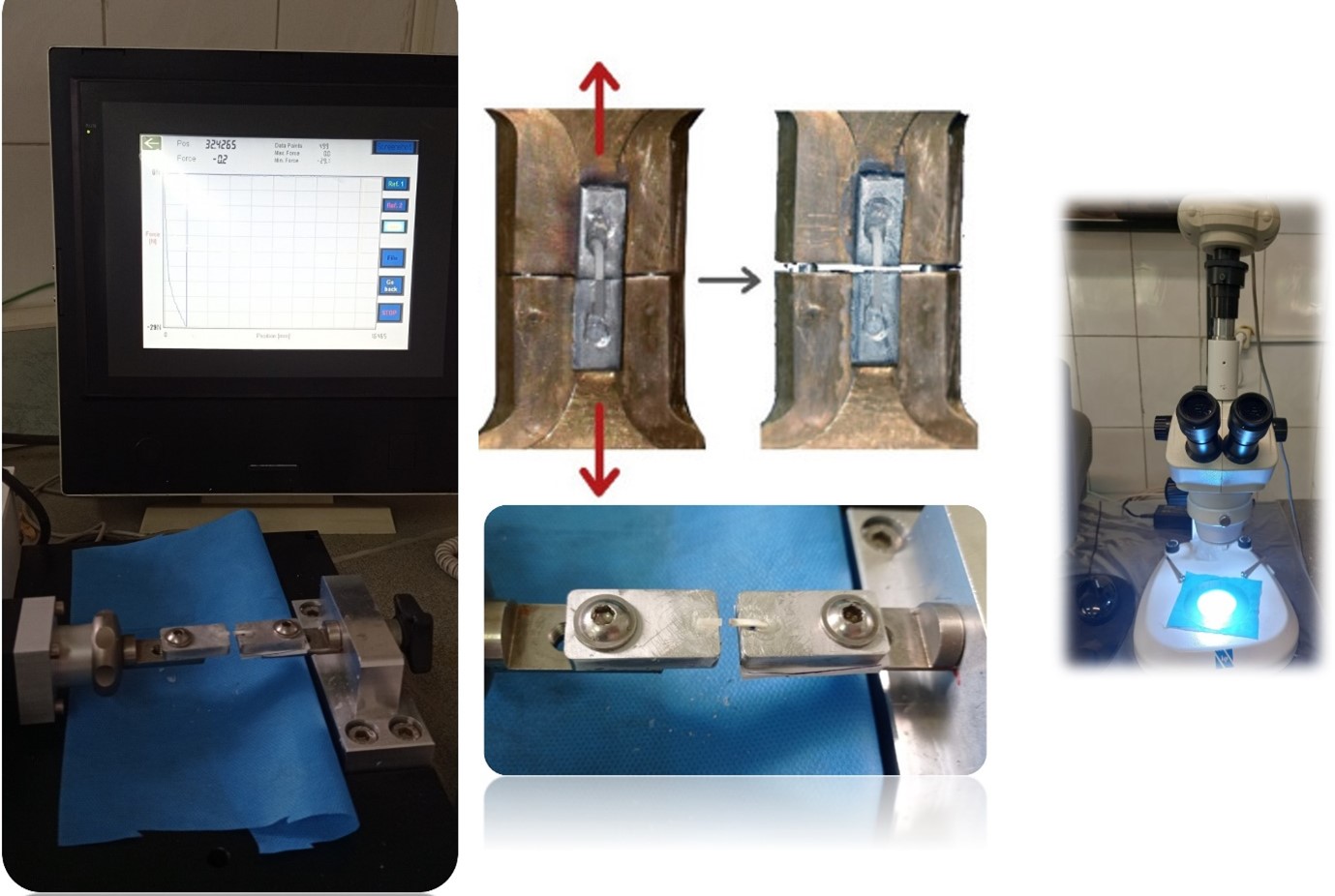
Resin composites are frequently used in restorative dentistry, but polymerization shrinkage poses significant challenges. This study aimed to assess the micro-tensile bond strength of indirect composites to deep dentin utilizing various bonding agents under Immediate Dentin Sealing (IDS). Sixty non-carious third molar teeth were selected; their roots were sectioned below the cemento-enamel junction (CEJ) and divided into five groups: four with adhesive systems (Optibond FL, SE bond, G Premio bond, G2 bond) under IDS and one control group using Delayed Dentin Sealing (DDS). After temporary restoration, composite blocks were bonded to each sample. A force of 500N was applied to measure micro-tensile bond strength until fracture, with data analyzed via chi-square tests, ANOVA, and Tukey’s post hoc tests. The bond strength values ranked from highest to lowest were Opti bond FL, SE bond, G2 bond, G Premio bond, and the control group. No significant differences were found among Opti bond FL, SE bond, and G2 bond (P > 0.05), but these three systems exhibited significantly higher bond strengths than the control group (P < 0.05). The bond strength of G Premio bond under IDS was significantly lower than the other adhesives (P < 0.05). In conclusion, IDS enhances the micro-tensile bond strength of indirect composite restorations to deep dentin, with Opti bond FL demonstrating the highest bond strength and the control group exhibiting the lowest.
Keywords
- Micro-tensile bond strength,
- Immediate dentin sealing,
- Delayed dentin sealing,
- Indirect nanocomposite