
 10.1007/s40097-019-0301-1
Biosynthesis, characterization and antimicrobial activity of gold nanoparticles from leaf extracts of Annona muricata
- Aderonke Folorunso
 1
1 - Sunday Akintelu*2
- Abel Kolawole Oyebamiji3
- Samuel Ajayi4
- Babawale Abiola2
- Ibrahim Abdusalam5
- Adetoun Morakinyo6
- Department of Chemistry, Louisiana State University, Louisiana, US
- Department of Pure and Applied Chemistry, Ladoke Akintola University of Technology, Ogbomoso, NG
- Department of Pure and Applied Chemistry, Ladoke Akintola University of Technology, Ogbomoso, NG Department of Basic Sciences, Adeleke University, Ede, Osun State, NG
- Department of Chemistry, Covenant University, Ota, NG
- Department of Chemical Sciences, Fountain University, Osogbo, NG
- Department of Biochemistry, Adeleke University, Ede, NG

Published in Issue 29-04-2019
How to Cite
Folorunso, A., Akintelu, S., Oyebamiji, A. K., Ajayi, S., Abiola, B., Abdusalam, I., & Morakinyo, A. (2019). Biosynthesis, characterization and antimicrobial activity of gold nanoparticles from leaf extracts of Annona muricata. Journal of Nanostructure in Chemistry, 9(2 (June 2019). https://doi.org/10.1007/s40097-019-0301-1




HTML views: 34
PDF views: 131
Share:





Abstract
Abstract
The need to divulge the rapid synthesis, non-hazardous, cost effectiveness and eco-friendly methods for the synthesis of nanoparticles utilizing plants is of great importance. This is as a result of high toxicity associated with the chemical method of synthesizing nanoparticles. The aim of this study was to investigate the potency of the synthesized gold nanoparticle against selected human pathogens. Gold nanoparticles were synthesized by reacting 1 mM gold chloride solution with leaf extract of
Annona muricata
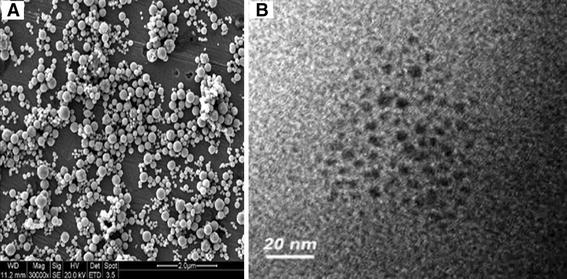
. The synthesized gold nanoparticles were characterized with UV–visible spectrophotometer, transmission electron microscope (TEM) and Fourier transformed infrared spectroscopy (FTIR). The antibacterial and antifungal activities of the synthesized gold nanoparticles were also investigated. The morphology, size, and structural properties of synthesized gold nanoparticles were determined with TEM analysis which showed spherical mono-dispersed structure with an average particle size of 25.5 nm. FTIR analysis reveal band at 3271.14, 2111.91 and 1637.82 cm
−1
corresponding to –N–H, –C=C, and –C–N functional groups that are responsible for the capping and stabilization of synthesized gold nanoparticles. The effectiveness of the gold nanoparticle against the test pathogens increases as the concentration of gold nanoparticle increases. The percentage of zones of inhibition of synthesized gold nanoparticle against test fungi and bacteria ranges from 30 to 66% and 40 to 54%, respectively. The potency of the synthesized gold nanoparticle against the selected fungi and bacteria increases with increase in concentration of gold nanoparticle. Therefore, the antibacterial and antifungal investigation revealed that the synthesized gold nanoparticles exhibited good antimicrobial activity.
Keywords
- Characterization,
- Antimicrobial,
- Gold nanoparticles,
- Annona muricata
References
- Latha et al. (2018) 2018 Biosynthesis and characterization of gold nanoparticle from Justicia adhatoda and its catalytic activity (pp. 8968-8972) https://doi.org/10.1016/j.matpr.2017.12.337
- Weingart et al. (2014) Membrane mimetic surface functionalization of nanoparticles: methods and applications (pp. 68-84)
- Amit et al. (2013) Synthesis of metallic nanoparticles using plant extracts https://doi.org/10.1016/j.biotechadv.2013.01.003
- Umamaheswari et al. (2018) Green synthesis, characterization and catalytic degradation studies of gold nanoparticles against congo red and methyl orange https://doi.org/10.1016/j.jphotobiol.2017.10.017
- Ahmed et al. (2016) A review on plants extract mediated synthesis of silver nanoparticles for antimicrobial applications: a green expertise 7(1) https://doi.org/10.1016/j.jare.2015.02.007
- Linlin and Longquan (2017) The antimicrobial activity of nanoparticles: present situation and prospects for the future (pp. 1227-1249) https://doi.org/10.2147/IJN.S121956
- del Marıa et al. (2018) Cytotoxic and bactericidal effect of silver nanoparticles obtained by green synthesis method using Annona muricata aqueous extract and functionalized with 5-fluorouracil https://doi.org/10.1155/2018/6506381
- Sahayaraj et al. (2011) Bionanoparticles: synthesis and antimicrobial applications (pp. 228-244) World Scientific
- Sorbiun et al. (2018) Biosynthesis of metallic nanoparticles using plant extracts and evaluation of their antibacterial properties 3(1) (pp. 1-16)
- Daniel and Astruc (2004) Gold nanoparticles: assembly, supramolecular chemistry, quantum-size-related properties, and applications toward biology, catalysis, and nanotechnology (pp. 293-346) https://doi.org/10.1021/cr030698+
- Vijayakumar (2019) Eco-friendly synthesis of gold nanoparticles using fruit extracts and in vitro anticancer studies https://doi.org/10.1016/j.jscs.2018.12.002
- Thakor et al. (2011) Gold nanoparticles: a revival in precious metal administration to patients (pp. 4029-4036) https://doi.org/10.1021/nl202559p
- Huang and El-Sayed (2010) Gold nanoparticles: optical properties and implementations in cancer diagnosis and photothermal therapy (pp. 13-28) https://doi.org/10.1016/j.jare.2010.02.002
- Elavarasan et al. (2014) Medicinal properties and uses of sour sop (Annona muricata L.) 2(9) (pp. 73-75)
- Banerjee et al. (2014) Leaf extract mediated green synthesis of silver nanoparticles from widely available Indian plants: synthesis, characterization, antimicrobial property and toxicity analysis https://doi.org/10.1186/s40643-014-0003-y
- Mubarakali et al. (2011) Plant extract mediated synthesis of silver and gold nanoparticles and its antibacterial activity against clinically isolated pathogens https://doi.org/10.1016/j.colsurfb.2011.03.009
- Ramdas et al. (1998) Antifungal activity of 1,3-disubstituted symmetrical and unsymmetrical thioureas https://doi.org/10.1002/(SICI)1096-9063(199802)52:2<145::AID-PS677>3.0.CO;2-J
- Hatem et al. (2018) Controlling Aedes albopictus and Culex pipiens pallens using silver nanoparticles synthesized from aqueous extract of Cassia fistula fruit pulp and its mode of action 46(3) (pp. 558-567) https://doi.org/10.1080/21691401.2017.1329739
- Ga’al et al. (2018) Synthesis, characterization and efficacy of silver nanoparticles against Aedes albopictus larvae and pupae (pp. 49-56) https://doi.org/10.1016/j.pestbp.2017.11.004
- Massoud et al. (2018) Biosynthesis of gold nanoparticles using aqueous extract of stem of Periploca aphylla 8(2) (pp. 152-158)
- Diane, C.T., Sidney, C.M, Jet, G.G.: Biosynthesized Gold Nanoparticles (AuNPs) for the Quantitation of Mercury (II) Ions by Digital Imaging Colorimetry.
- http://www.aq.edu.ph/main/downloads/pdfs/2016-2017-8.pdf
- . Accessed 05 Apr 2019
- Avan et al. (2018) Effects of Annona muricata biofunctionalized gold nanoparticles on erythrocyte osmotic fragility and hematological profile in rat model 2(1) (pp. 33-45)
- Fouad et al. (2017) Synthesis and characterization of silver nanoparticles using Bacillus amyloliquefaciens and Bacillus subtilis to control filarial vector Culex pipiens pallens and its antimicrobial activity 45(7) (pp. 1369-1378) https://doi.org/10.1080/21691401.2016.1241793
- Thanighaiarassu et al. (2014) Green synthesis of gold nanoparticles characterization by using plant essential oil menthapiperita and their antifungal activity against human pathogenic fungi
- Khan et al. (2018) Green synthesis of gold nanoparticles using Acer pentapomicum leaves extract its characterization, antibacterial, antifungal and antioxidant bioassay 2(13) (pp. 579-589)