
 10.57647/j.ijes.2025.16848


Received: 2024-01-15
Revised: 2024-08-19
Accepted: 2024-09-24
Published in Issue 2025-10-30
Published Online: 2025-05-25
Copyright (c) -1 Muhammad Kashif Shahzad Baig, Shahid Ghazi (Author)

This work is licensed under a Creative Commons Attribution 4.0 International License.
How to Cite




PDF views: 566





Abstract
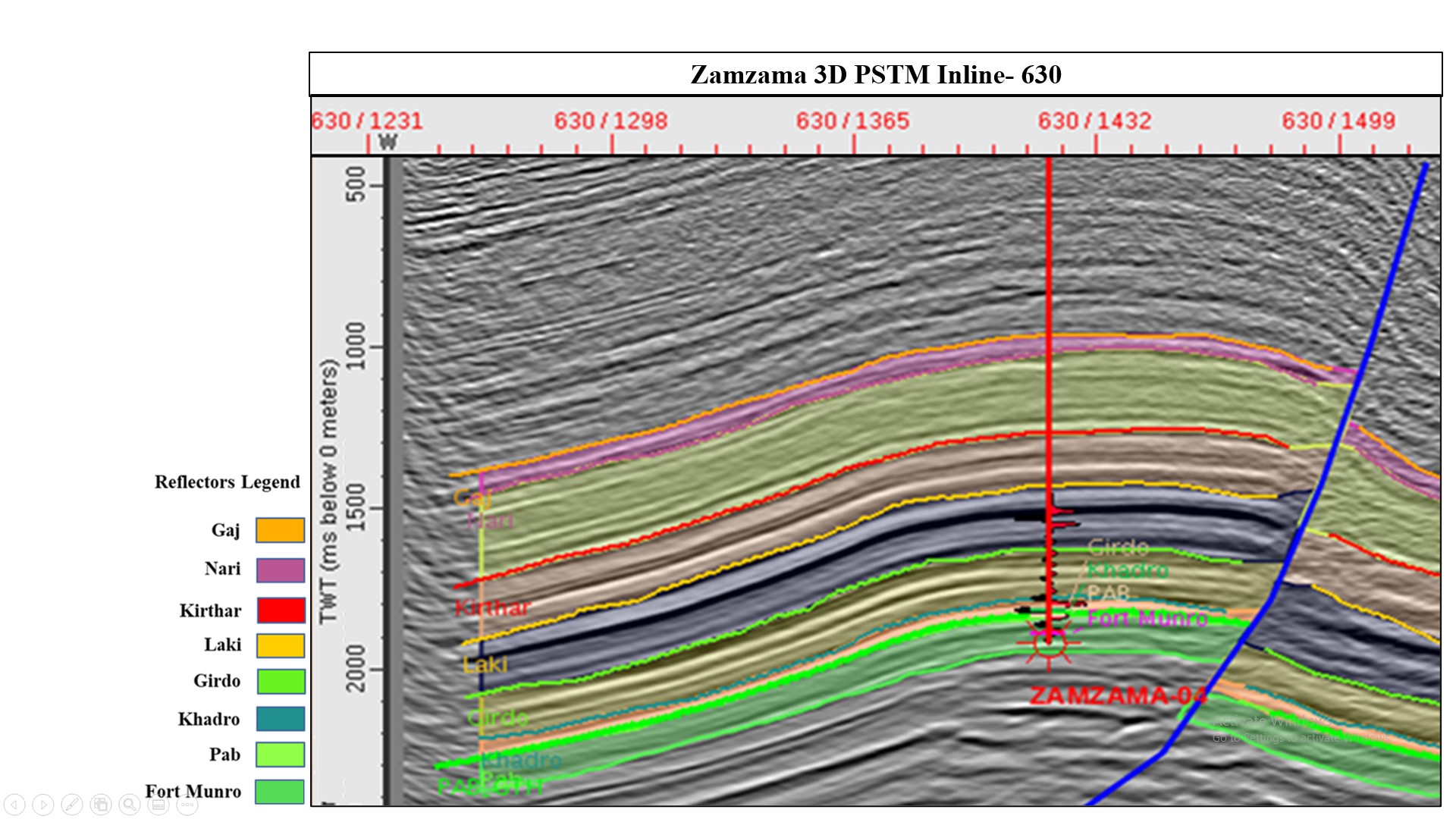
The style of structural deformation plays a crucial role in the trapping of hydrocarbons within the Kirthar Foldbelt and Foredeep. This investigation explores the factors contributing to the success and challenges of hydrocarbon exploration in these regions of the Southern Indus Basin of Pakistan. Despite the drilling of numerous wells in both geological zones, the success rate persists at approximately 20%. A common reason for unsuccessful drilling is often linked to trap integrity. Many wells have targeted surface structures bounded by major faults. It has been observed that most of these faults, extending to the surface, fail to provide effective sealing, leading to trap breaches. Nevertheless, there are instances within the study area where faults reaching the surface have successfully sealed traps. The current study aims to identify the distinguishing factors between sealing and non-sealing bounding faults in this region. The seismic data from producing and nonproducing fields within the Kirthar Foldbelt and Foredeep has been utilized in the analysis. However, only 3D seismic data of Zamzama Field was available, so it is interpreted while for analyzing the structural style of other fields the published 2D seismic data from available sources have been utilized.
Keywords
- Kirthar Foldbelt,
- Kirthar Foredeep,
- Hydrocarbon Entrapment
References
- Abbasi S. A., Asim S., Solangi S. H., Khan F. (2016). Study of fault configuration related mysteries through multi seismic attribute analysis technique in Zamzama gas field area, Southern Indus Basin Pakistan. Geodesy and Geodynamics 7(2):32–142. 10. https://doi.org/10.1016/j.geog.2016.04.002
- Ahmad, S., & Ghazi, S. (2022). Depositional trends & Reservoir geometries of the Early Cretaceous Lower Goru Formation in Lower Indus Basin, Pakistan: Evidence from Sequence Stratigraphy (Manuscript Number: PEPT-D-20-00545R2). Journal of Petroleum Exploration and Production Technology 12(3): 1-13. https://doi.org/10.1007/s13202-022-01489-y
- Besse, J., and Courtillot, V., (1988). Paleogeographic maps of the continents bordering the Indian Ocean since the Early Jurassic. Journal of Geophysical Research 92(B10): 11791-11808. https://doi.org/10.1029/JB093iB10p11791
- Bnnert, D. A., Cheema, A., Ahmad and Schaffer, (1992). The structural development of the Western Foldbelt Pakistan. Geologisches Jahrbuch, Vol B80, 3-60
- Ehsan, M., Gu, H., Ali, A., Akhtar, M. M., Abbasi, S. S., Miraj, M. A. F., & Shah, M. (2021). An integrated approach to evaluate the unconventional Hydrocarbon generation potential of the Lower Goru Formation (Cretaceous) in southern Lower Indus Basin, Pakistan. Journal of Earth System Science 130(2): 80-90. http://dx.doi.org/10.1007/s12040-021-01584-4
- Gnos, E., Khan, M., Mahmood, K., Khan, A.S., Shafique, N.A., and Villa, I.M. (1998). Bela oceanic lithosphere assemblage and its relationship to the Reunion hot spot. Terra Nova, Vol.10, 90-95
- Hussain, H., Shuangxi, Z., & Abid, M. (2019). Understanding the Hydrocarbon prospect of Buzdar block, Southern Indus Basin, Pakistan, by using 2-D seismic data: A case study. Contributions to Geophysics and Geodesy 49(3): 249–263. https://doi.org/10.2478/congeo-2019-0013
- Jackson MA., Jellis RG., Hill R., Roberson P., Woodall MA., Wormald G., Jafri N. (2004). Zamzama gas field-balancing risk and value. SPE Asia Pacific Oil and Gas Conference, Perth, Australia, October SPE88577-MS: 18–20. https://doi.org/10.2118/88577-MS
- Jehangir Khan M., Ghazi S., Mehmood M., Yazdi A., Naseem A.A., Serwar U., Zaheer A., Ullah H. (2021) Sedimentological and provenance analysis of the Cretaceous Moro formation Rakhi Gorge, Eastern Sulaiman Range, Pakistan. Iranian Journal of Earth Sciences 13(4): 252-266. DOI: https://doi.org/10.30495/ijes.2021.1917721.1564
- Kadri IB., (1993). Cretaceous source rocks in Pakistan. AAPG/SVG International Conference and Exhibitions, Venezuela, 11-35
- Kadri IB., (1995). Petroleum Geology of Pakistan. Pakistan Petroleum Ltd, Karachi, 1-275
- Kazmi AH., Abbasi AI., (2008). Stratigraphy and historical geology of and historical geology Pakistan. Peshawar Publication, Peshawar, pp 181–185. ISBN: 978-969-9119
- Kazmi AH., Jan MQ., (1997). Geology and tectonic of Pakistan. Graphic Publishers, Karachi, 528. ISBN: 969-8375-00-7
- Kazmi AH., Rana RA., (1982), Tectonic map of Pakistan. Geological Survey of Pakistan, 39, 283–300
- Kemal A, Ahmed G, Kemal A, Zaman ASH, (1991). Geology and new trends for petroleum exploration in Pakistan.
- Khalid, A., Ahmad, S., Ali, A., Rehman, G., & Yaseen, M. (2023). Structural Analysis of Kirthar Foldbelt, Lower Indus Basin, Balochistan, Pakistan; Implications from Compression and Inversion Tectonics. Sains Malaysiana 52(2): 417–430. http://dx.doi.org/10.17576/jsm-2023-5202-08
- Khan, Z. U., Lisa, M., Hussain, M., Ahmed, S. A. (2022). Gas-bearing Sands appraisal for Zamzama Gas field in Pakistan through inverted elastic attributes assisted with PNN approximation of petrophysical properties. Kuwait Journal of Science 49(4): 1-18. https://doi.org/10.48129/kjs.15915
- Lisa, M., Ullah Khan, Z., Hussain, M., & Adnan Ahmed, S. (2023). Evaluation of seismic responses from well-associated gas producing Sands using integrated approaches for optimal field production in Zamzama gas field, Pakistan. Journal of Asian Earth Sciences 10: 100-163. https://doi.org/10.1016/j.jaesx.2023.100163
- Meissner JrC., Rahman H. (1973). Distribution, thickness, and Lithology of Paleocene Rocks in Pakistan. USGS Professional Paper 716-E, US Government Office, Washington. 10.3133/pp716E
- Nayyer, Z.A. & Mallick, K.A. (1994) Sub-surface continuation of the Ophiolites in the Bela plain of Baluchistan, Pakistan. Ofioliti 19 (2a), 269-278. ISSN/ISBN: 0391-2612
- Patriat, P., and Achache, J., (1984). India-Eurasia collision chronology and its implications for crustal shortening and driving mechanisms of plates. Nature 311: 615-621(1984). https://doi.org/10.1038/311615a0
- Powell CM., (1979) A speculative tectonic history of Pakistan and surroundings: Some constraints from the Indian Ocean, Geodynamics of Pakistan 13: 5-24.
- Qureshi, M. A., Ghazi, S., Riaz, M., & Ahmad, S. (2021). Geo-seismic model for petroleum plays an assessment of the Zamzama area, Southern Indus Basin, Pakistan. Journal of Petroleum Exploration and Production Technology 11(1): 33–44. http://dx.doi.org/10.1007/s13202-020-01044-7
- Searle, M.P., Corfield, R.I., Stephenson, B., and J. McCarron, (1997). Structure of the North Indian continental margin in the Ladakh-Zanskar Himalayas: Implications for the timing and Obduction of The Spontang Ophiolite, India-Asia collision and deformation events in the Himalaya. Geological Magazine 134(3): 297-316. http://dx.doi.org/10.1017/S0016756897006857
- Shah SMI. (1977). Stratigraphy of Pakistan. Geological survey of Pakistan 12: 138
- Shah SMI. (2009). Stratigraphy of Pakistan. Geological survey of Pakistan, 1-400
- Smewing, J.D, Warburton, J., Cernuschi, A., (2002). Structural Inheritance in the southern Kirthar Foldbelt, Annual Technical Conference (ATC) of PAPG & SPE Islamabad, 26-35
- Tereloar P.J. and M.P. Searle (eds) Himalayan tectonics. Geological Society, London, Special Publication 74, 69-87
- Wandrey C. J., Law B. E., Shah H. A., (2004) Sembar Goru/Ghazij Composite Total Petroleum System, Indus and Sulaiman-Kirthar Geologic Provinces, Pakistan and India. U.S. Geological Survey Bulletin, 2208-C, 1-21
- Zafar Z. A., Shoaib K., Afsar F., Raja Z. A., Tanveer A., Burley S. D. (2018). A radical seismic interpretation re-think resolves the structural complexities of the Zamzama Field, Kirthar Foredeep, Pakistan. PAPG/SPE annual technical conference, December. Islamabad, Pakistan, 1–11.
- Zaigham N. A., Mallick K. A., (2000). Prospect of Hydrocarbon associated with fossil-rift structures of the Southern Indus Basin, Pakistan. Am. Assoc. Pet. Geol. Bull 84(11): 1833–1848. http://dx.doi.org/10.1306/8626C3A7-173B-11D7-8645000102C1865D