
 10.22034/ijnd.2023.1989285.2228
Microwave assisted synthesis of rod-shaped Copper Oxide microparticles and study of their bactericidal effects on Bacillus subtilis
- Nikhil Parasar

 1
1 - Bidhan Mohanta*1
- Abu Barkat Mohammad Gulzar2
- Pranab Behari Mazumder2

Published in Issue 2024-01-10




HTML views: 33
PDF views: 211





Abstract
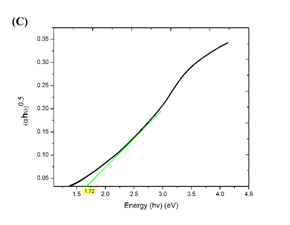
Bactericidal effect of copper oxide is still a growing area of research even though a lot of experiments have been carried out by the researchers. The present work was designed to explore structural and optical properties of micro-size copper oxide particles (µCuO) synthesized using microwave irradiation. Synthesized samples were characterized with ultraviolet-visible spectroscopy, Fourier transform infrared spectroscopy, x-ray diffraction and scanning electron microscopy. Scanning electron micrographs revealed the formation of rod-shaped copper oxide in micron size. X-ray diffraction pattern showed the synthesized microparticles are in monoclinic phase. Solutions of µCuO with various concentrations from 1% to 15% were prepared using dimethyl sulfoxide for the antibacterial study. Starting from 2% concentration, µCuO started to produce a good inhibition zone around the Bacillus subtilis bacteria. The prepared µCuO displayed splendid results in bactericidal activity against Bacillus subtilis bacteria. Higher concentrations of the µCuO showed strong action against bacterial growth. Micro-size copper oxide can also be used as an antibacterial agent like nano-size copper oxide.
Keywords
- Antibacterial,
- FTIR,
- Microstructure,
- Rapid synthesis,
- X-ray Techniques.