
 10.22034/ijnd.2023.1992161.2239
Novel epoxy nanocomposite with nano TiO2 and Al2O3 by D-optimal combined design and partial least squares discriminate analysis for food packaging
- Samira Siami Araghi
 1
1 - Seyed Mohamad Ali Ebrahimzadeh Mousavi*
 2
2 - Ali Akbar Safekordi3
- Reza Dinpanah1

Published in Issue 2023-09-20




PDF views: 192
HTML views: 61





Abstract
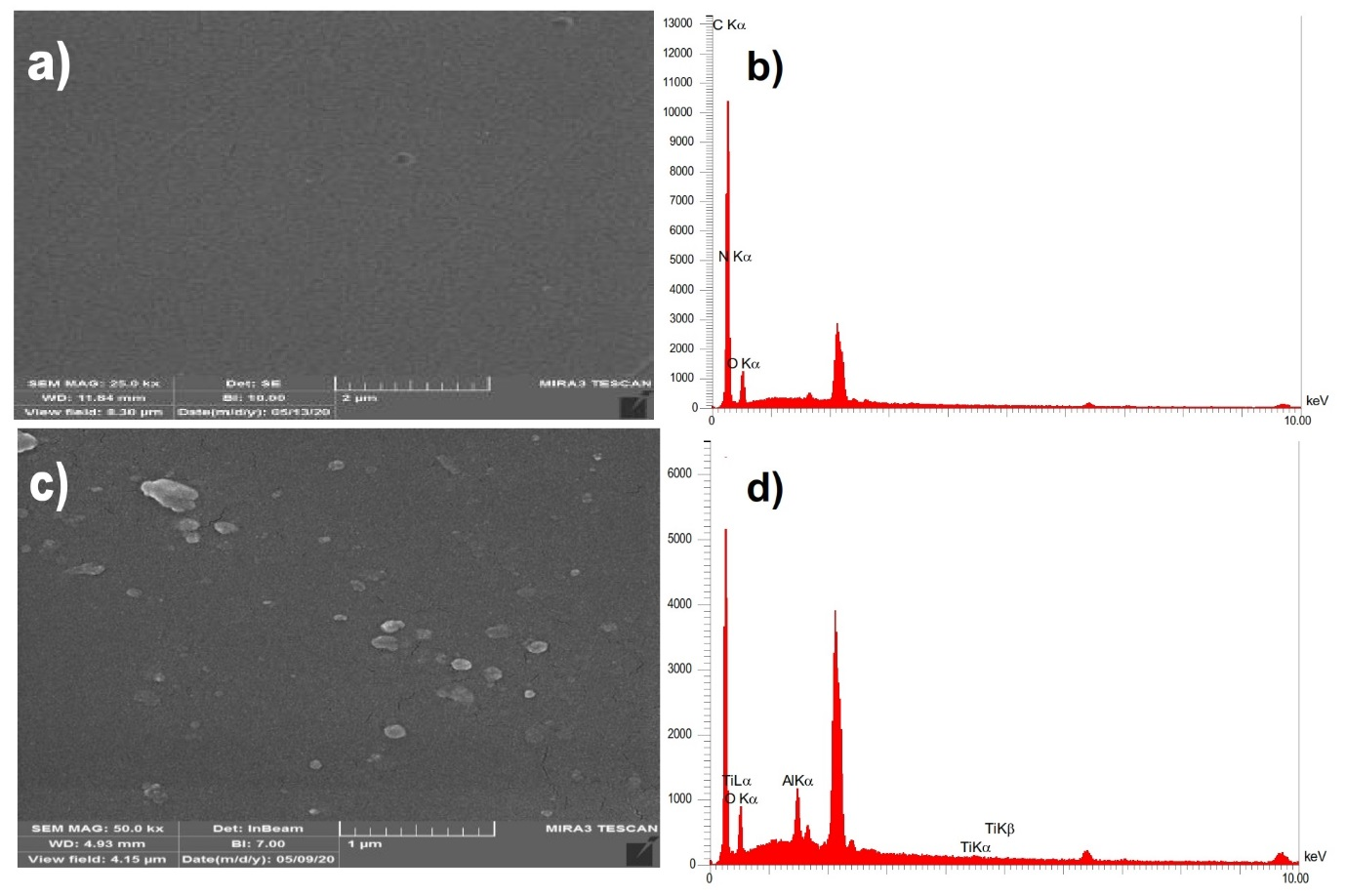
This study aimed to use D-optimal combined design, and partial least squares discriminate analysis (PLS-DA) to investigate the mechanical properties, and chemical compatibilities of improved epoxy nanocomposites by nano TiO2/Al2O3. Experimental design of adhesion, and wedge bend properties led the results into the optimum values of TiO2= 0.66%, Al2O3= 1.33%, dispersant= 0.000017%. The variable importance of the projection (VIP) score and PLS-DA modeling were used to categorize mechanical properties and chemical compatibilities. The best point could be identified from the other samples, based on the results. PLS-DA could explain 94.32% of the total variance in the data and wedge bend, adhesion and thermal treatment were the most significant variables with VIP scores at 2.73, 2.02, and 1.38, respectively. The morphology was examined using a field emission scanning electron microscope (FESEM). The thermal properties of nanocomposites were described by differential scanning calorimeter (DSC) to define the glass transition temperature for epoxy-nanocomposites. The mechanical properties were measured to assess the storage modulus via the dynamic mechanical analysis (DMA). Epoxy/TiO2/Al2O3 nanocomposite exhibited a uniform particle distribution, as indicated by the FESEM image. Adding nanoparticles significantly raised the glass transition temperature. The presence of nanoparticles can be used to enhance storage modulus functionally.
Keywords
- Chemical Properties,
- DMA,
- DSC,
- FESEM,
- Mechanical Properties.