
 10.57647/ijamad.2025.16901
The comparison of Algae Production Systems based on Energy Consumption and Economic analysis: The Application of Data Envelopment Analysis
- Naser Kazemi
 1
1 - Mohammad Gholami Parashkoohi*2
- Ahmad Mohammadi2
- Davood Mohammad Zamani1

Received: 12-10-2024
Revised: 07-02-2025
Accepted: 12-02-2025
Published in Issue 30-06-2025
Copyright (c) 2025 Naser Kazemi , Mohammad Gholami Parashkoohi, Ahmad Mohammadi , Davood Mohammad Zamani (Author)

This work is licensed under a Creative Commons Attribution 4.0 International License.




PDF views: 146





Abstract
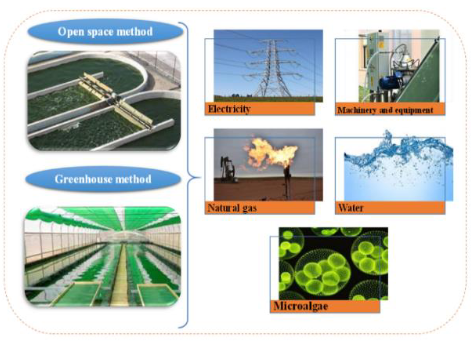
This paper examines energy use efficiency and economic performance in different microalgae production systems (open space and greenhouse) using Data Envelopment Analysis (DEA). Experiments were conducted at the laboratory of Islamic Azad University, Arak branch, with 20 samples collected for each production system. Results showed that the average total input energy was 15,920.40 MJ kg⁻¹ for open space and 17,691.60 MJ kg⁻¹ for greenhouse cultivation. The energy ratio was 0.89 for open space and 0.80 for greenhouse, while the energy productivity index was 0.06 and 0.02 kg MJ⁻¹, respectively. Economic analysis indicated net returns of 204,376.59 $ kg⁻¹ for open space and 269,276.06 $ kg⁻¹ for greenhouse cultivation. Economic productivity was 0.17 kg $⁻¹ for open space and 0.16 kg $⁻¹ for greenhouse. DEA results showed that optimized total energy consumption was 14,476.93 MJ kg⁻¹ for open space and 16,355.21 MJ kg⁻¹ for greenhouse, representing a 7.55% energy saving compared to current cultivation conditions by converting inefficient practices to efficient ones. Overall, open space cultivation consumes less energy and is more economical than greenhouse cultivation, indicating that promoting outdoor microalgae production is preferable.
Keywords
- Energy,
- Data envelopment analysis,
- Greenhouse,
- Microalgae
References
- Abbasi, T., Abbasi, S. A. 2012. Is the use of renewable energy sources an answer to the problems of global warming and pollution? Critical Reviews in Environmental Science and Technology, 42(2), 99-154.
- Akdeniz, M. B., Gonzalez-Padron, T., Calantone, R. J. 2010. An integrated marketing capability benchmarking approach to dealer performance through parametric and nonparametric analyses. Industrial marketing management, 39(1), 150-160.
- Arabi, M., Yaghoubi, S., Tajik, J., 2019. Algal biofuel supply chain network design with variable demand under alternative fuel price uncertainty: A case study. Comput. Chem. Eng. 130, 106528.
- Bahadar, A., Bilal Khan, M., 2013. Progress in energy from microalgae: A review. Renew. Sustain. Energy Rev. 27, 128–148.
- Bairamzadeh, S., Pishvaee, M.S., Saidi-Mehrabad, M., 2016. Multiobjective Robust Possibilistic Programming Approach to Sustainable Bioethanol Supply Chain Design under Multiple Uncertainties. Ind. Eng. Chem. Res. 55, 237–256.
- Bakhtiari, A.A., Hematian, A., Sharifi, A., 2015. Energy analyses and greenhouse gas emissions assessment for saffron production cycle. Environ. Sci. Pollut. Res. 22, 16184–16201.
- Banker, R. D., Charnes, A., Cooper, W. W. 1984. Some models for estimating technical and scale inefficiencies in data envelopment analysis. Management Science, 30(9), 1078-1092.
- Brennan, L., Owende, P., 2010. Biofuels from microalgae—A review of technologies for production, processing, and extractions of biofuels and co-products. Renew. Sustain. Energy Rev. 14, 557–577.
- Brentrup, F., Küsters, J., Kuhlmann, H., Lammel, J., 2001. Application of the Life Cycle Assessment methodology to agricultural production: an example of sugar beet production with different forms of nitrogen fertilisers. Eur. J. Agron. 14, 221–233.
- Castro, P.A.D., von Zuben, F.J., 2010. Multi-objective feature selection using a Bayesian artificial immune system. Int. J. Intell. Comput. Cybern. 3, 235–256.
- Charnes, A., Rousseau, J. J., Semple, J. H. 1996. Sensitivity and stability of efficiency classifications in data envelopment analysis. Journal of productivity analysis, 7, 5-18.
- Chen, L., & Wang, Y. M. 2020. DEA target setting approach within the cross efficiency framework. Omega, 96, 102072.
- Cochran, W.G., 1977. The estimation of sample size. Sampl. Tech. 3, 72-90.
- Elhami, B., Akram, A., Khanali, M., 2016. Optimization of energy consumption and environmental impacts of chickpea production using data envelopment analysis (DEA) and multi objective genetic algorithm (MOGA) approaches. Inf. Process. Agric. 3, 190–205.
- Geng, Z., Zeng, R., Han, Y., Zhong, Y., & Fu, H. 2019. Energy efficiency evaluation and energy saving based on DEA integrated affinity propagation clustering: Case study of complex petrochemical industries. Energy, 179, 863-875.
- Gumte, K.M., Mitra, K., 2019. Bio-Supply Chain Network Design to tackle ethanol deficiency in India: A mathematical framework. J. Clean. Prod. 234, 208–224.
- Han, S., Kim, J., 2019. A multi-period MILP model for the investment and design planning of a national-level complex renewable energy supply system. Renew. Energy 141, 736–750.
- Hasilová, K., & Vališ, D. 2022. Composite laminates reliability assessment using diffusion process backed up by perspective forms of non-parametric kernel estimators. Engineering Failure Analysis, 138, 106326.
- Hatirli, S.A., Ozkan, B., Fert, C., 2005. An econometric analysis of energy input–output in Turkish agriculture. Renew. Sustain. Energy Rev. 9, 608–623.
- Hosseinzadeh-Bandbafha, H., Nabavi-Pelesaraei, A., Khanali, M., Ghahderijani, M., Chau, K.-W., 2018a. Application of data envelopment analysis approach for optimization of energy use and reduction of greenhouse gas emission in peanut production of Iran. J. Clean. Prod. 172, 1327–1335.
- Hosseinzadeh-Bandbafha, H., Nabavi-Pelesaraei, A., Khanali, M., Ghahderijani, M., Chau, K. wing, 2018b. Application of data envelopment analysis approach for optimization of energy use and reduction of greenhouse gas emission in peanut production of Iran. J. Clean. Prod. 172, 1327–1335.
- Jiang, P., Fan, Y. Van, Klemeš, J.J., 2021. Impacts of COVID-19 on energy demand and consumption: Challenges, lessons and emerging opportunities. Appl. Energy 285, 116441.
- Jonker, J. G. G., Faaij, A. P. C., 2013. Techno-economic assessment of micro-algae as feedstock for renewable bio-energy production. Applied Energy, 102, 461-475.
- Kaab, A., Sharifi, M., Mobli, H., Nabavi-Pelesaraei, A., Chau, K.-W., 2019a. Combined life cycle assessment and artificial intelligence for prediction of output energy and environmental impacts of sugarcane production. Sci. Total Environ. 664.
- Kaab, Ali, Sharifi, M., Mobli, H., Nabavi-Pelesaraei, A., Chau, K., 2019b. Use of optimization techniques for energy use efficiency and environmental life cycle assessment modification in sugarcane production. Energy 181, 1298–1320.
- Khai, H. V, Yabe, M., 2011. Technical efficiency analysis of rice production in Vietnam. J. ISSAAS 17, 135–146.
- Khoo, H. H., Koh, C. Y., Shaik, M. S., Sharratt, P. N., 2013. Bioenergy co-products derived from microalgae biomass via thermochemical conversion–life cycle energy balances and CO2 emissions. Bioresource technology, 143, 298-307.
- Kuosmanen, T., & Johnson, A. L. 2010. Data envelopment analysis as nonparametric least-squares regression. Operations Research, 58(1), 149-160.
- Luo, X., Wang, J., Dooner, M., & Clarke, J. 2015. Overview of current development in electrical energy storage technologies and the application potential in power system operation. Applied Energy, 137, 511-536.
- Malyan, S. K., Bhatia, A., Tomer, R., Harit, R. C., Jain, N., Bhowmik, A., & Kaushik, R. 2021. Mitigation of yield-scaled greenhouse gas emissions from irrigated rice through Azolla, Blue-green algae, and plant growth–promoting bacteria. Environmental Science and Pollution Research, 28(37), 51425-51439.
- Masliah, I., Abdelfattah, A., Haidar, A., Tomov, S., Baboulin, M., Falcou, J., Dongarra, J., 2019. Algorithms and optimization techniques for high-performance matrix-matrix multiplications of very small matrices. Parallel Comput. 81, 1–21.
- Mobarezkhoo, H., Saidi-Mehrabad, M., Sahebi, H., 2022. Life cycle evaluation of microalgae based biorefinery supply network: A sustainable multi-criteria approach. Algal Res. 66, 102816.
- Mohammadi-Barsari, A., Firouzi, S., Aminpanah, H., 2016. Energy-use pattern and carbon footprint of rain-fed watermelon production in Iran. Inf. Process. Agric. 3, 69–75.
- Mohseni, S., Pishvaee, M.S., Sahebi, H., 2016. Robust design and planning of microalgae biomass-to-biodiesel supply chain: A case study in Iran. Energy 111, 736–755.
- Mousavi-Avval, S.H., Rafiee, S., Jafari, A., Mohammadi, A., 2011. Optimization of energy consumption for soybean production using Data Envelopment Analysis (DEA) approach. Appl. Energy 88, 3765–3772.
- Oyedepo, S. O. 2012. Energy and sustainable development in Nigeria: the way forward. Energy, Sustainability and Society, 2(1), 1-17.
- Pragya, N., Pandey, K.K. Sahoo, P.K., 2013. A review on harvesting, oil extraction and biofuels production technologies from microalgae. Renewable and Sustainable Energy Reviews, 24, 159-171.
- Rajaeifar, M.A., Akram, A., Ghobadian, B., Rafiee, S., Heidari, M.D., 2014. Energy-economic life cycle assessment (LCA) and greenhouse gas emissions analysis of olive oil production in Iran. Energy 66, 139–149.
- Razm, S., Nickel, S., Sahebi, H., 2019. A multi-objective mathematical model to redesign of global sustainable bioenergy supply network. Comput. Chem. Eng. 128, 1–20.
- Tan, J. S., Lee, S. Y., Chew, K. W., Lam, M. K., Lim, J. W., Ho, S. H., Show, P. L., 2020. A review on microalgae cultivation and harvesting, and their biomass extraction processing using ionic liquids. Bioengineered, 11(1), 116-129.
- Velasquez, M., Hester, P., 2013. An Analysis of Multi-Criteria Decision Making Methods. International Journal of Operations Research. 10 (2), 56-66.
- Yang, Z., Zhu, Y., Zhang, J., Li, X., Ma, P., Sun, J., Sun, Y., Ma, J., Li, N., 2022. Comparison of energy use between fully mechanized and semi-mechanized rice production in Southwest China. Energy 245, 123270.
- Zanella, A. (2014). Assessment of performance in the presence of undesirable outputs: the promotion of livability and sustainable development of cities and countries using Data Envelopment Analysis (Doctoral dissertation, Universidade do Porto (Portugal)).