
 10.1186/2251-6832-4-34
Mineralogical influence of mining intrusions in CFB combustion of Indian lignite
- Selvakumaran P*
 1
1 - Lawerence A2
- Lakshminarasimhan M1
- Bakthavatsalam AK3

Published in Issue 2013-09-09




HTML views: 85
PDF views: 116





Abstract
Abstract
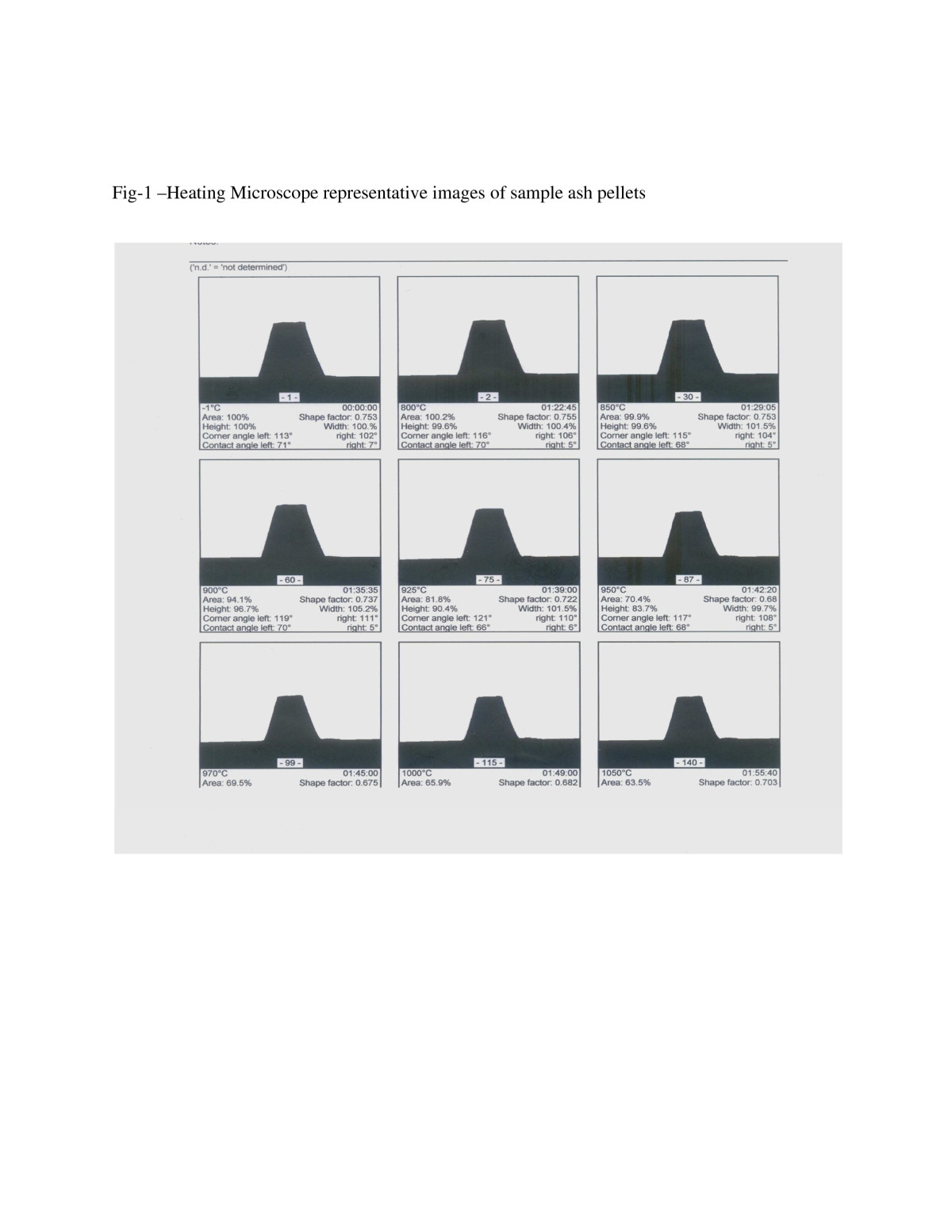
Lignite has emerged as an additional important fuel source for thermal power generation in India. Circulating fluid bed combustion technology is applied considering the impurities, moisture, ash and sulfur content, and wide variations for large units. Lignite mineralogy greatly influences combustion behavior. Agglomeration and clogging/blockage are experienced due to sintering of lignite at lower temperature regime in which circulating fluid bed boilers operate (800°C to 900°C). At this low temperature range, the extensive knowledge built for pulverized coal combustion with respect to slagging, fouling, and high-temperature corrosion is not useful. Sintering studies using the heating microscope’s potential are applied for understanding this phenomenon. The gray clay, which occurs as intrusions/thin bands in the lignite mine, is sampled at the mine site and taken up for analysis. Morphology of sintered deposits in the bottom ash is matched with the properties of clay which is very close to halloysite mineral (kaolinite group). Sintering is avoided by selecting the operating temperature range of combustion on either side of peak sintering temperature in the sample case. With higher ashing temperature, the lignite ash loses part of its sintering tendency. This indicates to a new hypothesis that once the lignite ash undergoes transformations resulting in sintering, its sintering tendency is lowered. Conventional slagging indices are also analyzed, and correlation was derived for sintering behavior of lignite.
Keywords
- Lignite,
- Sintering,
- CFBC,
- Heating microscope,
- Kaolinite,
- Mineral transformation
References
- Nevin and Mert (2011) Simulation of circulating fluidized bed combustors firing indigenous lignite 50(6) (pp. 1109-1115) https://doi.org/10.1016/j.ijthermalsci.2011.01.022
- Raask (1982) (pp. 145-156) Central Electricity Research Laboratories
- Fernandez Llorente and Carrasco Garcia (2005) Comparing methods for predicting the sintering of biomass ash in combustion (pp. 1893-1900) https://doi.org/10.1016/j.fuel.2005.04.010
- Bryers (1996) Fireside slagging fouling, and high temperature corrosion of heat transfer surface due to impurities in steam raising fuels (pp. 29-120) https://doi.org/10.1016/0360-1285(95)00012-7
- Wall et al. (1998) Coal ash fusion temperatures new characterization techniques and implications for slagging and fouling (pp. 345-353) https://doi.org/10.1016/S0360-1285(98)00010-0
- Raask (1979) Sintering characteristics of coal ashes by simultaneous dilatometry - electrical conductance measurements (pp. 91-102) https://doi.org/10.1007/BF01909636
- Marika et al. (2011) Comparison of sintering and compressive strength tendencies of a model coal mineral mixture heat-treated in inert and oxidizing atmospheres (pp. 1042-1051) https://doi.org/10.1016/j.fuproc.2010.12.030
- Paganelli and Sighinolfi (2007) Understanding the behavior of glazes with the automatic heating 86(86)
- Paganelli and Sighinolfi (2009) New double optic heating microscope for multi standard analysis
- Radmacher (1949) Brensstoff Chemie (pp. 377-384)
- Boccaccini and Hamann (1999) In-situ high temperature optical microscopy (pp. 5419-5436) https://doi.org/10.1023/A:1004706922530
- Harkort and Paetsch (1960) Berichte der DeutschenKeramischen Gesellschaft (pp. 402-409)
- Buist (1970) Sintering of Ceramic powder compacts (pp. 15-20)
- Boccaccini and Trusty Paul (1998) In situ characterization of the shrinkage behavior of ceramic powder compacts during sintering by using heating microscopy (pp. 109-121) https://doi.org/10.1016/S1044-5803(98)00025-4
- Adell et al. (2007) Characterizing the sintering behavior of pulverized fuel ash using heating stage microscopy (pp. 980-988) https://doi.org/10.1016/j.matchar.2006.10.004
- Cheeseman et al. (2005) Properties of lightweight aggregate produced by rapid sintering of incinerator bottom ash 43(2) (pp. 147-162) https://doi.org/10.1016/j.resconrec.2004.05.004
- Haykiri-Acma et al. (2010) Effect of biomass on temperatures of sintering and initial deformation of lignite ash (pp. 3063-3068) https://doi.org/10.1016/j.fuel.2010.06.003
- TortosaMasiá et al. (2007) Characterizing ash of biomass and waste (pp. 1071-1081) https://doi.org/10.1016/j.fuproc.2007.06.011
- Skrifvars et al. (1994) Sintering mechanisms of FBC ashes (pp. 171-176) https://doi.org/10.1016/0016-2361(94)90110-4
- Oleschko et al. (2007) Influence of coal composition on the release of Na-, K-, Cl-, and S-species during the combustion of brown coal (pp. 2275-2282) https://doi.org/10.1016/j.fuel.2007.01.030
- Venturelli and Paganelli (2007) Sintering behavior of clays for the production of ceramics 84(84)