Graphical abstract

In this paper, boron trifluoride supported on coconut shell nano-particles (nano-BF 2 O-coc) was prepared from nano-crystalline coconut shell through mechanical method using ultrasonication. The resultant was utilized to obtain nano-crystalline BF 3 supported on coconut shell nano-particles (nano-BF 2 O-coc). The novel nanostructure has been characterized using Fourier transform infrared spectroscopy, transmission electron microscopy, field-emission scanning electron microscopy, and energy-dispersive X-ray spectroscopy (EDX) techniques. The catalytic activity of the solid acid catalyst has been successfully examined in a one-pot, three-component condensation reaction of barbituric acid, ethyl cyanoacetate or malononitrile, and aldehydes in refluxing ethanol to furnish pyrano[2,3- d ]pyrimidine derivatives.
Multicomponent reactions (MCRs) are accounted as environmental friendly benign synthetic procedures to gain complex organic compounds with maximum complexity and various levels of structural diversity with an outlook to green chemistry. The power of MCRs is synthesis of desired adducts in a single operation from three or more reactants without exposure of inadvertent intermediates and/or products [ 1 , 2 , 3 – 4 ]. Pyrano[2,3- d ]pyrimidine derivative synthesis method can be conduct through multicomponent reactions. Pyrimidine derivatives are biologically interesting and attractive compounds with antibacterial, antitumor, cardiotonic, antihypertensive, antibronchitic, antifungal, and analgesic properties [ 5 , 6 – 7 ]. They are commonly synthesized via a one-pot, three-component reaction of various aromatic aldehydes, barbituric acid, and malononitrile or ethyl cyanoacetate in the presence of some conditions and catalysts such as DABCO [ 8 ], ultrasonic irradiation [ 9 ], glycerol [ 10 ], ionic liquids [ 11 ], diammonium hydrogen phosphate [ 12 ], l -proline [ 13 ], H 14 [NaP 5 W 30 O 110 ] [ 14 ], sulfonic acid nano-porous silica (SBA-Pr-SO 3 H) [ 15 ], as well as being promoted by microwave irradiation [ 16 ].
Recently, nano-solid-supported reagents such as nano-crystalline TiO 2 –HClO 4 [ 17 ], nano-TiCl 4 ·SiO 2 [ 18 ], nano-SnCl 4 ·SiO 2 [ 19 ], nano-sawdust-BF 3 [ 20 ], nano-sawdust-OSO 3 H [ 21 ], BF 3 –SiO 2 nano-particles [ 22 ], HClO 4 –SiO 2 nano-particles [ 23 ], nano-cellulose-OSO 3 H [ 24 ], nano-silica sulfuric acid [ 25 ], SbCl 5 /SiO 2 nano-particles [ 26 ], Pt@GO-PVP nano-composite [ 27 ], RhPt/TC@GO NPs [ 28 ], graphene oxide [ 29 ], and monodisperse Pt NPs@AC [ 30 ] have developed due to the high activity and selectivity [ 31 ].
Boron trifluoride (BF 3 ) is a steaming liquid, and usually, it is utilized in many important industrial’s processing and organic reactions. Due to high specific gravity along with having fumes in air, it reacts with the moisture to form HF; therefore, the supported form is actually suitable and preferable. According to the literatures, it has been acclaimed which the supported BF 3 with various materials is known as a solid Lewis superacid. Coconut shell ash due to be highly effective, having a large surface area and it usability for dispersing all of materials over it largely, has claimed and proved for preparation of a supported catalyst in liquid and vapor phase reactions [ 32 ]. In this study, we prepared the BF 3 supported on coconut shell (BF 2 O-coc) as an efficient and new nano-catalyst. Not only its efficiency regarding the chemical yield and reaction rate as a nano-catalyst is superior in compare with other previous reported catalysts for the same reactions, but also the catalyst preparation method could obviate the steaming inherent of boron catalysts; therefore, catalyst handling and operation becomes extremely clean and benign.
During the course of our studies and investigations on the synthesis of pyrano[2,3-
d
]pyrimidine compounds and our interest in MCRs [
20
,
21
,
22
,
23
,
24
–
25
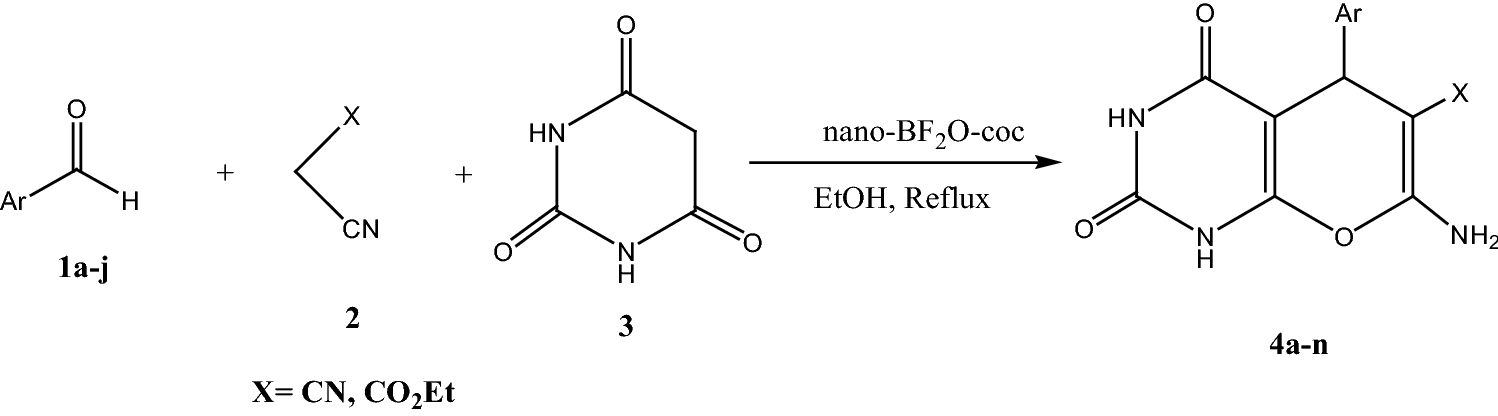
], we intended to study the feasibility of synthesizing their derivatives by the one-pot three-component condensation reactions strategy of aromatic aldehydes (
1a
–
j
) with ethyl cyanoacetate or malononitrile
2
and barbituric acid
3
in the presence of boron trifluoride supported on coconut shell (nano-BF
2
O-coc) as a novel nano-catalyst at reflux ethanol (Scheme
1
).
Synthesis of pyrano [2,3-
d
] pyrimidines in the presence of nano-BF
2
O-coc as novel nano-catalystScheme 1
All chemicals utilized in this work were purchased from Merck or Fluka and used as received.
Melting points were determined with an Electrothermal 9100 apparatus. Fourier transform infrared spectroscopy (FT-IR) was recorded using FT-IR spectrometer (Vector 22- Bruker). X-ray diffraction (XRD) measurements were achieved by Bruker D8 diffractometer using Cu-K α radiation ( λ = 1.5418 Å) in a range of Bragg’s angle (0°–100°) at room temperature. The morphologies of the nano-catalyst were observed using field-emission scanning electron microscopy (FESEM) of an MIRA3 TESCAN microscope with an accelerating voltage of 15 kV. The EDX analysis was done using a SAMx analyser. Transmission electron microscopy (TEM) experiments were conducted by a Philips EM 208 electron microscope. 1 H and 13 C NMR spectra were recorded on Bruker DRX-300 Avance spectrometer at solution in DMSO- d 6 using TMS as an internal standard.
At first, outer brown shell of coconut was separated and washed several times with deionized water at room temperature. The mixture put into ice/water bath and set in the ultrasonicator for 15 min at output power of 1200 W. The obtained colloidal suspension was centrifuged and freeze dried, and the powder was stored at 5 °C. To a suspension of nano-coconut powder (1 g) in
n
-hexane (10 ml), BF
3
(0.7 ml) was added dropwise at 0 °C during 20 min. Then, the mixture was stirred for 2 h at room temperature to remove HF from the reaction vessel. The mixture was filtered, and the collected solid was washed with
n
-hexane (10 ml) and dried at room temperature. Subsequently, for obtaining a fine and homogenized dried coconut shell powder, a mortar and pestle was used for grinding. Obtained powder was BF
3
supported on coconut shell (BF
2
O-coc) (Scheme
2
).
Preparation of nano-BF
2
O-cocScheme 2

To a mixture of barbituric acid (1 mmol), aromatic aldehyde (1 mmol) and ethyl cyanoacetate or malononitrile (1 mmol) in EtOH (5 mL) was added 15 mg BF 3 supported on coconut shell (nano-BF 2 O-coc) as nano-catalyst at reflux condition for 15 min. Having completed the reaction (as monitored by TLC), the mixture was filtered to separate the heterogeneous catalyst. Then, the mixture vial was cooled at room temperature and solid was filtered. Then, obtained crude product was recrystallized from ethanol/water to give the desired product a powder. Spectral data of products are listed below:
IR (KBr, cm −1 ): 3381, 3168, 1664; 1 H NMR (300 MHz, DMSO- d 6 ): δ 3.6 (s, 3H, CH 3 ), 4.19 (s, 1H), 4.31 (s, 2H, CH 2 ), 6.07 (s, 1H, ArH), 7.10 (br s, 2H, NH 2 ), 6.51–8.13 (m, 5H, ArH), 11.12 (br s, 1H, NH), 12.14 (br s, 1H, NH); 13 C NMR (75 MHz, DMSO- d 6 ): δ 30.0, 60.2, 69.2, 128.6, 129.8, 130.9, 135.4, 146.4, 148.6, 152.8, 156.3, 159.2, 160.7, 161.0 ppm.
IR (KBr, cm −1 ): 3376, 3343, 3192, 1687; 1 H NMR (300 MHz, DMSO- d 6 ): δ 2.17 (s, 3H, CH 3 ), 3.94 (s, 2H, CH 2 ), 4.73 (s, 1H), 6.99 (s, 2H, ArH), 7.11–7.25 (m, 2H, ArH), 7.21 (s, 2H, NH 2 ), 9.10 (br s, 1H, NH), 11.17 (br s, 1H, NH); 13 C NMR (75 MHz, DMSO- d 6 ): δ 35.7, 52.8, 76.9, 78.8, 124.8, 125.2, 127.9, 129.6, 133.5, 137.4, 143.0, 150.2, 160.1, 160.3, 163.2, 165.4 ppm.
IR (KBr, cm −1 ): 3311, 3188, 3091, 1648; 1 H NMR (300 MHz, DMSO- d 6 ): δ 2.17 (s, 3H, CH 3 ), 4.8 (s, 2H, CH 2 ), 5.28 (s, 1H), 7.25–7.31 (m, 2H, ArH), 7.35–7.41 (m, 2H, ArH), 7.75 (br s, 2H, NH 2 ), 10.99 (s, 1H, NH), 11.55 (s, 1H, NH); 13 C NMR (75 MHz, DMSO- d 6 ): δ 88.3, 98.5, 114.8, 126.9, 128.8, 129.0, 129.9, 130.5, 135.9, 150.1, 155.4, 155.8, 159.7, 160.9 ppm.
IR (KBr, cm −1 ): 3380, 3321, 1640; 1 H NMR (300 MHz, DMSO- d 6 ): δ 3.63 (s, 3H, CH 3 ), 4.1 (s, 2H, CH 2 ), 4.82 (s, 1H), 7.26 (s, 2H, NH 2 ), 7.52 (m, 2H, ArH), 8.14 (m, 2H, ArH), 11.12 (s, 1H, NH), 12.17 (s, 1H, NH); 13 C NMR (75 MHz, DMSO- d 6 ): δ 35.7, 57.5, 87.5, 119.0, 124.4, 130.7, 130.9, 146.4, 149.6, 151.9, 152.7, 157.8, 159.2, 161.7, 162.6 ppm.
IR (KBr, cm −1 ): 3422, 3367, 3106, 1604; 1 H NMR (300 MHz, DMSO- d 6 ): δ 3.09 (s, 3H, CH 3 ), 3.92 (s, 1H), 4.12 (s, 2H, CH 2 ), 7.26 (s, 2H, NH 2 ), 7.32 (m, 2H, ArH), 8.09 (m, 2H, ArH), 9.67 (s, 1H, NH), 10.15 (s, 1H, NH); 13 C NMR (75 MHz, DMSO- d 6 ): δ 37.2, 61.7, 79.5, 121.0, 128.0, 130.0, 131.2, 145.4, 148.3, 150.5, 160.3, 162.3, 163.8, 167.2 ppm.
IR (KBr, cm −1 ): 3395, 3367, 3103, 1662; 1 H NMR (300 MHz, DMSO- d 6 ): δ 2.36 (s, 3H, CH 3 ), 2.60 (s, 3H, CH 3 ), 4.13 (s, 1H), 5.21 (s, 2H, CH 2 ), 7.12 (m, 2H, ArH), 7.20 (m, 2H, ArH), 7.60 (br s, 2H, NH 2 ), 10.89 (s, 1H, NH), 11.43 (s, 1H, NH); 13 C NMR (75 MHz, DMSO- d 6 ): δ 20.9, 88.7, 98.3, 115.5, 127.5, 128.1, 133.7,137.4, 150.1, 155.5, 155.9, 159.1, 159.9, 160.8 ppm.
IR (KBr, cm −1 ): 3413, 3389, 3106, 1667; 1 H NMR (300 MHz, DMSO- d 6 ): δ 2.49 (s, 3H, CH 3 ), 3.32 (s, 3H, OCH 3 ), 3.71 (s, 2H, CH 2 ), 4.41 (s, 1H), 6.93 (m, 2H, ArH), 7.65 (m, 2H, ArH), 9.07 (br s, 2H, NH 2 ), 10.03 (s, 1H, NH), 11.09 (s, 1H, NH); 13 C NMR (75 MHz, DMSO- d 6 ): δ 33.0, 37.2, 55.8, 75.6, 114.2, 126.0, 128.4, 130.1, 134.2, 143.9, 150.5, 157.2, 162.4, 167.3 ppm.
IR (KBr, cm −1 ): 3495, 3303, 3123, 1662; 1 H NMR (300 MHz, DMSO- d 6 ): δ 3.12 (s, 3H, CH 3 ), 3.50 (s, 2H, CH 2 ), 3.60 (s, 3H, OCH 3 ), 4.02 (s, 3H, OCH 3 ), 4.2 (s, 1H), 7.1 (s, 2H, NH 2 ), 8.27 (m, 1H, ArH), 8.47 (m, 2H, ArH), 11.1 (s, 1H, NH), 11.4 (s, 1H, NH); 13 C NMR (75 MHz, DMSO- d 6 ): δ 37.9, 56.3, 57.4, 79.7, 114.2, 124.3, 127.5, 128.7, 135.8, 138.0, 143.8, 146.9, 149.4, 150.1, 157.3, 157.9, 163.9 ppm.
IR (KBr, cm −1 ): 3439, 3337, 3106, 1677; 1 H NMR (300 MHz, DMSO- d 6 ): δ 3.6 (s, 3H, CH 3 ), 3.91 (s, 2H, CH 2 ), 4.10 (s, 1H), 6.56 (s, 2H, NH 2 ), 6.59 (m, 1H, ArH), 7.04–7.10 (m, 3H, ArH), 9.33 (br s, 1H, OH), 11.1 (br s, 1H, NH), 12.1 (br s, 1H, NH); 13 C NMR (75 MHz, DMSO- d 6 ): δ 35.6, 59.9, 89.5, 114.7, 114.9, 118.8, 120.1, 127.4, 128.0, 130.1, 146.5, 150.4, 153.1, 158.1, 158.5, 163.3 ppm.
IR (KBr, cm −1 ): 3343, 3191, 1785; 1 H NMR (300 MHz, DMSO- d 6 ): δ 2.43 (s, 3H, CH 3 ), 3.17 (s, 2H, CH 2 ), 3.69 (s, 1H), 6.07 (br s, 1H, OH), 6.67 (m, 2H, ArH), 6.74 (m, 2H, ArH), 7.31 (s, 2H, NH 2 ), 10.47 (s, 1H, NH), 11.03 (s, 1H, NH); 13 C NMR (75 MHz, DMSO- d 6 ): δ 29.03, 37.2, 61.5, 75.2, 79.9, 115.3, 123.7, 129.0, 134.4, 142.3, 150.4, 155.5, 160.1, 163.5 ppm.
IR (KBr, cm −1 ): 3391, 3302, 3072, 2197, 1674; 1 H NMR (300 MHz, DMSO- d 6 ): δ 4.26 (s, 1H), 7.20 (br s, 2H, NH 2 ), 7.22 (d, 2H, J = 8.2 Hz, Ar), 6.51 (d, 2H, J = 8.2 Hz, Ar), 11.12 (br s, 1H, NH), 12.14 (br s, 1H, NH); 13 CNMR (75 MHz, DMSO- d 6 ): δ 35.3, 58.4, 88.0, 119.0, 129.6, 131.1, 143.5, 149.4, 152.3, 157.6, 162.4 ppm.
IR (KBr, cm −1 ): 3419, 3324, 3196, 2192, 1690; 1 HNMR (300 MHz, DMSO- d 6 ): δ 4.25 (s,1H), 7.18–7.26 (m, 6H, Ar, NH 2 ), 11.08 (br s, 1H, NH), 12.10 (br s, 1H, NH); 13 CNMR (75 MHz, DMSO- d 6 ): δ 35.5, 58.2, 87.8, 119.1, 126.3, 127.3, 130.2, 132.9, 146.7, 149.6, 152.5, 157.7, 162.6 ppm.
IR (KBr, cm −1 ): 3415, 3315, 3020, 2192, 1688, 1529, 1348; 1 HNMR (300 MHz, DMSO- d 6 ): δ 4.47 (s, 1H), 7.28 (br s, 2H, NH 2 ), 7.60 (t, 1H, 3 J = 7.8 Hz, Ar), 7.74 (d, 1H, 3 J = 7.8 Hz, Ar), 8.06–8.10 (m, 2H, Ar), 11.11 (br s, 1H, NH), 12.17 (br s, 1H, NH); 13 CNMR (75 MHz, DMSO- d 6 ): δ 35.5, 58.5, 88.3, 119.8, 122.8, 122.9, 130.7, 135.3, 147.3, 148.6, 150.4, 153.5, 158.7, 163.4 ppm.
IR (KBr, cm −1 ): 3439, 3337, 3193, 2206, 1677; 1 HNMR(300 MHz, DMSO- d 6 ): δ 4.10 (s, 1H), 6.56 (br s, 2H, NH 2 ), 6.59 (m, 1H, Ar), 7.04–7.10 (m, 3H, Ar), 9.33 (br s, 1H, OH) 11.09 (br s, 1H, NH), 12.07 (br s, 1H, NH) ppm; 13 CNMR (75 MHz, DMSO- d 6 ): δ 35.6, 59.9, 89.5, 114.7, 114.9, 118.8, 120.1, 130.1, 146.5, 150.4, 158.1, 158.5, 163.3 ppm.
The chemical composition of coconut shell consists of lignin, cellulose, and hemicelluloses [ 33 , 34 ]. Cellulose is composed of a long chain of glucose molecules, lignin is a complex polymer composed of phenylpropane units, and hemicelluloses are branched polymers composed of xylose, arabinose, galactose, mannose, and glucose [ 34 ].
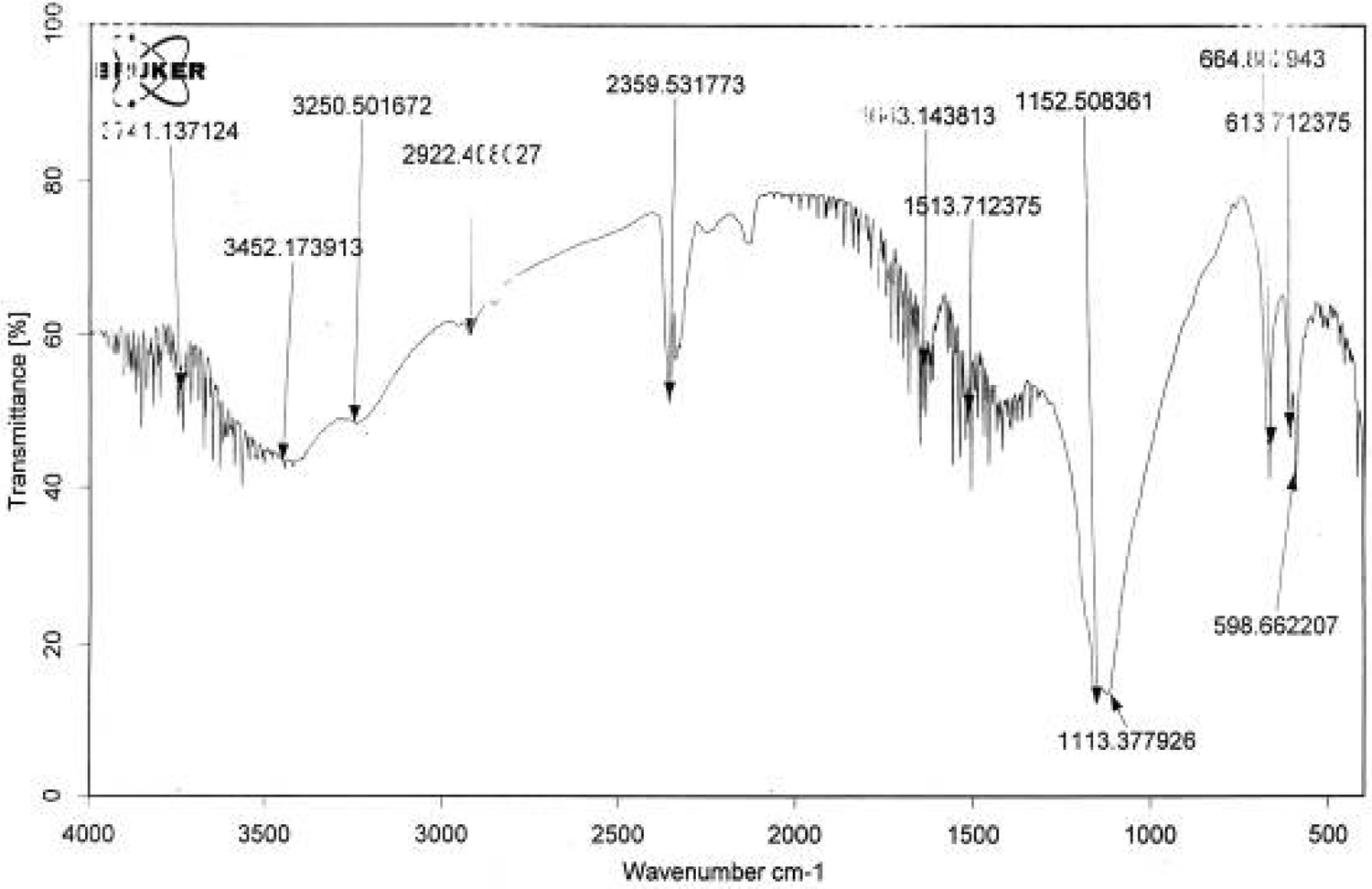
Figure
1
shows the FT-IR spectra related to BF
3
supported on coconut shell (nano-BF
2
O-coc). As it is seen, absorption band around the broad peak at 3452 cm
−1
implies the presence of hydroxyl group. The peak appeared at 2922 cm
−1
is attributed to the C–H stretching vibrations of CH, CH
2
, and CH
3
groups. In addition, the absorption bands at nearly 1513 and 1643 cm
−1
indicate the C=C bonds in aromatic rings. After supporting the coconut shell with BF
3
, the absorbtion of C–O and B–O is observed in 1152 and 664,598 cm
−1
respectively.
FT-IR spectra of BF
3
supported on coconut shellFig. 1
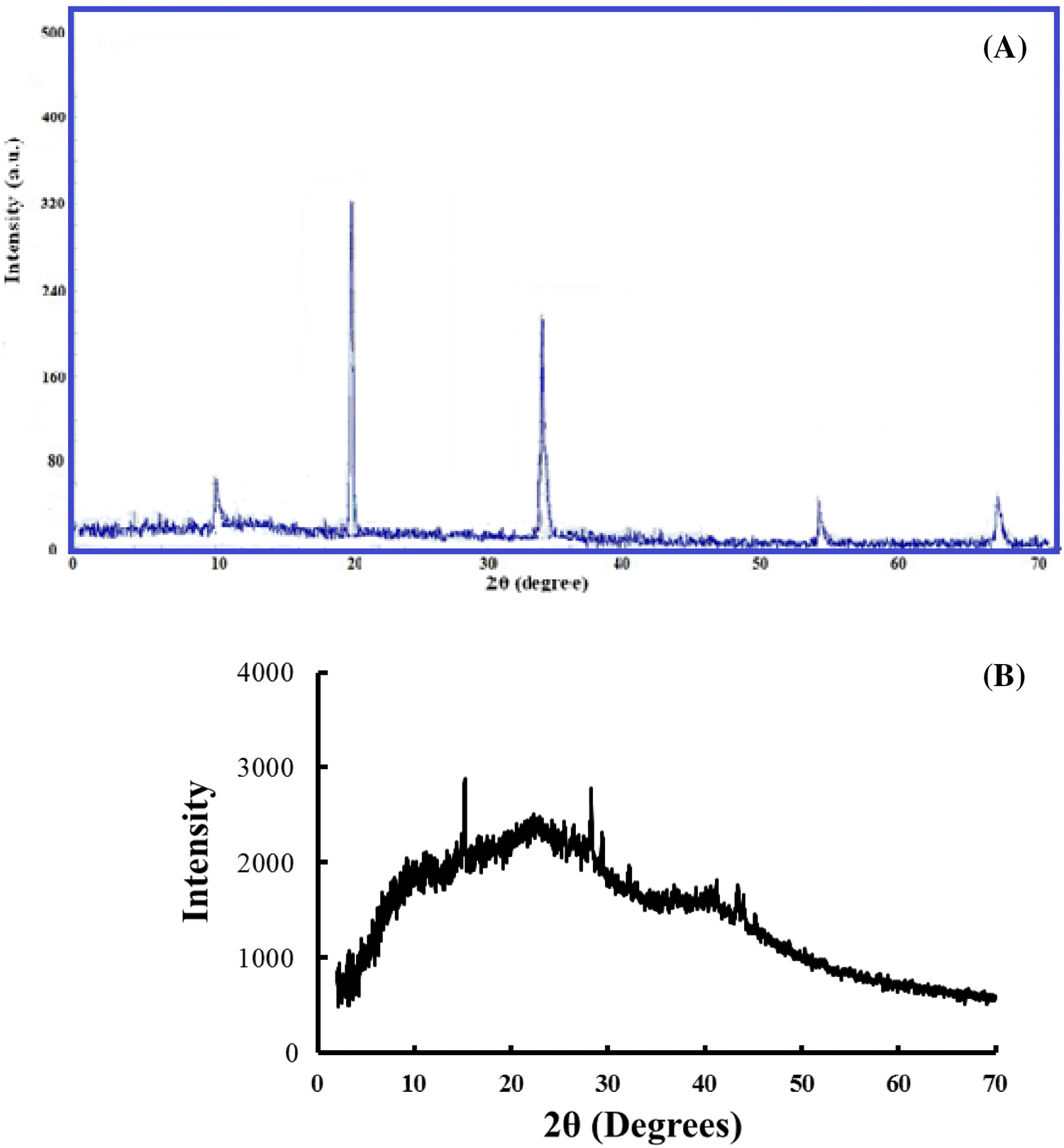
Figure
2
a, b shows the XRD patterns related to coconut shell and BF
3
supported on coconut shell (nano-BF
2
O-coc) respectively. The major index diffraction peaks for coconut shell (Fig.
2
a) are 10°, 20°, and 35° with their inter-planar distance and their relative intensity of X-ray scattering are 63, 320, and 220, respectively. After supporting BF
3
on coconut shell (nano-BF
2
O-coc) (Fig.
2
b), the representative peaks are broadened and also shifted to some extent, owing to the alternation in the crystalline structure of the supported coconut shell with BF
3
.
XRD powder patterns of
a
coconut shell and
b
BF
3
supported on coconut shellFig. 2
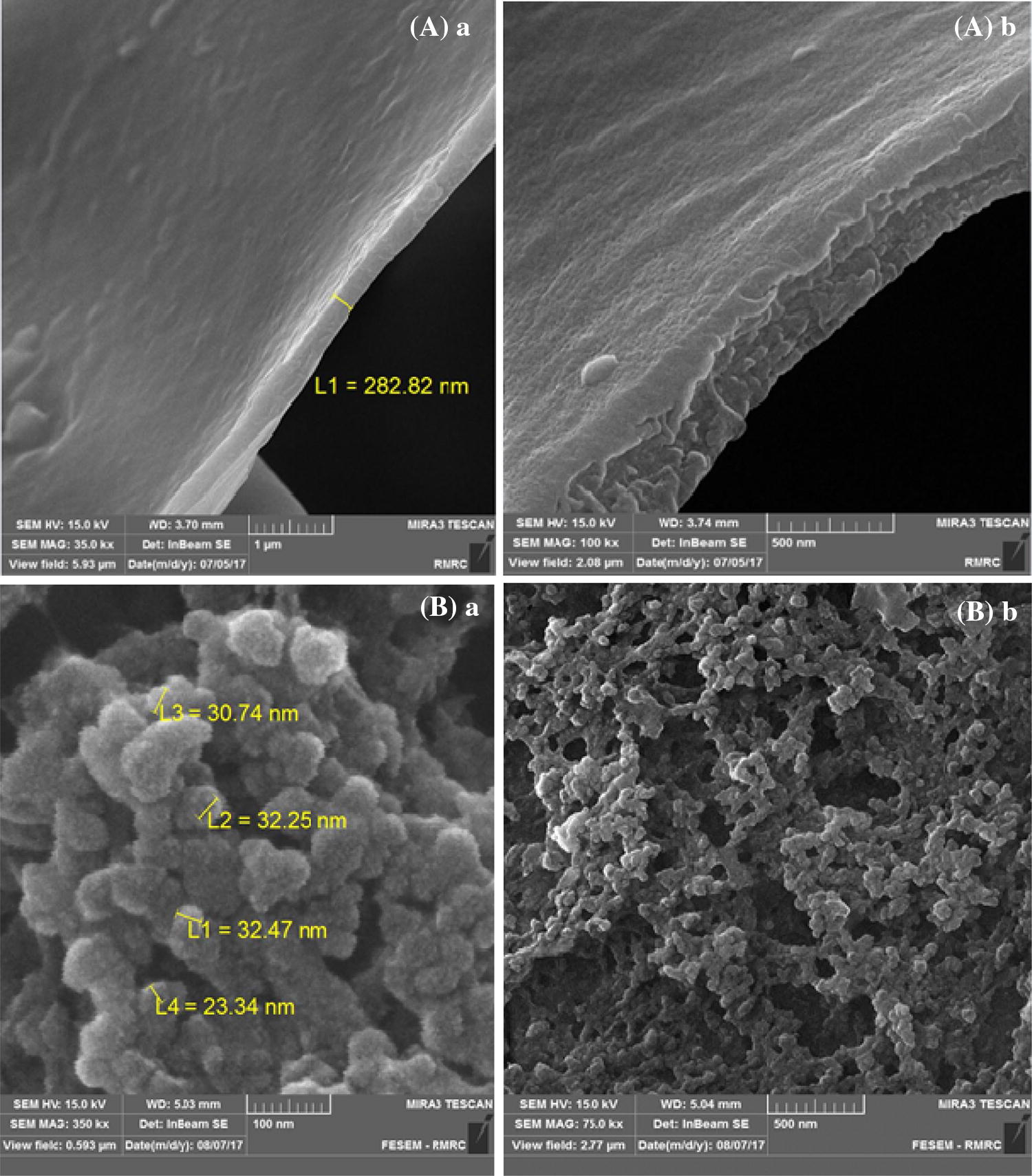
Figure
3
A, B indicates FESEM images of coconut shell and BF
3
supported on coconut shell. According to Fig.
3
A, the surface topography of coconut shell is shown. In fact, the pore structures and complete opening of network pores on its surface are observed and the average of diameter coconut shells is 282 nm. In addition, after supporting BF
3
on coconut shell (nano-BF
2
O-coc) (Fig.
3
B), average of its diameter is reduced to about 32 nm.
A
FESEM images of coconut shell:
a
1 μm and
b
500 nm;
B
BF
3
supported on coconut shell:
a
100 nm and
b
500 nmFig. 3
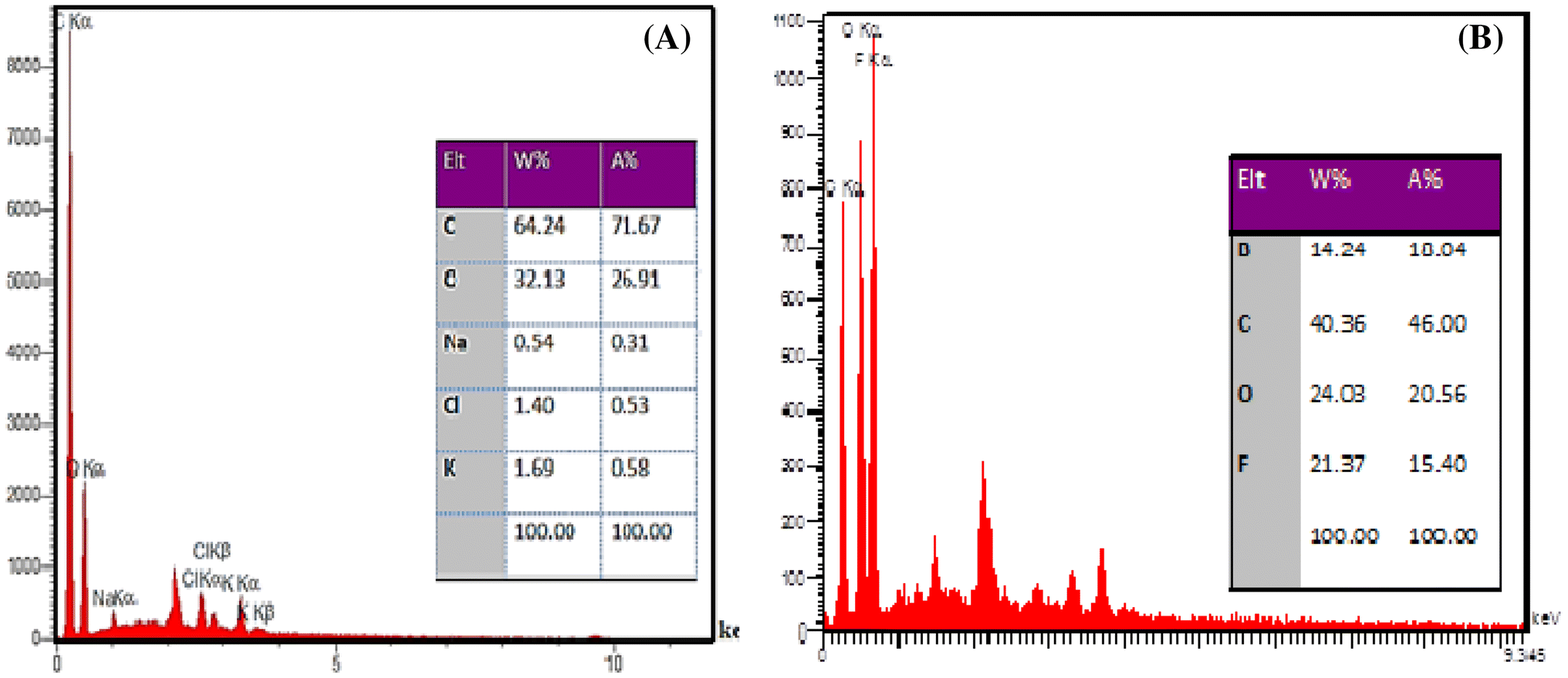
The EDX analysis of coconut shell and BF
3
supported on coconut shell is presented in Fig.
4
a, b. Coconut shell is composed of C, O, Na, Cl, and K (Fig.
4
a), while BF
3
supported on coconut shell (Fig.
4
b) is composed of C, O, B, and F, mentioning that BF
3
has been supported on coconut shell due to the presence of B and F.
a
EDX spectra of coconut shell.
b
BF
3
supported on coconut shellFig. 4
Figure
5
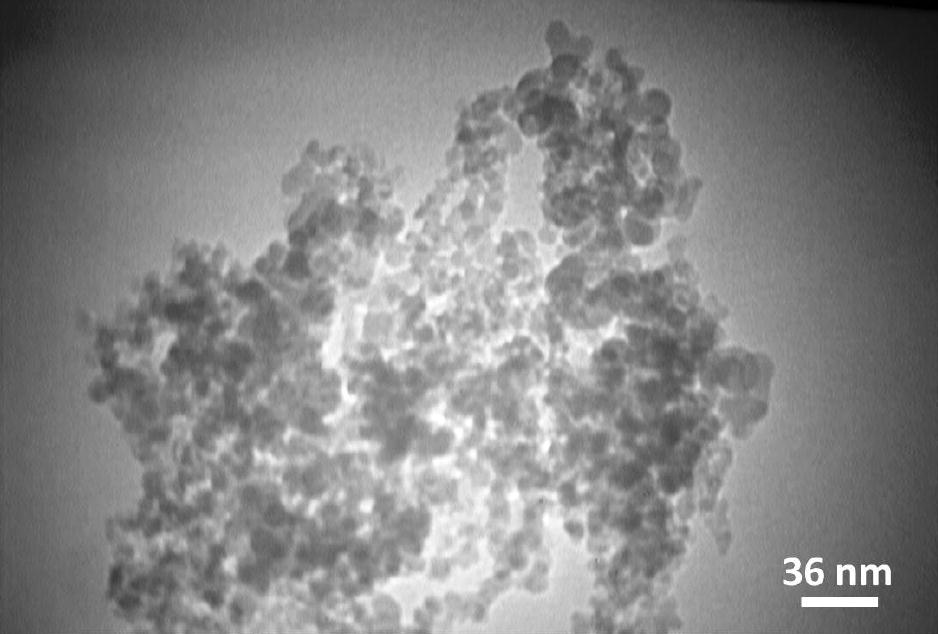
shows the TEM of images related to BF
3
supported on coconut shell (nano-BF
2
O-coc). As it can be seen from TEM images, the average particle size distribution is 30 nm which is consistent with the obtained results by FESEM images.
TEM image of BF
3
supported on coconut shell (nano-BF
2
O-coc)Fig. 5
At first, to figure out the optimized conditions, the three-component reaction of barbituric acid, benzaldehyde, and ethyl cyanoacetate in the presence of the BF
2
O-coc as nano-catalyst in ethanol as the solvent was chosen as model. The reaction was performed with different amount of BF
2
O-coc as nano-catalyst (10, 15, and 20 mg) in various temperatures (25 and 78 °C). It is concluded that optimal condition was 15 mg of BF
2
O-coc at 78 °C in 5 ml ethanol (Table
1
, entry 4).
Optimization of the reaction conditions for synthesis of
4a Entry Catalyst (amount) Temperature (°C) Time (min) Yield (%)a 1 Nano-BF2O-coc (15 mg) 25 100 Trace 2 Nano-BF2O-coc (20 mg) 25 100 39 3 Nano-BF2O-coc (10 mg) 78 10 72 4 Nano-BF2O-coc (15 mg) 78 15 91 5 Nano-BF2O-coc (20 mg) 78 15 93 6 BF3 (15 mg) 78 15 57Table 1
It should be pointed out that the reaction was conducted with BF 3 as the liquid catalyst. Regardless of difficulties in its handling, the chemical yield is very low (Table 1 , entry 6). The catalyst activity is extremely improved with supporting the BF 3 on the nano-crystalline structure due to the remarkable increase in the catalyst surface area.
Then, different aryl aldehydes were applied in the reactions that led to obtaining the corresponding products in high-to-outstanding yields (Table
2
). As it can be displayed in Table
2
, all the aryl aldehydes including electron-donating or electron-withdrawing substituents result, the desired products, in high yields (Table
2
).
Three-component reaction for synthesis of pyrano [2,3-
d
] pyrimidines in the presence of BF
2
O-coc as nano-catalyst Entry Ar X Product Yielda M.P. (°C) [references]b 1 C6H5 CO2Et 91 206–208 (206–210) [ 2 3-Cl-C6H4 CO2Et 88 282–284 (283–284) [ 3 4-Cl-C6H4 CO2Et 90 297–299 (> 300) [ 4 3-NO2-C6H4 CO2Et 91 262–264 (237–240) [ 5 4-NO2-C6H4 CO2Et 92 290–292 (289–293) [ 6 4-CH3-C6H4 CO2Et 87 295–298 (296–298) [ 7 4-CH3O-C6H4 CO2Et 88 293–295 (297–298) [ 8 3,4-CH3O-C6H3 CO2Et 90 > 300 (303–306) [ 9 3-OH-C6H4 CO2Et 91 172–174 (170–174) [ 10 4-OH-C6H4 CO2Et 92 169–170 (163–167) [ 11 4-Br-C6H4 CN 89 230–231 (228–230) [ 12 3-Cl-C6H4 CN 90 267–268 (266–268) [ 13 3-NO2-C6H4 CN 94 258–260 (259–261) [ 14 3-OH-C6H4 CN 92 157–159 (158–160) [Table 2
A proposed mechanism for synthesis of pyrano[2,3-
d
]pyrimidine derivatives using barbituric acid, arylaldehydes, and ethyl cyanoacetate or malononitrile in the presence of BF
2
O-coc as nano-catalyst was shown in Scheme
3
.
Suggested mechanism for the synthesis of pyrano [2,3-
d
] pyrimidines in the presence of BF
2
O-coc as nano-catalystScheme 3
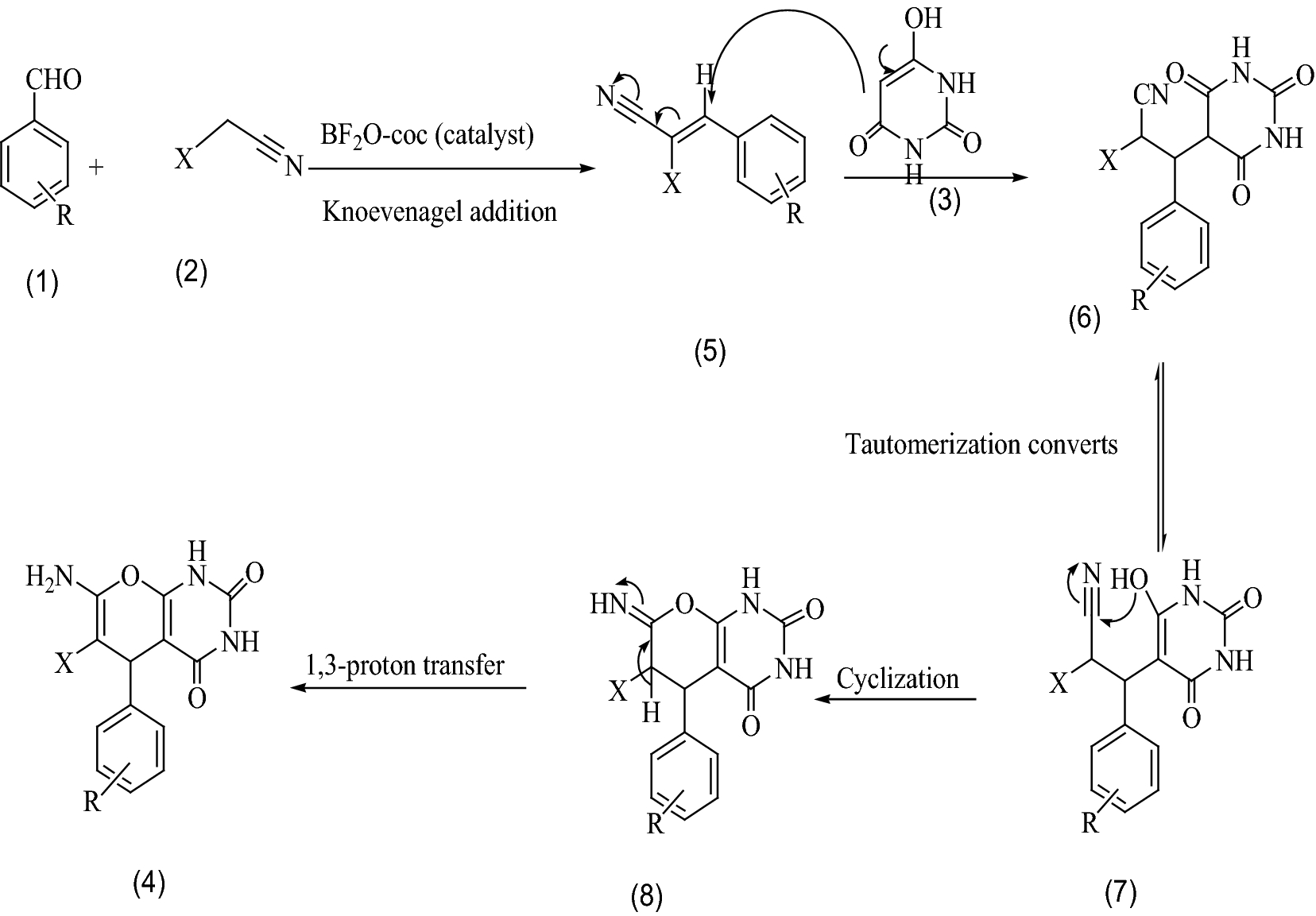
First, the ethyl 2-cyano-3-arylacrylate or 2-benzylidenemalononitrile ( 5 ), containing the electron-poor C=C double bond, is formed quantitatively by Knoevenagel addition of ethyl cyanoacetate or malononitrile ( 2 ) to the aromatic aldehyde ( 1 ) in the presence of BF 2 O-coc as nano-catalyst. Then, the barbituric acid C-alkylation reacts with the electrophilic C=C double bond and gives the intermediate ( 6 ). Tautomerization convert intermediate ( 6 ) to intermediate ( 7 ). After, the intermediate ( 7 ) was cyclized by the nucleophilic attack of OH group on the cyano (CN) moiety and gave the intermediate ( 8 ). The intermediate ( 8 ) by the 1,3-proton transfer produced the desired product ( 4 ).
To establish a better catalytic activity of nano-BF
2
O-coc, the synthesis of pyrano[2,3-
d
]pyrimidine derivatives was compared with other catalysts reported in the literature [
8
,
9
,
10
,
11
,
12
,
13
,
14
,
15
–
16
]. As shown in Table
3
, synthesis of these compounds catalyzed by many of various methods, but some of them suffer from disadvantages such as harsh reaction conditions, long reaction times, complex working and purification procedures, long volume of catalyst loading, and moderate yields. Therefore, the development of a simple, mild, and efficient method is still needed.
Comparison of nano-BF
2
O-coc and various catalysts in the synthesis of pyrano [2,3-
d
] pyrimidine derivatives Entry Catalyst, amount Solvent Condition Time (min) Yielda References 1 DABCO, 10 mol% H2O:EtOH r.t 30–40 82–94 [ 2 CaCl2, 20 mol% EtOH US 9–18 90–95 [ 3 CaCl2, 20 mol% EtOH r.t 90–190 89–93 [ 4 Glycerol, 1 mL – 80 °C 90–190 83–90 [ 5 [BMIm]BF4b, 1.5 g [BMIm]BF4 90 °C 180–300 82–95 [ 6 DAHPc, 13.2 mg EtOH r.t 120 71–81 [ 7 EtOH r.t 30–150 68–88 [ 8 H14[NaP5W30O110], 1 mol% EtOH Reflux 30–60 85–90 [ 9 SBA-Pr-SO3H, 0.02 g – 140 °C 5–45 30–90 [ 10 – H2O MW 3–5 86–94 [ 11 Nano-BF2O-coc, 15 mg EtOH Reflux 15 87–94 This workTable 3
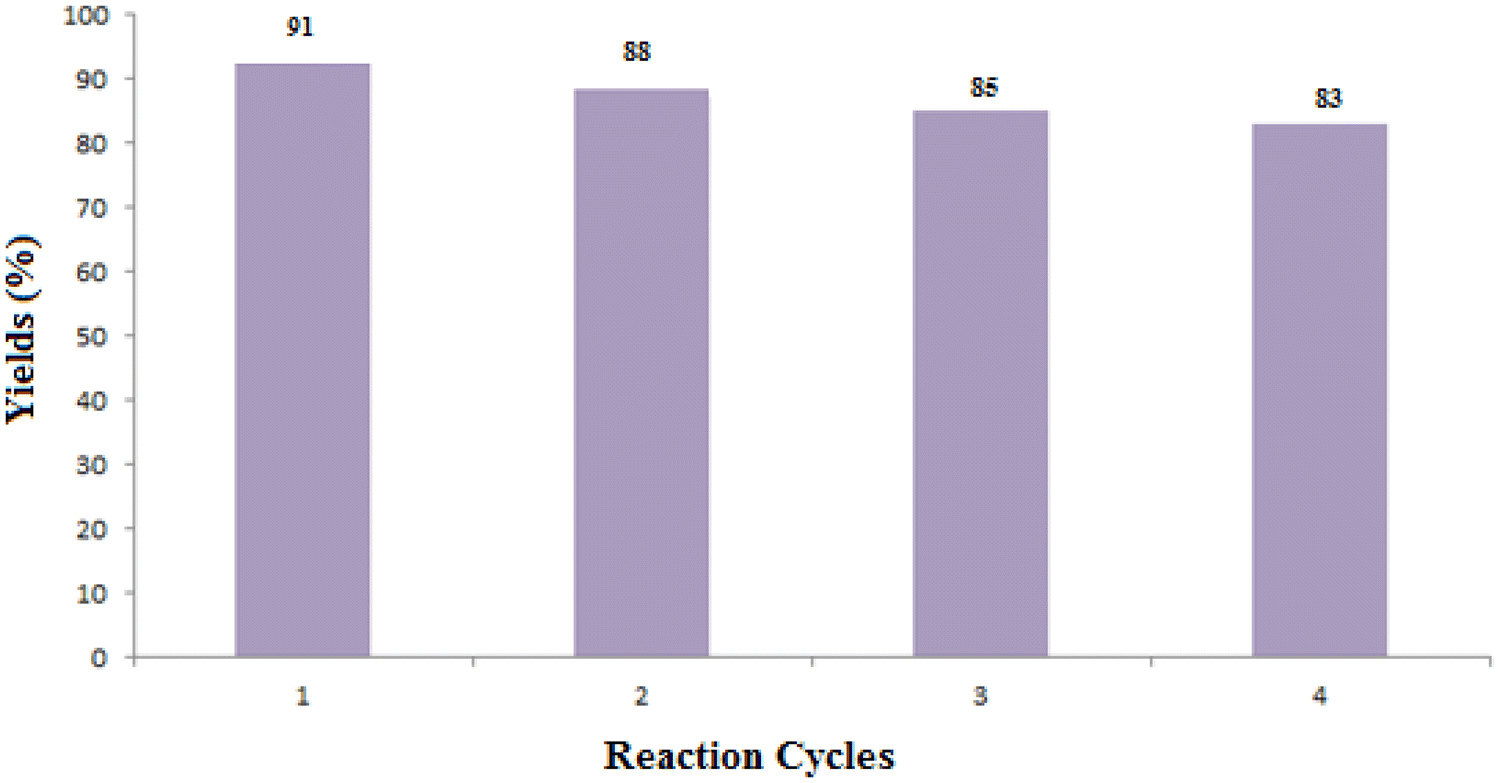
We also studied the recyclability of the BF
2
O-coc as the nano-catalyst utilizing the model reaction of barbituric acid, benzaldehyde, and ethyl cyanoacetate in ethanol (Table
2
, entry 1). When the reaction is completed, the mixture was filtered to separate the catalyst. Then, catalyst washed several times with the hot ethanol and reused four times in the model reaction to evaluate the catalyst reusability. The results indicated that BF
2
O-coc is stable with no decrease in its catalytic activity (Fig.
6
).
Recycling of the BF
2
O-coc as the nano-catalystFig. 6
In summary, we have elaborated a new attractive and effective methodology for preparation of pyrano[2,3- d ]pyrimidine derivatives via one-pot three-component condensation reaction strategy of barbituric acid with aromatic aldehydes and ethyl cyanoacetate or malononitrile at refluxing ethanol utilizing of BF 3 supported on coconut shell (BF 2 O-coc) as a nano-catalyst. BF 2 O-coc was successfully prepared and characterized by FT-IR, XRD, EDX, FESEM, and TEM techniques. In comparison with the previous investigations (Table 3 ), this method is among the advantages such as lower reaction times, high yield, clean and fume free reaction, and reusability for a several times without any impressive loss of activity, and the formed compound is filtered and purified just by simple crystallization. The present study is a good addition to the application hypothesis of plants or fruits consisting of cellulose, which enables the binding the Boron Lewis acidic compounds with them, to prepare new solidified and easy-to-handle catalysts for chemical reactions facilitations.
The research Council of the Islamic Azad University of Yazd is gratefully acknowledged for the financial support for this work.
Springer Nature remains neutral with regard to jurisdictional claims in published maps and institutional affiliations.