Graphical abstract

Novel S-doped Fe 2 O 3 /C nanocomposite was synthesized via a one-pot hydrothermal method and was used for the first time as an efficient adsorbent for Congo red dye (CR) removal from water solution. The obtained catalyst was characterized by various methods including Fourier transform infrared spectroscopy, energy dispersive X-ray spectrometry, vibration sample magnetometry, X-ray diffraction and field emission scanning electron microscopy. To improve the adsorption performance, some important parameters affecting dye removal were optimized such as adsorbent dosage, contact time, solution pH, initial dye concentration and ionic strength. At the optimum conditions, the maximum capacity of adsorption for this nanocomposite was 270.2 mg g −1 , which is better than other magnetic adsorbents for CR removal. The results of adsorption isotherm were matched with Langmuir model. Kinetic tests show that adsorption experimental data were best fitted by pseudo-first-order model.
Organic dyes are natural or synthetic compounds which have been widely applied in a number of processing industries such as leather, textile, cosmetics, packaging, food, and paper industries [ 1 , 2 ]. There are more than 100,000 commercial dyes with an annual production of over 7 × 10 5 tons year −1 [ 3 ]. The extensive application of dyes in industries brings about big amount of toxic dyes and pigments waste discharging to the environment, which subsequently causes serious environmental problems and threat to human’s health [ 4 , 5 ]. The presence of organic dyes even in low concentrations has irreversible effects on human health from skin irritation, Heinz body formation, gastritis and tissue necrosis to the worst result of cancer [ 6 ]. Therefore, removing dye pollutants from the environment is an important and necessary task.
Congo red (CR), one of the important pollution dyes, is a sodium salt of benzidinediazobis-1-naphthylamine-4-sulfonic acid with chemical formula C
32
H
22
N
6
Na
2
O
6
S
2
(Scheme
1
). The presence of aromatic amine groups as toxic agent in water may endanger human and other living organisms [
7
,
8
]. According to Merck
®
safety information, CR may cause cancer and possible risk of damage to the human fetus (Merck Material Safety Data Sheet) [
9
]. CR is highly soluble in water, has high resistance to the temperature and sunlight, and is stable against the biological and chemical degradation [
10
].
The molecular structure of Congo redScheme 1

A number of methods have been reported to remove the dye pollutions from water, for example, filtration by membrane and nanomaterials, coagulation, photocatalytic decomposition, aerobic and anaerobic microbial degradation, flocculation, advanced oxidation processes and treatment with ozone [ 11 , 12 ]. Among these methods, adsorption is the most convenient and promising strategy due to the easy operation, high efficiency, low energy requirement, and easy recovery or reuse of the adsorbent [ 10 , 13 ]. Compared to other adsorbents for dye removal, magnetic materials possessed many advantages such as chemical stability, nontoxic synthesis, environmentally friendly, low cost and facile separation from the water solution [ 14 , 15 ].
Fe 2 O 3 magnetic particles are frequently used as one of the suitable materials to remove the pollutants from environment For example, γ-Fe 2 O 3 synthesized by metal etching approach was applied for the adsorption removal of methylene blue dye [ 16 ]. Activated carbon/α-Fe 2 O 3 nanocomposite was prepared by simple pyrolysis route and utilized to degrade the acid yellow 17 dye from water [ 17 ]. In another work, S-doped α-Fe 2 O 3 (α-Fe 2 O 3 /s) was synthesized with ferrous sulfate and Na 2 S 2 O 3 via a hybrid hydrothermal–calcination treatment for the photogeneration of acid orange 7 and phenol [ 18 ]. Similarly, γ-Fe 2 O 3 and Fe 3 O 4 nanoparticles loading on activated carbon were fabricated for the removal of cationic dye [ 19 , 20 ] and Alizarin Red S [ 21 ]. Mesoporous carbon nanocomposite was synthesized via a facile impregnation–carbonization method for dye and heavy metal adsorption [ 22 ], and other carbon derivatives (carbon nanotubes and graphene) for heavy metal removal [ 23 , 24 ]. In previous studies, Dutta and coworkers used γ-Fe 2 O 3 nanoparticles for photodegradation of methylene blue and rose Bengal dye [ 25 ]. Wang et al. [ 26 ] used hydroxylated α-Fe 2 O 3 for synergistic photocatalysis of Cr(VI) reduction and 4-chlorophenol degradation under visible light irradiation. Other reports about Fe 2 O 3 magnetic composites for organic pollutant removal can be found in [ 27 , 28 , 29 , 30 – 31 ].
In this study, new magnetic nanocomposite S-doped Fe 2 O 3 /C was synthesized through a one-pot hydrothermal method. The preparation method was optimized by modifying several synthesis conditions and the physicochemical properties of prepared S-doped Fe 2 O 3 /C were studied by means of characterization methods. The synthesized S-doped Fe 2 O 3 /C was applied as an adsorbent for the first time for the removal of CR dye from water.
Cellulose powder, thiourea, FeCl 3 ·6H 2 O, FeCl 2 ·4H 2 O, NaOH, HCl, and CR were purchased from Merck. All chemicals were of analytical grade applied without further purification. Deionized (DI) water was used to prepare all solutions.
The typical preparation procedure of S-doped Fe 2 O 3 /C was depicted as follows: 8 g NaOH and 1.2 g cellulose powder were dissolved in 80 mL DI water. The mixture was stirred for 3 h at room temperature and aged at − 15 °C for 12 h. After that, the mixture was stirred vigorously by a magnet stirrer at room temperature for 2 h to dissolve cellulose. 0.28 g FeCl 3 ·6H 2 O and 0.15 g FeCl 2 ·4H 2 O were then added to the solution simultaneously and stirred for 2 h. Afterward, 1 g thiourea was added to the mixture and stirred for a few minutes before transferring the mixture to a Teflon sealed autoclave at 160 °C for 10 h. After cooling to room temperature, S-doped Fe 2 O 3 /C nanocomposite was collected by a magnet and washed for several times with DI water and diluted HCl. The product was finally obtained after drying in a vacuum oven at 60 °C for 12 h.
The properties of the S-doped Fe 2 O 3 /C nanocomposite were determined by different techniques. Morphology of adsorbent was studied by FE-SEM model of TESCAN, Mira III LMU, the Czech Republic at 15 kV. FT-IR analysis was conducted by Shimadzu FTIR 8400S spectrophotometer (Japan). Field emission scanning electron microscopy with energy dispersive X-ray spectroscopy (FE-SEM/EDS, TESCAN, Mira II LMU, Czech Republic) was used for the elemental analysis. XRD pattern was obtained in 2 θ between 10 and 80° with a Philips-pw 1800 diffractometer, which was equipped with Cu-Kα irradiation ( λ = 0.1524 nm) source. Magnetic property was measured by VSM analysis (Lake Shore 7410, USA). UV–Vis spectra were obtained with a Shimadzu UV–Visible Spectrophotometer model UV-mini 1240 (Japan).
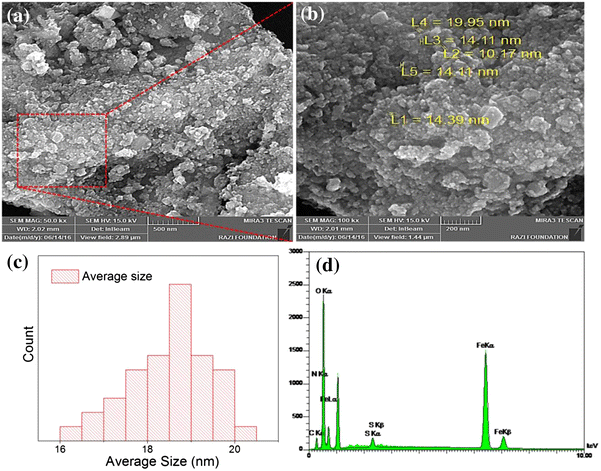
Figure
1
shows SEM images of S-doped Fe
2
O
3
/C nanocomposite. It can be seen that Fe
2
O
3
nanoparticles are decorated on the carbon surface and the estimated mean particle size of Fe
2
O
3
is about 20 nm (Fig.
1
c). EDS spectrum of S-doped Fe
2
O
3
/C is presented in Fig.
1
d. The peaks related to Fe, C, O and S elements are obviously observed, suggesting the successful synthesis of the S-doped Fe
2
O
3
/C nanocomposite.
FE-SEM images of S-doped Fe
2
O
3
/C nanocomposite with two magnifications
a
×50 K,
b
×100 K,
c
average size distribution and
d
EDS elemental maps of the sampleFig. 1
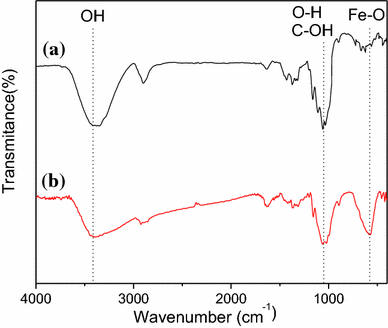
The formation of S-doped Fe
2
O
3
/C was further confirmed by FT-IR spectroscopy as shown in Fig.
2
, which indicates the spectra of cellulose powder and S-doped Fe
2
O
3
/C. The stretching vibration band at 3434 cm
−1
can be correlated with hydroxyl groups (OH) adsorbed on the surface. The bands between 1000 and 1400 cm
−1
can be assigned to the C–OH stretching and O–H bending vibrations. The bands attributed to Fe–O and C–S stretching at around 577 cm
−1
is only observed in S-doped Fe
2
O
3
/C spectrum. The FT-IR results are well matched with the spectra of previous research.
FT-IR spectra of
a
cellulose powder
b
S-doped Fe
2
O
3
/C nanocompositeFig. 2
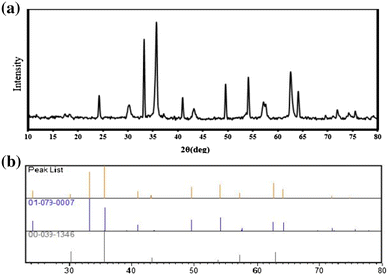
X-ray diffraction patterns of the S-doped Fe
2
O
3
/C nanocomposite are shown in Fig.
3
. Compared to the standard JCPDS Card No. 01-79-0007 of hematite α-Fe
2
O
3
, the main diffraction peaks at 2
θ
= 24.18, 33.19, 35.68, 40.91, 49.52, 54.13, 64.10 and 72.03° are assigned to (012), (104), (110), (113), (024), (116), (300) and (101) planes, respectively. It is found that the diffraction peaks at 2
θ
= 30.24, 35.63, 43.28, 57.27 and 62.92° are related to (220), (311), (400), (511) and (440), respectively, in standard maghemite γ-Fe
2
O
3
according to 00-39-1346 reference pattern. The result shows that no diffraction peaks for crystalline carbon are detected, which may be due to the formation of amorphous carbon structure [
32
].
a
X-ray diffraction pattern of S-doped Fe
2
O
3
/C nanocomposite,
b
comparison between S-doped Fe
2
O
3
/C and Fe
2
O
3
(
α
and
γ
) reference patternsFig. 3
Average particle diameter (
D
) of different nanoparticles was calculated from the main peaks using Scherrer equation (Eq.
1
):
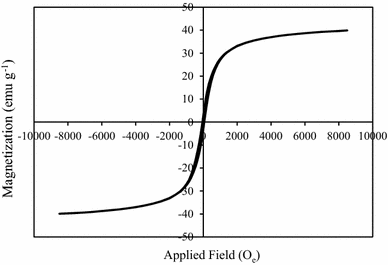
Figure
4
gives the magnetic hysteresis loops of S-doped Fe
2
O
3
/C nanocomposite at room temperature. The saturation magnetization is found to be 39.33 emu g
−1
for the proposed nanocomposite. The decrease in saturation magnetization value for this nanocomposite is due to the presence of non-magnetic carbon and α-Fe
2
O
3
(Hematite). However, the VSM curve indicates that S-doped Fe
2
O
3
/C nanocomposite exhibited enough magnetic properties to be separated from the water solution by a magnet.
Magnetic hysteresis loops of the S-doped Fe
2
O
3
/C nanocompositeFig. 4
In this work, to obtain the best conditions, some important parameters affecting dye removal were studied. The concentration of CR dye was measured by a UV–Vis spectrophotometer at
λ
max
= 498 nm. The following formula specifies the percentage of dye removal:
The adsorption dosage is an important parameter for dye removal. In the economic view, the researchers are perusing optimal adsorption capacity with the minimum usage of adsorbent dosage [
33
]. For this study, various amounts of S-doped Fe
2
O
3
/C nanocomposite (3, 4, 5, 10 and 15 mg) were added to 40 mL of 10 mg L
−1
CR dye solution at pH 5 with 200 rpm shaking speed for 300 min. Figure
5
shows the changes of
q
e
and dye removal (%) vs. adsorbent dosage. Along with the increase of adsorbent dosage from 3 to 5 mg, both
q
e
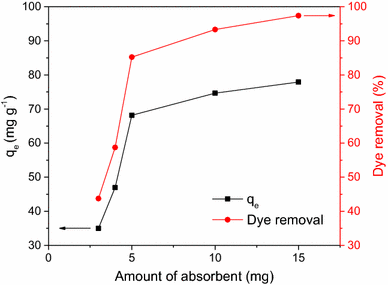
and dye removal percentage show drastically improvement. However, as the amount of adsorbent increase to 10 and 15 mg, the variation trend exhibits a slow growth, suggesting the saturation of dye with 5 mg absorbent. Thus, 5 mg of adsorbent was determined as the most effective amount and higher dosages led to significant decrease in adsorption capacity.
Effect of S-doped Fe
2
O
3
/C dosage on adsorption of CR dye (
C
0
= 10 mg L
−1
, initial solution pH = 5, shaker speed = 200 rpm, CR solution volume = 40 mL)Fig. 5
pH value in the solution is another important parameter affecting the dye removal efficiency. The influence of initial pH for CR adsorption on the S-doped Fe
2
O
3
/C nanocomposite is illustrated in Fig.
6
. In this study, 5 mg adsorbent (optimum amount obtained from above experiment) was added to 40 mL of 10 mg L
−1
CR solution at the pH range of 5–10 (pH was adjusted with 0.1 M HCl or 0.1 M NaOH solutions). According to Fig.
6
, the best result in this pH range is at pH 5. The possible reason for this result is the anionic structure of CR dye which causes repulse of adsorbent at higher pH values. In the acidic environment, the adsorbent has neutral or positive charge, which attracts more CR molecules with a negative charge, resulting in the improvement of adsorption process.
The effect of pH value on CR removal efficiency by the magnetic adsorbent (
C
0
= 10 mg L
−1
, adsorbent dosage = 5 mg, solution volume = 40 mL, shaker speed = 200 rpm)Fig. 6

The effect of contact time on adsorption of CR by S-doped Fe
2
O
3
/C nanocomposite at optimum pH and adsorbent dosage was examined and the results of this study are presented in Fig.
7
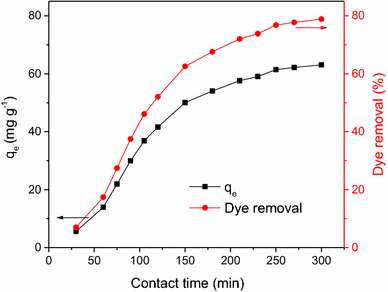
. The results show that the adsorption capacity and percent of dye adsorption increase rapidly at the initial increasing period of contact time duration, but slow down after 150 min and reach almost equilibrium at about 250 min. Hence, the equilibrium time for dye and adsorbent contact is optimized as 250 min.
Effect of shaking time on adsorption of CR dye (
C
0
= 10 mg L
−1
, CR solution volume = 40 mL, adsorbent dosage = 5 mg, shaker speed = 200 rpm, pH = 5)Fig. 7
The adsorption capacity for dye removal is highly related to the initial dye concentration. In present study, the effect of concentrations of dye (10−100 mg L
−1
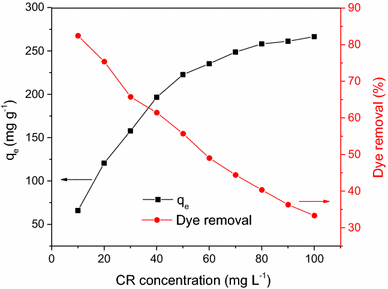
) on the removal performance was investigated at the optimum dosage, pH and shaking time. As shown in Fig.
8
the dye removal percentage decreases along with the increase of the initial dye concentration which is because of the saturation of adsorption sites on the magnetic adsorbent surface. Also, by increasing the initial dye concentration, the capacity of adsorbent increases, which may be due to the high driving force for mass transfer at a high initial dye concentration.
Effect of initial dye concentration on removal of CR (CR solution volume = 40 mL, adsorbent dosage = 5 mg, shaker speed = 200 rpm, pH = 5)Fig. 8
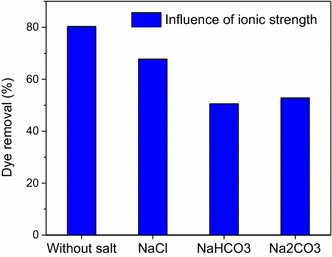
To investigate the ionic strength on adsorption efficiency, 0.01 mol L
−1
of NaCl, Na
2
CO
3
and NaHCO
3
were added to 40 mL of 10 mg L
−1
CR solution (pH = 5) containing 5 mg adsorbent (Fig.
9
). In the presence of Cl
−
, CO
3
2−
and HCO
3
−
, the adsorption efficiency of CR dye decreases to about 12.5, 29.8 and 27.5%, respectively. It indicates that a competitive adsorption occurs between the anionic CR dye molecules and the anions present in the salt solution.
Influence of ionic strength for various salts on CR adsorption (
C
0
= 10 mg L
−1
, solution volume = 40 mL, adsorbent dosage = 5 mg, shaker speed = 200 rpm, pH = 5)Fig. 9
To determine the adsorption behavior of CR on S-doped Fe
2
O
3
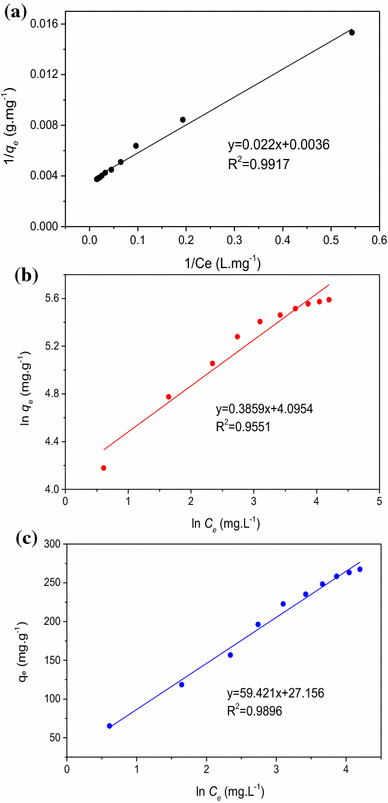
/C nanocomposite, three important isotherm models (Langmuir, Freundlich and Temkin) were used. The Langmuir model assumes that the process of adsorption on adsorbent is monolayer and homogeneous, and there is no interaction between the adsorbent and dye molecules. The equation of Langmuir isotherm is shown as follows:
In Eq. (
5
),
R
L
gives important information about the nature of dye adsorption, where
K
L
is the Langmuir constant (L mg
−1
) and
C
0
(mg L
−1
) is the initial dye concentration. The value of
R
L
indicates the adsorption nature, if
R
L
> 1,
R
L
= 1, 0 <
R
L
< 1 or
R
L
= 0, it will be unfavorable (desorption occurs in during the adsorption process), linear (isotherm is totally a straight line), favorable (process adsorption occurs normally under conditions tested), and irreversible (adsorption is still too strong), respectively
. R
L
values of CR adsorption on to S-doped Fe
2
O
3
/C nanocomposite were calculated and these values were between 0 and 1 at different concentrations (minimum
R
L
= 0.059 and maximum
R
L
= 0.358), indicating favorable adsorption onto adsorbent (Table
1
) [
36
].
Adsorption isotherm constants for adsorption of CR on S-doped Fe
2
O
3
/C Langmuir 270.2 0.178 0.059–0.358 0.992 Freundlich 62.445 2.668 0.954 Temkin 1.748 42.150 0.989Table 1
In the Freundlich isotherm, a heterogeneous surface and a multilayer adsorption on the adsorbent surface are assumed. The mathematical model can be written by the following equation:
In this equation,
A
is a constant for equilibrium binding (L mg
−1
) in accordance with maximum binding energy and constant
B
(
B
= RT
/b
) is the Temkin isotherm energy that is related to the heat of adsorption.
R
is the universal gas constant (8.314 J mol
−1
K
−1
),
T
is the absolute temperature (K), and
b
is a constant [
39
]. The results were fitted with these isotherms (Fig.
10
), which the best fit was obtained for Langmuir model (
R
2
= 0.992). Therefore, according to this isotherm the adsorption phenomenon is monolayer and homogeneous on the magnetic adsorbent. The results of adsorption isotherm constants for adsorption of CR on to the S-doped Fe
2
O
3
/C are presented in Table
1
.
a
Langmuir,
b
Freundlich and
c
Temkin adsorption isotherms for the adsorption of the CR on to S-doped Fe
2
O
3
/C at 298 KFig. 10
The kinetics of dye adsorption onto adsorbent can be used to locate the best operating conditions for the adsorption process [
33
]. For kinetic studies, pseudo-first-order and pseudo-second-order are two commonly used models to determine the factors that affect the rate of absorption. The first adopted method is a Lagergren pseudo-first-order [
40
], which is used widely and expressed by the Eq.
8
:
In this equation k 1 (min −1 ) is the rate constant for pseudo-first (Lagergren) order, q t (mg g −1 ) and q e (mg g −1 ) are adsorption capacities at time t (min) and the equilibrium condition, respectively. The values of the constants k 1 and q e were obtained from the linear plot of ln ( q e – q t ) vs. t .
The simplified Lagergren pseudo-second-order model of dye adsorption described as:
a
Pseudo-first-order and
b
pseudo-second-order plots for the adsorption of CR dye on to S-doped Fe
2
O
3
/CFig. 11

Table
2
compares
q
max
of the proposed S-doped Fe
2
O
3
/C nanocomposite with some magnetic adsorbents which have been reported recently for CR dye removal. This comparison results indicate that the proposed magnetic nanocomposite has comparable
q
max
with other reported adsorbents.
Comparison of
q
max
for different magnetic adsorbents for removal of CR Adsorbent References CTAB-coated Fe3O4 NPs 93.46 [ CABI nanogoethite 181.1 [ α-Fe2O3 313.6 [ γ-Fe2O3 208.3 [ NiFe2O4/ZnO 221.7 [ Fe3O4/MgAl-layered double hydroxide composite 253 [ pTSAPani@GO-CNT nanocomposite 66.66 [ Silica coated Fe3O4 magnetic nanospheres 54.65 [ MagneticSr5xBa3x(PO4)3(OH)/Fe3O4 nanopowder 417 [ S-doped Fe2O3/C 270.2 Present studyTable 2
In summary, a novel adsorbent magnetically separable S-doped Fe 2 O 3 /C nanocomposite was prepared by a simple one-pot hydrothermal method. Nanocomposite properties were determined by FE-SEM, XRD, FT-IR, EDS and VSM methods and the removal performance of the CR dye from water solution was determined on the obtained materials. The effect of important parameters on dye removal performance including initial solution pH, adsorbent dosage, shaking time, initial dye concentration with ionic strength was optimized. The adsorption data were fitted well with the Langmuir isotherm and the kinetic results were well matched with the pseudo-first-order model. Owing to the low cost, ease of preparation and high adsorption capacity, the investigated magnetic nanocomposite can be a suitable adsorbent for anionic dye removal.
The authors gratefully acknowledge the Iran University of Science and Technology for supporting this research.
Springer Nature remains neutral with regard to urisdictional claims in published maps and institutional affiliations.