Graphical abstract

Last decade has seen tremendous applications of nano-ZnO as a mild, cheap, efficient, commercially available, environmentally benign, non-toxic, reusable, heterogeneous catalyst for the various organic transformations. The present review summarizes the applications of nano-ZnO as an efficient heterogeneous catalyst for the synthesis of diverse biologically relevant heterocycles reported so far.
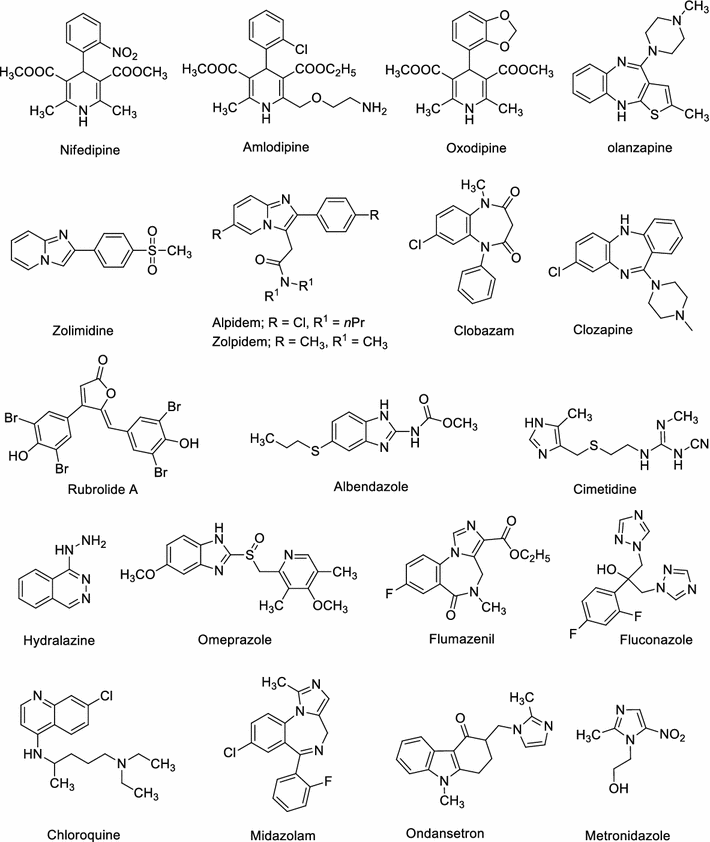
Heterocycles are the core structural motif in the majority of organic compounds, known so far [
1
,
2
]. Heterocyclic moieties are very common in naturally occurring compounds and are important because of their significant biological efficacies that include anticancer [
3
], cytotoxic [
4
], anti-malarial [
5
], anti-microbial [
6
], anti-inflammatory [
7
], anti-oxidant [
8
] and many more [
9
,
10
]. Figure
1
represents a glimpse of marketed drugs containing heterocycles as the core structural unit [
11
,
12
,
13
,
14
,
15
–
16
].
Some of the marketed drugs containing heterocyclesFig. 1
It is well-established that along with other favorable conditions catalyst plays a crucial role for synthesis of heterocycles [ 17 , 18 ]. Worldwide scientists are always trying to modify the catalyst to increase the efficiency of the reaction and to reduce their toxicity level as well. Screening of suitable catalyst is the key to success among the other significant parameters during chemical synthesis. Recently, various nano catalysts have gained much attention due to their greater surface area per unit mass [ 19 ]. In recent past, among the other nano catalysts, metal oxides such as ZnO, CuO, SiO 2 , CeO 2 , Fe 3 O 4 , CaO, In 2 O 3 ZrO 2 , etc. in nano form, have drawn considerable attention as efficient, environmentally sustainable, heterogeneous catalysts and have found immense applications in various organic transformations that include C-H funtionalizaion [ 20 ], synthesis of 2-aminobenzimidazoles, 2-aminobenzothiazoles, benzoxazoles [ 21 ], tetrahydrobenzofurans [ 22 ], α -aminophosphonate [ 23 ], bis -2,3-dihydroquinazolin-4(1 H )-ones [ 24 ], 1,4-substituted 1,2,3-triazoles [ 25 ], xanthenes [ 26 ], pyrano[2,3- d ]pyrimidines, 4 H -chromenes, and dihydropyrano[3,2- c ]chromenes [ 27 ], substituted pyridines [ 28 ], quinoxalin-2-amine [ 29 ] and many more [ 30 , 31 ].
Among these, ZnO-nanoparticles were used in various areas, such as optoelectronics [ 32 , 33 ], ferromagnetism [ 34 ], piezoelectric transducers [ 35 ], solar cell [ 36 ], gas sensors [ 37 ], etc. [ 38 ]. They also possess antibacterial [ 39 ] and antioxidant efficacies [ 40 ]. Various ZnO nanostructures, such as nanopar-ticles, nanorods, nanowires, nanobelts, nanotubes, nanobridges and nanonails, nanowalls, nanohelixes and polyhedral cages, have been synthesized and well characterized in recent years [ 41 , 42 – 43 ]. ZnO-nanoparticles can easily be synthesized from zinc acetate using either sol–gel [ 44 ] or precipitation method [ 45 ]. In many occasions, it was also synthesized in biogenic pathway using various plant extracts [ 46 ]. Thereby, past decade has seen tremendous applications of various morphologies of nano-ZnO as catalysts in different organic name reactions that include Mannich reaction [ 47 ], knoevenagel condensation [ 48 , 49 ] and in various organic transformations, such as the synthesis of antiplatelet drug (Clopidogrel) [ 50 ], phosphonomalonates [ 51 ], ferrocenylphosphonates [ 52 ], 3-indolyl-3-hydroxy oxindoles [ 53 ], β-acetamido ketones/esters [ 54 ], O -acylation of alcohol [ 55 ], enamination of 1,3-dicarbonyls [ 56 ] and β-amino carbonyl compounds [ 57 ], etc.
The favorable physical and chemical properties like mild, low toxicity, low corrosion, large surface area, high pores volume, reusability, low cost, environmental sustainability and commercial availability make this Lewis acidic heterogeneous nano catalyst superior than others.
The present review focuses on the nano-ZnO catalyzed synthesis of diverse biologically relevant heterocycles and when possible to compare its catalytic efficiency with the rest of the congeners reported so far. The research groups working with this fascinating nano catalyst will surely be attracted by this review.
The following sections describe the catalytic applicability of nano-ZnO for the synthesis of biologically relevant heterocycles.
Pyrroles are very common in naturally occurring porphyrins, alkaloids and co-enzymes possessing various pharmacological efficacies [
58
,
59
,
60
–
61
]. Some marketed drugs like tallimustine, atorvastatin (Lipitor) contains pyrrol skeleton [
62
,
63
]. Sabbaghan et al. (Table
1
) [
64
] employed ZnO-nanorod as an efficient, reusable catalyst for the synthesis of polysubstituted pyrroles (
4
) via a one-pot three-component reaction between primary amines (
1
), dialkyl acetylenedicarboxylates (
2,2a
) and phenacyl bromide (
3
) under solvent free conditions at 50 °C. The catalyst was reused for the successive runs without significant loss of its activity. ZnO nanorod was found to be much more efficient than the commercial ZnO and even better that the ZnO-nanoparticles or sheets.
ZnO nanoparticles catalyzed synthesis of polysubstituted pyrroles
Entry R R1 R2 Time (min) Yield (%) Entry R R1 R2 Time (min) Yield (%) 1 CH3 CH3 H 45 90 6 4-CH3C6H4 H C2H5 60 86 2 CH3 C2H5 H 45 88 7 4-ClC6H4 H C2H5 60 82 3 C6H5 CH3 H 50 90 8 C5H11 H C2H5 45 86 4 C6H5 C2H5 H 50 94 9 CH3 OCH3 C2H5 60 75 5 CH3 CH3 Cl 60 78 10 C5H11 H CH3 45 92Table 1
Imidazole and its derivatives possess a wide-range of biological activities that include anti-inflammatory [
65
], anti-tumor [
66
], anti-fungal [
67
] efficacies. Some marketed drugs like omeprazole consist of modified imidazole as a core unit [
68
]. Nikoofar et al. [
69
] synthesized ZnO-nanorods. After characterized it by X-ray diffraction (XRD), IR, and scanning electron microscopy (SEM) techniques, they successfully employed this ZnO-nanorods as an efficient, mild, reusable catalyst for the synthesis of 2,4,5-triaryl-1
H
-imidazolesin (
8
) via one-pot, three-component reactions of various aldehydes (
5
), benzils (
6
) and ammonium acetate (
7
) in water under reflux conditions (Table
2
).
ZnO nanoparticles catalyzed synthesis of 2,4,5-triaryl-1
H
-imidazoles
Entry R R1 Time (h) Yield (%) Entry R R1 Time (h) Yield (%) 1 C6H5 H 2.5 80 14 1-Naphthyl H 3.45 78 2 4-ClC6H4 H 1.45 83 15 2-furyl H 3.45 79 3 4-BrC6H4 H 1.45 86 16 Cinnamyl H 3.5 80 4 4-N(CH3)2C6H4 H 3.5 75 17 C6H5 Cl 2.5 82 5 4-CH3C6H4 H 3.45 81 18 4-ClC6H4 Cl 2.25 87 6 4-NO2C6H4 H 1.15 90 19 4-OCH3C6H4 Cl 3 85 7 3-ClC6H4 H 2 90 20 4-CH3C6H4 Cl 3 84 8 3-OCH3C6H4 H 2.25 81 21 4-N(CH3)2C6H4 Cl 3.25 86 9 2-NO2C6H4 H 1.45 78 22 C6H5 CH3 3.5 87 10 2-OHC6H4 H 3.25 78 23 4-ClC6H4 CH3 2.45 83 11 2-OCH3C6H4 H 3.45 70 24 4-OCH3C6H4 CH3 4 82 12 3,5-(OCH3)2C6H3 H 4 78 25 4-OCH3C6H4 OCH3 4 80 13 2-OH-6-NO2-C6H3 H 3.15 80Table 2
In 2012, Alinezhad et al. (Table
3
) [
70
] reported the synthesis of benzimidazoles (
11
) from the reaction of
o
-phenylenediamines (
9
) and formic acid (
10
) in the presence of nano-ZnO as catalyst under solvent-free conditions at 70 °C. Very recently, in 2017, Paul et al. [
71
] have synthesized ZnO-nanoparticles under biogenic pathway from the seeds extract of
Parkia roxburghii.
Using these ZnO-nanoparticles as catalyst they have synthesized a series of 2-substituted-benzimidazoles (
11a
) from the reaction of
o
-phenylenediamine (
9
) and various aldehydes (
5
) under ultrasonic irradiation in ethanol at room temperature (Table
4
).
ZnO nanoparticles catalyzed synthesis of benzimidazoles
Entry R Time (min) Yield (%) Entry R Time (min) Yield (%) 1 H 6 97 4 COOH 120 90 2 CH3 30 94 5 COC6H5 150 92 3 OCH3 240 98 ZnO nanoparticles catalyzed synthesis of 2-substituted-benzimidazoles
Entry R Yield (%) Entry R Yield (%) 1 H 93 6 3-OH-C6H4 93 2 C6H5 97 7 4-OCH3-C6H4 92 3 4-OH-C6H4 95 8 4-Cl-C6H4 92 4 2-OH-C6H4 91 9 4-NO2-C6H4 94 5 4-CH3-C6H4 96Table 3
Table 4
Nano-crystalline ZnO catalyzed simple, efficient, environmentally benign protocol was developed by Swami et al. (Scheme
1
) [
72
] for the synthesis of biologically promising pyrazole coupled imidazo[1,2-
a
]pyridine derivatives (
15
) via a one-pot three component reaction between various alkyl-4-formyl-1-phenyl-1
H
-pyrazole-3-carboxylates (
12
), 2-aminopyridines (
13
) and isocyanides (
14
) in ethanol at 70 °C.
ZnO nanoparticles catalyzed synthesis of imidazo-fused polyheterocyclesScheme 1

A simple, efficient one-pot, four-component condensation of aldehydes (
5
), dimedone (
16
), alkyl acetoacetate (
17
/
17a
) and ammonium acetate (
7
) was achieved by Kassaee et al. (Scheme
2
) [
73
] to synthesize 2-methyl-hexahydroquinoline derivatives (
19
) using ZnO nano-particles as catalyst under solvent-free conditions at room temperature. Changing alkyl acetoacetate (
17
/
17a
) by malononitrile (
18
) of the four component reaction they also synthesized a series of 2-amino-hexahydroquinolines (
20
) under the same optimized reaction conditions. After completion of the reaction, the catalyst was recovered and reused four times without any significant loss in catalytic activity.
ZnO nanoparticles catalyzed synthesis of polyhydroquinolineScheme 2

ZnO-nanoparticles were found to be an efficient, reusable catalyst for the synthesis of 1,4-diaryl dihydropyridines (
21
) from the reaction between aldehydes (
5
), alkyl acetoacetate (
17
/
17a
) and substituted anilines (
20
) (Table
5
) [
74
].
ZnO nanoparticles catalyzed synthesis of 1,4-diaryl dihydropyridine derivatives
Entry R R1 R2 Time (min) Yield (%) Entry R R1 R2 Time (min) Yield (%) 1 H C2H5 H 120 82 6 H C2H5 3-CH3 135 85 2 H C2H5 4-Br 90 92 7 H C2H5 4-OCH3 100 87 3 H C2H5 4-Cl 80 90 8 Cl C2H5 4-OCH3 120 89 4 H C2H5 4-CH3 110 88 9 Cl CH3 4-CH3 105 88 5 H C2H5 3-Cl 120 86 10 Cl CH3 3-Br 109 87Table 5
Shafiee et al. (Table
6
) [
75
] demonstrated a simple, convenient, ZnO nanopowder catalyzed condensation between benzaldehydes (
5
), acetophenones (
22
) and ammonium acetate (
7
) for the synthesis of substituted 2,4,6-triaryl pyridines (
23
) in good yields under solvent-free condition at 120 °C.
ZnO nanoparticles catalyzed synthesis of substituted 2,4,6-triaryl pyridines
Entry R R1 Time (min) Yield (%) Entry R R1 Time (min) Yield (%) 1 H 4-Br 135 86 7 4-Cl 4-Cl 135 83 2 4-Cl 4-Br 120 88 8 H 4-OCH3 45 75 3 4-F 4-Br 100 91 9 4-CH3 4-OCH3 30 82 4 4-OCH3 4-Br 90 95 10 4-Cl 4-OCH3 45 78 5 H 4-Cl 105 87 11 4-NO2 4-OCH3 20 83 6 4-CH3 4-Cl 150 85 12 H 4-OH 30 86Table 6
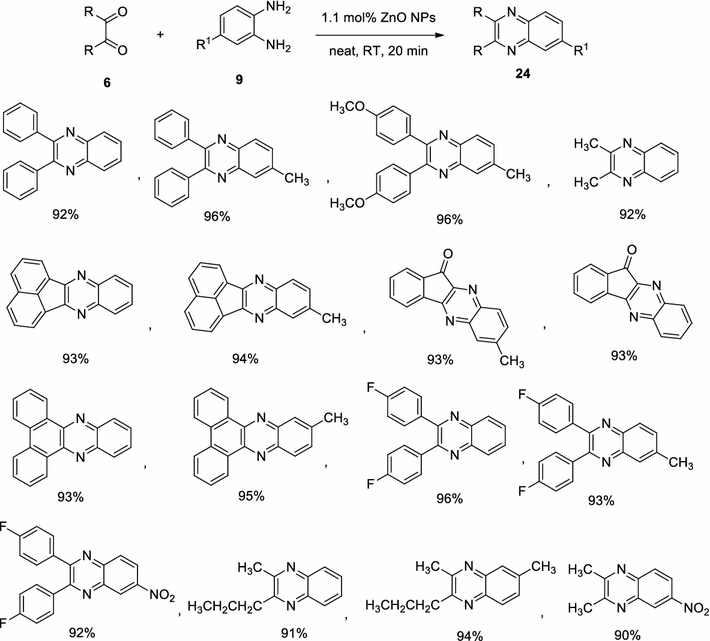
Sadeghi et al. [
76
] described ZnO nanoparticles as an efficient and reusable catalyst for the synthesis of a series of quinoxaline derivatives (
24
) via the condensation between various 1,2-diketones (
6
) and 1,2-diamines (
9
) under solvent-free condition at room temperature (Scheme
3
).
ZnO nanoparticles catalyzed synthesis of quinoxalineinScheme 3
Dihydropyrimidinones (
26
) possess significant biological efficacies that include antiviral, antibacterial, antihypertensive and antitumor activity [
77
]. In 1893, Biginelli [
78
] first reported the synthesis of dihydropyrimidinones (
26
) with only 20–50% yields. In 2015, Hassanpour et al. [
79
] successfully employed ZnO nanoparticles as an efficient catalyst for the synthesis of dihydropyrimidinones (
26
) in good yields via a one-pot three component reaction between various aldehydes (
5
), alkyl acetoacetate (
17a
/
17b
) and urea (
25
) or thiourea (
25a
) in water at 50 °C. ZnO nanoparicles was found to be much more efficient than the commercial ZnO (Scheme
4
). After completion of the reaction, the catalyst was recovered and reused successfully without any significant loss in catalytic activity.
ZnO nanoparticles catalyzed synthesis of dihydropyrimidinonesScheme 4

Abdolmohammadi [
80
] synthesized a series of hexahydropyrido[2,3-
d
]pyrimidine derivatives (
29
) via the cyclocondensation reaction between arylmethylidenepyruvic acids (
27
) and 6-aminouracils (
28
,
28a
) in the presence of catalytic amount of ZnO nanoparticles under solvent-free condition at 70 °C. After completion of the reaction, ZnO nanoparticles were recovered and recycled three times without any apparent loss in catalytic activity (Table
7
).
ZnO nanoparticles catalyzed synthesis of hexahydropyrido[2,3-
d
]pyrimidines
Entry R R1 Yield (%) Entry R R1 Yield (%) 1 Cl H 93 4 Cl CH3 98 2 OCH3 H 94 5 OCH3 CH3 93 3 CH3 H 91 6 CH3 CH3 96Table 7
Azarifar et al. [
81
] explored the catalytic activity of ZnO nano-particles for the synthesis of 1
H
-pyrazolo[1,2-
b
]phthalazine-5,10-diones (
32
) and pyrazolo[1,2-
a
] [
1
,
2
,
4
] triazole-1,3-dione derivatives (
33
) via a three-component coupling reaction between aromatic aldehydes (
5
), malononitrile (
18
), and phthalhydrazides (
30
) or 4-arylurazoles (
31
), respectively, under solvent-free condition at 80–110 °C. High product yields, short reaction times, non-toxicity, easy work-up and reusability of the catalyst are some of the merits of this developed protocol (Scheme
5
).
ZnO nanoparticles catalyzed synthesis of 1
H
-pyrazolo[1,2-
b
]phthalazine-5,10-diones and pyrazolo[1,2-
a
] [
1
,
2
,
4
] triazole-1,3-dionesScheme 5

Imidazo[1,2-
a
]quinolines possess immense biological efficacies that include antiallergic [
82
], anxiolytic [
83
] activity. Recently, in 2014, a simple, efficient and ultrasound-assisted convenient protocol was developed by Abaszadeh et al. [
84
] for the synthesis of a series of imidazo[1,2-
a
]quinoline derivatives (
35
) via a one-pot three-component reaction between cyclic enaminoketones (
34
), aromatic aldehydes (
5
) and malononitrile (
18
) in the presence of catalytic amount of ZnO nanoparticles in EtOH at 80 °C (Table
8
).
ZnO nanoparticles catalyzed synthesis of imidazo[1,2-
a
]quinoline
Entry R R1 Time (min) Yield (%) Entry R R1 Time (min) Yield (%) 1 C6H5 CH3 45 90 4 C6H5 H 48 89 2 4-CH3C6H4 CH3 48 88 5 4-CH3C6H4 H 55 88 3 4-ClC6H4 CH3 42 92 6 4-ClC6H4 H 45 90Table 8
Imidazo[1,2-
a
]pyridine/pyrimidines have gained significant attention from the pharmaceutical industry because of their promising biological efficacies that include antibacterial, antifungal, antiviral and anti-inflammatory activities [
85
,
86
]. Many marketed drugs such as alpidem (anxiolytic), zolpidem (hypnotic), and zolimidine (antiulcer) contains imidazo[1,2-
a
]pyridine as the core structural unit [
87
,
88
]. Sadjadi et al. [
89
] successfully employed ZnO-nanorods as an efficient, cost effective catalyst for the rapid synthesis of imidazo[1,2-
a
]pyrimidines (
38
) and imidazo[1,2-
a
]pyridines (
39
) via the one-pot three-component condensation between benzaldehydes (
5
), trimethylsilylcyanide (
37
) and pyrimidin-2-amines (
36
) or pyridin-2-amines
(36a
), respectively, in ethanol under the influence of ultrasonic irradiation at room temperature. After completion of reaction they were able to recover ZnO nanoparticles and reused it up to third run without any significant loss in its catalytic activity (Table
9
).
ZnO nanoparticles catalyzed synthesis of imidazo[1,2-
a
]pyridine/pyrimidines
Entry R R1 Time (min) Yield (%) of Entry R R1 Time (min) Yield (%) of 1 4-NO2C6H4 H 7 90 1 C6H5 Br 10 85 2 4-OCH3C6H4 H 12 83 2 3-NO2C6H4 CH3 8 88 3 4-ClC6H4 CH3 7 90 4 4-CH3C6H4 CH3 12 85Table 9
A simple, mild and eco-friendly method was developed for the synthesis of 5-substituted 1
H
-tetrazoles (
42
) via the cycloaddition reaction of various nitriles (
40
) and sodium azide (
41
) using ZnO nanoparticles as a heterogeneous, reusable catalyst in DMF as solvent at 120–130 °C (Table
10
) [
90
].
ZnO nanoparticles catalyzed synthesis of 5-substituted 1
H
-tetrazoles
Entry R Time (min) Yield (%) Entry R Time (min) Yield (%) 1 C6H5 14 72 5 4-CHOC6H4 14 69 2 4-ClC6H4 14 74 6 4-ClC6H4CH2 24 71 3 2-ClC6H4 14 70 7 2-pyridyl 6 79 4 2-CNC6H4 24 81 8 pyrazine-2-yl 5 82Table 10
Benzodiazepine represents core structural motif in many marketed drugs such as olanzapine and clozapine (schizophrenia treatment) [
91
], clobazam (anxiolytic agents) [
92
], etc. Ghasemzadeh et al. (Table
11
) [
93
] reported a mild, simple and convenient approach for the efficient synthesis of a series of biologically promising benzo[
b
][1,5]diazepines (
44
) via one-pot three-component reactions of aromatic diamines (
9
), various isocyanides (
14
) and Meldrum’s acid (
43
) in the presence of a catalytic amount of ZnO nanoparticles in dichloromethane at room temperature. For this transformation, ZnO nanoparicles were found to be much more efficient than the commercial ZnO. After completion of the reaction, they were able to recover ZnO nanoparticles and reused six times without apparent loss in catalytic activity.
ZnO nanoparticles catalyzed synthesis of benzo[
b
][1,5]diazepines
Entry R1 R2 Time (h) Yield (%) Entry R1 R2 Time (h) Yield (%) 1 H cyclohexyl 3.5 93 6 CH3 cyclohexyl 3 95 2 H C(CH3)3 3 95 7 CH3 C(CH3)3 3 96 3 H CH2C6H5 3.5 91 8 CH3 CH2C6H5 3.5 94 4 H CH2(CH2)3CH3 3.5 92 9 CH3 CH2(CH2)3CH3 3.5 95 5 H 4-OCH3C6H4 4 91 10 CH3 4-OCH3C6H4 3.5 93Table 11
Furans are very common in naturally occurring bioactive heterocycles. This important structural motif has gained considerable attention because of its significant biological efficacies. Many marketed drugs such as rubrolide, sarcophine, benfurodil hemisuccinate [
94
,
95
] contain furan skeleton. 5
H
-Furan-2-one derivatives exhibit many pharmacological and biological activities including antifungal, antibacterial, anti-oxidants, anti-inflammatory, anti-microbial and anti-cancer agents [
96
,
97
,
98
,
99
–
100
]. Benzo[
b
]furan containing heterocycles possesses immense pharmaceutical efficacies that include antifungal [
101
], antitumor [
102
] activity. Tekale et al. [
103
] synthesized a series of biologically promising 3,4,5-trisubstituted furan-2(5
H
)-one derivatives (
45
) by the one-pot three-component condensation between various aromatic aldehydes (
5
), dimethylacetylenedicarboxylate (
2a
) and substituted anilines (
20
) using nano-ZnO as an efficient, reusable, heterogeneous catalyst in aqueous ethanol at 90 °C (Table
12
). After completion of the reaction, ZnO nanoparticles were recovered and reused several times without apparent loss in its catalytic efficacy. Safaei-Ghomi et al. [
104
] demonstrated a ZnO-nanoparticles catalyzed simple and efficient method for the convenient synthesis of 2,3-disubstituted benzo[
b
]furans (
49
) via a one-pot three-component coupling reaction between substituted salisaldehydes (
46
), secondary amines (
47
) and phenylacetylene (
48
) in aqueous ethanol under reflux conditions. ZnO nanoparicles was found to be more efficient than the other bulk metal oxides such as MgO, CuO, Fe
2
O
3
etc (Table
13
).
ZnO nanoparticles catalyzed synthesis of 3,4,5-trisubstituted furan-2(5
H
)-ones
Entry R R1 Yield (%) Entry Q R1 Yield (%) 1 H H 94 7 3-OCH3 H 85 2 H 4-CH3 95 8 4-CH3 H 84 3 4-OCH3 H 88 9 H 4-CH(CH3)2 88 4 H 4-F 84 10 H 2-F 84 5 4-Cl H 89 11 2,4-diCl 2-F 85 6 2-Cl H 87 12 2,4-(OCH3)2 H 83 ZnO nanoparticles catalyzed synthesis of benzo[
b
]furans
Entry X R1 and R2 Time (min) Yield (%) Entry X R1 and R2 Time (min) Yield (%) 1 H Morpholine 90 92 7 Cl Morpholine 60 92 2 H Piperidine 90 90 8 Cl Piperidine 65 94 3 H Dibenzyl 110 80 9 Cl Dibenzyl 80 85 4 Br Morpholine 70 94 10 NO2 Morpholine 55 96 5 Br Piperidine 75 94 11 NO2 Piperidine 55 94 6 Br Dibenzyl 90 85 12 NO2 Dibenzyl 65 88Table 12
Table 13
Pyrans and pyran-annulated heterocyclic scaffolds possess a broad spectrum of significant biological activities that include anticancer, cytotoxic, anti-HIV, anti-inflammatory, antimalarial, antimicrobial activity [
105
,
106
–
107
]. Das and his group reported a simple, efficient, environmentally benign protocol for the synthesis of 2-amino-3-cyano-4
H
-pyran derivatives via a one-pot three-component coupling reaction between a series of aromatic aldehydes (
5
), malononitrile (
18
) and 1,3-dicarbonyl compounds (
17
,
50
) using nano-ZnO as the catalyst in water at room temperature [
108
] (Scheme
6
). Under the same optimized condition they also synthesized 2-amino-3-cyano-4
H
-chromenes (
52
) in good yields from the three-component reaction between aldehydes (
5
), malononitrile (
18
) and dimedone (
16
) (Scheme
6
).
ZnO nanoparticles catalyzed synthesis of 4
H
-pyran derivativesScheme 6

Very recently, in 2017, Zavar [
109
] has also synthesized a series of 2-amino-3-cyano-4
H
-chromenes (
52
) within just 10 min using nano-ZnO as catalyst in ethanol under reflux conditions (Table
14
).
Nano-ZnO catalyzed synthesis of 2-amino-3-cyano-4
H
-chromenes
Entry R Yield (%) Entry R Yield (%) 1 C6H5 90 6 2-NO2C6H4 85 2 4-N(CH3)2C6H4 80 7 3-NO2C6H4 92 3 4-OCH3C6H4 78 8 2,4-diClC6H4 80 4 2-OCH3C6H4 75 9 4-ClC6H4 80 5 3,4-(OCH3)2C6H3 80 10 4-BrC6H4 95Table 14
Xanthenes, in particular, 1,8-dioxo-octahydroxanthene moieties, have received significant attention due to their potent pharmacological efficacies such as antimicrobial, anticancer and enzyme inhibitory activity [
110
,
111
–
112
]. Recently, Safaei-Ghomi et al. have synthesized a variety of structurally diverse xanthene derivatives using ZnO-nanoparticles as catalyst. In 2013, they developed a simple protocol for the efficient synthesis of 1,8-dioxooctahydroxanthene derivatives (
53
) via a one-pot pseudo three-component condensation between various aldehydes (
5
) and dimedone (
16
) in the presence of catalytic amount of ZnO-nanoparticles at 90 °C under solvent-free conditions [
113
] (Scheme
7
). The optimized reaction conditions also worked satisfactorily in synthesizing a variety of
N
-aryl-1,8-dioxodecahydroacridine derivatives (
54
) in one-pot when the reaction was carried out in presence of aromatic amines (
20
) with excellent yield of 70–91% within just 5–25 min (Scheme
7
). After completion of reaction, nano-ZnO was successfully recovered and recycled for five successive runs with little loss in the catalytic activity.
ZnO nanoparticles catalyzed synthesis of 1,8-dioxo-decahydroacridines and 1,8-dioxooctahydro-xanthenesScheme 7

To explore the catalytic efficiency of this fascinating catalyst, the same group has also employed nano-ZnO as catalyst for the synthesis of tetrahydrobenzo[
a
]xanthen-11-ones (
56
) via one-pot three-component reactions of aldehydes (
5
), 2-naphthol (
55
) and dimedone (
16
) under solvent-free condition at 120 °C [
114
] (Table
15
). By changing 4-hydroxycoumarin (
57
) instead of dimedone (
16
) in the above-mentioned reaction they were also able to synthesize a range of 7-alkyl-6
H
,7
H
-naphtho[1′,2′:5,6]pyrano[3,2-
c
]chromen-6-one derivatives (
58
) using the same nano-ZnO as catalyst under solvent-free condition at 110 °C [
115
] (Table
16
). Short reaction times, high yields, easy workup procedure, wide substrate tolerance, small catalyst loading, reusability of the catalyst and solvent-free conditions are some of the salient features of these developed protocols.
ZnO nanoparticles catalyzed synthesis of tetrahydrobenzo[
a
]xanthen-11-ones
Entry R Time (min) Yield (%) Entry R Time (min) Yield (%) 1 C6H5 16 88 9 4-CHOC6H4 18 91 2 3-NO2C6H4 15 90 10 2-S(CH3)C6H4 22 87 3 4-NO2C6H4 10 95 11 4-CH(CH3)2C6H4 20 86 4 4-ClC6H4 12 93 12 4-OCH3C6H4 22 88 5 2,4-diClC6H3 20 92 13 2-OCH3C6H4 30 85 6 4-BrC6H4 15 90 14 4-OHC6H4 25 90 7 4-FC6H4 15 92 15 3-CH3C6H4 22 85 8 4-CNC6H4 15 90 16 4-CH3C6H4 18 90 ZnO nanoparticles catalyzed synthesis of pyrano[3,2-
c
]chromen derivatives
Entry R Time (min) Yield (%) Entry R Time (min) Yield (%) 1 C6H5 50 70 7 2,4-diClC6H3 45 85 2 4-ClC6H4 40 91 8 4-BrC6H4 40 89 3 4-FC6H4 40 92 9 4-OCH3C6H4 50 89 4 4-CH3C6H4 60 85 10 4-OHC6H4 50 90 5 4-NO2C6H4 40 93 11 3,4-diClC6H3 60 86 6 3-NO2C6H4 60 70 12 2,5-(OCH3)2C6H3 60 81Table 15
Table 16
Coumarins are very common in the naturally occurring heterocycles like warfarin, phenprocoumon, coumatetralyl, carbochromen, bromadialone, etc. Heterocycles containing this important structural motif exhibit a wide range of pharmaceutical activities that include antibacterial, anti-HIV, antiviral, anticoagulant, antioxidant and anticancer activities [
116
,
117
,
118
,
119
–
120
]. Goswami [
121
] synthesized a wide range of 4-substituted coumarins (
60
) by the reaction of a wide range of structurally diverse phenols (
59
) and ethyl acetoacetate (
17
) or ethyl benzoyl acetate (
17c
) in the presence of nanocrystalline ZnO as catalyst and pyridine dicarboxylic acid as co-catalyst in acetonitrile under reflux conditions (Table
17
).
ZnO nanoparticles catalyzed synthesis of coumarins
Entry R Time (h) Yield (%) of Entry R Time (h) Yield (%) of 1 H 3 90 1 3-OH 4 88 2 3-OH 3 93 2 3,5-diOH 4 85 3 3,5-diOH 3 89 3 3-OCH3 4 87 4 3-OCH3 3 93 4 3,5-diCH3 4 85 5 2-CH3-3-OH 3.5 86 6 3-NH2 4 89 7 4-NO2 4 92 8 4-Cl 4 73Table 17
Kumar et al. [
122
] achieved the synthesis of various 3-substituted coumarins (
60b
) by the nano-ZnO catalyzed reactions between salisaldehydes (
46
) and various 1,3-dicarbonyl compounds (
17
,
18a
,
61
) under microwave irradiation at 120 °C (Table
18
). Under the same optimized reaction conditions they also synthesized benzo[
f
]chromen-3-ones (
63
) by using 2-hydroxy naphthaldehyde (
62
) instead of salisaldehyde (
46
) (Table
18
). After completion of reaction, nano-ZnO was successfully recovered and recycled for several runs with consistent catalytic activity. During optimization, ZnO nanoparicles were found to be much more efficient than the commercially available bulk ZnO. Das and his group employed nanocrystalline ZnO as an efficient, reusable catalyst for the one-pot green synthesis of a series of benzylamino coumarin derivatives (
64
) from the reactions of various aromatic aldehydes (
5
), 4-hydroxycoumarin (
57
) and cyclic secondary amines (
47
) in water at room temperature [
123
] (Scheme
8
).
ZnO nanoparticles catalyzed synthesis of coumarins
Entry R R1 Time (min) Yield (%) of 1 H COOC2H5 5 92 2 H COCH3 6 90 3 3,4-(OH)2 COOC2H5 4 86 4 3-OCH3 COOC2H5 5 92 5 3-OCH3 COCH3 5 90 6 4-OCH3 COOC2H5 6 92 7 4-OCH3 COCH3 5 93 8 3-N(C2H5)2 COOC2H5 5 87 9 3-N(C2H5)2 COCH3 7 88 10 3-N(C2H5)2 CN 7 90 11 3-OH COOC2H5 5 62 12 4-OH COOC2H5 7 85 13 5-Cl COCH3 9 92 14 5-Br COCH3 6 95 15 5-NO2 COCH3 8 93 16 5-OH COCH3 6 93 ZnO nanoparticles catalyzed synthesis of benzylamino coumarin derivativesTable 18
Scheme 8

Das and his group developed another nano-ZnO catalyzed protocol for the efficient synthesis of dihydropyrano[2,3-
c
]chromenes (
66
) via a one-pot, three-component coupling reaction between aromatic aldehydes (
5
), malononitrile (
18
) and 3-hydroxycoumarin (
65
) in water at 70 °C [
124
] (Table
19
). Later on, the same group also synthesized a series of structurally diverse 4
H
-chromene derivatives (
69
) by the reactions of salisaldehydes (
46
), active methylene compounds (
16
,
16a
,
18
,
67a
) and C-H activated nucleophiles (
28
,
55
,
57
,
68a
,
68b
,
68c
,
68d
) employing the same nano-ZnO as catalyst in aqueous medium at 55 °C [
125
] (Scheme
9
). During optimization it was found that the catalytic activity of nano-ZnO is superior to the other nano metal oxides such as nano-Al
2
O
3
, nano-MgO tested for these reactions. Nano-ZnO was recovered easily and recycled six times without significant loss in catalytic activity.
ZnO nanoparticles catalyzed synthesis of dihydropyrano[2,3-
c
]chromenes
Entry R Time (h) Yield (%) Entry R Time (h) Yield (%) 1 C6H5 3 87 6 2-naphthyl 2.5 89 2 4-NO2C6H4 2.5 91 7 4-FC6H4 2 90 3 4-OCH3C6H4 3 78 8 4-CNC6H4 2.5 90 4 4-BrC6H4 2.5 89 9 2-thienyl 3 75 5 4-CH3C6H3 3 83 10 4-CHOC6H4 4 65 ZnO nanoparticles catalyzed synthesis of densely functionalized 4
H
-chromenesTable 19
Scheme 9

Pyrano[2,3-
c
]pyrazole and its derivatives possess significant biological efficacies that include anti-inflammatory, molluscicidal, insecticidal, antitumor and anticancer activity [
126
,
127
]. Tekale et al. [
128
] developed a simple, convenient and practical method for the efficient synthesis of 6-amino-5-cyano-pyrano[2,3-
c
]pyrazoles (
71
) via a four-component reaction of ethyl acetoacetate (
17
), hydrazine hydrate (
70
), malononitrile (
18
) and various aromatic aldehydes (
5
) using nano-ZnO as a recyclable heterogeneous catalyst in aqueous medium at 70 °C (Table
20
). In the same year, from the same batch of reactions, Sachdeva et al. [
129
] replaced malononirile (
18
) by ethylcyano acetate (
18a
) and synthesized ethyl 6-amino-pyrano[2,3-
c
]pyrazoles-5-carboxylate derivatives (
71a
) in good yields using the same nano-ZnO as a reusable catalyst in aqueous medium at room temperature (Table
21
).
ZnO nanoparticles catalyzed synthesis of 6-amino-5-cyano-pyrano[2,3-c]pyrazoles
Entry R Time (min) Yield (%) Entry R Time (min) Yield (%) 1 C6H5 60 94 8 4-BrC6H4 65 85 2 4-ClC6H4 60 90 9 4-NO2C6H4 90 87 3 4-N(CH3)2C6H4 70 86 10 4-OCH3C6H4 70 90 4 4-S(CH3)C6H4 70 88 11 4-NO2C6H4 90 87 5 4-OH-C6H4 90 82 12 2-furyl 80 86 6 2-ClC6H4 80 89 13 4-OH-3-OCH3C6H3 80 91 7 4-CH3C6H4 70 90 ZnO nanoparticles catalyzed synthesis of ethyl 6-amino-pyrano[2,3-
c
]pyrazoles-5-carboxylate derivatives
Entry R Time (min) Yield (%) Entry R Time (min) Yield (%) 1 3,4-(OCH3)2C6H3 60 90 6 3-CH3-2-furyl 60 86 2 3-OCH3C6H4 55 85 7 2-thienyl 55 87 3 3,4,5-(OCH3)3C6H2 55 86 8 3-pyridyl 60 85 4 4-ClC6H4 60 87 9 2-OH-C6H4 60 87 5 4-OCH3C6H4 55 89 10 3-OH-4-OCH3-C6H3 60 85Table 20
Table 21
Heravi et al. [
130
] reported the efficient synthesis of a series of pyrazolo-[4′,3′:5,6]pyrido[2,3-
d
]pyrimidine-dione derivatives (
72
) via a one-pot five-component condensation between hydrazine hydrate (
70
), ethyl acetoacetate (
17
), 1,3-dimethyl barbituric acid (
67a
), aromatic aldehydes (
5
) and ammonium acetate (
7
) in the presence of nano-ZnO in water under reflux conditions (Table
22
). Use of nano-ZnO as catalyst offers several advantages such as operational simplicity, wide range of substrate tolerance, easy work-up and high yields of products.
ZnO nanoparticles catalyzed synthesis of pyrido[2,3-
d
]pyrimidine-diones
Entry R Time (h) Yield (%) Entry R Time (h) Yield (%) 1 C6H5 4 91 6 4-NO2C6H4 4 91 2 4-FC6H4 3.5 90 7 3-NO2C6H4 4.2 89 3 4-ClC6H4 3.5 91 8 4-OHC6H4 4.5 85 4 4-BrC6H4 3.8 90 9 4-N(CH3)2C6H4 4.5 85 5 2,4-diClC6H3 4 90Table 22
Siddiqui et al. [
131
] demonstrated the catalytic efficiency of ZnO-nanoparticles for the efficient synthesis of a series of novel pyridine derivatives (
76
,
77
,
78
,
79
,
80
) via a sequential three-component reaction of β-enaminones (
73
), ammonium acetate (
7
) and various active methylene compounds (
16
,
17
,
17a
,
43
,
57
,
67a
,
67aa
,
74
) under solvent-free conditions at 70 °C. Nano-ZnO was recovered easily and recycled six times without significant loss in catalytic activity (Scheme
10
).
ZnO nanoparticles catalyzed synthesis of structurally diverse pyridine derivativesScheme 10

Haerizade et al. [
132
] synthesized a series of functionalized 2-thioxo-2,3-dihydro-1,3-oxazoles (
83
) from one-pot three-component reactions of ammonium thiocyanate (
81
), various acid chlorides (
82
) and phenacyl bromides (
3
) in the presence of a catalytic amount of nano-ZnO and
N
-methylimidazole as co-catalyst under solvent-free conditions at room temperature (Table
23
).
ZnO nanoparticles catalyzed synthesis of 1,3-oxazoline-2-thione derivatives
Entry Ar R Yield (%) Entry Ar R Yield (%) 1 4-BrC6H4 4-NO2 95 4 4-OCH3C6H4 4-Br 85 2 4-NO2C6H4 4-Br 75 5 4-BrC6H4 4-OCH3 83 3 4-NO2C6H4 4-CH3 70Table 23
Sangshetti et al. [
133
] employed combined nano zinc oxide and titanium dioxide [nano (ZnO–TiO
2
)] as an efficient catalytic system for the synthesis of a series of novel 4,5,6,7-tetrahydro-6-((5-substituted-1,3,4-oxadiazol-2-yl)methyl)thieno[2,3-
c
]pyridines (
85
) from the reactions of 2-(4,5-dihydrothieno[2,3-
c
]pyridin-6(7
H
)-yl)acetohydrazide (
84
) and various substituted aldehydes (
5
) in ethanol under reflux conditions (Table
24
). Catalytic activity of nano (ZnO–TiO
2
) was found to be superior to the individual effect of nano ZnO or nano TiO
2
. All the synthesized compounds were screened for their antimicrobial activities. Among them compounds
85f
,
85k
,
85l
have promising antibacterial as well as antifungal efficacies whereas compound
85j
possess promising antibacterial activity.
ZnO nanoparticles catalyzed synthesis of thieno[2,3-
c
]pyridine derivatives
Entry R Product Time (min) Yield (%) 1 4-ClC6H4 12 96 2 C6H5 12 91 3 4-OCH3C6H4 13 95 4 3,4-(OH)2C6H3 14 91 5 2-ClC6H4 12 95 6 2,6-(Cl)2C6H3 12 91 7 2,4-(OCH3)2C6H3 14 94 8 4-OH-C6H4 13 94 9 C4H4N 15 95 10 C4H3S 14 94 11 4-FC6H4 13 94 12 2,4-diClC6H3 12 92 13 C5H4N 15 95Table 24
Ziraka et al. [
134
] prepared bismuth oxide supported nano zinc dioxide [nano Bi
2
O
3
-ZnO] by sol–gel method and characterized it by FT-IR, XRD, SEM, TEM and energy-dispersive X-ray analysis (EDX) analysis. They employed this newly synthesize catalytic system for the synthesis of pyrano[3,2-
b
]chromenes (
87
) via one-pot three-component reactions of various aromatic aldehydes (
5
), kojic acid (
86
) and dimethone (
16
) under solvent-free condition at 100 °C (Table
25
). During optimization it was found that the catalytic activity of combined nano (ZnO–TiO
2
) is superior to the individual effect of nano ZnO or nano Bi
2
O
3
.
ZnO nanoparticles catalyzed synthesis of pyrano[3,2-
b
]chromene
Entry R Yield (%) Entry R Yield (%) 1 C6H5 80 6 4-NO2C6H4 81 2 4-ClC6H4 82 7 2,4-diClC6H3 78 3 2-ClC6H4 79 8 4-OCH3C6H4 75 4 3-NO2C6H4 84 9 4-CH3C6H4 77Table 25
Albadi et al. [
135
] synthesized CuO supported nano-ZnO [nano-CuO–ZnO] by a co-precipitation method and well characterized it by XRD, SEM, TEM and EDS analysis. Using this newly prepared efficient catalytic system they synthesized a series of 1,2,3-triazoles (
89
) via one-pot three-component reactions of various benzyl halides (
88
) phenylacetylenes (
48
) and sodium azide (
41
) in water under reflux condition (Table
26
). During optimization combined nano (CuO–ZnO) showed better catalytic efficacy than the individual nano-ZnO or nano-CuO. After completion of reaction, the catalyst was recovered easily and recycled for several runs without loss in catalytic activity.
ZnO nanoparticles catalyzed synthesis of 1,2,3-triazoles
Entry R X R1 Time (min) Yield (%) 1 H Br H 20 92 2 3-CH3 Br H 20 91 3 4-OCH3 Br H 15 92 4 2,4-diCl Br H 35 90 5 4-NO2 Br H 35 91 6 H Br 3-NH2 30 89 7 4-OCH3 Br 3-NH2 20 90 8 H Cl H 30 92 9 2,4-diCl Cl H 18 89Table 26
The present review describes the recent developments on the synthesis of biologically promising heterocycles using nano zinc oxide as a mild, cheap, non-toxic, efficient, reusable, Lewis acidic heterogeneous catalyst. For many organic transformations, catalytic efficacy of nano ZnO was found to be superior to the commercially available bulk ZnO. After completion of reaction, in many occasions nano-ZnO was successfully recovered and reused further for the several runs without significant loss in catalytic activity. This review will enrich the readers about the developments of ZnO nanoparticles catalyzed synthesis of various heterocycles reported so far. Therefore, the present review will surely attract attention of the organic methodologists working with this fascinating catalyst worldwide.
The author is grateful to Dr. Sudhir Kartha, Chancellor, Indus International University, Una, Himachal Pradesh, India for his wholehearted support throughout and the Kartha Education Society, Mumbai, India for the financial help. Special thanks are due to Mr. Pankaj Choudhary, Dr. Samik Mukherjee and Dr. Sudipta Som for their able assistance to search the literature.
Springer Nature remains neutral with regard to jurisdictional claims in published maps and institutional affiliations.