Graphical Abstract

A new protocol for the synthesis of 2 H -indazolo[2,1- b ]phthalazine-trione derivatives is described via a one-pot three-component condensation reaction of phthalhydrazide, dimedone or 1,3-cyclohexanedione and aromatic aldehydes catalyzed by SnO 2 nanoparticles as a heterogeneous catalyst under solvent-free conditions. The SnO 2 nanoparticles (NPs) were characterized by FT-IR, X-ray diffraction (XRD), field emission scanning electron microscopy (FE-SEM) and energy dispersive X-ray analyzer (EDAX). The advantages of the protocol are the shorter reaction time, simple work-up procedure and reusable catalyst.
Generally, nitrogen containing heterocyclic compounds have a wide range of pharmacological and clinical applications [ 1 , 2 , 3 , 4 , 5 – 6 ]. Among them, nitrogen incorporated phthalazine containing bridgehead hydrazine heterocyclic compounds are highly desirable drugs with anticonvulsant [ 7 ], cardiotonic [ 8 ], vasorelaxant [ 9 ], antimicrobial [ 10 ], antifungal [ 11 ], anticancer [ 12 ] and anti-inflammatory [ 13 ] activities. In addition, phthalazine derivatives also have excellent optical properties [ 14 , 15 ]. Due to the notable significances, we would like to establish a new facile protocol for the synthesis of phthalazine scaffolds.
In recent years, the literature reports reveal that only a limited number of solvent-free protocols are available for the synthesis of phthalazine derivatives using the condensation reaction of phthalhydrazide, dimedone, and aromatic aldehydes with various catalysts [ 16 , 17 , 18 , 19 , 20 , 21 , 22 , 23 , 24 – 25 ]. However, the reported methods have some limitations such as non-biodegradable and expensive metal catalysts, corrosive reaction media and longer reaction times due to which new synthetic protocols may be suggested for the synthesis of phthalazine derivatives via one-pot multicomponent reactions. Multicomponent reactions (MCRs) are more essential to construct the complex organic molecule in a single step without isolation of any intermediates [ 29 , 30 ]. MCRs with heterogeneous catalyst and solvent-free process are more attractive to the researchers, because they will minimize the waste and usage of hazardous chemicals [ 31 , 32 ]. Moreover, the heterogeneous catalysts have more enrapture to the researchers because of their selectivity and reactivity in organic transformations [ 33 , 34 – 35 ] and they provide more advantages over homogeneous catalysts due to the more active sites. In addition, they are environmental friendly, cost effective, insoluble in solvents and reusable leading to easy work-up procedures. In general, the nanomaterials exhibit superior mechanical, thermal, chemical, electrical, optical and catalytic properties. Therefore, we extend our present research work by employing SnO 2 nanoparticles as a heterogeneous catalyst for the synthesis of phthalazine derivatives. Tin oxide (SnO 2 ) has a broad spectrum of applications which includes its use in electrochemical [ 36 ] and photo-catalytical processes [ 37 ], gas sensors [ 38 , 39 ], optical electronic devices [ 40 ] and solar cells [ 41 ]. Additionally, the SnO 2 NPs have an excellent catalytic behavior in the synthesis of various heterocyclic compounds [ 42 , 43 , 44 – 45 ].
The present research work utilizes SnO 2 NPs as a reusable catalyst for the synthesis of 2 H -indazolo[2,1- b ]phthalazine-trione derivatives. To the best of our knowledge, there is no literature report available for the SnO 2 NPs-catalyzed synthesis of 2 H -indazolo[2,1- b ]phthalazine-triones.
All reagents and common solvents were purchased from Loba chemie and Sigma-Aldrich and used without further purification. The products were isolated and characterized by physical and spectral analysis. 1 H NMR and 13 C NMR spectra were recorded on Bruker (DRX Avance-400) spectrometer in the presence of tetramethylsilane as an internal standard. The IR spectra were recorded on Bruker (ATR FT-IR) apparatus using Zn-Se technique. Reactions were monitored by TLC using precoated silica gel plates and melting points were determined on an electro thermal apparatus, and are uncorrected. Powder X-ray diffraction (XRD) was carried out on a Philips diffractometer of X’pert Company with monochromatized Cu Ka radiation ( k = 1.5406 A˚). Field emission scanning electron microscopy (FE-SEM) and the X-ray dispersive analysis were recorded by FE-SEM (LEO 1455VP), operated at a 15 kV accelerating voltage.
The SnO
2
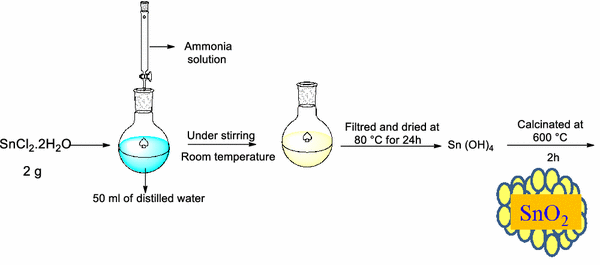
NPs were prepared by taking 2 g (0.1 M) of stannous chloride dihydrate (SnCl
2
·2H
2
O) in 50 ml of distilled water and dissolved. Simultaneously, an aqueous ammonia solution was added drop by drop under continuous stirring for 15–20 min while maintaining the pH of the solution between 9 and 11. The resulting gel was washed with deionized water until the pH reached 7, filtered and dried at 80 °C for 24 h to remove water. Then, the powdered sample was calcinated at 600 °C for 2 h and the finally obtained powder sample was characterized with FT-IR, powder X-ray diffraction (XRD), field emission scanning electron microscopy (FE-SEM) and X-ray dispersive analyses.
An equimolar mixture of phthalhydrazide (1.0 mmol), aromatic aldehyde (1.0 mmol), 5,5-dimethyl-1,3-cyclohexanedione or 1,3-cyclohexanedione (1.0 mmol) and 10 mol % of SnO 2 NPs was magnetically stirred over an oil bath at 80 °C under solvent-free condition for an appropriate time. The completion of the reaction was monitored by TLC using ethyl acetate–hexane (1:1) as the eluent. After completion of the reaction, the reaction mass was cooled to room temperature and 3 ml of chloroform was added and stirred well. The product was soluble in chloroform and the catalyst was recovered by simple filtration. The catalyst was washed with 3 ml of acetone and dried at 100 °C. Finally, the recovered catalyst was subjected to the next run of the reaction. The solvent was removed under vacuum to get the crude product, which on further recrystallization with ethanol afforded the pure product (compared with literatures Ref. [16–18, 26–28]). The pure products were characterized with FT-IR, 1 H and 13 C NMR spectroscopic techniques.
The SnO 2 NPs were synthesized using an already reported procedure [ 38 ]. The synthesized SnO 2 NPs were characterized by Fourier transform-infrared spectroscopy, powder X-ray diffraction, field emission scanning electron microscopy and energy dispersive X-ray spectroscopy.
We have compared the FT-IR spectra of as-synthesized form and calcinated samples of SnO
2
NPs (Fig.
1
). Figure
1
a shows a broad band at 3460.78 cm
−1
which represents the presence of water molecule bound to Sn surface. The band at 1573.15 cm
−1
is due to the bending vibration of water molecules and the peak at 1423.15 cm
−1
represents the unreactive SnCl
2
. The band at 625 cm
−1
indicates the Sn–OH. Furthermore, the calcinated sample has shown a band at 646.31 cm
−1
corresponds to Sn–O–Sn and the band present at 553.94 cm
−1
is due to the stretching vibration of Sn–O. The intensity of peaks due to water molecules is very much decreased in the case of calcinated sample. The observed results reveal that the Sn–O band is not present in the fresh sample. Figure
1
c shows the IR spectrum of the SnO
2
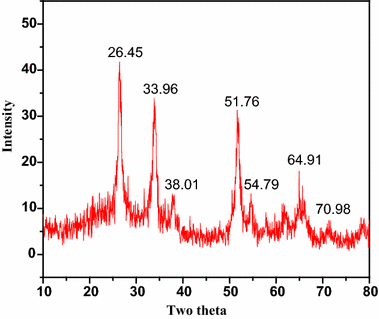
catalyst after the sixth run of the reaction in which there is no change in the peak position and intensity when compared to that of the calcinated catalyst supporting its reusability results. From the X-ray diffraction spectrum, the formations of SnO
2
NPs are confirmed (Fig.
2
). All the diffraction peaks are in good agreement with the standard (JCPDS No- 41-1445) which can be indexed as the tetragonal structure of SnO
2
with lattice constant of
a
= 4.78,
c
= 3.17 and unit cell volume
d
= 72.66. No other diffraction peaks are observed in the XRD pattern that clearly indicates the purity of SnO
2
NPs. The average crystallite size of the SnO
2
NPs was calculated using Scherrer formula as, (
D
=
kλ
/
β
cos
θ
), where
D
is the average crystallite size,
k
is the Scherrer constant,
λ
is the wavelength of the X-ray beam,
β
is the (
π
/2) FWHM (Full width at half maximum) and
θ
is the diffraction angle. The average crystallite size of the SnO
2
NPs was found to be 23.4 nm. Meanwhile, these results were in good agreement with the literature report [
46
].
The comparative FT-IR spectra of:
a
Before calcinations of SnO
2
NPs,
b
After calcinations of SnO
2
NPs and
c
SnO
2
NPs after the sixth run of the reaction XRD spectra of SnO
2
NPsFig. 1
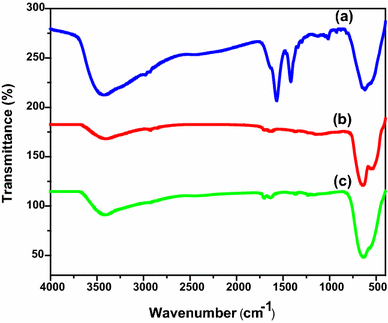
Fig. 2
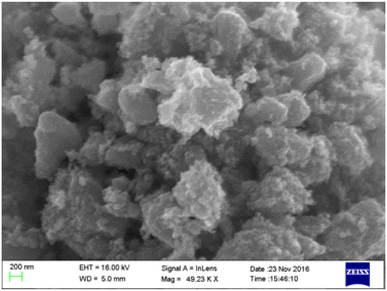
The field emission scanning electron microscopy (FE-SEM) that shows the morphology and size of the SnO
2
NPs is presented in Fig.
3
. The morphology and size of the individual particles could not be measured due to their extremely small size and heavy aggregation. In general, the formation of agglomerated nanoparticles can be explained by nucleation–aggregation–agglomeration–growth mechanism proposed by Rodriguez-Clemente et al. [
47
]. The particle size of the SnO
2
NPs is in the range of 44–71.79 nm approximately and also the SnO
2
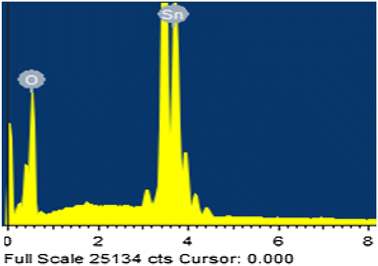
NPs have been aggregated in spherical morphology. Finally, the energy dispersive X-ray spectrum exhibits the atomic weight % of tin 33.33 and 66.67% of oxygen present in the SnO
2
NPs (Fig.
4
).
FE-SEM images of the SnO
2
NPs EDAX spectrum of SnO
2
NPsFig. 3
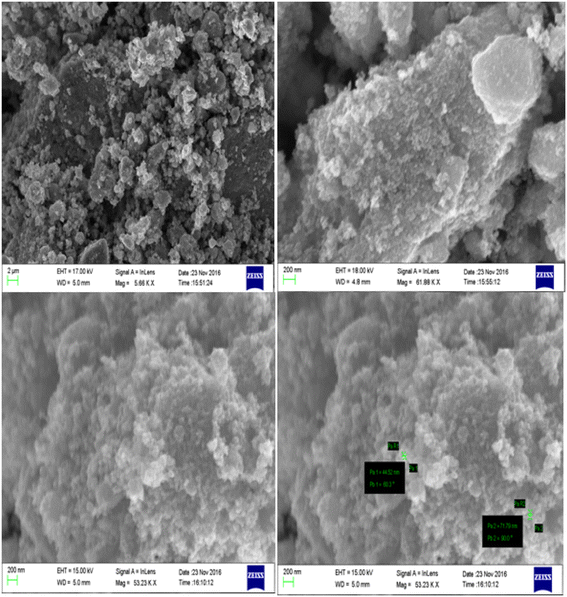
Fig. 4
The formation of SnO
2
NPs made us to utilize the NPs as a catalyst for the one-pot synthesis of 2
H
-indazolo[2,1-
b
]phthalazine-triones under various reaction conditions. We have optimized the amount of catalyst required to catalyze the reaction where the temperature and solvent have also been screened. Initially, we have performed the model reaction with a mixture of 4-chlorobenzaldehyde (1 mmol), dimedone (1 mmol) and phthalhydrazide (1 mmol) without catalyst and solvent and found that there was no reaction even after five hours (Table
1
, Entry 1) revealing the need of a catalyst to activate the reaction. By employing 20 mol % of various Lewis acid catalysts such as NiCl
2
.6H
2
O, CuCl
2
.2H
2
O, CaCl
2
.2H
2
O and MnCl
2
.4H
2
O for the reaction, the yield of the expected product was very low even after 60 min of the reaction (Table
1
, Entries 2-5). Next, we investigated the reaction with 20 mol % of SnCl
2
·2H
2
O, where the moderate yield of the product was observed (Table
1
, Entry 6). The model reaction when conducted at 80 °C with 10 mol % of SnO
2
bulk led to prolonged reaction time with 72% yield (Table
1
, Entry 7) which made us to standardize the reaction using SnO
2
NPs. Using 5 mol % SnO
2
NPs, the reaction provided 70% of the product with lesser reaction time when compared with other metal chlorides (Table
1
, Entry 8) and 10 mol % of the SnO
2
NPs catalyzed the reaction to an excellent yield of the product (Table
1
, Entry 9) with shorter reaction time. Further increase in the mol % of SnO
2
NPs did not improve the yield of the product (Table
1
, Entries 10 and 11). Meanwhile, the model reaction was studied with 10 mol % of SnO
2
NPs under various temperatures. At 80 and 90 °C, there was no change in the yield and reaction time, (Table
1
, Entry 12) but the yield decreased at 70 or 60 °C (Table
1
, entries 13 and 14).
Optimization of reaction condition for the synthesis of 2
H
-indazolo[2,1-
b
]phthalazine-triones Entry Catalyst (mol%) Reaction conditions Time (min) Yielda (%) 1 No catalyst Solvent-free, 80 °C >300 No reaction 2 NiCl2·6H2O (20) Solvent-free, 80 °C 60 10 3 CuCl2·2H2O (20) Solvent-free, 80 °C 60 17 4 CaCl2·2H2O (20) Solvent-free, 80 °C 60 12 5 MnCl2·4H2O (20) Solvent-free, 80 °C 60 20 6 SnCl2·2H2O (20) Solvent-free, 80 °C 60 48 7 SnO2 (10) bulk Solvent-free, 80 °C 44 72 8 SnO2 (5) Solvent-free, 80 °C 26 80 9 SnO2 (10) Solvent-free, 80 °C 12 96 10 SnO2 (15) Solvent-free, 80 °C 12 96 11 SnO2 (20) Solvent-free, 80 °C 12 96 12 SnO2 (10) Solvent-free, 90 °C 12 96 13 SnO2 (10) Solvent-free, 70 °C 12 81 14 SnO2 (10) Solvent-free, 60 °C 12 66 15 SnO2 (10) Ethanol, Reflux 12 60 16 SnO2 (10) Methanol, Reflux 12 48 17 SnO2 (10) Water, Reflux >60 20Table 1
With the optimized catalyst, solvent-mediated reaction did not succeed well which may be due to the interruption of solvent molecules for the direct contact between the reactants and the catalyst (Table
1
, entries 15–17). We have compared the yield of the product and the reaction time with previous literature in Table
2
, entries 1–10. Apparently, some of the reported catalysts afforded good yields but most of the catalysts were hazardous to the environment and the catalyst quantity needed was also more in addition to longer reaction time. The catalytic activity of SnO
2
NPs may be due to the presence of more acidic (Sn
4+
) and the basic (O
2−
) surface sites [
37
] that could readily induce the organic transformations. We have concluded that 10 mol % of SnO
2
NPs at 80 °C was more favorable under solvent-free condition to provide excellent yield of the target product with shorter reaction time (Table
1
, entry 9) and the optimization results are presented in Table
1
. The reusability of the catalyst was also successfully checked up to seven runs.
Comparative study of the present protocol with previous reports for the synthesis of 2
H
-indazolo[2,1-
b
]phthalazine-triones Entry Catalyst Reaction conditions Time (min) Yield % Ref 1 MNPs-guanidine (0.030 g) Solvent-free, 70 °C 34 94 [ 2 Nano-ASA (0.04 g) Solvent-free, 110 °C 10 100 [ 3 Solvent-free, 80 °C 30 93 [ 4 Iodine (0.1 g) Solvent-free, 25–30 °C 10 92 [ 5 PPA-SiO2(0.1 g) Solvent-free, 100 °C 30 92 [ 6 Et3N–SO3HCl (0.043 g) Solvent-free, 20 °C 40 93 [ 7 PEG-SO3H (0.61 g) Solvent-free, 80 °C 40 91 [ 8 SO3H-FMSM (0.020 g) Solvent-free, 110 °C 18 95 [ 9 H4SiW12O40 (0.2 g) Solvent-free, 100 °C 60 75 [ 10 ZrOCl2.8H2O (0.096 g) Solvent-free, 80 °C 60 83 [ 11 SnO2 (0.015 g) Solvent-free, 80 °C 12 96 Present workTable 2
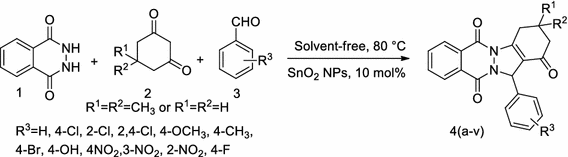
Using the above optimized conditions, we have taken various aromatic aldehydes having different electron withdrawing and donating substituents in the ortho, meta and para positions and cyclic diketones for the synthesis of 2
H
-indazolo[2,1-
b
]phthalazine-trione derivatives (Table
3
). Almost all aldehydes provided good to excellent yields of the products irrespective of the position as well as electron donating and withdrawing nature of the group in the aryl aldehydes (Scheme
1
).
Synthesis of 2
H
-indazolo[2,1-
b
]phthalazine-trione derivatives catalyzed by SnO
2
NPs under solvent-free condition Entry ArCHO R1, R2 Product (4a-4v) Time (min) Yielda (%) Mp (° C) Lit. Mp (°C)[Ref] 1 C6H5 CH3 4a 14 93 206–208 [ 2 4-ClC6H4 CH3 4b 12 96 259–261 [ 3 2-ClC6H4 CH3 4c 13 85 261–263 [ 4 2,4-ClC6H3 CH3 4d 12 88 220–222 [ 5 4-OCH3C6H4 CH3 4e 15 91 216–218 [ 6 4-CH3C6H4 CH3 4f 14 90 227–229 [ 7 4-BrC6H4 CH3 4 g 13 93 260–262 [ 8 4-OHC6H4 CH3 4 h 13 90 290–292 [ 9 4-NO2C6H4 CH3 4i 12 92 218–221 [ 10 3-NO2C6H4 CH3 4j 12 87 267–269 [ 11 2-NO2C6H4 CH3 4 k 13 84 236–238 [ 12 4-FC6H4 CH3 4 l 14 94 218–220 [ 13 C6H5 H 4 m 13 86 229–230 [ 14 4-ClC6H4 H 4n 15 93 268–270 [ 15 2,4-ClC6H3 H 4o 13 86 273–274 [ 16 4-OCH3C6H4 H 4p 17 90 252–253 [ 17 4-CH3C6H4 H 4q 19 87 242–244 [ 18 4-BrC6H4 H 4r 17 88 279–280 [ 19 4-OHC6H4 H 4 s 22 86 262–263 [ 20 4-NO2C6H4 H 4t 20 86 251–253 [ 21 3-NO2C6H4 H 4u 22 84 226–227 [ 22 4-FC6H4 H 4v 17 90 259–261 [Table 3
The synthesized 2
H
-indazolo[2,1-
b
]phthalazine-trione derivatives were confirmed by
1
H-NMR and
13
C-NMR spectroscopic techniques. The
1
H-NMR spectrum of the compound
4p
exhibited a peak at δ 2.24–3.59 ppm which could confirm the presence of six methylene protons in the cyclohexenone ring and another singlet appeared at δ 3.75 ppm which indicates the presence of 4-OCH
3
on the aromatic ring. The methine (C–H) proton has given a single peak at δ 6.42 ppm and the remaining aromatic protons exhibited peaks at δ 6.84–8.35 ppm. The
13
C-NMR spectrum of the compound (
4p
) exhibited peak at δ 22.35–64.60 ppm which corresponds to the presence of aliphatic carbon in the cyclohexenone ring and the peak appeared at δ 114.11 ppm due to the presence of methine carbon. The characteristic peak of carbonyl carbon appeared at δ 192.62 ppm and the rest of the aromatic carbons appeared at δ 159.74–119.68 ppm.
Synthesis of 2
H
-indazolo[2,1-
b
]phthalazine-trionesScheme 1
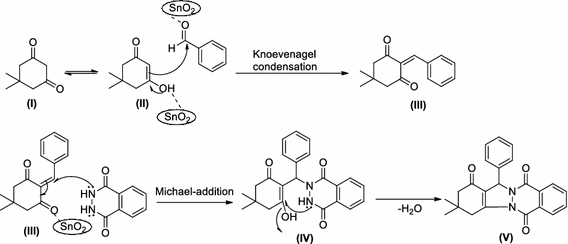
The plausible reaction mechanism proposed for the synthesis of 2
H
-indazolo[2,1-
b
]phthalazine-trionederivatives is represented in Scheme
2
. Initially, the SnO
2
NPs catalyzed the Knoevenagel condensation reaction between dimedone (
I
) and aromatic aldehyde (
II
) providing
III
. This step is facilitated by the activation of carbonyl group in aromatic aldehyde by SnO
2
NPs. Michael addition of phthalhydrazide to
III
provides
IV
which on cyclization afforded the target product (
V
).
A plausible mechanism for the one-pot three-component synthesis of 2
H
-indazolo[2,1-
b
]phthalazine-triones catalyzed by 10 mol % of SnO
2
under solvent-free conditionScheme 2
Next, we have also checked the reusability of SnO
2
NPs. The reusability of the catalyst was investigated with the model reaction using an equimolar mixture of 4-chlorobenzaldehyde (1 mmol), dimedone (1 mmol) and phthalhydrazide (1 mmol) performed with 10 mol % of SnO
2
NPs under solvent-free condition. After completion of the reaction, the reaction mass was cooled to room temperature and 3 ml of chloroform was added and stirred well. After that the product soluble in chloroform was separated by filtration. The recovered catalyst was washed with 3 ml of acetone to remove any organic residues present in the catalyst. The recovered catalyst was dried at 100 °C and subjected to the consecutive runs with same experimental condition. The yield of the product and the reaction time were not much affected up to fifth run after that a slight decrement in the yield of the product was observed. From these results, it has been concluded that 10 mol % of SnO
2
NPs can be efficiently reused for more than five to six consecutive runs without loss in its catalytic activity (Fig.
5
). After the sixth run, the recovered SnO
2
NPs were further subjected to FE-SEM analysis which was shown in Fig.
6
.
Reusability of the catalytic system FE-SEM image of SnO
2
NPs after sixth runFig. 5
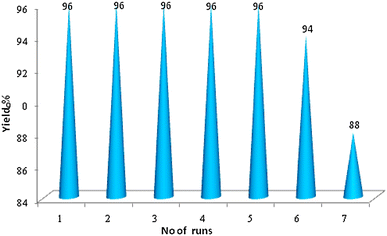
Fig. 6
We have demonstrated the SnO 2 NPs as an effective catalyst for the synthesis of 2 H -indazolo[2,1- b ]phthalazine-triones derivatives via one-pot three-component condensation reaction of the aromatic aldehydes, dimedone/1,3-cyclohexanedione and phthalhydrazide under solvent-free condition at 80 °C. The SnO 2 NPs have remarkable advantages such as cheap and efficient catalyst. The excellent yield of the product without using column chromatography, shorter reaction time and easy work-up procedure and the reusability of the catalyst are the added advantages of this method. The present protocol seems to be a better alternative compared to other reported protocols.