Porous and chelated nanostructured multifunctional materials: recoverable and reusable sorbents for extraction of metal ions and catalysts for diverse organic reactions
Sri Venkateswara College, University of Delhi, Delhi, IN
Abstract
This review article gives an insight into recent developments in chelating agents modified nanostructures in metal extraction and catalysis. The ability of functionalization by anchoring specific functional groups on the surface of nanostructures makes it possible to synthesize different types of desired chelated nanostructures for their use as catalysts and metal ion scavengers. Keeping these aspects in outlook this review emphasizes mainly on the synthesis of chelating agent functionalized nanostructures and their applications in the field of metal ion extraction and catalysis. The review article provides comprehensive information about the work that has been done in the past 5 years in the field of metal ion extraction and catalysis using chelating agent modified nanoparticles.
Introduction
Environmental pollution and hence affected human health due to release of metal ions in the environment, particularly as industrial waste, poses a serious problem. The removal and recovery of these metal ions is, therefore, a significant concern [
1
]. The key to extract these metal ions in an economically viable manner lies in the use of highly efficient, cost-effective and environmentally acceptable techniques. A broad range of physiochemical separation processes such as precipitation, sorption, membrane processes, electrolytic recovery, solid-phase extraction (SPE) and liquid–liquid extraction are available for this purpose [
2
–
5
]. Among these techniques, SPE is fast, generates less waste, regenerates the solid phase and does not require toxic solvents. Therefore, SPE has emerged as a powerful tool for separation/enrichment of metal ions using modified sorbents [
6
]. Further, chelation plays an important role in enhancing their adsorption capacity and easy separation. Chelated sorbents are more efficient and can be recovered and reused for many cycles [
7
–
9
].
In recent years, nanotechnology has emerged as one of the most key technologies in the field of metal extraction, catalysis, pharmacy, biotechnology, electronics, etc. [
10
–
12
]. The fabrication of nanostructured chelated sorbents, particularly for metal ion extraction, is emerging as an important field of analytical chemistry due to their unique properties [
13
]. Nanostructured sorbents show high surface reactivity with their large surface areas so that their surfaces can be easily modified by various chelating agents [
14
]. Chelating agent modified nanoparticles, being highly selective can easily bind to metal ions with strong chemical activities, thus providing high sorption capacity, high enrichment factors for separation and recovery of various metal ions. For this purpose, accurate selection of appropriate support and chelating agent is required for full recovery of metal ions with high enrichment factor [
15
].
In addition to the application of nanostructured materials for extraction of metal ions, the use of these materials to catalyse diverse organic reactions has received much attention in recent times [
16
–
24
]. It is well known that activity of catalysts depend on size, dimensions and morphologies and, therefore, the porous and nanostructured materials are expected to exhibit enhanced catalytic efficiency and reusability [
25
–
27
]. These porous and chelated nanostructured multifunctional materials, along with their metal extraction and catalytic properties, have also shown biological activities such as antibody purification from human plasma, removing oxidative stress, etc. [
28
–
32
]. But, in the present review, we have focused on the synthesis and application of porous and chelated nanostructured multifunctional materials for extraction of metal ions and as catalysts for diverse organic reactions.
Porous and chelated nanostructured materials for extraction of metal ions
The extraction of metal ion plays a significant role in soil, air and water remediation. Nanoparticles provide high surface area and are, therefore, suitable for this purpose. The extraction of metal ions, as explained earlier, can be done easily and efficiently by SPE.
SPE technique requires a support material to prepare an efficient sorbent. Based on the chemical nature, these can be divided as inorganic sorbents including modified metal/metal oxide nanoparticles, organic sorbents (generally carbon nanotubes) and organic–inorganic based sorbents (Table
1
) [
33
–
35
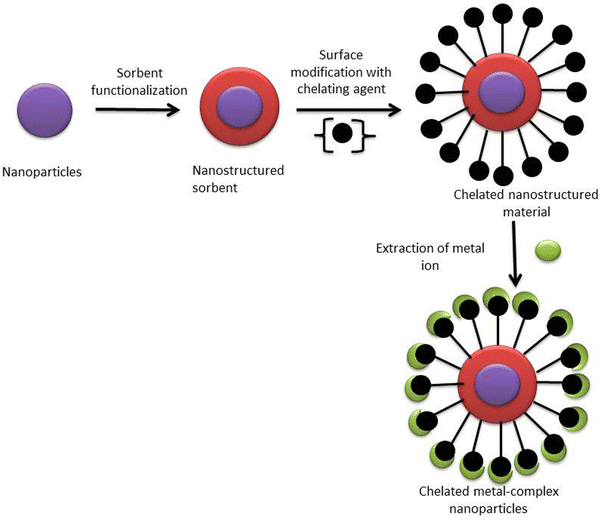
]. In general, nanostructured sorbent systems are fabricated by functionalization of ligands over sorbent coated nanoparticles followed by metal immobilization (Fig.
1
; Table
2
).
Table 1
Various chelated nanostructured inorganic sorbent-support systems for extraction of metal ions
S. no.
Support material
Ligand
Selective for following metal ion
References
1.
Alumina nanoparticles
2,4-Dinitrophenylhydrazine
Pb(II), Cd(II), Cr(III), Co(II), Ni(II) and Mn(II)
The use of surfactant-coated mineral oxides (generally alumina and silica) as sorbent materials has received much attention for extraction of various metal ions. These sorbent materials provide high surface areas. The modification of sorbent helps in their selectivity and increased activity. The most commonly used methods of modification are physisorption and chemisorption. However, chemical methods provide high stability and reusability.
Alumina nanoparticles
Afkhami et al. modified alumina nanoparticles with 2,4-dinitrophenylhydrazine (DNPH) by prior treatment with sodium dodecyl sulphate (SDS) for increasing its adsorption capacity. They found that SDS-coated alumina formed hemi-micelles which trapped DNPH molecules homogeneously, thus changing colour of alumina from white to orange. The immobilization of DNPH on SDS-coated alumina nanoparticles favoured uptake of metal ions by complex formation, thus extracting metal ions like Pb(II), Cr(III), Cd(II) efficiently [
2
]. Ezoddina et al. coated nano-sized alumina with sodium dodecyl sulphate-1-(2-pyridylazo)-2-naphthol (SDS-PAN) by formation of hemi-micelles. They observed that at lower pH, positively charged nano-γ-alumina surfaces sorbed negatively charged SDS efficiently. These modified alumina nanoparticles were used for preconcentration of Cd and Pb samples [
15
].
Baezzat et al. modified SDS-coated alumina nanoparticles with 3-mercapto-
d
-valine. They found that coating alumina nanoparticles with SDS provided greater efficiency for metal ion recovery. The presence of free lone pairs on nitrogens of the ligand coordinated with metal ions, thus causing their extraction. This method provided higher recoveries of zinc, iron and copper ions [
36
].
Magnetic nanoparticles
The use of magnetic nanoparticles has provided better kinetics for adsorption of metal ions. Zhai et al. modified silica-coated Fe
3
O
4
nanoparticles with 2,6-diaminopyridine. The stereochemical interactions of two amino and one pyridine ring with target ion resulted in selective coordination for Cu(II) and Zn(II). Since the adsorption capacity of these two ions is comparable, the magnetic nanoparticles were of great use because of high selectivity and magnetically separable property [
37
]. Huang and Hu synthesized silica-coated magnetic nanoparticles (SCMNPs) and modified them with γ-mercaptopropyltrimethoxysilane (γ-MPTMS) for extraction of trace amounts of Cd, Cu, Hg and Pb. For the recovery of metal, magnetic nanoparticles were separated easily using an external magnetic field. This method provided high enrichment factors and rapid adsorption of metals under study [
38
].
Ozmen et al. used a quick and easy metal separation process by preparing (3-aminopropyl)-triethoxysilane (APTES) and glutaraldehyde (GA) and modified them with Fe
3
O
4
magnetic nanoparticles. These nanoparticles were then used for effective removal of Cu(II)from wastewater in acidic pH range (4.0–5.3). This separation process was completed in around 15 min and thus proved to be efficient for this purpose [
39
].
Hu et al. modified the surface of magnetic Fe
3
O
4
nanoparticles with dithizone, mercaptopropyltrimethoxysilane and bismuthiol-II. These modified magnetic nanoparticles proved to be efficient for the fast preconcentration and determination of trace amount of Cr(III), Cu(II), Pb(II), Hg(II) and Zn(II) in environmental and biological samples [
38
,
40
,
41
].
Organic monolayer-coated metal nanoparticles have proved to be good sorbents due to chemical stability and selectivity. Karimipour et al. synthesized gold nanoparticles loaded in activated carbon (Au-NP-AC) and modified it by bis-(4-methoxy salicylaldehyde)-1,2-phenylenediamine (BMSAPD). This sorbent was used for enrichment and preconcentration of trace amounts of Co
2+
, Cu
2+
, Ni
2+
, Fe
2+
, Pb
2+
and Zn
2+
ions via complexation by BMSAPD ligand. They retained metal ions by elution with HNO
3
[
1
].
Silica nanoparticles
Awual et al. prepared a nano-conjugate adsorbent (NCA) by anchoring an organic ligand
N
,
N
(octane-1,8-diylidene)di(2-hydroxy-3,5-dimethyl-aniline) (DHDM) onto mesoporous silica by direct immobilization approach. DHDM has strong electrostatic interactions with hydroxyl-containing mesoporous surface. This sorbent exhibited distinct colour based on charge transfer on sorption of Pd(II) in both solid and liquid states. Pd(II) adsorption was found to increase sharply on increasing contact time and concentration of ligand [
42
].
Halloysite nanotubes
Besides mineral oxides, halloysite (2-layered alumino silicate clay mineral) nanotubes have also been used for the purpose of metal extraction. Since halloysite nanotubes (HNTs) have reactive hydroxyl groups on the surface, their modification with some organic compound tends to increase the sorption selectivity of metal ions. Li et al. synthesized and used murexide functionalized HNTs for selective extraction of Pd(II). Acidic environment was provided for protonation of binding sites of chelating agent, thus favouring selective adsorption of Pd(II). Pd(II) was retained on the column at pH 1.0 and quantitatively eluted by 2.5 mL of 0.01 mol L
−1
HCl–3 % thiourea solution at a flow rate of 2.0 mL min
−1
[
3
].
Organic-based sorbents
Multiwalled carbon nanotubes (MWCNTs) have high tensile strengths and great thermal and chemical stability. Due to high surface area and large micropore volume, these are good adsorbents for metal ion extraction [
43
,
44
].
Ghaedi et al. modified MWCNTs with 2-(2-hydroxy-5-nitrophenyl)-4,5-diphenyl imidazole for enrichment of trace amounts of various ions. To obtain highly efficient metal ions, optimization of the influence of variables including pH, amount of ligand and solid phase, type and condition of eluent and common coexisting ions was done. The metal ions (Co
2+
, Cu
2+
, Ni
2+
, Fe
2+
, Pb
2+
and Zn
2+
) were then desorbed using nitric acid [
6
].
Soylakab et al. modified MWCNTs with (
E
)-
N
1-(4-nitro-benzylidene)-
N
2-(2-((
E
)-4-nitrobenzylideneamino)ethyl) ethane-1,2-diamine (NBNBAEED). Due to the existence of donating nitrogen atom as well as –NH group in NBNBAEED, both the stability and selectivity of its Cu
2+
, Zn
2+
, Pb
2+
and Cd
2+
ion complex over other metal ions increased, thus providing fast adsorption and high metal recovery [
45
].
Porous and chelated nanostructured materials as reusable catalysts for diverse organic reactions
The photocatalytic reactions occur mainly on surface of a catalyst. Since nanostructures provide a large surface-to-volume ratio, they show high photocatalytic activity [
46
]. Since metal nanoparticles can easily aggregate in catalytic reactions and hence can decrease the available surface area, metal nanoparticles are modified with various sorbents. The chelated nanostructured materials have been used for catalysing various organic reactions as explained below.
Reduction reactions
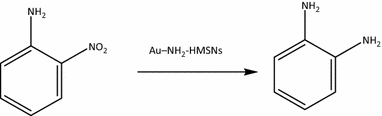
Both metal and metal oxides modified with suitable chelating agents have been used as catalysts in reduction reactions. Du and He immobilized gold nanoparticles into previously fabricated amino-functionalized silica nanoparticles with centre-radially hierarchical mesopores (Au–NH
2
–HMSNs) and used them as catalyst in catalytic reduction of 2-nitroaniline (Fig.
2
). The centre-radially hierarchical mesopores enhanced diffusion of guest molecules, thus providing excellent catalytic activity and stability [
47
].
Fig. 2
Reduction of 2-nitroaniline using Au–NH
2
–HMSNs
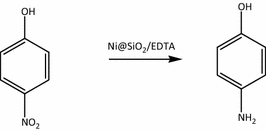
Jiang et al. prepared nano-Ni core mesoporous-silica shell (NCMSS) particles using EDTA as the chelating agent (Ni@SiO
2
/EDTA) and used them as a catalyst for reduction of 4-nitrophenol to 4-aminophenol in the presence of excess amount of NaBH
4
(Fig.
3
). The reaction was found to show pseudo-first order kinetics with respect to 4-nitrophenol. Since only a small amount of catalyst provides great results, NCMSSs have a great potential in catalytic fields in future [
26
].
Fig. 3
Reduction of 4-nitrophenol using Ni@SiO
2
/EDTA
Sharma et al. immobilized copper(II) acetylacetone complex over amino functionalized silica@magnetite nanoparticles (Cu–acac@Am–Si–Fe
3
O
4
) for catalytic reduction of nitro group using NaBH
4
as source of hydrogen (Fig.
4
). They also studied the kinetics for reduction reaction of
o
-nitroaniline to benzenediamine. Since nano-catalytic system can be easily recovered using magnets, they can be reused for multiple cycles [
48
].
Fig. 4
Reduction of nitro group using Cu–acac@Am–Si–Fe
3
O
4
Negroa et al. prepared three Fe–N non-noble electrocatalysts using networked graphitic structures as support. They found that catalysts with higher cobalt and iron content showed maximum oxygen reduction reaction (ORR) activity. This electrocatalyst showed promising applications in low-temperature fuel cells [
49
].
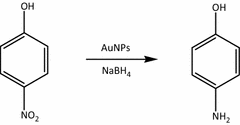
Veerakumara et al. synthesized gold nanoparticles (AuNPs) using highly branched polyethylenimine (PEI) and acylated PEI as the chelating agents. These modified gold nanoparticles were found to be excellent catalyst for selective reduction of nitro compounds in presence of sodium borohydride (Fig.
5
). This catalyst was found to be stable for a long time without any provided support [
50
].
Fig. 5
Selective reduction of nitro compounds using AuNPs/PEI
Oh et al. synthesized nitrogen-modified carbon nanofibres by pyrolysis of cobalt, polypyrrole (PPy) using ethylenediamine (ED) as the chelating agent for obtaining stable oxygen reduction catalysts. They found that combined use of PPy and ED increased activity and stability of catalyst by increasing total nitrogen contents [
51
].
Photocatalytic degradation reactions
Yang et al. synthesized YMn
2
O
5
nanoparticles using different chelating agents. They found that YMn
2
O
5
nanoparticles prepared using citric acid exhibited slightly high photocatalytic activity than the sample prepared using EDTA as the chelating agent. These nanoparticles showed excellent photocatalytic activity for oxidative decomposition of methyl red under UV and visible light irradiation [
27
].
Zhanga et al. synthesized Bi
2
Fe
4
O
9
nanoparticles using different chelating agents and observed their photocatalytic activity. The use of EDTA favoured the synthesis of relatively small particle sized Bi
2
Fe
4
O
9
nanoparticles. These nanoparticles were found to exhibit excellent photocatalytic degradation of methyl red [
46
].
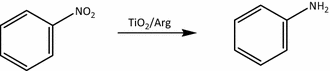
Makarova et al. modified surface of nanocrystalline titanium dioxide with specific chelating agents for photochemical reduction of nitrobenzene. The modification was done using arginine, lauryl sulphate and salicylic acid (Fig.
6
). It was found that arginine-modified TiO
2
(TiO
2
/Arg) was more stable and showed better photocatalytic decomposition as compared to other chelating agents [
52
].
Fig. 6
Reduction of nitrobenzene using TiO
2
/Arg
Wang et al. synthesized BaTiO
3
nanoparticles using acetylacetone and citric acid as chelating agents. These nanoparticles were tested for their photocatalytic activities for removal of humic acid from water. The tetragonal phase BaTiO
3
nanoparticles were found to be excellent photocatalysts for decomposition of organic pollutants [
53
].
Habibi and Mokhtari fabricated novel sulphur-modified niobium (V) oxide nanoparticles by a modified sol–gel method. A very stable sol-containing niobium (V) chloride and oxalic acid were used with isopropanol as chelating agent and thiourea as sulphur source. Unlike unmodified niobium (V) nanoparticles, the doped ones induced charge transfer across the niobium pentoxide interface. These nanoparticles can be suitably used as semiconductor photocatalysts and for visible light sensitization [
54
]. Sun et al. synthesized nano-sized BiVO
4
by a hydrothermal process in the presence of EDTA as chelating agent. With reduction of hydrothermal temperature and increase in concentration of EDTA, the size of BiVO
4
nanoparticles decreases. This sample showed a high photocatalytic activity for degradation of phenol solution [
55
].
Saien and Mesgari prepared nitrogen-doped TiO
2
nanoparticles using hematoporphyrin as the support material. These nanocomposites exhibited highly efficient visible-light photocatalytic activity for degradation of methyl orange. These nanocomposites can be reused again without any loss in its activity [
56
].
Hydrogenation/dehydrogenation reactions
Tianbin et al. synthesized Zr-based metal organic frameworks (Zr/MOF) that contained both mesopores and micropores by the reaction of 1,4-benzenedicarboxylic acid (H
2
BDC) and ZrOCl
2
·8H
2
O using citric acid as the chelating agent and cetyltrimethylammonium bromide (CTAB) as surfactant. The Ru@Zr/MOF (ruthenium nanoparticles embedded on Zr-based MOF) catalyst was prepared in supercritical CO
2
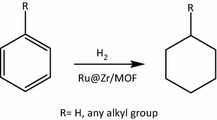
–methanol solution. This resulted in Ru nanoparticles with small size that were uniformly supported in the Zr–MOF unlike in the case of immobilization where particles were of larger size. This catalyst showed significant catalytic activity in hydrogenation of benzene and its derivatives (Fig.
7
) [
57
].
Fig. 7
Hydrogenation of benzene by Ru@Zr/MOF
Qureshi et al. prepared Pd nanoparticles supported on porous silica nanospheres KCC-1. The silica-supported Pd nanocatalysts were prepared by modification of the supports with 3-aminopropyltrimethoxysiliane (3-APTES). 3-APTES acted as binding agent for PdCl
2
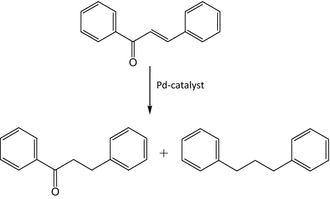
with the aim of obtaining well-spaced and uniformly dispersed Pd atoms on the silica surface. These proved to be efficient, chemoselective catalysts for hydrogenation of alkenes and α,β-unsaturated carbonyl compounds (Fig.
8
). A comparison between Pd nanoparticles supported on KCC-1 and those prepared on traditional mesoporous silica materials under similar conditions was done. It was found that the nanoparticles on KCC-1 showed excellent catalytic activity and particle dispersion. This catalyst can be reused many times without any significant loss in its catalytic activity [
58
].
Fig. 8
Hydrogenation of alkenes and α,β-unsaturated carbonyl compounds
Oxidation reactions
Sharma and Sharma immobilized palladium complex on silica nanospheres functionalized with 3-aminopropyltriethoxysilane (SiO
2
@APTES@Pd-FFR). This nano-catalyst was found to be highly selective for oxidative amination of aldehydes (Fig.
9
). The high activity of this nanocatalyst provided ease in time and cost along with high yield and enhanced dispersion. Since this catalyst provided high turn-over frequencies and can be easily reused without loss in its activity, the catalyst proved to be useful for industrial and environmental applications [
59
].
Fig. 9
Oxidative amination of aldehydes using SiO
2
@APTES@Pd-FFR
Gholivand and Azadbakht prepared nano-structured Ni(II)–chelidamic acid-modified gold nanoparticles (Ni(II)/CHE/AuNPs) by electrodeposition of Ni(II)/CHE complex on the surface of the AuNP–Au electrode in alkaline solution. This catalyst was tested for electrocatalytic oxidation (Fig.
10
) and determination of methanol. This electrode proved to be an excellent catalyst for oxidation of methanol [
60
].
Fig. 10
Electrocatalytic oxidation of methanol by Ni(II)–CHE/AuNPs
Kumar et al. prepared nano-spinel CuAl
2
O
4
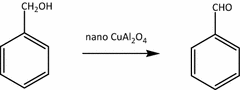
and investigated the effect of ethylenediamine addition. This catalyst was found to have high surface area, low activation energy and high porosity. Due to more number of active sites at low temperature, it is highly active for selective oxidation of benzyl alcohol to benzaldehyde (Fig.
11
). This explained that addition of ethylenediamine during preparation process enhanced the catalytic activity of copper aluminate [
61
].
Fig. 11
Selective oxidation of benzyl alcohol using nano-CuAl
2
O
4
spinel
Also, Cruz et al. also used self-prepared copper(II) complexes supported on hybrid mesoporous SBA-15 functionalized with imidazole ionic liquid and an amino chelate ligand, as efficient catalyst for selective oxidation of benzyl alcohol to benzaldehyde in aqueous phase [
62
].
Pandey et al. prepared stable CuO nanoparticles immobilized on resin in presence of cyclodextrin as an organic support material. These nanoparticles were found to be effective catalyst for liquid phase oxidation of alcohols to aldehydes. The catalytic activity was found to be better than the earlier used Cu(0) nanocomposites [
63
].
Coupling reactions
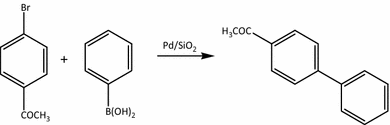
Dutta and Sarkar immobilized palladium nanoparticles on chemically modified silica gel which were stabilized by encapsulation through PEG tentacles. These nanoparticles were prepared by reaction of modified silica gel with potassium tetrachloropalladate(II) in presence of an acyl metal salt of a Fischer carbene complex. This nanocatalyst proved to be an efficient heterogeneous catalyst for Suzuki, Stille and Sonogashira cross-coupling reactions (Fig.
12
) [
64
].
Fig. 12
Coupling reaction of 4-bromoacetophenone with phenylboronic acid using Pd@SiO
2
/PEG
He et al. synthesized a novel palladium(II) organometallic catalyst by coordinating Pd(II) ions with PPh
2
-functionalized mesoporous silica nanospheres. Unlike the ones previously prepared by traditional methods, this catalyst exhibited higher activity and selectivity for water-medium C–C coupling reactions and could be used repeatedly for various cycles [
65
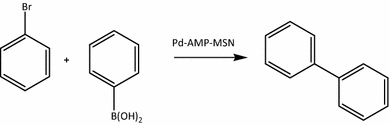
]. Mondal et al. prepared palladium(II) 2-aminopyridine complex in situ by co-condensation reaction of tetraethylorthosilicate (TEOS) with ((chloromethyl)phenylethyl)trimethoxysilane (CMPE-TMS) using CTAB as the structure directing agent and supported it on mesoporous silica nanospheres (Pd–AMP–MSN). It was shown to have high catalytic activity for Suzuki–Miyaura cross-coupling reactions of aryl iodides, aryl bromides and also aryl chlorides with phenylboronic acids in water medium with high yields (Fig.
13
) [
66
].
Fig. 13
Suzuki–Miyaura cross-coupling reaction of aryl halides with phenylboronic acids using Pd–AMP–MSN
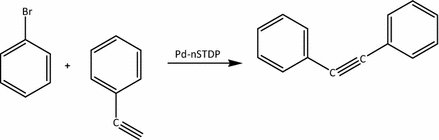
Isfahani et al. immobilized palladium nanoparticles on nanosilica triazine dendritic polymer (Pd–nSTDP). These were found to be efficient catalysts for Sonogashira cross coupling of aryl halides with aromatic and aliphatic terminal alkynes where water was used as solvent (Fig.
14
). This catalytic system can also be used for preparation of V- and star-shaped molecules and the catalyst can be recovered and reused [
67
].
Fig. 14
Sonogashira cross coupling of aryl halides with terminal alkynes using Pd–nSTDP as catalyst
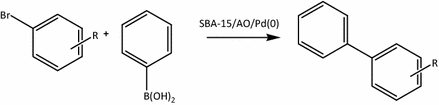
Vaghei et al. synthesized novel SBA-15/AO/Pd(II) nanocatalyst by grafting of amidoxime on SBA-15 and deposition of palladium chlorides. This catalyst, under mild conditions, was found to have high catalytic activity for the Suzuki–Miyaura cross-coupling reaction of aryl halides with phenylboronic acid (Fig.
15
) [
68
].
Fig. 15
Suzuki–Miyaura cross-coupling of aryl halides with phenylboronic acid using SBA-15/AO/Pd(II)
Naghipour and Fakhri prepared Pd-based nanocatalyst supported on magnetite nanoparticles using chitosan-Schiff base as the chelating agent. This catalyst (Pd/Fe
3
O
4
@chitosan-Schiff base) in mild experimental conditions was found to be highly efficient for Suzuki–Miyaura and Heck–Mizoroki C–C coupling reactions. Also, since the catalyst is supported on magnetite nanoparticles, it can be easily recovered magnetically [
69
].
Miscellaneous reactions
Nyalosaso et al. prepared aluminium-derived silica monodisperse nanospheres (Al–MSS-22) by a one-step synthesis–functionalization method and its surface properties were studied. It was found that this aluminosilicate nanocatalyst showed catalytic activity in various esterification reactions of ethanoic acid with selected alcohols and polyols (Fig.
16
) [
70
].
Fig. 16
Esterification of ethanoic acid with alcohols/polyols using Al–MSS-22 as catalyst
Tang et al. immobilized salicylaldimine transition metal complexes on mesoporous silica nanoparticles (Sal–MSN). These nanoparticles, because of high surface area of support, provide high concentration of catalytically active sites. These nanocatalysts were found to be efficient catalysts for epoxidation of styrene [
71
].
Li et al. used aqueous phosphine–Rh complexes immobilized on non-porous fumed-silica nanoparticles (HRh(CO)(TPPTS)
3
@SiO
2
) for their catalytic activity in higher olefin hydroformylation. They showed that the structure and hydration of support material are the two important factors in hydroformylation reaction. It was found that addition of basic alkali metal salts in the system favoured hydroformylation of 1-hexene [
72
].
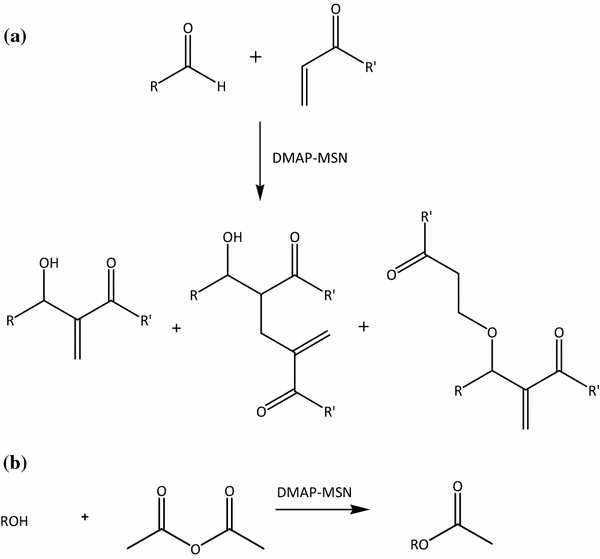
Chen et al. synthesized dialkylaminopyridine-functionalized mesoporous silica nanospheres (DMAP–MSN). This nanocatalyst showed high turnover frequency for Baylis–Hillman, acylation and silylation reactions and could also serve as efficient catalyst for various other nucleophilic reactions (Fig.
17
) [
73
].
Fig. 17
a
Baylis–Hillman reaction using DMAP–MSN catalyst.
b
Acylation reaction using DMAP–MSN catalyst
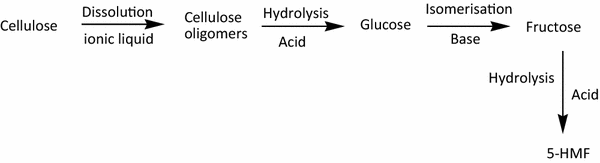
Peng et al. synthesized acid–base bi-functionalized mesoporous silica nanoparticles. These nanoparticles were studied for catalytic activity for one-pot conversion of 5-hydroxymethylfurfural (HMF) in an ionic liquid by using cellulose, cellobiose, glucose and fructose as starting materials. It was found that these nanoparticles showed high catalytic activity towards cellulose-to-HMF conversion (Fig.
18
) [
74
].
Fig. 18
Scheme for conversion of cellulose to 5-HMF
Tang et al. immobilized salicylaldimine cobalt complexes on mesoporous silica nanoparticles (Co–MSN/MAO). These nanocatalysts showed higher activity than existing homogeneous analogue and proved to be highly efficient for catalytic polymerization of 1,3-butadiene [
75
].
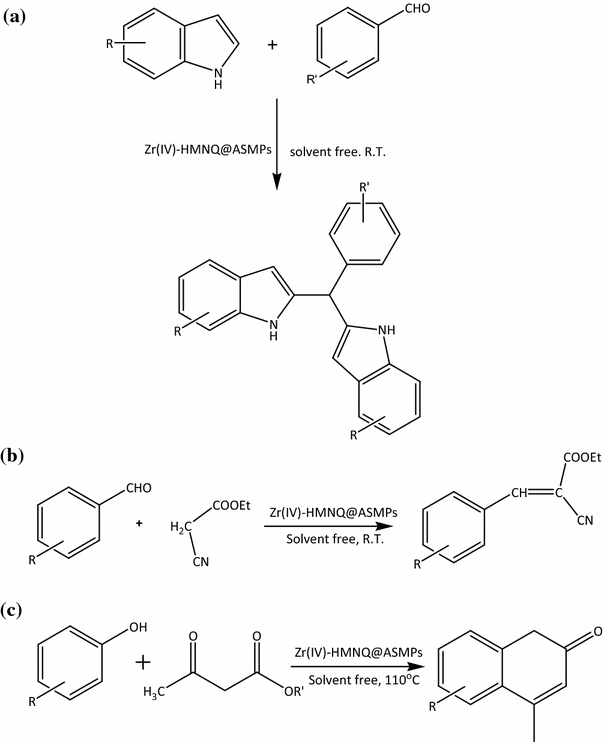
Sharma et al. synthesized zirconium (IV)-modified@amine functionalized silica nanocomposites by grafting of 3-hydroxy-2-methyl-1,4-napthoquinone covalently (Zr(IV)–HMNQ@ASMPs). These catalysts were found to be efficient for Friedel–Crafts, Knoevenagel and Pechmann condensation reactions (Fig.
19
). The catalyst provided high selectivity and could be reused for a number of cycles [
76
].
Fig. 19
a
Friedel–Crafts reaction using Zr(IV)–HMNQ@ASMPs catalyst.
b
Knoevenagel condensation reaction using Zr(IV)–HMNQ@ASMPs catalyst.
c
Pechmann condensation reaction using Zr(IV)–HMNQ@ASMPs catalyst
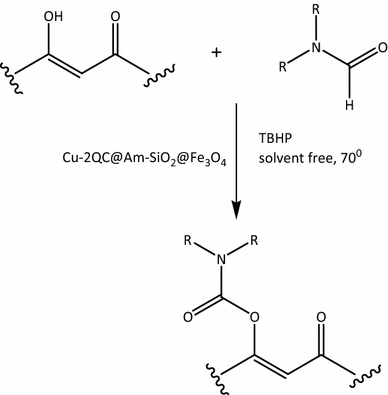
Sharmaet al. immobilized quinolone-2-carboxyaldehyde on amine functionalized silica-coated magnetite nanoparticles. This was followed by metallation with copper acetate (Cu–2QC@Am–SiO
2
@Fe
3
O
4
). This catalyst showed efficient activity for synthesis of carbamates via C–H activation of formamides (Fig.
20
). The catalyst was easily recovered and could be reused for multiple cycles [
77
].
Fig. 20
Synthesis of carbamates via C–H activation of formamides using Cu–2QC@Am–SiO
2
@Fe
3
O
4
catalyst
Conclusions
Nanostructured modified chelating agents prepared by functionalization method have been discussed in view of applications in the metal extraction and catalysis. With their controllable morphology, particle size and incorporation of active sites at the surface through synthesis–functionalization procedure, desired properties of nanostructured chelating agents can be easily achieved. Such advanced functionalized materials possess remarkable properties, making them potentially useful in applications requiring surface reactivity of the solid substrates in the liquid phase. The importance of chelating agents is well known but their incorporation in nanotechnologies can increase their usability manifolds. The results discussed hereby are of referential importance to the design and synthesis of other multifunctional nanostructured materials (Table
3
).
Table 3
Various nanostructured chelating sorbents as nanocatalysts for diverse organic reactions
S. no.
Nanocatalyst
Organic reaction
References
1.
Au–NH2–HMSNs
Reduction of 2-nitroaniline
[47]
2.
Ni@SiO2/EDTA
Reduction of 4-aminophenol
[26]
3.
Cu–acac@Am–Si–Fe3O4
Reduction of aromatic nitro groups
[48]
4.
Fe–N non-noble electrocatalysts
Oxygen reduction reaction
[49]
5.
AuNPs/PEI
Reduction of nitro compounds in presence of NaBH4
[50]
6.
N-modified carbon nanofibres/ED
Oxygen reduction reaction
[51]
7.
Bi2Fe4O9/EDTA
Photocatalytic degradation of methyl red
[46]
8.
BaTiO3/acac or CA
Photocatalytic removal of humic acid from water
[53]
9.
YMn2O5/CA
Oxidative decomposition of methyl red
[27]
10.
Nb2O5@S/isopropanol
Semiconductor photocatalyst
[54]
11.
BiVO4/EDTA
Photocatalytic degradation of phenol solution
[55]
12.
N-doped TiO2/hematoporphyrin
Photocatalytic degradation of methyl orange
[56]
13.
Ru@Zr/MOF
Hydrogenation of benzene and its derivatives
[57]
14.
Pd@SiO2/3-APTES
Hydrogenation of alkenes and α,β-unsaturated carbonyl compounds
[58]
15.
SiO2@APTES@Pd-FFR
Oxidative amination of aldehydes
[59]
16.
Ni(II)–CHE/AuNPs
Oxidation of methanol
[60]
17.
Nano-CuAl2O4 spinel
Selective oxidation of benzyl alcohol to benzaldehyde
[61]
18.
Cu@SBA-15/amino alcohol chelate ligand
Selective oxidation of benzyl alcohol to benzaldehyde
[62]
19.
CuO@cyclodextrin
Alcohol oxidation
[63]
20.
Pd@SiO2/PEG
Suzuki, Stille and Sonogashira cross-coupling reactions
[64]
21.
Pd@SiO2/PPh2
Water-medium C–C coupling reactions
[65]
22.
Pd–AMP–MSN
Suzuki–Miyaura coupling reactions of aryl halides with phenylboronic acids
[66]
23.
Pd–nSTDP
Sonogashira coupling of aryl halides with aromatic and aliphatic terminal alkynes
[67]
24.
SBA-15/AO/Pd(0)
Suzuki–Miyaura cross-coupling of aryl halides with phenylboronic acid
[68]
25.
Pd/Fe3O4@chitosan-Schiff base
Suzuki–Miyaura and Heck–Mizoroki C–C coupling reactions
[69]
26.
Al–MSS-22
Esterification of ethanoic acid with alcohols/polyols
One-pot conversion of cellulose to 5-hydroxymethylfurfural
[74]
29.
Co–MSN/MAO
Polymerization of 1,3-butadiene
[75]
30.
Zr(IV)–HMNQ@ASMPs
Friedel–Crafts, Knoevenagel and Pechmann condensation reactions
[76]
31.
Cu–2QC@Am–SiO2@Fe3O4
Synthesis of carbamates via C–H activation of formamides
[77]
References
Karimipour et al. (2012) Modification of gold nanoparticle loaded on activated carbon with bis(4-methoxysalicylaldehyde)-1,2-phenylenediamine as new sorbent for enrichment of some metal ions (pp. 109-117) 10.1007/s12011-011-9153-3
Afkhami et al. (2010) Simultaneous removal of heavy-metal ions in wastewater samples using nano-alumina modified with 2,4-dinitrophenylhydrazine (pp. 836-844) 10.1016/j.jhazmat.2010.05.089
Li et al. (2012) Highly selective solid-phase extraction of trace Pd(II) by murexide functionalized halloysite nanotubes (pp. 136-144) 10.1016/j.aca.2011.11.047
Sharma and Pant (2009) Solid phase extraction and determination of metal ions in aqueous samples using quercetin modified Amberlite XAD-16 chelating polymer as metal extractant (pp. 503-514) 10.1080/03067310802691680
Sharma and Pant (2009) Preconcentration and determination of trace metal ions from aqueous samples by newly developed gallic acid modified Amberlite XAD-16 chelating resin (pp. 295-301) 10.1016/j.jhazmat.2008.06.120
Ghaedi et al. (2012) Oxidized multiwalled carbon nanotubes modified with 2-(2-hydroxy-5-nitrophenyl)-4,5-diphenyl imidazole for solid phase extraction and preconcentration of some metal ions (pp. 846-859) 10.1080/02772248.2012.678998
Evangelou et al. (2007) Chelate assisted phytoextraction of heavy metals from soil. Effect, mechanism, toxicity, and fate of chelating agents (pp. 989-1003) 10.1016/j.chemosphere.2007.01.062
Turker (2007) New sorbents for solid-phase extraction for metal enrichment (pp. 548-557) 10.1002/clen.200700130
Prabhakaran and Subramanian (2003) A new chelating sorbent for metal ion extraction under high saline conditions (pp. 1227-1236) 10.1016/S0039-9140(03)00030-4
Mikhailov (2014) Molecular nanotechnologies of gelatin-immobilization using macrocyclic metal chelates10.3402/nano.v5.21485
Sahiner (2013) Soft and flexible hydrogel templates of different sizes and various functionalities for metal nanoparticle preparation and their use in catalysis (pp. 1329-1356) 10.1016/j.progpolymsci.2013.06.004
Chen et al. (2012) Self-assembled nanostructures of Ag6[PV3Mo9O40] with N-donor ligands and their catalytic activity (pp. 11449-11456) 10.1039/c2ra21858e
Wang and Yang (2014) New nanostructured sorbents for desulfurization of natural gas (pp. 8-19) 10.1007/s11705-014-1411-4
Sharma et al. (2013) Fabrication of a novel nano-composite carbon paste sensor based on silica-nanospheres functionalized with isatin thiosemicarbazone for potentiometric monitoring of Cu2+ ions in real samples (pp. 1414-1426) 10.1039/c3ay26319c
Ezoddina et al. (2010) Application of modified nano-alumina as a solid phase extraction sorbent for the preconcentration of Cd and Pb in water and herbal samples prior to flame atomic absorption spectrometry determination (pp. 900-905) 10.1016/j.jhazmat.2010.02.023
Sharma et al. (2012) Novel, efficient and recyclable silica based organic–inorganic hybrid nickel catalyst for degradation of dye pollutants in a newly designed chemical reactor (pp. 247-258) 10.1016/j.apcatb.2012.05.046
Sharma and Gulati (2012) Manganese phthalocyanine immobilized on silica gel: efficient and recyclable catalyst for single-step oxidative esterification of aldehydes with alcohols (pp. 291-303) 10.1016/j.molcata.2012.07.004
Sharma et al. (2013) Polyfluorinated–zinc(II)phthalocyanine complex immobilized on silica: a novel, highly selective and recyclable inorganic–organic hybrid catalyst for the synthesis of biologically important 1,5-benzodiazepines (pp. 21-31) 10.1016/j.ica.2012.11.012
Gawandea et al. (2015) Silica-decorated magnetic nanocomposites for catalytic applications (pp. 118-143) 10.1016/j.ccr.2015.01.001
Azgomi and Mokhtary (2015) Nano-Fe3O4@SiO2 supported ionic liquid as an efficient catalyst for the synthesis of 1,3-thiazolidin-4-ones under solvent-free conditions (pp. 58-64) 10.1016/j.molcata.2014.11.018
Dai et al. (2000) Hierarchically imprinted sorbents for the separation of metal ions (pp. 992-993) 10.1021/ja993168x
Lagadic et al. (2001) Highly effective adsorption of heavy metal ions by a thiol-functionalized magnesium phyllosilicate clay (pp. 984-990) 10.1021/es001526m
Sierra and Quintanilla (2013) Heavy metal complexation on hybrid mesoporous silicas: an approach to analytical applications (pp. 3792-3807) 10.1039/C2CS35221D
Cruz et al. (2016) ε-Caprolactone polymerization using titanium complexes immobilized onto silica based materials functionalized with ionic liquids: insights into steric, electronic and support effects (pp. 19723-19733) 10.1039/C6RA01220E
Quintanilla et al. (2007) Functionalized HMS mesoporous silica as solid phase extractant for Pb(II) prior to its determination by flame atomic absorption spectrometry (pp. 1556-1567) 10.1002/jssc.200600540
Jiang et al. (2012) Facile route fabrication of nano-Ni core mesoporous-silica shell particles with high catalytic activity towards 4-nitrophenol reduction (pp. 4601-4611) 10.1039/c2ce25205h
Yang et al. (2011) Fabrication and photocatalytic activity of YMn2O5 nanoparticles (pp. 884-886) 10.1016/j.matlet.2010.11.068
Wang et al. (2012) Hierarchical, core–shell meso-ZSM-5@mesoporous aluminosilicate-supported Pt nanoparticles for bifunctional hydrocracking10.1039/C4TA02740J
Uygun et al. (2012) Metal-chelating nanopolymers for antibody purification from human plasma (pp. 1528-1539) 10.1007/s12010-012-9875-5
Bonda et al. (2012) Nanoparticle delivery of transition-metal chelators to the brain: oxidative stress will never see it coming! (pp. 81-85) 10.2174/187152712799960709
Dehdashtian et al. (2015) A nano sized functionalized mesoporous silica modified carbon paste electrode as a novel, simple, robust and selective anti-diabetic metformin sensor (pp. 807-815) 10.1016/j.snb.2015.07.010
Liu et al. (2005) Nanoparticle and other metal chelation therapeutics in Alzheimer disease (pp. 246-252) 10.1016/j.bbadis.2005.06.006
Zhao et al. (2008) TiO2 nanotubes: a novel solid phase extraction adsorbent for the sensitive determination of nickel in environmental water samples (pp. 865-867) 10.1016/j.cclet.2008.05.004
Lestan et al. (2008) The use of chelating agents in the remediation of metal-contaminated soils (pp. 3-13) 10.1016/j.envpol.2007.11.015
Yazdi and Beckman (1996) Design, synthesis, and evaluation of novel, highly CO2-soluble chelating agents for removal of metals (pp. 3644-3652) 10.1021/ie9601211
Baezzat et al. (2014) Determination of trace amounts of zinc, iron and copper by flame atomic absorption after their preconcentration using sodium dodecyl sulfate (SDS) coated alumina nanoparticles modified with 3-mercapto-d-valin from environmental samples (pp. 1228-1238) 10.4236/ajac.2014.517129
Zhai et al. (2012) Solid-phase extraction of trace metal ions with magnetic nanoparticles modified with 2,6-diaminopyridine (pp. 405-412) 10.1007/s00604-012-0857-7
Huang and Hu (2008) Silica-coated magnetic nanoparticles modified with γ-mercaptopropyltrimethoxysilane for fast and selective solid phase extraction of trace amounts of Cd, Cu, Hg, and Pb in environmental and biological samples prior to their determination by inductively coupled plasma mass spectrometry (pp. 437-444) 10.1016/j.sab.2007.12.010
Ozmen et al. (2010) Adsorption of Cu(II) from aqueous solution by using modified Fe3O4 magnetic nanoparticles (pp. 162-169) 10.1016/j.desal.2009.11.043
Cheng et al. (2012) Dithizone modified magnetic nanoparticles for fast and selective solid phase extraction of trace elements in environmental and biological samples prior to their determination by ICP-OES (pp. 507-515) 10.1016/j.talanta.2011.11.025
Suleiman et al. (2009) Separation/preconcentration of trace amounts of Cr, Cu and Pb in environmental samples by magnetic solid-phase extraction with bismuthiol-II-immobilized magnetic nanoparticles and their determination by ICP-OES (pp. 1579-1583) 10.1016/j.talanta.2008.09.049
Awual et al. (2015) Organic–inorganic based nano-conjugate adsorbent for selective palladium(II) detection, separation and recovery (pp. 611-619) 10.1016/j.cej.2014.08.028
Sharma et al. (2012) One pot and solvent-free synthesis of 2,9,16,23-tetrachlorometal(II) phthalocyanines (pp. 83-87) 10.1080/17518253.2011.581701
Sharma et al. (2012) Preparation of gold nanoparticles using tea: a green chemistry experiment (pp. 1316-1318) 10.1021/ed2002175
Soylakab et al. (2011) Solid phase extraction on multiwalled carbon nanotubes and flame atomic absorption spectrometry combination for determination of some metal ions in environmental and food samples (pp. 873-885) 10.1080/02772248.2011.572885
Zhanga et al. (2011) Polyacrylamide gel synthesis and photocatalytic performance of Bi2Fe4O9 nanoparticles (pp. 809-812) 10.1016/j.jallcom.2010.09.097
Du and He (2012) Amino-functionalized silica nanoparticles with center-radially hierarchical mesopores as ideal catalyst carriers (pp. 852-859) 10.1039/C1NR11504A
Sharma et al. (2014) Magnetically separable silica@Fe3O4 core–shell supported nano-structured copper(II) composites as a versatile catalyst for the reduction of nitroarenes in aqueous medium at room temperature (pp. 84-95) 10.1016/j.molcata.2014.06.009
Negroa et al. (2015) Fe–N supported on graphitic carbon nano-networks grown from cobalt as oxygen reduction catalysts for low-temperature fuel cells (pp. 75-83) 10.1016/j.apcatb.2014.10.074
Veerakumara et al. (2012) Polyelectrolyte encapsulated gold nanoparticles as efficient active catalyst for reduction of nitro compounds by kinetic method (pp. 197-205) 10.1016/j.apcata.2012.07.008
Oh et al. (2011) Development of highly active and stable non-precious oxygen reduction catalysts for PEM fuel cells using polypyrrole and a chelating agent (pp. 879-881) 10.1016/j.elecom.2011.05.027
Makarova et al. (2000) Surface modification of TiO2 nanoparticles for photochemical reduction of nitrobenzene (pp. 4797-4803) 10.1021/es001109+
Wang et al. (2013) A dual chelating sol–gel synthesis of BaTiO3 nanoparticles with effective photocatalytic activity for removing humic acid from water (pp. 869-877) 10.1016/j.materresbull.2012.11.075
Habibi and Mokhtari (2011) Novel sulfur-doped niobium pentoxide nanoparticles: fabrication, characterization, visible light sensitization and redox charge transfer study (pp. 352-357) 10.1007/s10971-011-2510-z
Sun et al. (2011) Synthesis of large surface area nano-sized BiVO4 by an EDTA-modified hydrothermal process and its enhanced visible photocatalytic activity (pp. 3050-3054) 10.1016/j.jssc.2011.09.013
Saien and Mesgari (2016) Highly efficient visible-light photocatalyst of nitrogen-doped TiO2 nanoparticles sensitized by hematoporphyrin (pp. 108-115) 10.1016/j.molcata.2015.12.027
Tianbin et al. (2013) Catalytic activity of immobilized Ru nanoparticles in a porous metal-organic framework using supercritical fluid (pp. 167-175) 10.1016/S1872-2067(11)60475-0
Qureshi et al. (2015) Palladium nanoparticles supported on fibrous-structured silica nanospheres (KCC-1): an efficient and selective catalyst for the transfer hydrogenation of alkenes (pp. 635-642) 10.1002/cctc.201402781
Sharma and Sharma (2014) Silica nanospheres supported palladium(II) furfural complex as highly efficient and recyclable catalyst for oxidative amination of aldehydes (pp. 1292-1304) 10.1039/C3DT51928G
Gholivand and Azadbakht (2012) A nano-structured Ni(II)–chelidamic acid modified gold nanoparticle self-assembled electrode for electrocatalytic oxidation and determination of methanol (pp. 1955-1962) 10.1016/j.msec.2012.05.031
Kumar et al. (2012) Comparative study of nano copper aluminate spinel prepared by sol–gel and modified sol–gel techniques: structural, electrical, optical and catalytic studies (pp. 39-45) 10.1016/j.jallcom.2012.01.064
Cruz et al. (2016) Copper, copper oxide nanoparticles and copper complexes supported on mesoporous SBA-15 as catalysts in the selective oxidation of benzyl alcohol in aqueous phase (pp. 136-147) 10.1016/j.micromeso.2015.08.029
Pandey et al. (2008) Resin-immobilized CuO and Cu nanocomposites for alcohol oxidation (pp. 5179-5181) 10.1021/ol802040x
Dutta and Sarkar (2011) Palladium nanoparticles immobilized on chemically modified silica gel: efficient heterogeneous catalyst for Suzuki, Stille and Sonogashira cross-coupling reactions (pp. 2814-2822) 10.1002/adsc.201100168
He et al. (2011) Active and reusable Pd(II) organometallic catalyst covalently bonded to mesoporous silica nanospheres for water-medium organic reactions (pp. 961-966) 10.1039/C0SC00652A
Mondal et al. (2012) In situ prepared mesoporous silica nanosphere supported palladium(II) 2-aminopyridine complex catalyst for Suzuki–Miyaura cross-coupling reaction in water (pp. 20434-20442) 10.1039/c2jm33835a
Unknown ()
Vaghei et al. (2014) Pd immobilized on amidoxime-functionalized mesoporous SBA-15: a novel and highly active heterogeneous catalyst for Suzuki–Miyaura coupling reactions (pp. 240-247) 10.1016/j.molcata.2014.06.025
Naghipour and Fakhri (2016) Heterogeneous Fe3O4@chitosan-Schiff base Pd nanocatalyst: fabrication, characterization and application as highly efficient and magnetically-recoverable catalyst for Suzuki–Miyaura and Heck–Mizoroki C–C coupling reactions (pp. 39-45) 10.1016/j.catcom.2015.10.002
Nyalosaso et al. (2012) Aluminium-derivatized silica monodisperse nanospheres by a one-step synthesis–functionalization method and application as acid catalysts in liquid phase (pp. 1459-1468) 10.1039/C1JM14412J
Tang et al. (2011) Transition metal complexes on mesoporous silica nanoparticles as highly efficient catalysts for epoxidation of styrene (pp. 262-266) 10.1016/j.jcis.2010.12.031
Li et al. (2003) Aqueous phosphine–Rh complexes supported on non-porous fumed-silica nanoparticles for higher olefin hydroformylation (pp. 79-86) 10.1016/S0926-860X(02)00377-0
Chen et al. (2005) Dialkylaminopyridine-functionalized mesoporous silica nanosphere as an efficient and highly stable heterogeneous nucleophilic catalyst (pp. 13305-13311) 10.1021/ja0524898
Peng et al. (2012) Acid–base bi-functionalized, large-pored mesoporous silica nanoparticles for cooperative catalysis of one-pot cellulose-to-HMF conversion (pp. 23181-23185) 10.1039/c2jm35391a
Tang et al. (2012) Mesoporous silica nanoparticles immobilized salicylaldimine cobalt complexes as high efficient catalysts for polymerization of 1,3-butadiene (pp. 338-343) 10.1016/j.jcis.2011.12.014
Sharma et al. (2013) Zirconium(IV)-modified silica@magnetic nanocomposites: fabrication, characterization and application as efficient, selective and reusable nanocatalysts for Friedel–Crafts, Knoevenagel and Pechmann condensation reactions (pp. 110-114) 10.1016/j.catcom.2013.02.016
Sharma et al. (2015) Quinoline-2-carboimine copper complex immobilized on amine functionalized silica coated magnetite nanoparticles: a novel and magnetically retrievable catalyst for the synthesis of carbamates via C–H activation of formamides (pp. 1303-1316) 10.1039/C4DT03236E