A comparative study on the basis of adsorption capacity between CNTs and activated carbon as adsorbents for removal of noxious synthetic dyes: a review
Department of Chemistry, Science and Research Branch, Islamic Azad University, Tehran, IR
Department of Chemistry, Shahid Beheshti University, Tehran, IR
Department of Chemistry, Indian Institute of Technology Roorkee, Roorkee, 247667, IN
Department of Chemistry, King Fahd University of Petroleum and Minerals Dhahran, Dhahran, SA
Center for Environment and Water, The Research Institute, King Fahd University of Petroleum and Minerals Dhahran, Dhahran, 31261, SA
Department of Applied Chemistry, University of Johannesburg, Johannesburg, ZA
Department of Chemistry, Shahr-e-Qods Branch, Islamic Azad University, Tehran, IR
Department of Manufacturing Engineering, College of Engineering and Computer Science, University of Texas Pan-American, Edinburg, US
Laboratory of Green Chemistry, Lappeenranta University of Technology, Mikkeli, 50130, FI
National Risk Management Research Laboratory, US Environmental Protection Agency, WSWRD, TTEB, Cincinnati, OH, US
Chemistry and Biomolecular Science, Clarkson University, Potsdam, NY, 13699, US
State Key Laboratory of Chemical Resource Engineering, Beijing University of Chemical Technology, Beijing, 100029, CN
Department of Chemistry, Payame Noor University, Zanjan, IR
Abstract
Rapid removal of noxious synthetic dyes from wastewater is of great concern in the scientific research field, this is due to the expansion of harmful effects of synthetic dyes traces in water streams on the environment and human health with the exponential rise in concentration of synthetic dye globally and demand in various industries that coincided with the implantation of more stringent water quality standards. Various technologies have been applied for the removal of synthetic dye from wastewater, including adsorption technology, which has a great potential in treating varieties of synthetic dyes. This article comprehensively reviews the latest progress in the development of carbon nanotubes (CNTs) and their applications for the removal of synthetic dyes from wastewater, including functionalized of CNTs and their researched counterparts. The emerging trends in the development of alternative adsorbents with different substrates, morphologies, and functional groups are also elucidated.
Introduction
The application of carbon nanomaterials such as carbon nanotubes (CNTs) in the field of adsorption is one of the emerging trends for the removal of dyes from wastewater, even at very low concentrations [
1
]. CNTs can be visualized as graphitic carbon sheets rolled into hollow cylinders with nanometer-scale diameters and micrometer-scale lengths [
2
,
3
]. Owing to their unique properties, the production and chemical variations of CNTs has been growing rapidly [
4
]. These chemical variations are created by the unique bonding configurations of carbon that make it a ubiquitous part of our environment. The one-dimensional nature of the basic CNT structure enables ultra-high surface area, the ability to act as a semiconductor or a metal, the existence of multiple direct band gaps, the relative ease of attachment for numerous chemical functional groups, and the ability to decorate CNTs with nanoparticles [
4
–
7
].
In this review, we highlight the past and present attempts for using CNTs as adsorbents for the removal of synthetic dyes. Furthermore, the effect of surface modification of CNTs by synthetic dyes is in the core of this review.
Synthetic dyes
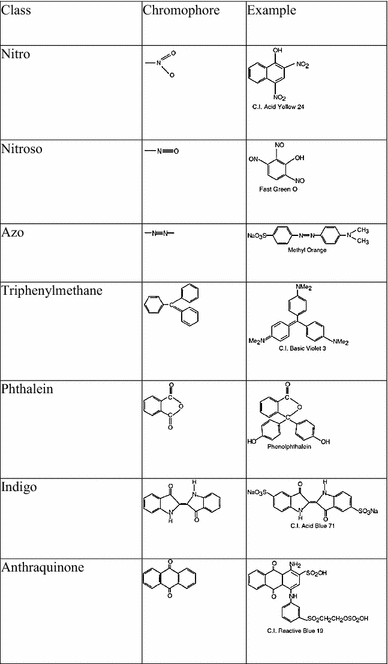
The major structure element responsible for light absorption in dye molecules is the chromosphere group, i.e., a delocalized electron system with conjugated double bonds. Usually chromospheres contain heteroatoms such as N, O, and S, with non-bonding electrons. Common classes of dyes, based on the chromosphere present, are shown in Table
1
[
8
–
11
]. Dyes were also usually classified based on their particle charge upon dissolution in aqueous application medium [
12
,
13
], to cationic (all basic dyes), anionic (direct, acid, and reactive dyes), and non-ionic (dispersed dyes) as shown in Table
2
[
14
,
15
].
Table 1
Synthetic dye structures according to their chromophores adapted from [
8
–
11
]
Table 2
Classification of dyes based on their chemical nature adapted from [
14
,
15
]
Class
Substrate
Method of application
Chemical types
Acid dyes
Wool, nylon, silk, inks, leather and paper
Generally from neutral to acidic bath
Anthraquinone, xanthene, azo, nitro, and triphenylmethane
Basic dyes
Inks, paper, polyacrylonitrile, treated nylon, and polyester
Applied from neutral or a little alkaline bath containing additional electrolyte
Phthalocyanine, azo, oxazine, and stilbene
Disperse dyes
Polyamide, acrylic polyester, acetate, and plastics
Fine aqueous dispersions often applied by high-temperature/pressure or lower temperature carrier methods; dye may be padded on cloth and thermo fixed
Benzodifuranone, azo, anthraquinone, nitro, and styryl
Reactive dyes
Wool, cotton, silk and nylon
Reactive site on dye reacts with functional group on fiber to bind dye covalently under influence of heat and pH
Anthraquinone, formazan, phthalocyanine, azo, oxazine and basic
Sulphur dyes
Rayon and cotton
Aromatic substrate vatted with sodium sulphide and reoxidized to insoluble sulphur-containing products on fiber
Indeterminate structures
Vat dyes
Wool and cotton
Water-insoluble dyes solubilized by dropping in sodium hydrogen sulphite, then exhausted on reoxidized and fiber
Indigoids and anthraquinone
Carbon nanotubes (CNTs)
The discovery of carbon nanotubes in 1991 by Iijima [
16
] brought revolutionary changes into the field of nano-adsorbents during the last decade that showed a boom as evidenced from the huge number of literature. Carbon nanotubes are basically rolled up graphene sheets (hexagonal structures) into cylindrical form and capped with half shape of fullerene structure [
5
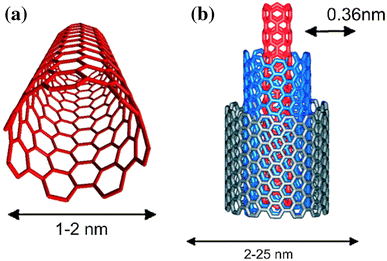
]. There are two types of carbon nanotubes (Fig.
1
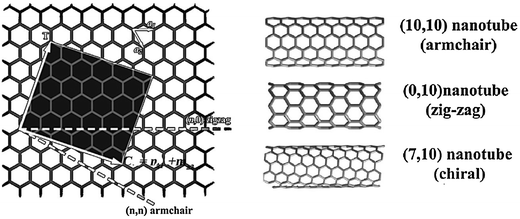
): (a) single-walled carbon nanotubes (SWCNTs), that can be considered as a single graphene sheet rolled into a cylinder and (b) multi-walled carbon nanotubes (MWCNTs), which can be considered as stacking of concentric layers of several graphene sheets in the form of cylinders with an interspacing of 0.34 nm. Based on the atomic arrangement there are three types of structures: (1) zigzag, (2) armchair and (3) chiral structures (Fig.
2
) [
5
,
17
]. The properties of carbon nanotubes are highly dependent on morphology, size and diameter [
3
]. Carbon nanotubes can be metallic or semiconducting depending on the atomic arrangement of carbon nanotubes. Initially, MWCNTs were prepared by Iijima using arc evaporation method in 1991 [
16
–
18
]. Later on, the same researcher reported the discovery of SWCNT in 1993 prepared by arc evaporation of metal impregnated (Fe–graphite) electrodes in the presence of methane–argon [
18
,
19
].
Fig. 1
Schematics of a SWCNTs (
a
) and MWCNTs (
b
)
Fig. 2
Molecular models of exhibited by SWNTs based on the chirality
In addition to the pioneer study of Iijima for the preparation of MWCNTs and SWCNT using arc evaporation method [
16
–
19
], other methods have been reported including laser ablation [
19
], chemical vapor deposition [
20
], electrolysis [
20
], flame synthesis [
19
], etc. It is worth mentioning that arc evaporation method, laser ablation and chemical vapor deposition are the most common techniques which are used broadly for synthesis of CNTs [
20
,
21
].
The adsorptive surface of the CNTs by nature is highly hydrophobic [
21
]. To overcome this problem in raw CNTs, different methods of surface modification have been pursued using non-covalent [
22
] and covalent functionalization [
23
] strategies.
CNTs surface modifications have been conventionally classified mainly into three categories depending on the method for achieving modification [
24
,
25
]: (1) mechanical, (2) physicochemical, and (3) irradiation. Physicochemical methods had been most widely adopted, namely, covalent surface modification and non-covalent surface modification, depending on whether or not covalent bonding between the CNTs and the functional groups and/or modifier molecules is involved in the surface modification process [
24
–
27
].
Non-covalent functionalization strategies do not have any effect on the physical properties of the CNTs because they keep the structure of intrinsic
sp2
hybridized orbital unchanged. This can be done by taking advantage of the
π
–
π
interaction between conjugated molecules and the graphitic sidewall of CNTs [
24
–
26
]. Other methods such as non-covalent hydrophobic interactions (amphiphilic molecules) with aromatic surface of CNTs in aqueous media have also been explored, which can reduce the hydrophobic interface between the CNTs and their polar environment [
27
–
33
].
Covalent functionalization depends on the chemical reaction between the carbon atoms of CNTs and conjugation of hydrophilic organic molecules on the surface of CNTs. The ‘ends and defects’ and ‘side walls’ functionalizations are the two subcategories of covalent functionalization, whereas the former one is more specific and reactive than the later [
28
–
34
].
The chemical treatment of pristine CNTs with most widely used strong oxidative agents (concentrated H
2
SO
4
and HNO
3
with molar ratio 3:1) generate the oxygenated groups such as carboxylic, ketone, alcohol, and ester at ‘ends and defects’ sites of CNTs. This treatment not only generates the various functional groups, but also cut and shortens the CNTs into the smaller pieces. Side wall functionalization introduces higher concentration of covalently attached functional groups on the CNTs surface with the trade-off of significant perturbation in the electronic structure [
35
–
38
]. A more detailed account about the recent progress in the chemical modifications of CNTs was reviewed by Karousis et al. [
39
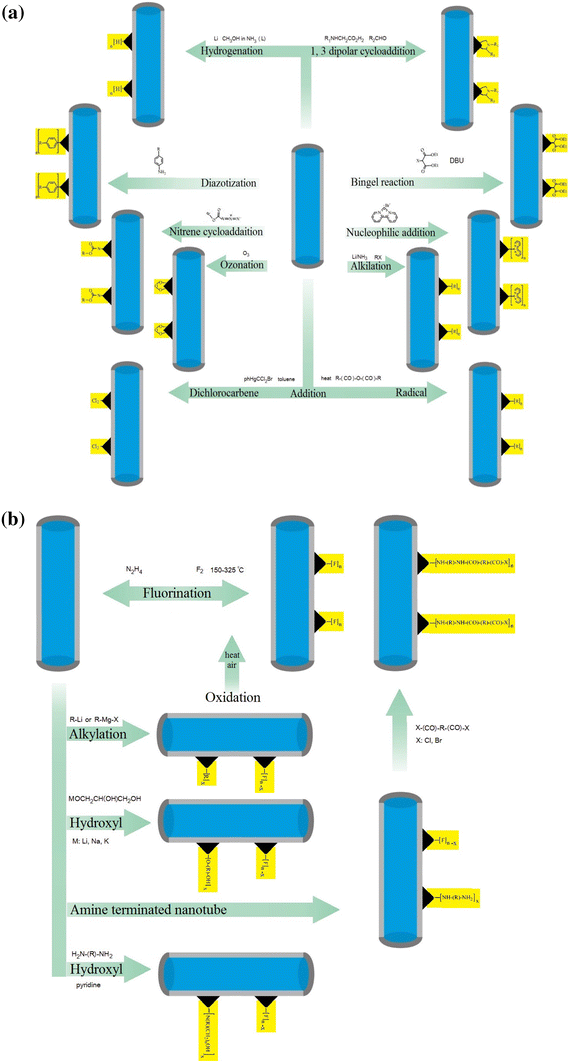
]. In this review, we summarized the different functionalization schemes of CNTs in Fig.
3
. This shows that different functionalities have added on CNT surfaces through different routes. Such treatments increase the affinity of CNT towards wastewater pollutants, which are subsequently trapped into the nanotube’s surface [
17
].
Fig. 3
Surface functionalization of CNTs through different routes: normal methods (
a
), other related methods (
b
)
Treatment with different acidic and oxidizing agents on CNTs leads to different surface area and adsorption capacity. Some of them are listed in Table
3
with corresponding surface area and adsorption capacities [
40
]. In addition, functionalities can increase the solubility of CNTs and bring CNTs to repulse each other, which help free movement of individual CNT in homogeneous solution without aggregation. Aggregation can decrease the affinity of interactions between synthetic dyes and nanotube surfaces [
17
].
Table 3
Adsorption capacities and surface area of CNTs [
40
]
CNTs (m2/g)
Adsorption capacity (mg/g)
Surface area
Pristine CNTs
1.10
82.20
H2O2 oxidized
2.60
130.0
HNO3 oxidized
5.10
84.30
KMnO4 oxidized
11.00
128.0
Adsorption of synthetic dyes on CNTs and a comparison with activated carbon (AC)
Adsorption is commonly employed as a polishing step to remove synthetic dyes contaminants in wastewater treatment. Efficiency of conventional adsorbents is usually limited by the surface area or active sites, the lack of selectivity, and the adsorption kinetics [
41
]. CNT adsorbents offer significant improvement with their extremely high specific surface area and associated sorption sites, short intraparticle diffusion distance, and tunable pore size and surface chemistry [
42
]. In addition, CNTs can be considered as one of the most promising absorbents for this purpose because of their large adsorption capacity for synthetic dyes [
5
]. Indeed, MWCNTs have been shown to outperform cadmium hydroxide nanowire-loaded AC (Cd(OH)
2
-NW-AC) with respect to their efficient removal of safranine O (SO) from wastewater [
43
]. However, only a few studies on the application of CNTs for dye removal from aqueous solution have been reported [
44
–
49
] and the CNTs were typically directly used without further treatment [
45
–
47
,
49
] (Table
4
).
Table 4
Removal of synthetic dyes using CNTs
CNTs
Modification method
Dye adsorbed
Adsorption effect (mg g−1)
References
SWCNTs
Pristine
BR46
38.35
[41]
SWCNTs
Oxidized
BR46
49.45
[41]
MWCNTs
Refluxed pristine MWCNTs in concentrated HNO3/H2SO4 mixture for 4 h
TB, MB, MG, BR
Not provided
[44]
MWCNTs
Untreated
ARS
161.290
[45]
MWCNTs
Untreated
morin
26.247
[45]
MWCNTs
Untreated
ECR
73.18
[46]
MWCNTs
Untreated
Arsenazo(III)
Not provided
[47]
MWCNTs
Oxidized using concentrated nitric acid
MO
Not provided
[48]
MWCNTs
Untreated
RRM
335.7
[49]
MWCNTs
Oxidized
MR
108.7
[50]
MWCNTs
Oxidized
BTB
55.3
[51]
MWCNTs
Oxidized and microwave method
MO
306
[52]
MWCNTs
Untreated
MB
132.6
[53]
MWCNTs
Untreated
MB
77.83 ± 1.6
[54]
MWCNTs
Untreated
RRM
335.7
[55]
MWCNTs
CNT-impregnated chitosan hydrogel beads (CSBs)
CR
450.4
[56]
MWCNTs
CSBs prepared by using sodium dodecyl sulfate (SDS)
CR
375.94
[57]
SWCNTs
Untreated
RB29
496
[59]
MWCNTs
Untreated
CR
Not provided
[61]
MWCNTs
Untreated
MO
Not provided
[62]
MWCNTs
Alkali-activated
MB
399
[63]
MWCNTs
Alkali-activated
MO
149
[63]
MWCNTs
Untreated
AR18
166.67
[64]
MWCNTs
Untreated
MB
59.7
[65]
MWCNTs
Untreated
AR183
5.2
[65]
MWCNTs
Untreated
AB 161
91.68 %
[66]
MWCNTs
Untreated
RB4
69
[67]
MWCNTs
Untreated
AR183
45
[67]
MWCNTs
Fabricated magnetic MWCNTs by Fenton’s reagent method (M-MWCNTs)
MO
28
[68]
MWCNTs
Oxidized
DMBAR
15.52
[69]
MWCNTs
Produced by Ni nanoparticle catalyzed pyrolysis of methane in a hydrogen and nitrogen flow at 650 °C
MB
188.68
[70]
MWCNTs
Untreated
Triclosan
153.1
[71]
SWCNTs
Untreated
RR120
426.49
[72]
Functionalization of CNTs has been undertaken because the introduction of various functional groups can provide new adsorption sites for synthetic dyes. Among such modifications, oxidation is an easy method of introducing hydroxyl and carbonyl groups to the sidewalls of CNTs. Oxidized MWCNTs have been shown to be effective in the removal of methyl red (MR) [
50
] and methylene blue (MB) from aqueous solutions [
51
].
Mahmoodian et al. [
52
] studied the adsorption of methyl orange (MO) onto pHEMA–CS-f-MWCNT and reported an adsorption capacity of 306 mg g
−1
for removal of MO onto CNTs. Shahryari et al. [
53
] performed the same batch of experiments on MWCNTs having a higher surface area of 280 m
2
/g as compared to that of CNTs used by Mahmoodian et al. and reported a higher methyl blue (MB) adsorption of 132.6 mg g
−1
at 310 K. We suggest that the adsorption capacity also depends on the experimental conditions and nature and type of the adsorbent. In ref. [
53
] the authors used MWCNTs as adsorbent while ref. [
52
] reported the use of CNTs.
Rodríguez et al. [
54
] compared the adsorption capacity of cationic MB and anionic orange II (OII) from aqueous solution by using MWNTs and carbon nanofibers (CNF) as adsorbents. The adsorption of MB onto CNF was slightly higher than adsorption onto MWCNTs, while for OII the adsorption capacity of CNF was (66.12 ± 2.11) mg g
−1
and MWCNTs was 77.83 ± 1.6 mg g
−1
.
In another study, the reverse adsorption capacity was observed for the removal of Reactive Red M-2BE (RRM) onto MWCNTs and powdered activated carbon (PAC) while PAC had a higher surface area of 728.7 m
2
/g than that of MWCNTs (180.9 m
2
/g) [
55
]. The maximum amounts of RRM uptake were 335.7 and 260.7 mg g
−1
for MWCNT and PAC, respectively. Accordingly, we can justify the higher adsorption capacity on the basis of the higher average pore diameter of MWCNTs which was 7.62 nm as compared to 3.52 nm for PAC. Due to the larger pore size, the dyes molecules can easily be diffused form surface though the pores of MWCNTs.
The development of CNT-impregnated chitosan hydrogel beads (CSBs) for the removal of Congo red (CR) has been investigated [
56
,
57
]. In Langmuir adsorption modeling, CSBs demonstrated a higher maximum adsorption capacity than normal chitosan CBs (450.4 vs. 200.0 mg g
−1
) [
56
]. A new generation of CSBs prepared by using sodium dodecyl sulfate (SDS) and MWCNTs to improve their mechanical properties has demonstrated a high maximum adsorption capacity for CR (375.94 mg g
−1
) [
57
]. Compared to MWCNTs and hybrid CNTs (HCNTs), SWCNTs can demonstrate better adsorption properties for organic contaminants because of their higher specific surface area [
41
]. Indeed, SWCNTs are more efficient for the removal of benzene and toluene, and has shown maximum adsorption capacities of 9.98 and 9.96 mg g
−1
, respectively [
58
]. A maximum adsorption capacity of 496 mg g
−1
was achieved when reactive blue 29 (RB29) was removed from aqueous solution using SWCNTs [
59
,
60
].
CNTs have shown higher efficiency than AC on adsorption of various synthetic dyes [
73
]. The high adsorption capacity mainly stems from the large specific surface area and the diverse contaminant–CNT interactions. The available surface area for adsorption on individual CNTs is their external surfaces [
74
]. In the aqueous phase, CNTs form loose bundles/aggregates due to the hydrophobicity of their graphitic surface, reducing the effective surface area [
73
–
75
]. On the other hand, CNT aggregates contain interstitial spaces and grooves, which are high adsorption energy sites for organic molecules [
75
]. Although activated carbon possesses comparable measured specific surface area as CNT bundles, it contains a significant number of microspores inaccessible to bulky organic molecules such as many antibiotics and pharmaceuticals [
76
]. Thus CNTs have much higher adsorption capacity for some bulky organic molecules because of their larger pores in bundles and more accessible sorption sites.
A major drawback of AC is its low adsorption affinity for low molecular weight polar organic compounds. CNTs strongly adsorb many of these polar organic compounds due to the diverse contaminant–CNT interactions including hydrophobic effect,
π
–
π
interactions, hydrogen bonding, covalent bonding, and electrostatic interactions [
74
]. The
π
electron-rich CNT surface allows
π
–
π
interactions with organic molecules with C=C bonds or benzene rings, such as poly-aromatic hydrocarbons (PAHs) and polar aromatic compounds [
77
,
78
]. Organic compounds which have –COOH, –OH, –NH
2
functional groups could also form hydrogen bond with the graphitic CNT surface which donates electrons [
79
,
80
]. Electrostatic attraction facilitates the adsorption of positively charged organic chemicals such as some antibiotics at suitable pH [
76
].
Conclusion
This article reviews the different adsorption technique using CNTs used for the removal of synthetic dyes from wastewaters. Many reports confirmed that CNTs have higher efficiency than AC on the adsorption of various synthetic dyes. A wide range of CNT-based adsorbents obtained from surface modification of CNTs has been investigated. Several researchers demonstrated that the surface modification of CNTs has a high impact on improving their performance and ability to adsorb synthetic dyes from aqueous solutions. It has also been demonstrated that surface modification of CNTs, in general, improves the adsorption capacity of adsorbents probably due to the increased number of active binding sites resulting from surface modification and formation of new functional groups that favors the adsorption of synthetic dyes. Although surface modification of CNTs can enhance the adsorption of synthetic dyes, the cost of chemicals used and methods of modification also have to be taken into consideration. As far as the modification of an adsorbent surface might change the overall properties of the adsorbent, characterization studies involving surface area pore size, porosity are recommended for any future work on surface modification of CNTs.
Acknowledgments
The authors would like to thank Islamic Azad University.
References
Gong et al. (2009) Removal of cationic dyes from aqueous solution using magnetic multi-wall carbon nanotube nanocomposite as adsorbent 164(2) (pp. 1517-1522) 10.1016/j.jhazmat.2008.09.072
Zare et al. (2013) Studies of ab initio and Monte Carlo simulation on interaction of fluorouracil anticancer drug with carbon nanotube 3(1) (pp. 1-8)
Unknown ()
Wang et al. (2008) Sorption of organic contaminants by carbon nanotubes: influence of adsorbed organic matter 42(9) (pp. 3207-3212) 10.1021/es702971g
Gupta and Kumar (2013) Adsorptive removal of dyes from aqueous solutions onto carbon nanotubes: a review (pp. 24-34) 10.1016/j.cis.2013.03.003
Moradi et al. (2013) Isotherm, thermodynamic, kinetics, and adsorption mechanism studies of Ethidium bromide by single-walled carbon nanotube and carboxylate group functionalized single-walled carbon nanotube (pp. 224-229) 10.1016/j.jcis.2012.11.013
Khani and Moradi (2013) Influence of surface oxidation on the morphological and crystallographic structure of multi-walled carbon nanotubes via different oxidants 3(1) 10.1186/2193-8865-3-73
Ali (2010) Biodegradation of synthetic dyes—a review 213(1–4) (pp. 251-273) 10.1007/s11270-010-0382-4
Shahryari-ghoshekandi and Sadegh (2014) Kinetic study of the adsorption of synthetic dyes on graphene surfaces 9(4) (pp. 267-278)
Yagub et al. (2014) Dye and its removal from aqueous solution by adsorption: a review (pp. 172-184) 10.1016/j.cis.2014.04.002
Forgacs et al. (2004) Removal of synthetic dyes from wastewaters: a review 30(7) (pp. 953-971) 10.1016/j.envint.2004.02.001
Mishra and Tripathy (1993) A critical review of the treatments for decolourization of textile effluent
Purkait et al. (2005) Adsorption of eosin dye on activated carbon and its surfactant based desorption 76(2) (pp. 135-142) 10.1016/j.jenvman.2005.01.012
Gupta (2009) Application of low-cost adsorbents for dye removal—a review 90(8) (pp. 2313-2342) 10.1016/j.jenvman.2008.11.017
Gupta et al. (2015) Decolorization of Mixture of Dyes: a Critical Review 1(1) (pp. 71-94)
Das et al. (2014) Multifunctional carbon nanotubes in water treatment: the present, past and future (pp. 160-179) 10.1016/j.desal.2014.09.032
Iijima and Ichihashi (1993) Single-shell carbon nanotubes of 1-nm diameter (pp. 603-605) 10.1038/363603a0
Terrones (2003) Science and technology of the twenty-first century: synthesis, properties, and applications of carbon nanotubes 33(1) (pp. 419-501) 10.1146/annurev.matsci.33.012802.100255
Farhat and Scott (2006) Review of the arc process modeling for fullerene and nanotube production 6(5) (pp. 1189-1210) 10.1166/jnn.2006.331
Rafique and Iqbal (2011) Production of carbon nanotubes by different routes—a review 1(02) 10.4236/jeas.2011.12004
Sadegh et al. (2014) Study in synthesis and characterization of carbon nanotubes decorated by magnetic iron oxide nanoparticles 4(4) (pp. 129-135) 10.1007/s40089-014-0128-1
Bahr et al. (2001) Dissolution of small diameter single-wall carbon nanotubes in organic solvents (pp. 193-194) 10.1039/b008042j
Chen et al. (2001) Noncovalent sidewall functionalization of single-walled carbon nanotubes for protein immobilization (pp. 3838-3839) 10.1021/ja010172b
Islam et al. (2003) High weight fraction surfactant solubilization of single-wall carbon nanotubes in water (pp. 269-273) 10.1021/nl025924u
Richard et al. (2003) Supramolecular self-assembly of lipid derivatives on carbon nanotubes (pp. 775-778) 10.1126/science.1080848
O’connell et al. (2002) Band gap fluorescence from individual single-walled carbon nanotubes (pp. 593-596) 10.1126/science.1072631
Moore et al. (2003) Individually suspended single-walled carbon nanotubes in various surfactants (pp. 1379-1382) 10.1021/nl034524j
Bachilo et al. (2002) Structure assigned optical spectra of single walled carbon nanotubes (pp. 2361-2366) 10.1126/science.1078727
Hagen and Hertel (2003) Quantitative analysis of optical spectra from individual single-wall carbon nanotubes (pp. 383-388) 10.1021/nl020237o
Zorbas et al. (2004) Preparation and characterization of individual peptide wrapped single-walled carbon nanotubes (pp. 7222-7227) 10.1021/ja049202b
Zorbas et al. (2005) Importance of aromatic content for peptide/single-walled carbon nanotube interactions (pp. 12323-12328) 10.1021/ja050747v
Kam and Dai (2005) Carbon nanotubes as intracellular protein transporters: generality and biological functionality (pp. 6021-6026) 10.1021/ja050062v
Zheng et al. (2003) Structurebased carbon nanotube sorting by sequence-dependent DNA assembly (pp. 1545-1548) 10.1126/science.1091911
Zhang et al. (2010) Functionalized carbon nanotubes for potential medicinal applications 15(11/12) (pp. 428-435) 10.1016/j.drudis.2010.04.005
Kesharwani et al. (2012) Carbon nanotubes exploration in cancer cell lines 17(17–18) (pp. 1023-1030) 10.1016/j.drudis.2012.05.003
Karousis et al. (2010) Current progress on the chemical modification of carbon nanotubes 110(9) (pp. 5366-5397) 10.1021/cr100018g
Ali (2012) New generation adsorbents for water treatment (pp. 5073-5091) 10.1021/cr300133d
Moradi (2013) Adsorption behavior of basic red 46 by single-walled carbon nanotubes surfaces (pp. 286-301) 10.1080/1536383X.2011.572317
Derakhshan and Moradi (2013) The study of thermodynamics and kinetics methyl orange and malachite green by SWCNTs, SWCNT–COOH and SWCNT–NH 2 as adsorbents from aqueous solution 20(5) (pp. 3186-3194) 10.1016/j.jiec.2013.11.064
Sharma et al. (2015) Nanocomposite pectin Zirconium (IV) selenotungstophosphate for adsorptional/photocatalytic remediation of methylene blue and malachite green dyes from aqueous system (pp. 957-964) 10.1016/j.jiec.2014.05.001
Bahgat et al. (2011) Synthesis and modification of multiwalled carbon nano-tubes (MWCNTs) for water treatment applications (pp. 307-313) 10.1016/j.jaap.2011.07.002
Ghaedi et al. (2011) Multiwalled carbon nanotubes as adsorbents for the kinetic and equilibrium study of the removal of alizarin red S and morin (pp. 2511-2520) 10.1021/je2000414
Gupta et al. (2014) Biosorption and reuse potential of a blue green alga for the removal of hazardous reactive dyes from aqueous solutions (pp. 179-191) 10.1080/10889868.2014.918574
Ghaedi et al. (2011) Activated carbon and multiwalled carbon nanotubes as efficient adsorbents for removal of arsenazo(III) and methyl red from waste water (pp. 438-449) 10.1080/02772248.2010.540244
Hu et al. (2011) Removal of methyl orange from aqueous solution by magnetic carbon nanotubes (pp. 205-209)
Machado et al. (2011) Adsorption of reactive red M-2BE dye from water solutions by multi-walled carbon nanotubes and activated carbon (pp. 1122-1131) 10.1016/j.jhazmat.2011.06.020
Ghaedi and Kokhdan (2012) Oxidized multiwalled carbon nanotubes for the removal of methyl red (MR): kinetics and equilibrium study (pp. 317-325) 10.1080/19443994.2012.719355
Gupta et al. (2006) Adsorption studies on the interaction of some azo dyes (naphthol red-J and direct orange) with nontronite mineral 298(1) (pp. 79-86) 10.1016/j.jcis.2005.11.041
Mahmoodian et al. (2015) Enhanced removal of methyl orange from aqueous solutions by poly HEMA–chitosan-MWCNT nano-composite (pp. 189-198) 10.1016/j.molliq.2014.10.040
Shahryari et al. (2010) Experimental study of methylene blue adsorption from aqueous solutions onto carbon nano tubes 2147483647(2) (pp. 016-028)
Rodríguez et al. (2010) Adsorption of dyes on carbon nanomaterials from aqueous solutions 45(12) (pp. 1642-1653) 10.1080/10934529.2010.506137
Machado et al. (2011) Adsorption of Reactive Red M-2BE dye from water solutions by multi-walled carbon nanotubes and activated carbon 192(3) (pp. 1122-1131) 10.1016/j.jhazmat.2011.06.020
Chatterjee et al. (2010) Adsorption of Congo red by chitosan hydrogel beads impregnated with carbon nanotubes (pp. 1800-1806) 10.1016/j.biortech.2009.10.051
Chatterjee et al. (2011) Effect of the addition mode of carbon nanotubes for the production of chitosan hydrogel core–shell beads on adsorption of Congo red from aqueous solution (pp. 4402-4409) 10.1016/j.biortech.2010.12.117
Bina et al. (2012) Benzene and toluene removal by carbon nanotubes from aqueous solution (pp. 3-25)
Nadafi et al. (2011) The combination and optimization study on RB29 dye removal from water by peroxy acid and single-wall carbon nanotubes (pp. 237-242) 10.5004/dwt.2011.1980
Jahangiri-Rad et al. (2013) Sequential study on reactive blue 29 dye removal from aqueous solution by peroxy acid and single wall carbon nanotubes: experiment and theory 10(1) (pp. 1-8) 10.1186/1735-2746-10-1
Ramazani et al. (2011) Multiwalled carbon nanotubes as efficient adsorbent for the removal of Congo red (pp. 2514-2520)
Yao et al. (2011) Equilibriumand kinetic studies of methyl orange adsorption on multiwalled carbon nanotubes (pp. 82-89) 10.1016/j.cej.2011.03.031
Ma et al. (2012) Enhanced adsorptive removal of methyl orange and methylene blue from aqueous solution by alkali-activated multiwalled carbon nanotubes (pp. 5749-5760) 10.1021/am301053m
Shirmardi et al. (2012) Kinetics and equilibrium studies on adsorption of acid red 18 (azo-dye) using multiwall carbon nanotubes (MWCNTs) from aqueous solution (pp. 2371-2383) 10.1155/2012/541909
Wang et al. (2012) Synergistic and competitive adsorption of organic dyes on multiwalled carbon nanotubes (pp. 34-40) 10.1016/j.cej.2012.05.008
Geyikci (2013) Adsorption of acid blue 161 (AB 161) dye from water by multi-walled carbon nanotubes (pp. 579-593) 10.1080/1536383X.2011.643428
Wang et al. (2012) A comparative study on the adsorption of acid and reactive dyes on multiwall carbon nanotubes in single and binary dye systems (pp. 1563-1569) 10.1021/je3001552
Yu et al. (2012) Magnetic carbon nanotubes synthesis by Fenton’s reagent method and their potential application for removal of azo dye from aqueous solution (pp. 175-183) 10.1016/j.jcis.2012.04.024
Ghaedi et al. (2013) Oxidized multiwalled carbon nanotubes as adsorbents for kinetic and equilibrium study of removal of 5-(4-dimethyl amino benzylidene)rhodanine (pp. 1691-1699) 10.1007/s13369-012-0419-7
Li et al. (2013) Comparative study of methylene blue dye adsorption onto activated carbon, graphene oxide, and carbon nanotubes (pp. 361-368) 10.1016/j.cherd.2012.07.007
Zhou et al. (2013) Equilibrium, kinetic, and thermodynamic studies on the adsorption of triclosan onto multi-walled carbon nanotubes (pp. 539-547) 10.1002/clen.201200082
Bazrafshan et al. (2013) Decolorisation of reactive red 120 dye by using single-walled carbon nanotubes in aqueous solutions
Pan and Xing (2008) Adsorption Mechanisms of Organic Chemicals on Carbon Nanotubes 42(24) (pp. 9005-9013) 10.1021/es801777n
Yang and Xing (2010) Adsorption of organic compounds by carbon nanomaterials in aqueous phase: Polanyi theory and Its application 110(10) (pp. 5989-6008) 10.1021/cr100059s
Pan et al. (2008) Adsorption and hysteresis of bisphenol A and 17 alpha-ethinyl estradiol on carbon nanomaterials 42(15) (pp. 5480-5485) 10.1021/es8001184
Ji et al. (2009) Mechanisms for strong adsorption of tetracycline to carbon nanotubes: a comparative study using activated carbon and graphite as adsorbents 43(7) (pp. 2322-2327) 10.1021/es803268b
Chen et al. (2007) Adsorption of polar and nonpolar organic chemicals to carbon nanotubes 41(24) (pp. 8295-8300) 10.1021/es071230h
Lin and Xing (2008) Adsorption of phenolic compounds by carbon nanotubes: role of aromaticity and substitution of hydroxyl groups 42(19) (pp. 7254-7259) 10.1021/es801297u
Yang et al. (2008) Aqueous adsorption of aniline, phenol, and their substitutes by multi-walled carbon nanotubes 42(21) (pp. 7931-7936) 10.1021/es801463v
Mezohegyi et al. (2012) Towards advanced aqueous dye removal processes: a short review on the versatile role of activated carbon (pp. 148-164) 10.1016/j.jenvman.2012.02.021