Introduction of a new high yielding method for the synthesis of 1, 8-dioxo-octahydroxanthenes using W-doped ZnO nanocomposite

Abstract

W-doped ZnO nanocomposite was easily prepared by sol–gel method. The sample was characterized using a variety of techniques including X-ray diffraction, scanning electron microscopy, transmission electron microscopy, inductively coupled plasma and BET surface area measurement. This reagent can be used as an efficient and heterogeneous catalyst for the preparation of 1, 8-dioxo-octahydroxanthenes from aldehydes in ethanol under mild conditions. The structures of the products were characterized by their physical constants, comparison with authentic samples and IR, 1 H NMR and 13 C NMR spectroscopy. Easy preparation of the catalyst, mild reaction conditions, easy workup procedure, excellent yields and short reaction times are some advantages of this work. In addition, in this article and for the first time the preparation of 1, 8-dioxo-octahydroxanthenes from the protected derivatives of aldehydes including oximes, semicarbazones and 1,1-diacetates is reported.


Background

Xanthenes and their derivatives have received special attention due to their diverse array of biological activities such as anti-inflammatory, antibacterial and antiviral activities [ 13 ]. Furthermore, these compounds can be used as leuco dyes [ 4 ], in laser technology [ 5 ] and as pH-sensitive fluorescent materials for the visualization of biomolecular assemblies [ 6 ]. Because of their wide range of synthetic, industrial and pharmacological applications, there are several reports in the literature for the synthesis of these types of compounds. 1, 8-Dioxo-octahydroxanthene derivatives are one of the important types of xanthenes that could be easily prepared from the reaction of aromatic aldehydes with dimedone and/or cyclohexadione. Various catalysts were reported for the promotion of this reaction including SbCl 3 /SiO 2 [ 7 ], SiO 2 -R-SO 3 H [ 8 ], MCM-41-SO 3 H [ 9 ], p -dodecylbenzene sulfonic acid [ 10 ], triethyl benzyl ammonium chloride [ 11 ], diammonium hydrogen phosphate [ 12 ] and silica-supported Preyssler nanoparticles [ 13 ], silica sulfuric acid [ 14 ], Amberlyst-15 [ 15 ] and trichloroisocyanuric acid (TCCA) [ 16 ] are examples. However, these methods suffer from one or more disadvantages such as: long reaction times, low yields, use of toxic solvents, requirement of the excess amounts of the reagents/catalysts and harsh reaction conditions. Therefore, it is important to find more efficient catalysts and methods for the synthesis of these types of compounds.

Oximes and semicarbazones are used not only for the isolation, purification and characterization, but also for the protection of carbonyl compounds [ 17 , 18 ]. Since oximes can be prepared from non-carbonyl compounds [ 1921 ], the regeneration of carbonyl compounds from oximes provides an alternative method for the preparation of aldehydes and ketones. In addition, oximes can be used as intermediates for the preparation of nitriles [ 2224 ], nitrones [ 25 ], amines [ 26 ], amides [ 27 ], isoxazoles [ 28 ] and chiral α -sulfinyl oximes [ 29 ]. Because of their remarkable stability to neutral and basic conditions [ 30 , 31 ], acylals (1,1-diacetates) have been introduced as the other suitable protection group for aldehydes. In addition, they can be converted into other useful functional groups by reaction with appropriate nucleophiles [ 32 ] and used as carbonyl surrogates for asymmetric synthesis [ 33 ]. 1,1-Diacetates, on the other hand, are ambient substrates containing two types of reactive carbon centers, the carbon atom of the protected aldehyde function and the carbonyl group in the ester moieties [ 34 ]. To the best of our knowledge and in spite of the above-mentioned important applicabilities of oximes, semicarbazones and acylals, there is no report about the preparation of biscoumarins using these types of substrates.

In recent years and because of the unique properties of nanoparticles, synthetic chemists have focused on the synthesis and characterization of these types of catalysts with lower dimensions named as nanocatalysts [ 35 ]. Among these types of catalysts, nano metal oxides are widely used in organic reactions, of which zinc oxide as a solid acid catalyst has found considerable applications in different types of important organic transformations [ 3644 ]. To improve the photocatalytic activity of ZnO, many dopant ions (metals and transition metals) were doped into ZnO [ 4550 ]. In 2008, nanosized W-doped TiO 2 photocatalysts were synthesized and used for the oxidation degradation of methyl orange by Tian et al. [ 51 ]. The results showed that the photocatalytic activity of W-doped TiO 2 was much higher than that of the undoped TiO 2 . They believed that the enhanced photocatalytic efficiency of the W-doped TiO 2 can be attributed to the presence of surface acidity. In other words, this catalyst exhibits surface acidity due to the presence of Lewis and Bronsted acidic sites related to W species. In 2013 and on the basis of Ma’s report, Moafi et al. [ 52 ] showed that doping of ZnO with 4 % mol of tungsten, in the same manner, can improve the photocatalytic activity of this reagent in the photodegradation of methylene blue.

On the basis of this report, we anticipate that W-doped ZnO nanocomposite can be used as an efficient solid acid catalyst for the speed-up of the reactions which need the use of an acidic catalyst. So, we were interested to investigate the applicability of this reagent in the promotion of the synthesis of 1, 8-dioxo-octahydroxanthenes. Our initial studies clarified that to obtain the best results, the amounts of tungsten should be enhanced to 8 mol%. Therefore, we prepared, identified and applied the % 8 mol W-doped ZnO nano composite in the promotion of the requested reactions.

Methods

General

All chemicals were purchased from Merck, Aldrich and Fluka Chemical Companies and used without further purification. Products were characterized by their physical constants and comparison with authentic samples. The purity determination of the substrates and reaction monitoring were accompanied by TLC using silica gel SIL G/UV 254 plates.

To investigate the morphology of the W-doped sample scanning electron microscopy (SEM) images were obtained on a Philips, XL30. The particles sizes were obtained by transmission electron microscope (TEM) images on a Philips CM10 instrument with an accelerating voltage of 100 kV. Elemental analyses of the samples were carried out by ICP-OES. Measurements were made on an ICP-OES Vista-Pro (Varian) after dissolution of the samples in an HNO 3 :HF:H 2 O mixture.

The BET specific surface areas of the synthesized nanocomposite were determined by nitrogen adsorption at liquid nitrogen temperature on a Sibata SA-1100 surface area analyzer. X-ray diffraction measurements were recorded by a Philips PW1840 diffractometer with Cu–Kα radiation, scan rate 0.02 2 θ /s and within a range of 2 θ of 10°–80° at room temperature.

The IR spectra were recorded on a Perkin Elmer 781 Spectrophotometer. In all the cases, the 1 H NMR spectra were recorded with Bruker Avance 300, 400 and 500 MHz instruments. All chemical shifts are quoted in parts per million (ppm) relative to TMS using deuterated solvent. The 13 C NMR data were collected on Bruker Avance 100 MHz instrument. Melting points were recorded on a Büchi B-545 apparatus in open capillary tubes.

Catalyst preparation

The W-doped ZnO nanocomposite was prepared by sol–gel method using the precursors of zinc and tungsten [ 52 ]. Zinc acetate dihydrate [Zn(Ac) 2 .2H 2 O] was used as a zinc oxide source. In a typical procedure, 0.02 mol of zinc acetate dihydrate was dissolved in 50 mL of methanol and heated at 50 °C with stirring for half an hour. Then, certain amounts of sodium tungstate (8 mol% with respect to zinc acetate dihydrate) was dissolved in a mixture of water/methanol [10 mL (2:8)] under vigorous stirring and then the solution was added dropwise into the mixture of zinc acetate dihydrate and methanol, thus making precursor solution A. Afterward, 0.04 mol of sodium hydroxide was dissolved in 50 mL of methanol and heated at 50 °C with stirring for 1 h, making precursor solution B. To make ZnO nano-sol, the solution of sodium hydroxide (solution B) was added dropwise into the solution A under constant stirring for half an hour and then the mixture was heated at 50 °C for a further half an hour. Subsequently, a homogenous sol was obtained. The obtained solution was precipitated after continuous stirring for 2 h and cooling to room temperature. After 24 h, the colloidal solution was washed several times with methanol. Finally, the obtained precipitate was dried at 80 °C and then calcinated at 300 °C for 3 h. Similarly, 2, 4 and 6.0 mol% W-doped ZnO and undoped ZnO samples were also prepared by repeating the above procedure. The experimental results showed that the W-ZnO with 8 mol% W has the highest catalytic activity.

General procedure for the synthesis of 1, 8-dioxo-octahydroxanthenes

A mixture of dimedone and/or cyclohexadione (2 mmol), aldehyde and/or protected aldehyde (1 mmol) and W-ZnO (5 mg) in ethanol (3 mL) was stirred at room temperature and/or refluxing conditions for the appropriate time. After completion of the reaction [monitored by TLC: EtOAc: n -hexane (2:8)], hot ethanol (2 mL) was added and the mixture was filtered to separate the catalyst. Then the crude product was recrystallized from EtOH:H 2 O (95:5) to afford the pure product.

Results and discussion

Catalyst characterization

Powder X-ray diffraction

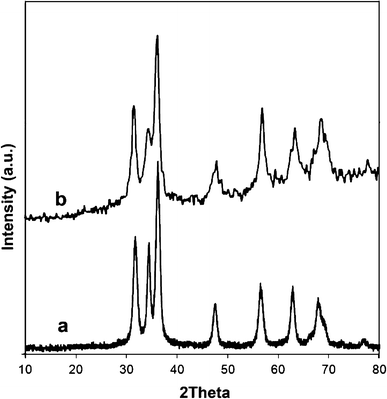
Figure  1 shows the XRD patterns of ZnO and W-doped ZnO nanocomposite. The W-doped ZnO nanocomposite showed a hexagonal wurtzite crystal structure and high crystallinity of ZnO. The peaks at 31.7º, 34.5º, 36.7º, 47.7º, 56.5º, 62.9º and 67.9º 2 θ are associated with the (100), (002), (101), (102), (110), (103) and (112) planes of the ZnO hexagonal wurtzite structure. The diffraction peaks of the W-ZnO are broad, indicating a small crystal size of this sample. The XRD pattern of the W-ZnO catalyst shows that there is no major change in the hexagonal crystal structure of ZnO after the tungsten-doping process. However, it can be indicated that W +6 ions are uniformly dispersed on ZnO nanoparticles in the form of highly dispersed WO 3 clusters. Meanwhile, the ionic radius of the dopant ion is the most important factor, which strongly influences the ability of the dopant to enter into the ZnO crystal lattice. If the ionic radius of the doping metal ions matches those of the lattice metal ion in oxides, the doping metal ion will substitute itself for the lattice in the doping reactive process (substitutional mode). While if the ionic radius of the dopant is much bigger or smaller than that of Zn 2+ , the dopant substituting for ZnO crystal lattice ions results in crystal lattice distortion. The ionic radius of W 6+ (60 pm) is smaller or closer than that of Zn 2+ ion (74 pm). Therefore, it would be possible that some W 6+ ions replace the lattice Zn 2+ ions and thus occupy the lattice Zn 2+ positions [ 52 ].

Fig. 1

XRD pattern of W-ZnO

There were no detectable peaks relating to the existence of a separate dopant metal phase in any corresponding pattern. This could be attributed to the fact that the dopant metals/metal oxides were too low in concentration and/or amorphous structure to be seen as a separate phase. The real W content in W-ZnO sample was measured by ICP-OES (Table  1 ). The weight ratio of W/Zn in the W-ZnO nanocomposite was 0.228 %.

Table 1

Some characteristics of W-ZnO

Sample

Crystalline structure

Contents

BET surface area (m2/g)

Pore volume (cm3/g)

TEM crystal size (nm)

Nominal (mol%)

ICP W/Zn (%)

W-ZnO (8 mol%)

Wurtzite

8

0.228

93.70

0.033

10–15

Surface area and pore distribution measurements

The surface area of the catalyst is the most important factor influencing catalytic activity. The surface area of W-ZnO nanocomposite was determined using the nitrogen gas adsorption method. The BET surface area of the prepared W-ZnO yielded a relatively high surface area (93.70 m 2 /g).

SEM analysis

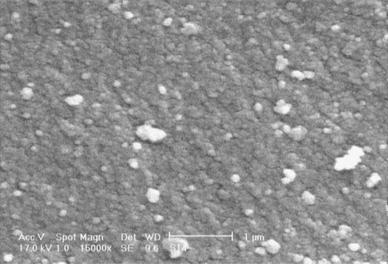
The surface morphology and dispersion of the sample were determined by scanning electron microscopy (SEM). Figure  2 shows SEM micrographs of 8 mol% W-ZnO. The image reveals that the particles in this sample have a relatively sphere-like morphology and the nanoparticles were composed of agglomerates of fine W-doped ZnO nanoparticles with particle size <100 nm. The small and uniform size of the prepared reagent can affect its catalytic performance.

Fig. 2

SEM image of W-ZnO

TEM analysis

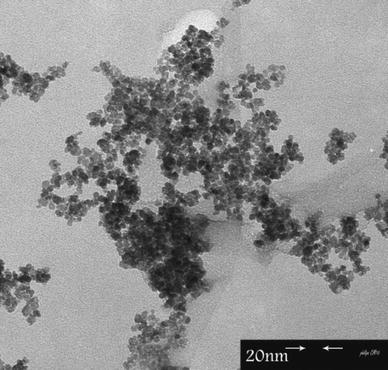
Figure  3 depicts transmission electron micrograph of 8 mol% W-ZnO. The TEM image of W-ZnO shows that the sample consists of fine particles with diameters <20 nm in size. On the other hand, the size of the W-ZnO nanoparticles was observed as aggregation of fine nanoparticles with average particle size of 10–15 nm (Table  1 ).

Fig. 3

TEM image of W-ZnO

Catalytic activity

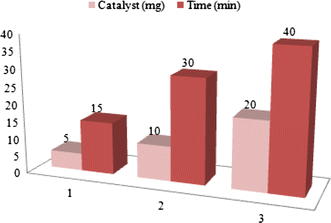
In recent years a considerable amount of our research program has focused on the development of new methods and use of new reagents for the synthesis of xanthene derivatives [ 5358 ]. Herein and in continuation of these studies, we wish to report the preparation of % 8 mol W-doped ZnO nanocomposite and its applicability as a new and efficient catalyst in the promotion of the synthesis of 1, 8-dioxo-octahydroxanthenes under mild conditions. After preparation and identification of W-doped ZnO nanocomposite (as reported in the experimental section), its application in the promotion of the synthesis of 1, 8-dioxo-octahydroxanthene is studied. To optimize the reaction conditions, the reaction of 4-chlorobenzaldehyde (1 mmol) with dimedone (2 mmol) was studied in different solvents and under solvent-free conditions at different temperatures (Table  2 ). Also, the effect of the catalyst load on the model reaction was studied. The results are shown in Fig.  4 .

Table 2

The effect of different conditions on the model reaction

Entry

Conditions

Time (min)

Conversion (%)a

1

H2O

20

100

2

EtOH

15

100

3

CH2Cl2

40

100

4

n-Hexane

25

100

5

CH3CN

30

100

6

CCl4

10

100

7

Solvent-free

35

100

8

Solvent-freeb

10

100

Reaction conditions: 4-chlorobenzaldehyde (1 mmol), dimedone (2 mmol), W-ZnO (5 mg), room temperature

a GC

b 80 °C

Fig. 4

The effect of different amounts of W-ZnO on the reaction of 4-chlorobenzaldehyde with dimedone in ethanol

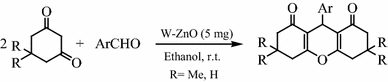
On the basis of the obtained results, it is concluded that the best results can be obtained under the conditions shown in Scheme  1 .

Scheme 1

Synthesis of 1, 8-dioxo-octahydroxanthenes

To assess the efficiency of W-ZnO in the preparation of 1, 8-dioxo-octahydroxanthenes, various aromatic aldehydes were reacted with 1, 3-cyclohexanedione and/or dimedone under optimal reaction conditions (Table  3 ). These results show that the requested reactions efficiently occurred with excellent yields in very short times (Table  3 ). It seems that the electronic nature of the functional group on the ring of the aldehyde exerted a slight influence on the reaction time.

Table 3

Preparation of 1, 8-dioxo-octahydroxanthenes in the presence of W-ZnO

Entry

Aldehydes

R

Time (min)

Yield (%)a

Melting point (°C)

Found

Reported [Reference]

1

C6H5CHOSci Am Assoc Adv Sci

Me

10

98

195–198

197–198 [54]

2

4-ClC6H4CHO

Me

15

98

225–227

227–229 [54]

3

3-ClC6H4CHO

Me

15

98

184–185

186–187 [54]

4

2-ClC6H4CHO

Me

15

98

224–225

224–225 [54]

5

4-BrC6H4CHO

Me

15

98

239–240

240–242 [59]

6

3-BrC6H4CHO

Me

25

95

281–282

281–282 [54]

7

4-NO2C6H4CHO

Me

20

95

220–222

223–224 [54]

8

3-NO2C6H4CHO

Me

15

98

162–163

164–165 [54]

9

2-NO2C6H4CHO

Me

15

98

251–252

251–252 [54]

10

4-MeOC6H4CHO

Me

15

98

240–243

243–245 [54]

11

3-MeOC6H4CHO

Me

15

98

190–193

190–191 [54]

12

2-MeOC6H4CHO

Me

15

98

209–211

209–210 [54]

13

Cinnamaldehyde

Me

20

90

170–172

170–172 [54]

14

4-Me2NC6H4CHO

Me

30

96

220–221

221–223 [54]

15

C6H5CHO

H

15

98

203–204

203–204 [54]

16

4-ClC6H4CHO

H

10

98

228–231

228–229 [54]

17

4-BrC6H4CHO

H

10

98

227–229

227–228 [54]

18

4-NO2C6H4CHO

H

15

98

263–264

263–264 [54]

19

2-NO2C6H4CHO

H

20

96

238–240

238–240 [56]

20

2-MeC6H4CHO

H

15

98

225–226

225–227 [54]

21

4-OHC6H4CHO

H

15

98

245–246

245–247 [61]

22

4-MeOC6H4CHO

H

15

98

200–201

200–201 [56]

a Isolated yield

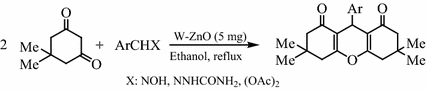
After the above-mentioned studies, we were interested in investigating the applicability of the same method to the preparation of 1, 8-dioxo-octahydroxanthenes from the protected aldehydes (e.g., oximes, semicarbazones and 1,1-diacetates). Our investigations clarified that using this method the best results can be obtained when the reaction was conducted in refluxing ethanol (Scheme  2 ).

Scheme 2

Synthesis of 1, 8-dioxo-octahydroxanthenes from protected aldehydes

After optimization of the reaction conditions, different types of protected derivatives of aldehydes were efficiently converted to the requested 1, 8-dioxo-octahydroxanthenes under the selected conditions (Table  4 ). All reactions were performed under completely heterogeneous conditions during relatively short times with good to high yields.

Table 4

Preparation of 1, 8-dioxooctahydroxanthenes from the reaction of protected aldehydes and dimedone in the presence of W-doped ZnO nanocomposite

Entry

Protected aldehydes

Time (min)

Yield (%)a

Melting point (°C)

Found

Reported [Reference]

1

4-ClC6H4CH=NOH

30

98

225–227

227–229 [54]

2

4-NO2C6H4CH=NOH

60

98

220–222

223–224 [54]

3

4-Me2NC6H4CH=NOH

20

98

220–221

221–223 [60]

4

45

98

235–236

236–238 [62]

5

2-ClC6H4CH=NOH

120

50b

224–225

225–227 [54]

6

2-NO2C6H4CH=NOH

120

50b

251–252

251–252 [54]

7

2-MeOC6H4CH=NOH

120

50b

209–211

209–210 [54]

8

4-NO2C6H4CH=NNHCONH2

40

98

220–222

223–224 [54]

9

2-ClC6H4CH=NNHCONH2

120

70

224–225

225–227 [54]

10

2-OHC6H4CH=NNHCONH2

120

90

250–251

250–251 [63]

11

2-OHC6H4CH(OAc)2

60

98

250–251

250–251 [63]

12

120

98

300

>300 [59]

a Isolated yield

b Conversion

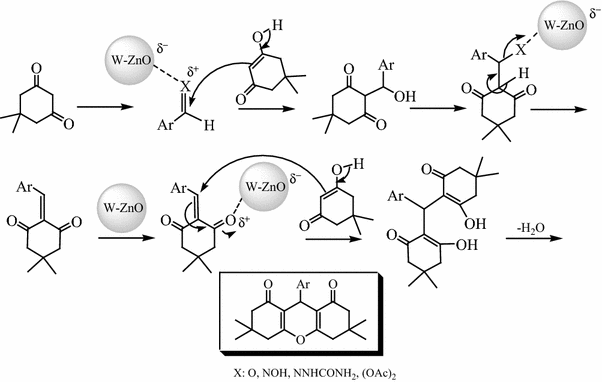
A plausible mechanism for the synthesis of 1, 8-dioxo-octahydroxanthenes catalyzed by W-ZnO is shown in Scheme  3 .

Scheme 3

Proposed mechanism for the synthesis of 1, 8-dioxo-octahydroxanthenes catalyzed by W-ZnO

To illustrate the efficiency of the present method, Table  5 compares some of our results obtained from the synthesis of xanthene derivatives with the same results reported by the other research groups. These results indicated that in most cases, the reactions were performed under heated conditions using larger amounts of other catalysts.

Table 5

Comparison of the results of the reaction of dimedone with C 6 H 4 CHO using W-ZnO with some of those reported in the literature

Entry

Catalyst (mol%)

Conditions

Time (h)

Yield (%)

TOF (h−1)

Reference

1

Amberlist-15 (200 mg)

CH3CN, reflux

5

94

[15]

2

Silica sulfuric acid (7.8)

Solvent-free, 80 °C

1

97

12.43

[14]

3

NSPVPC (4)

Solvent-free, 100 °C

0.17

98

144

[54]

4

1-Butyl-3-methylimidazolium hydrogen sulfate (72)

Solvent-free, 80 °C

3

85

0.39

[59]

5

[Et3N-SO3H]Cl (25)

Solvent-free, 80 °C

1

97

3.88

[64]

6

Trichloroisocyanuric acid (4)

EtOH, reflux

0.5

95

47.5

[16]

7

Saccharin sulfonic acid (15)

Solvent-free, 90 °C

0.42

94

14.9

[65]

8

Fe3O4 NPs (10)

Solvent-free, 100 °C

0.5

89

17.8

[66]

9

ZnO (30), Acetyl chloride (2 mmol)

CH3CN, reflux

5

86

0.57

[37]

10

ZnO-NPs (10)

Solvent-free, 80 °C

0.37

91

24.5

[36]

11

W-ZnO (5.6)

EtOH, r.t.

0.17

98

102

This work

It is important to note that the reaction in the presence of Fe 3 O 4 or ZnO-NPs needs larger amounts of catalysts at high temperatures (Table  5 , entries 8–10), while in the present method the reaction is carried out under very mild conditions using few amounts of W-doped ZnO nanocomposite. In addition, to compare the applicability and efficiency of W-ZnO with other catalysts, we have tabulated the TOF (turnover frequency) of these catalysts in this reaction. Clearly, W-ZnO is superior in terms of TOF to the compared catalysts.

According to literature [ 44 ], it can be concluded that the catalytic efficiency of W-ZnO can be attributed to the presence of surface acidity. W/ZnO catalysts exhibit surface acidity due to the presence of Lewis and Bronsted acidic sites related to W 6+ species. Thus, the acidic surface of W-ZnO has a higher affinity for reactive species.

Conclusion

In summary, we have introduced W-doped ZnO nanocomposite as a highly efficient nanocatalyst for the promotion of the synthesis of 1, 8-dioxo-octahydroxanthenes under mild and completely heterogeneous reaction conditions. This method has several advantages such as ease of preparation and handling of the catalyst, easy workup and procedure, high reaction rates and excellent yields. Also, and for the first time, different types of protected aldehydes were successfully employed in these types of reactions and the corresponding products were obtained in high to excellent yields.


Acknowledgments

The authors are thankful to the University of Guilan Research Council for the partial support of this work.


References

  1. Chatterjee et al. (1996) Xanthene derived potent nonpeptidic inhibitors of recombinant human calpain (pp. 1619-1622) 10.1016/S0960-894X(96)00286-7
  2. Vieira et al. (2005) 9H-xanthene-9-carboxylic acid [1, 2, 4]oxadiazol-3-yl- and (2H-tetrazol-5-yl)-amides as potent, orally available mGlu1 receptor enhancers (pp. 4628-4631) 10.1016/j.bmcl.2005.05.135
  3. Hafez et al. (2008) Facile regioselective synthesis of novel spiro-thioxanthene and spiro-xanthene-9′,2-[1, 3, 4]thiadiazole derivatives as potential analgesic and anti-inflammatory agents (pp. 4538-4543) 10.1016/j.bmcl.2008.07.042
  4. Kitahara and Tanaka (2002) Synthesis, crystal structure and properties of thiaheterohelicenes containing phenolic hydroxy functions (pp. 932-933) 10.1039/b110514k
  5. Ahmad et al. (2002) Performance and photostability of xanthene and pyrromethene laser dyes in sol–gel phases (pp. 1473-1476) 10.1088/0022-3727/35/13/303
  6. Knight and Stephens (1989) Xanthene-dye-labelledphosphatidylethanolamines as probes of interfacial pH (pp. 683-689) 10.1042/bj2580683
  7. Zhang and Liu (2008) Antimony trichloride/SiO2 promoted synthesis of 9-aryl-3,4,5,6,7,9-hexahydroxanthene-1,8-diones (pp. 1715-1719) 10.1016/j.catcom.2008.01.031
  8. Mahdavinia et al. (2009) Covalently anchored sulfonic acid on silica gel (SiO2–R–SO3H) as an efficient and reusable heterogeneous catalyst for the one-pot synthesis of 1,8-dioxo-octahydroxanthenes under solvent-free conditions (pp. 539-541) 10.1016/j.cclet.2008.12.026
  9. Rostamizadeh et al. (2010) Ultrasound promoted rapid and green synthesis of 1,8-dioxo-octahydroxanthenes derivatives using nanosized MCM-41-SO3H as a nanoreactor, nanocatalyst in aqueous media (pp. 306-309) 10.1016/j.ultsonch.2009.10.004
  10. Jin et al. (2004) Clean synthesis of 1,8-dioxo-octahydroxanthene derivatives catalyzed by p-dodecylbenzenesulfonic acid in aqueous media (pp. 866-870) 10.1055/s-2004-820022
  11. Wang et al. (2005) A clean synthesis of 1-dioxo-hexahydro- xanthene derivatives in aqueous media catalyzed by TEBA (pp. 97-104) 10.1081/SCC-200046510
  12. Darvish et al. (2007) Diammonium hydrogen phosphate as a neutral and efficient catalyst for synthesis of 1, 8-dioxo-actahydroxanthene derivatives in aqueous media (pp. 1059-1067) 10.1080/00397910701196520
  13. Javid et al. (2011) One-pot synthesis of 1,8-dioxo-octahydro xanthenes utilizing silica-supported preyssler nano particles as novel and efficient reusable heterogeneous acidic catalyst (pp. 910-916) 10.1155/2011/980242
  14. Mozhdeh et al. (2008) Solvent-free synthesis of aryl-14H-dibenzo[a, j]xanthenes and 1,8-dioxo-octahydro-xanthenes using silica sulfuric acid as catalyst (pp. 836-839) 10.1016/j.dyepig.2007.02.001
  15. Das et al. (2006) Iodine catalyzed simple and efficient synthesis of 14-aryl or alkyl-14-H-dibenzo[a, j]xanthenes (pp. 74-77) 10.1016/j.molcata.2006.04.007
  16. Bigdeli et al. (2009) A series of 1,8-dioxo-octahydro-xanthenes are prepared using trichloroisocyanuric acid (pp. 1275-1278) 10.1016/j.cclet.2009.06.024
  17. Greene and Wuts (1991) Wiley
  18. Unknown ()
  19. Kabalka et al. (1990) One-pot synthesis of aryl 14H-dibenzo[a, j]xanthene leuco-dye derivatives (pp. 2453-2485) 10.1080/00397919008053193
  20. Fujisawa et al. (1983) A convenient synthesis of ketoximes from grignard reagents and nitro compounds activated by N,N-dimethyl chloromethyleniminium chloride (pp. 1537-1540) 10.1246/cl.1983.1537
  21. Barton et al. (1961) Contribution x from the research institute for medicine and chemistry, Cambridge, mass. A new photochemical reaction (pp. 4076-4083) 10.1021/ja01480a030
  22. Lee et al. (2004) Efficient transformation of aldoximes to nitriles using 2-chloro-1-methylpyridinium iodide under mild conditions (pp. 1775-1782) 10.1081/SCC-120034158
  23. Sarvari (2004) ZnO/CH3COCl: a new and highly efficient catalyst for dehydration of aldoximes into nitriles under solvent-free condition (pp. 787-790)
  24. Movassagh and Fazeli (2007) Direct synthesis of aromatic nitriles from aldehydes using hydroxyl amine and oxalyl chloride (pp. 623-628) 10.1080/00397910601055198
  25. Schoenewalat et al. (1968) Improved synthesis of anti-benzaldoxime. Con comitant cleavage and formation of nitriles (pp. 4270-4272) 10.1021/jo01275a059
  26. Unknown ()
  27. Ghiaci and Hassan (1998) A facile Beckmann rearrangement of oximes with AlCl3 in the solid state (pp. 2275-2280) 10.1080/00397919808007044
  28. Peter et al. (2005) Microwave promoted oxazole synthesis: cyclocondensation cascade of oximes and acyl chlorides (pp. 5463-5466) 10.1016/j.tetlet.2005.06.063
  29. Unknown ()
  30. Greene and Wuts (1999) Wiley 10.1002/0471220574
  31. Unknown ()
  32. Heerden et al. (1998) Palladium-catalysed substitution reactions of geminal allylic diacetates (pp. 5281-5284) 10.1016/S0040-4039(98)01000-4
  33. Trost and Lee (2001) Gem-diacetates as carbonyl surrogates for asymmetric synthesis. Total syntheses of sphingofungins E and F (pp. 12191-12201) 10.1021/ja0118338
  34. Sandberg and Sydnes (1998) The chemistry of acylals Part II Formation of nitriles by treatment of acylals with trimethyl silyl azide in the presence of a Lewis acid (pp. 6361-6364) 10.1016/S0040-4039(98)01309-4
  35. Shirini and Abedini (2013) Application of nanocatalysts in multi-component reactions (pp. 4838-4860) 10.1166/jnn.2013.7571
  36. Safaei-Ghomi and Ghasemzadeh (2012) Zinc oxide nanoparticles: a highly efficient and readily recyclable catalyst for the synthesis of xanthenes (pp. 1225-1229) 10.1016/j.cclet.2012.09.016
  37. Maghsoodlou et al. (2010) An efficient synthesis of 2,2′-arylmethylene bis(3-hydroxy-5,5-dimethyl-2-cyclohexene-1-one) and 1,8-dioxo-octahydroxanthenes using ZnO and ZnO-acetyl chloride (pp. 686-689) 10.1016/j.cclet.2010.02.005
  38. Tamaddon et al. (2011) ZnO and ZnO-nanoparticles: efficient and reusable heterogeneous catalysts for one-pot synthesis of N-acylsulfonamides and sulfonate esters (pp. 41-45) 10.1016/j.molcata.2011.09.010
  39. Paul et al. (2011) One-pot synthesis of dihydropyrano[2,3-c]chromenes via a three component coupling of aromatic aldehydes, malononitrile and 3-hydroxycoumarin catalyzed by nano-structured ZnO in water: a green protocol (pp. 4636-4641) 10.1016/j.tetlet.2011.06.101
  40. Ghosh and Das (2012) Nano crystalline ZnO: a competent and reusable catalyst for one-pot synthesis of novel benzylaminocoumarin derivatives in aqueous media (pp. 3140-3143) 10.1016/j.tetlet.2012.04.033
  41. Bhattacharyya et al. (2012) Nano crystalline ZnO catalyzed one-pot multicomponent reaction for an easy access of fully decorated 4H-pyran scaffolds and its rearrangement to 2-pyridone nucleus in aqueous media (pp. 4687-4691) 10.1016/j.tetlet.2012.06.086
  42. Kassaee et al. (2009) ZnO nanoparticles as an efficient catalyst for the one-pot synthesis of α-amino phosphonates (pp. 1326-1330) 10.1055/s-0028-1088135
  43. Dharma Rao et al. (2012) An efficient synthesis of naphtha[1,2-e]oxazinone and 14-substituted-14H-dibenzo[a, j]xanthene derivatives promoted by zinc oxide (pp. 2741-2744) 10.1016/j.tetlet.2012.03.085
  44. Kassaee et al. (2010) ZnO-nanoparticle-promoted synthesis of polyhydroquinoline derivatives via multicomponent Hantzsch reaction (pp. 317-322) 10.1007/s00706-010-0252-1
  45. Sun et al. (2011) Enhanced sunlight photocatalytic performance of Sn-doped ZnO for methylene blue degradation (pp. 145-150) 10.1016/j.molcata.2010.11.026
  46. Zheng et al. (2010) Novel ZnO-based film with double light-scattering layers as photoelectrodes for enhanced efficiency in dye-sensitized solar cells (pp. 928-934) 10.1021/cm901780z
  47. Patil et al. (2010) Ecofriendly synthesis and solar photocatalytic activity of S-doped ZnO (pp. 315-328) 10.1016/j.jhazmat.2010.07.026
  48. Wu et al. (2011) Synthesis of Sn-doped ZnO nanorods and their photo catalytic properties (pp. 1107-1112) 10.1016/j.materresbull.2011.02.043
  49. Karunakaran et al. (2010) Preparation and characterization of antimicrobial Ce-doped ZnO nanoparticles for photocatalytic detoxification of cyanide (pp. 585-594) 10.1016/j.matchemphys.2010.05.019
  50. Barick et al. (2010) Porosity and photocatalytic studies of transition metal doped ZnO nanoclusters (pp. 195-202) 10.1016/j.micromeso.2010.05.026
  51. Tian et al. (2008) Photocatalytic degradation of methyl orange with W-doped TiO2 synthesized by a hydrothermal method (pp. 47-51) 10.1016/j.matchemphys.2008.05.005
  52. Fallah Moafi et al. (2013) Tungsten-doped ZnO nanocomposite: synthesis, characterization, and highly active photocatalyst toward dye photodegradation (pp. 856-864) 10.1016/j.matchemphys.2013.02.044
  53. Shirini and Khaligh (2012) Succinimide-N-sulfonic acid: an efficient catalyst for the synthesis of xanthenes derivatives under solvent-free conditions (pp. 789-794) 10.1016/j.dyepig.2012.06.022
  54. Shirini et al. (2013) N-sulfonic acid poly(4-vinylpyridinium) chloride: a novel polymeric and reusable catalyst for the preparation of xanthenes derivative (pp. 250-255) 10.1016/j.dyepig.2013.04.036
  55. Shirini et al. (2013) Rice-husk-supported FeCl3 nano-particles: introduction of a mild, efficient and reusable catalyst for some of the multi-component reactions (pp. 945-955) 10.1016/j.crci.2013.02.019
  56. Shirini et al. (2012) Introduction of two efficient catalysts for the synthesis of 1,8-dioxo-octahydroxanthene derivatives in the absence of solvent (pp. 115-119)
  57. Shirini et al. (2014) One-pot synthesis of various xanthene derivatives using ionic liquid 1,3-disulfonic acid imidazolium hydrogen sulfate as an efficient and reusable catalyst under solvent-free conditions (pp. 341-347) 10.1016/j.cclet.2013.11.016
  58. Unknown ()
  59. Niknam and Damya (2009) 1-Butyl-3-methylimidazolium hydrogen sulfate [bmim]HSO4: an efficient reusable acidic ionic liquid for the synthesis of 1,8-dioxo-octahydro xanthenes (pp. 659-665) 10.1002/jccs.200900098
  60. Ilangovan et al. (2013) Simple and cost effective acid catalysts for efficient synthesis of 9-aryl-1,8-dioxo-octahydro xanthene (pp. 491-494) 10.1016/j.tetlet.2012.11.058
  61. John et al. (2006) Clean synthesis of 1,8-dioxo-octahydroxanthene derivatives catalyzed by polyaniline-p-toluenesulfonate salt in aqueous media (pp. 121-125) 10.1016/j.molcata.2005.12.017
  62. Shaterian et al. (2009) Ferric hydrogen sulfate as an efficient heterogeneous catalyst for environmentally friendly greener synthesis of 1,8-dioxo-octahydroxanthenes (pp. 233-240)
  63. Zhou and Deng (2013) [Et3NH][HSO4] catalyzed efficient and green synthesis of 1,8-dioxo-octahydroxanthenes (pp. 99-102) 10.1016/j.molcata.2012.11.002
  64. Zare et al. (2012) Ionic liquid triethylamine-bonded sulfonic acid [Et3N-SO3H]Cl as a novel, highly efficient and homogeneous catalyst for the synthesis of β-acetamido ketones, 1,8-dioxo-octahydroxanthenes and 14-aryl-14H-dibenzo[a, j]xanthenes (pp. 69-77) 10.1016/j.molliq.2011.12.012
  65. Zare et al. (2012) Solvent-free synthesis of 1,8-dioxo-octahydroxanthenes and 14-aryl-14H-dibenzo[a, j]xanthenes using saccharin sulfonic acid as an efficient and green catalyst (pp. 1854-1863) 10.1155/2012/596862
  66. Ghasemzadeh et al. (2013) Fe3O4 nano-particles: a highly efficient and easily reusable catalyst for the one-pot synthesis of xanthene derivatives under solvent-free conditions (pp. 769-779) 10.2298/JSC120624156G