Synthesis of quinoline derivatives from the reaction of aminobenzophenones and acetylenic esters in the presence of SnO2 nanoparticles

Abstract

Nano SnO 2 catalyzes the two-component reaction of 2-aminobenzophenones with acetylenic mono or diesters under mild conditions to afford quinoline derivatives in high yields. Nano SnO 2 shows high activity when used as surface catalyst for the synthesis of quinoline derivatives.


Background

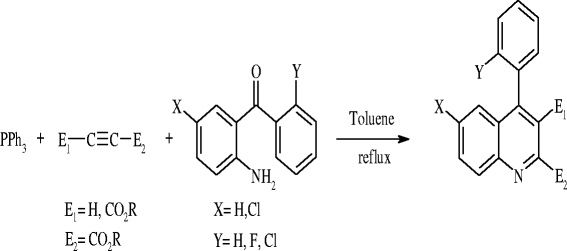
Nanocatalysis has an important role in the chemistry of nanoscience [ 14 ]. Many nanoparticles are used as the materials that can catalyze various chemical reactions. In some cases, nanoparticles are put on the surface since this facilitates recovery of the catalyst [ 5 ]. In addition, in several cases, users can increase the selectivity because of the high synergistic interaction between nanoparticle and solid supports [ 6 , 7 ]. The applications of SnO 2 are in the semiconductors, and it has been widely used as gas sensor [ 8 ], solar cells [ 9 ], lithium battery and use in the materials [ 10 ], and catalysts [ 11 ]. In the area of nanocatalysis, tin oxide (SnO 2 ) is one of the most extensively studied materials [ 12 ]. Quinoline derivatives are one of the most applicable products in the chemistry of anti-hypertensive and anti-inflammatory, with tyrosine-kinase PDGf-RTK as an inhibitor agent [ 1321 ]. Due to these uses, there has been an increasing interest in the development of quinoline synthesis. There are various general methods for the synthesis of this heterocycle such as Skraup, Friedlandear, Dobner-von Miller, Combes, Pfitzinger, and Conrad-Limpach [ 2226 ]. These classical syntheses are frequently used for the preparation of pharmaceutical agents, ligands, and functional materials containing a quinoline skeleton [ 27 ]. Previously, we have reported the synthesis of 4-arylquinolines via a three-component reaction of acetylenic esters and 2-aminobenzophenone derivatives in the presence of triphenylphosphine (Scheme  1 ) [ 28 ].

Scheme 1

Reaction of acetylenic esters and 2-aminobenzophenone derivatives in the presence of triphenylphosphine.

Methods

1 H NMR spectra were recorded on DRX-400AVANCE spectrometer, Bruker AXS, Inc., Karlsruhe, Germany, at 400 MHz; infrared (IR) spectra were recorded on a Shimadzu IR-470 spectrometer, Kyoto, Japan. Nano SnO 2 powder was achieved from NanoPac Persia Co., Isfahan, Iran. Thin layer chromatography (TLC) was carried out on Fluka Silica gel TLC- cards, St. Louis, MO, USA. All of the other reagents and solvents were used as received from commercial suppliers. A transmission electron microscope (TEM) (ZEISS EM900 operating at 50 kV, Carl Zeiss AG, Germany) was used to observe the morphology and size of the nanoparticles. The XRD pattern was acquired using a D8 ADVANCE, Bruker. The diffractograms were measured for 2 θ , in the range of 10 to 80°, using Cu K α incident beam ( λ = 1.51418 Å).

General procedure for the preparation of 4-arylquinolines (exemplified by 3a)

To a stirred mixture of 2-aminobenzophenone (2 mmol) and acetylenic ester (2 mmol) in EtOAc, 5 ml SnO 2 nanoparticles (5 mol%) was added. The reaction mixture was refluxed for 1 h. The progress of the reaction was monitored by TLC. After completion of the reaction, the solid product was filtered and purified by dissolving in chloroform, and the nanocatalyst was removed by a centrifuge and pure product 3a was obtained by removing the solvent. The nanocatalyst was recovered to be reused in subsequent reactions without losing any activity. The structure of the product was confirmed by melting point, IR, and 1 H NMR spectra. The results were compared with authentic samples.

Results and discussion

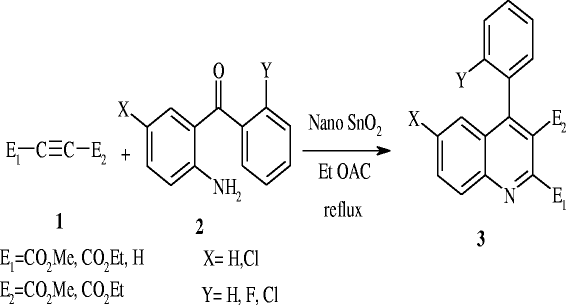
In this work, we report a methodology reaction in which 2-aminobenzophenones 2 react with acetylenic mono or diesters 1 in the presence of nano SnO 2 (Scheme  2 ).

Scheme 2

2-aminobenzophenones 2 react with acetylenic mono or diesters 1 in the presence of nano SnO 2 .

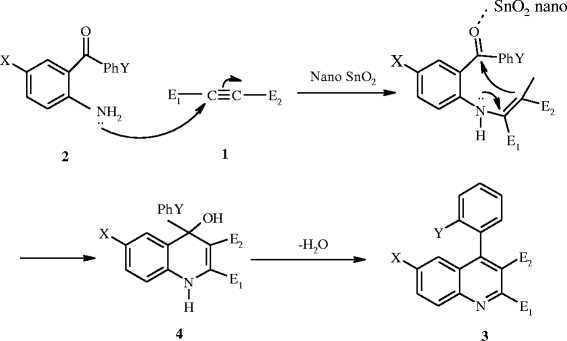
The yields of the two component reactions show that nano SnO 2 catalyzes these reactions efficiently (Table  1 ). It was found that nano SnO 2 acts as both site of catalysis and a support for this system due to their high surface area. A possible mechanism of the reaction is shown in Scheme  3 . It is reasonable to assume that the initial attack of nucleophilic amine to the acetylenic ester leads to the formation of intermediate 4 on the surface of nano SnO 2 which can act as Lewis acid to increase the electrophilicity of the carbonyl group of 2-aminobenzophenone. Then, the product 3 is formed by loss of one molecule of water under reflux condition (Scheme  3 ).

Scheme 3

Mechanism of the reaction.

Table 1

Synthesis of 4-arylquinolines derivatives

Product

E1

E2

X

Y

Yield (%)

3a

CO2Me

CO2Me

H

H

90

3b

CO2Et

CO2Et

H

H

87

3c

H

CO2Me

H

H

60

3d

H

CO2Et

H

H

65

3e

CO2Me

CO2Me

Cl

H

80

3f

CO2Et

CO2Et

Cl

H

90

3g

H

CO2Me

Cl

H

70

3h

H

CO2Et

Cl

H

75

3i

CO2Me

CO2Me

Cl

Cl

74

3j

CO2Et

CO2Et

Cl

Cl

87

3k

CO2Me

CO2Me

Cl

F

92

3l

CO2Et

CO2Et

Cl

F

95

In the procedure of optimizing the reaction conditions, we monitored the solvent effect, temperature dependency, and the amount of nanocatalyst. To study the optimized condition of the reaction parameters, the reaction between 2-aminobenzophenone and DMAD was considered as the model reaction. The effect of different solvents was monitored, and the excellent results were obtained when the reaction has been carried out in EtOAc. The temperature monitoring showed that the best temperature for this reaction is the reflux condition for 1 h. Also, when the reaction was scaled up to 5 mol% of nano SnO 2 , the highest yield was achieved (Table  2 ), and in the absence of SnO 2 catalyst no formation of the expected product was detected even after 3 h.

Table 2

Optimizing the reaction condition between 2-amino benzophenone and DMAD

Entry

Nano SnO2(mol%)

Solvent

Temperature (°C)

Time (h)

Yield (%)

1

5

Dichloromethane

50

4

35

2

5

Chloroform

60

4

40

3

5

Acetone

60

4

48

4

5

Toluene

80

4

61

5

2

Ethyl acetate

80

2.5

80

6

3

Ethyl acetate

80

2

85

7

5

Ethyl acetate

rt

3

90

8

5

Ethyl acetate

80

1

90

9

10

Ethyl acetate

80

1

90

The morphology, crystal structure, and sizes of the SnO 2 nanocatalyst were characterized by X-ray diffraction and TEM analyses. The powder X-ray diffraction pattern of the reaction mixture was recorded on a Rigaku D/Max-2200 diffractometer, Shibuya-ku, Japan, equipped with horizontal goniometer in θ /2 θ geometry. The Cu K α ( l = 1.5418 Å) radiation was used, and the sample was scanned between 3° to 80° 2 θ . The sharp peaks in the diffractogram indicate that the reaction media (nano SnO 2 in the dimethyl 4-phenyl-2,3-quinolinedicarboxylate) contain crystalline species. There are several major peaks with 2 θ values of 26.63, 33.91, 37.94, 42.61, 51.80, 54.77, and 57.83, corresponding to SnO 2 crystal planes of (1 0 1), (1 1 0), (1 1 1), (2 1 0), (2 1 1), (2 2 0), and (0 0 2), respectively. All reflections of SnO 2 nanoparticles show tetragonal rutile structure (JCPDS 41–1445).

TEM images of the SnO 2 nanocatalyst in the reaction mixture (nano SnO 2 in the dimethyl 4-phenyl-2,3-quinolinedicarboxylate) in different scales (50, 100, 150, 200, and 300 nm) were obtained. Also, using the bright field technique, the nanoparticles were observed; the nanoparticles look distinctly darker than the organic phase due to the much higher electron density, the nanoparticles clearly distinguishable from organic media. The obtained pictures showed that the nanoparticles are in good dispersion state, and the nanoparticles are in the range of 70 to 95 nm.

Conclusions

In conclusion, we have reported an efficient procedure for the synthesis of quinoline derivatives using SnO 2 nanoparticles as a non-toxic and inexpensive heterogeneous nanocatalyst. The method offers advantages such as ease of the work-up, low loading of catalyst, high yields of products and short reaction times.


References

  1. Corma and Serna (2006) Chemoselective Hydrogenation of Nitro Compounds with Supported Gold Catalysts 10.1126/science.1128383
  2. Enache et al. (2006) 10.1126/science.1120560
  3. Hughes et al. (2005) 10.1038/nature04190
  4. Liang et al. (2004) 10.1002/anie.200352956
  5. Astruc et al. (2005) 10.1002/anie.200500766
  6. Valden et al. (1998) 10.1126/science.281.5383.1647
  7. Huang et al. (2004) 10.1002/anie.200352682
  8. Li and Bi (2007)
  9. El-Etre and Reda (2010) 10.1016/j.apsusc.2010.04.055
  10. Li et al. (2010) 10.1016/j.jpowsour.2009.11.005
  11. Arpita et al. (2010) 10.1016/j.molcata.2010.05.015
  12. Modou and Roy (1989) Academic Press
  13. Barton and Ollis (1979) (pp. 166-203) Pergamon
  14. Desai et al. (1996)
  15. Sonza and Vasconcelos (2005) 10.1590/S0100-40422005000400022
  16. Hirano et al. (2002) 10.1248/jhs.48.118
  17. Larsen et al. (1996) 10.1021/jo952103j
  18. Chen et al. (2001) 44(K.C Fang) 10.1021/jm0100335
  19. Kallmaya and Serrnivasa (1998) 10.1016/S0014-827X(98)00037-8
  20. Ko et al. (2001) 10.1016/S0960-894X(00)00652-1
  21. Ferrarini et al. (1997) 10.1002/jhet.5570340520
  22. Maguire et al. (1994) 10.1021/jm00040a003
  23. Bergstrom (1944) 10.1021/cr60111a001
  24. Edward (1966) 10.1021/jo01347a038
  25. Jones (1997) (pp. 93-318) Wiley
  26. Reitsema (1948) 10.1021/cr60134a002
  27. Jones et al. (1996) Pergamon
  28. Asghari et al. (2010) 10.1007/s11030-009-9188-y