Department of Chemistry, Faculty of Science, University of Dhaka, Dhaka, 1000, BD
Department of Applied Chemistry and Chemical Engineering, Noakhali Science and Technology University, Noakhali, BD
The Center of Excellence in Environmental Studies, Department of Chemistry, Faculty of Science, King Abdulaziz University, Jeddah, 21589, SA
Abstract
Nanocomposite ZnO-TiO
2
powders of varying ZnO/TiO
2
molar ratios have been prepared from their salt/compound by heating at 600°C and 900°C and characterized using scanning electron microscope and X-ray diffraction techniques. The nanosized powders can decolorize/degrade brilliant golden yellow (BGY), an azo dye extensively used in textile industries, in water under solar irradiation. The effects of various parameters such as photocatalyst loading, molar ratio of ZnO/TiO
2
, pH of the solution, initial dye concentration, and irradiation time on the photodecolorization have been investigated. ZnO-TiO
2
nanocomposite (6 g/L) in the molar ratio of 1:1 or 3:1, prepared at 900°C, can efficiently decolorize about 98% of 20 mg/L BGY at pH of about 7 by 2-h illumination in sunlight. The initial dye decolorization follows pseudo-first-order kinetics. Finally, trial experiments were done using real textile wastewater to find out the effectiveness of the photocatalysts to a more complex system.
Background
Effluents containing dyes often create severe environmental pollutions because of their direct disposal into the nearby water bodies[
1
]. Most of the textile synthetic dyes are azo compounds, that is, they contain -N = N- linkage in their structure. About 15% of the dyes are lost in wastewater during dyeing operation. This affects the esthetic merit of surface water and reduces light penetration, hampering aquatic lives and hindering photosynthesis. Moreover, some dyes are either toxic or mutagenic and carcinogenic[
2
]. Consequently, many approaches have been attempted to find out an effective method for remediation of industrial wastewaters. Unfortunately, the conventional methods for treating dye-containing wastewaters are usually ineffective in terms of complete mineralization. Biodegradation of dyes is generally selective and incomplete; some dyes with aromatic structure are difficult to biodegrade[
3
]. Therefore, an effective method is needed to overcome this problem.
In recent years, the photocatalytic degradation of various kinds of organic and inorganic pollutants using semiconductors as photocatalysts has been widely studied[
4
–
7
]. Among these semiconductors, TiO
2
has been extensively investigated as the most promising photocatalyst due to its high photocatalytic activity, non-toxicity, high photochemical stability, and low-cost. However, it divulged some drawbacks. For example, TiO
2
(band gap 3.2 eV corresponds to 388 nm) can only absorb the UV region (only about 4%) of the solar radiation, whereas solar spectrum has about 40% visible region (400 to 700 nm), and it shows high recombination rate of photo-induced electron–hole pairs which may affect negatively the degradation ratio and rate[
8
]. In order to make TiO
2
suitable for receiving solar energy efficiently in a wide range from UV to visible, many methods such as dye sensitization, metal- or nonmetal-doped TiO
2
-based nanoparticles, and modification of TiO
2
by the addition of another metal oxide-based semiconductor have been used. It has been shown that coupled semiconductors seem to be simple and viable photocatalysts. Photocatalytic process is based on the generation of electron–hole pairs by means of band-gap radiation that can give rise to redox reactions with the species adsorbed on the surface of the photocatalysts. In principle, the coupling of different semiconductor oxides seems useful in order to absorb a wide range of solar radiation (both UV and visible regions) and to achieve a more efficient electron–hole pair separation, and consequently, a higher photocatalytic activity will be attained[
9
]. Various composites formed by TiO
2
and other inorganic oxides such as ZnO[
10
], SnO
2
[
11
], SiO
2
[
12
], In
2
O
3
[
13
], Cu
2
O[
14
], MgO[
15
], WO
3
[
16
], MoO
3
[
17
], and so on have been reported.
Note that ZnO is a suitable alternative to TiO
2
because its photodegradation mechanism has been proven to be similar to that of TiO
2
. In fact, in comparison to TiO
2
, ZnO has been reported to have higher photocatalytic efficiency[
18
,
19
]. ZnO can absorb over a larger fraction of UV radiation, and the corresponding threshold of ZnO is 425 nm[
20
]. Therefore, nanocomposites of ZnO/TiO
2
can be used as photocatalysts to degrade/decolorize organic dyes under solar irradiation in aqueous system. In this paper, nanocomposite/nanosized bicomponent ZnO-TiO
2
of various molar ratios of ZnO/TiO
2
were prepared through thermal decomposition of their corresponding salt/compound. The nanocomposites were characterized by scanning electron microscope (SEM)/X-ray diffraction (XRD) technique, and then the as-prepared nanocomposites were used as photocatalysts to decolorize the brilliant golden yellow (BGY), an azo dye which is extensively used in textile/dyeing industries, under solar irradiation.
Methods
Materials
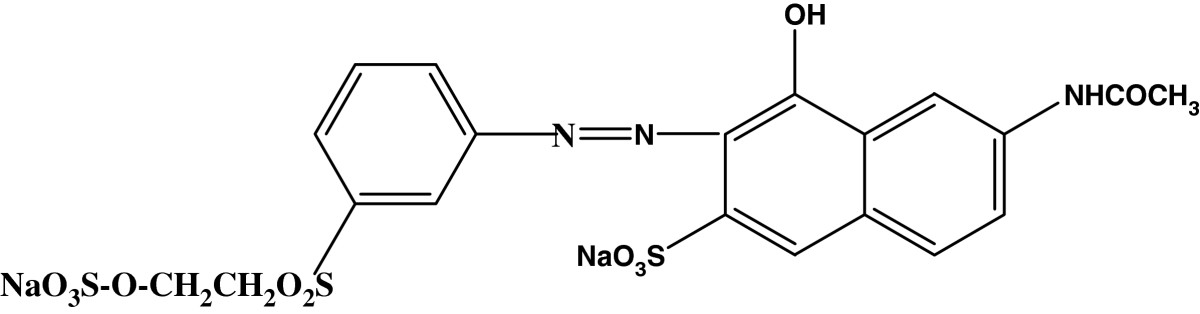
Zinc carbonate was purchased from E. Merck, Mumbai, India. Metatitanic acid was purchased from Chengdu XiYa Chemical Technology Co., Ltd., Chengdu, China. Sodium hydroxide, sulfuric acid, sodium dodecyl sulfate, and Triton X 100 were purchased from BDH Chemicals Ltd., East Yorkshire, UK. BGY (Figure
1
) was obtained from local dye suppliers. Wastewater was collected from local textile factory in Dhaka, Bangladesh. De-ionized water was used throughout the experiments.
Figure 1
Structure of BGY.
Preparation and characterization of ZnO/TiO2 nanocomposites
Metatitanic acid was first neutralized by adding concentrated NH
3
solution (28%) under ice-cold temperature. Then, the neutralized metatitanic acid was spray-dried using air to obtain spherical shape granules (TiO
2
·
x
H
2
O)[
21
]. For the preparation of ZnO/TiO
2
nanocomposite, the requisite amount of zinc carbonate was mixed with granules TiO
2
·
x
H2O in a mortar in such a way that the mixture satisfied the desired molar ratios of ZnO and TiO
2
[
22
]. Each sample of the powered mixtures was taken in a platinum crucible and heated in a muffle furnace at pre-set temperatures for 1 h. Initially, samples were heated batch-wise from 200°C to 900°C for 1 h. The calcined samples were heated further at the desired temperatures for constant weight. SEM (JSM-6490LA, JEOL, Tokyo, Japan) was used to study the particle sizes, and XRD technique (RIINT 2100, Rigaku Corp., Tokyo, Japan) was used to study the structural characteristics of the as-prepared samples.
Photocatalysis studies
Photocatalytic experiments were carried out in a 50-mL capacity borosilicate glass as photochemical batch reactor with dimensions 6 × 4 cm (height × diameter). All photocatalytic experiments were carried out under the similar conditions on sunny days of June to July between 10 A.M. and 2 P.M. when the solar intensity fluctuations were minimal. A series of 20 mg/L BGY solutions were prepared. The pH of the dye solutions was adjusted to the desired value using either dilute H
2
SO
4
or NaOH. The reaction suspension was prepared by adding appropriate quantity of photocatalyst into 50 mL of BGY aqueous solutions, and then the mixture was magnetically stirred in dark for 15 min to establish adsorption-desorption equilibrium. The suspension containing BGY and photocatalyst was then kept under sunlight, and the photocatalytic reaction timing was started. During the experiment, the reaction mixture was stirred vigorously using magnetic stirrer. The reaction mixture was withdrawn after an appropriate illumination time and centrifuged at 8,000 rpm to settle the suspended solids. The clear supernatant was then analyzed in a UV–vis spectrophotometer (UV-1800, Shimadzu, Kyoto, Japan) at
λmax
= 417 nm, absorption maximum of BGY. The decolorization efficiency (
D
) was observed in terms of change in intensity of the dye before and after the solar irradiation. The
D
was calculated as
D
(%) = {[(dye)
o
− (dye)]/(dye)
o
} × 100, where (dye)
o
was the equilibrium concentration of BGY after adsorption-desorption equilibrium, and (dye) was the concentration of BGY at solar irradiation time ‘
t
’.
Results and discussion
ZnO/TiO2 photocatalysts
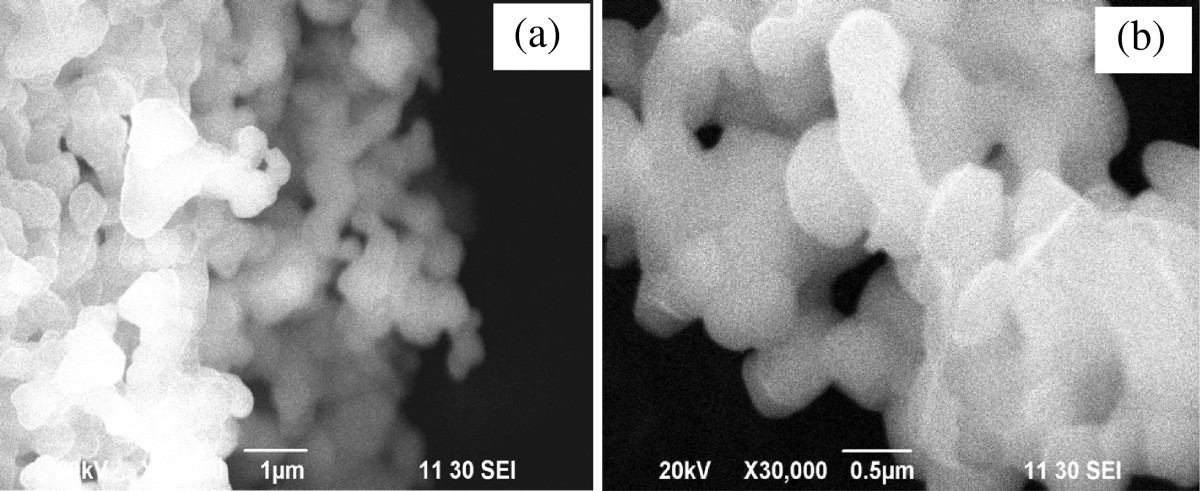
Figure
2
a, b shows the SEM images of ZnO/TiO
2
nanocomposites prepared by the thermal method at 600°C and 900°C, respectively. The average particle size of the composites is about 500 nm. The SEM images show the uniform sizes of the nanocomposite particles prepared at two different temperatures. Differentiation between ZnO and TiO
2
in the nanocomposites was not possible by SEM owing to the similar electron density of Zn and Ti. To get more insight into the crystal phases of the constituents of the prepared nanocomposites, XRD patterns of the samples were recorded after annealing them at different temperatures.
Figure 2
SEM images of the as-prepared nanocomposites of ZnO/TiO2with a ratio of 1:1.
600°C (
a
) and 900°C (
b
).
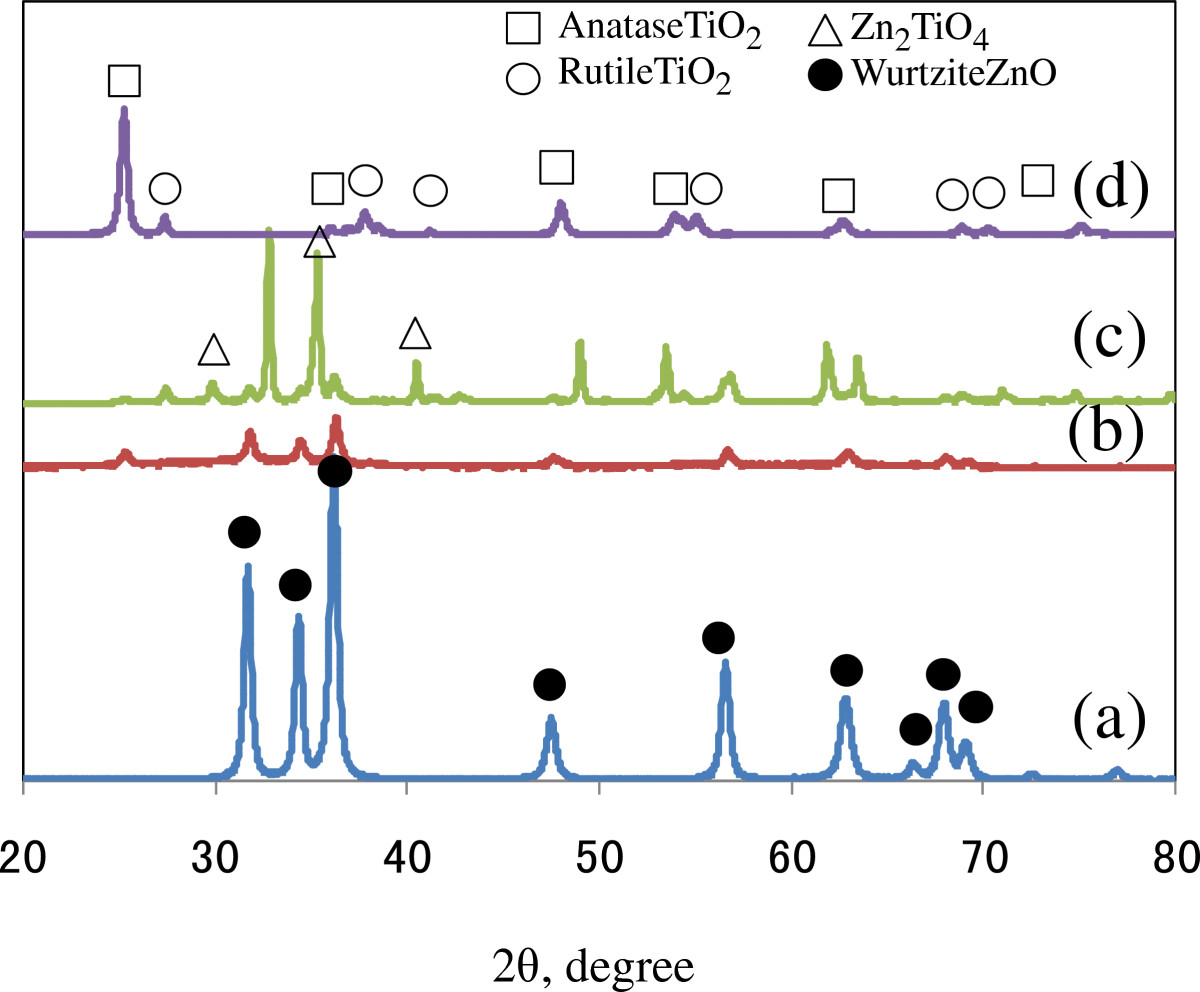
The phase composition of the prepared photocatalysts has been identified by XRD analysis (Figure
3
). The composites are all crystalline and have the diffraction peaks at 2
θ
= 31.778°, 34.428°, 36.258°, 47.548°, 56.608°, 62.868°, 66.388°, 67.968°, and 69.108°, marked by their miller indices ((1 0 0), (0 0 2), (1 0 1), (1 0 2), (1 1 0), (1 0 3), (2 0 0), (1 1 2), and (2 0 1)) corresponding to ZnO (JCPDS no. 36–1451), indicating that the phase of ZnO was wurtzite (Figure
3
a). In addition, peaks at 2
θ
= 25.4°, 38.1°, 48.1°, 54.8°, 62.5°,75.1° and at 2
θ
= 27.4°, 36.1°, 41.2°, 56.6°, 69.1°, and 69.9° correspond to anatase and rutile phases of TiO
2
, respectively, were observed in the sample prepared at 600°C (Figure
3
b). The influence of increase in temperature on the phase transformation in the photocatalysts is shown in Figure
3
c. At 900°C, surface reaction occurred between ZnO and TiO
2
, resulting in the formation of Zn
2
TiO
4
(Figure
3
c).
Figure 3
XRD patterns.
ZnO
(a)
, ZnO/TiO
2
nanocomposite (ZnO:TiO
2
= 1:1) annealed at 600°C
(b)
, ZnO-TiO
2
annealed at 900°C
(c)
, and pure TiO
2(d)
.
Effect of molar ratios of ZnO/TiO2 on the photocatalytic activity of the nanocomposites
In order to find out the effect of molar ratios of ZnO/TiO
2
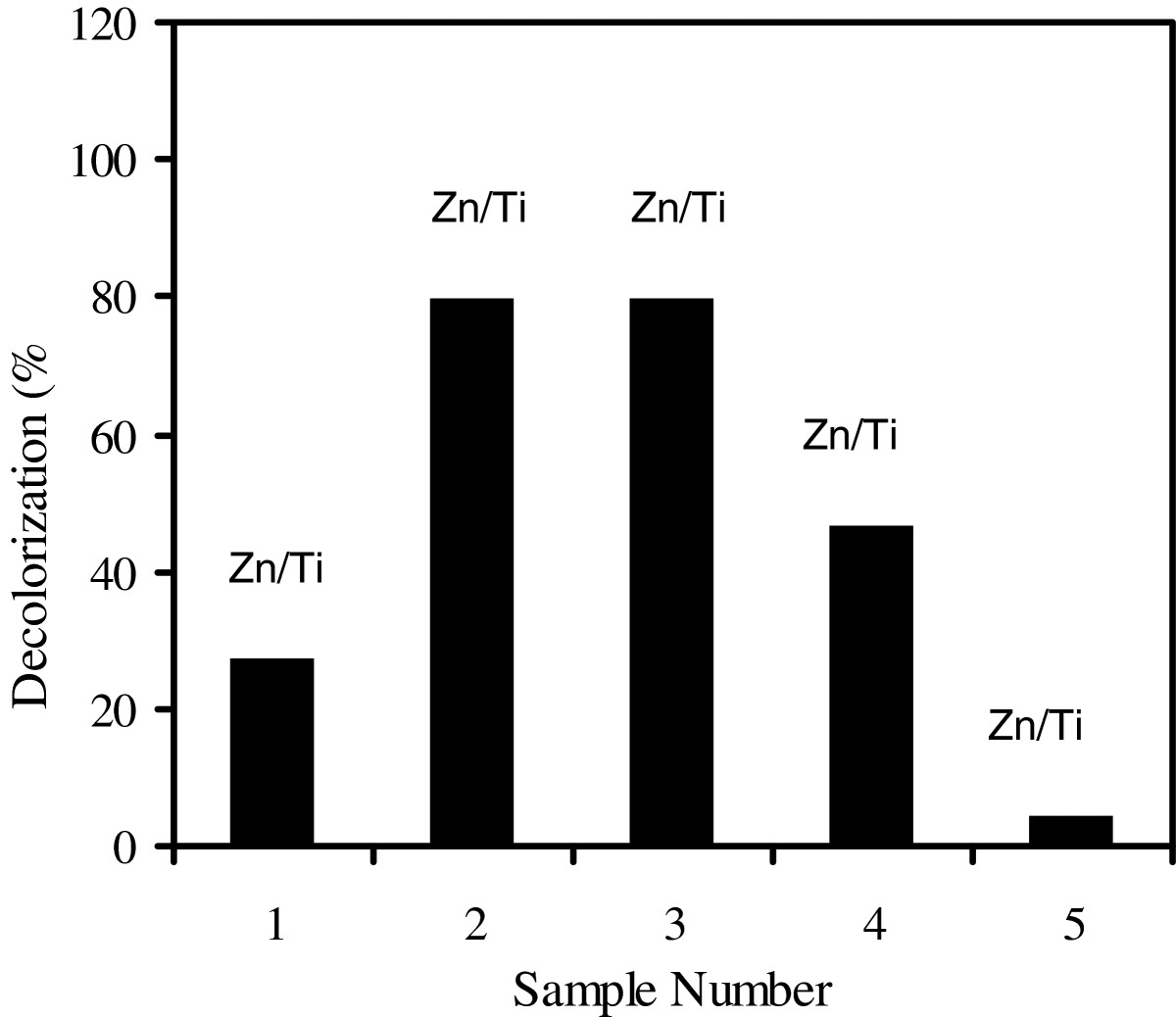
on the photocatalytic activity of the as-prepared nanocomposites, a set of parallel experiments were done with samples 1 to 5. Figure
4
shows the effect of the variation of ZnO/TiO
2
molar ratios on the decolorization of BGY. The results indicate that all the nanocomposites (samples 2 to 4) show higher photocatalytic activity than the pure ZnO or TiO
2
(samples 1 and 5), and samples 2 and 3 with the ZnO/TiO
2
molar ratios of 3:1 and 1:1, respectively, show better photocatalytic activity with the decolorization efficiency about 98%.
Figure 4
Effect of molar ratios of ZnO/TiO2(Zn:Ti) on the decolorization of BGY.
BGY = 20 mg/L, pH 7.5; irradiation time = 2 h.
In the ZnO/TiO
2
nanocomposites, after irradiation by sunlight, electron transfer occurs from ZnO to TiO
2
, and simultaneously, hole transfer takes place from TiO
2
to ZnO[
23
,
24
]. This causes efficient charge separation, increases the life time of charge carriers, and enhances the efficiency of interfacial charge transfer to the adsorbed substrates. The combined effect of all of these is the ultimate increase of the photocatalytic activity of the ZnO/TiO
2
composite. Furthermore, the higher photocatalytic activity can be related to the amount of ZnO, which has to be sufficient to trap the photogenerated holes. On the other hand, lower decolorization efficiency was observed for sample 4. As for sample 4, the concentration of photogenerated holes trapped by ZnO was lower because of the insufficient amount of ZnO compared to that in samples 2 and 3. Accordingly, sample 2 (ZnO/TiO
2
= 3:1) has been used as a photocatalyst throughout the experiments.
As observed in the present work, Zn
2
TiO
4
has also been reported to be generated by the incorporated Zn reacting with the Ti-rich phase on the SrTiO
3
surface[
25
]. This has led to the decrease of the surface defect concentration of SrTiO
3
and consequently increased the photocatalytic activity of Zn-doped SrTiO
3
. While preparing TiO
2
-capped ZnO nanoparticles, the formation of Zn
2
TiO
4
phase at higher calcination temperature has been noticed[
26
]. The nanoparticles with TiO
2
cap as Zn
2
TiO
4
exhibited higher photodecolorization yield of methylene blue under UV light (3 mW/cm
2
) and faster kinetics in comparison to the uncoated ZnO and P25-Degussa TiO
2
nanoparticles. It is to be noted that the band gap energy of Zn
2
TiO
4
is approximately 3.10 eV[
27
].
Zn
2
TiO
4
is known to show high separation efficiency of photogenerated carriers[
28
]. This characteristic of Zn
2
TiO
4
and the capability of low energy photons in generating some holes in ZnO are likely to be important factors in the enhancement of decolorization of BGY by sunlight catalyzed by ZnO/TiO
2
composite[
29
], where the amount of ZnO is sufficient in the mixture, and the annealing temperature is about 900°C.
Probable mechanism of sunlight decolorization of BGY in the presence of ZnO/TiO2
Decolorization of BGY is the result of surface reactions initiated by its adsorption on the solid matrices, forming (BGY
2−
)
ads
. It gets excited by solar irradiation:
BGY2−ads+hνvis→*BGY2−ads
The pH of the suspension environment is likely to make ZnO as the most efficient adsorbent. Favorable hole concentration in ZnO, ZnO(h
+
), produces
·
OH radicals, the most efficient agents for BGY degradation:
H2Oads+ZnOh+→·OH+H++ZnO
ZnO(h
+
) also produces dye radicals:
BGY2−ads+ZnOh+→·BGY−ads+ZnO
·
(BGY
−
)
ads
is also produced by injecting an electron by *(BGY
2−
)
ads
in the conduction band of TiO
2
:
TiO2+*BGY2−ads→TiO2e−+*BGY−ads
TiO
2
(
e
) in its turn initiate host of processes, such as
TiO2e−+O2ads→·O2−+TiO2
·
O
2−
can then generate far more reactive species
·
O
2
H (or
·
OOH) in a favorable environment:
·O2−+H+→·O2H
·
O
2
H may initiate the formation of
·
OH:
·O2H+H++TiO2e−→H2O2+TiO2H2O2+TiO2e−→·OH+OH−+TiO2
BGY decolorization is initiated by the attack of
·
OH on its -N = N- linkage and fragmenting the dye molecule. In the case of ZnO alone, sample 1, solar radiation not only causes reaction (4) to take place
ZnO+*BGY2−ads→ZnOe−+·BGY−ads
but also may induce the formation of both types of charge carriers
ZnO+hvvis→e−CB+h+VB
On the other hand only reaction (4) is likely to be possible by solar irradiation when TiO
2
is used alone, sample 5. Accordingly, ZnO is a more efficient photocatalyst than TiO
2
when sunlight is the light source.
Decolorization of BGY is accompanied by its mineralization:
*BGY−ads+O2,·O2−,·O2H,·OHorotherradicals→mineralizedproducts
The mineralized products are N
2
, CO
2
, H
2
O, Na
+
, NO
3−
, and SO
42−
.
Effect of photocatalyst loading on decolorization
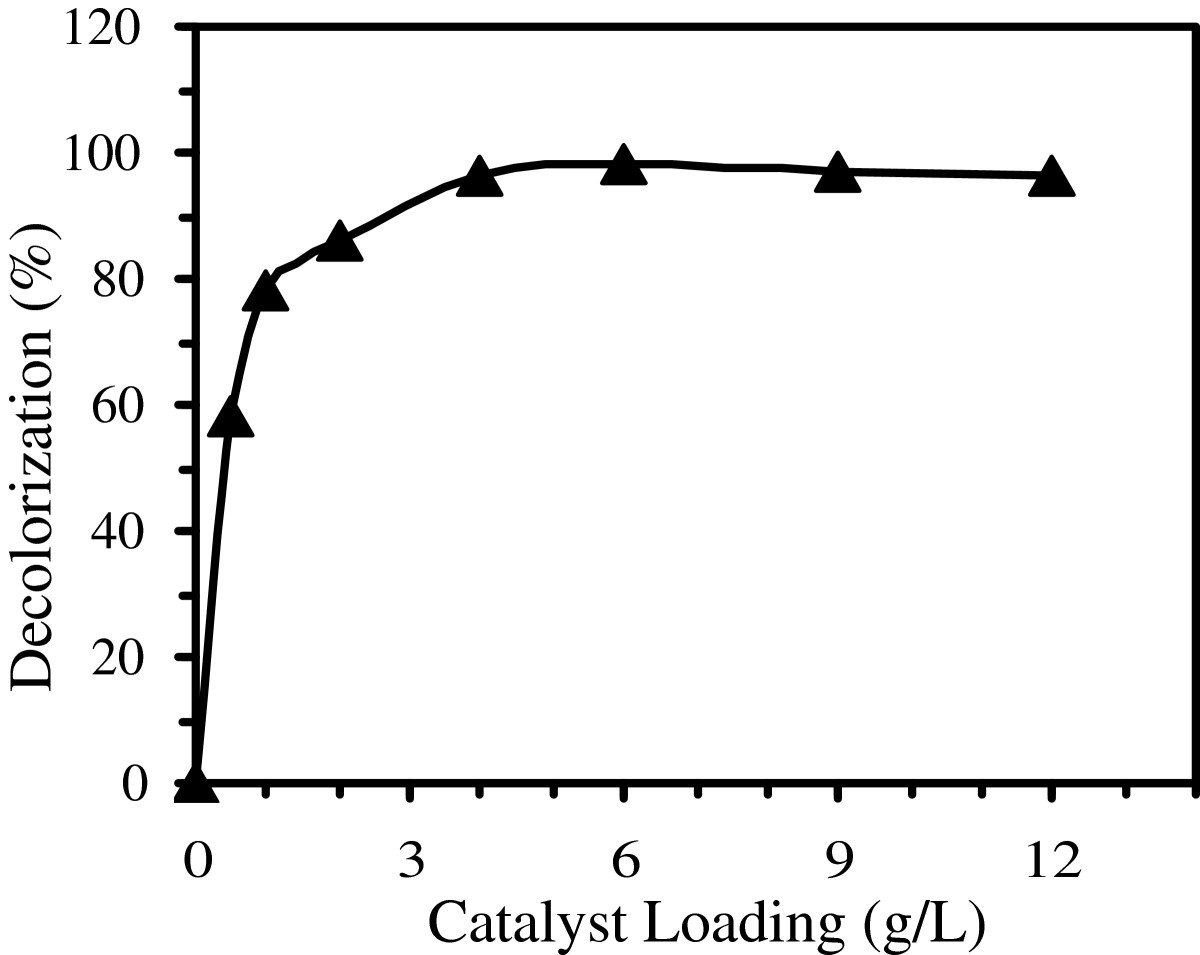
In order to avoid the use of excess catalyst, it is desirable to find out an optimum catalyst loading for efficient decolorization. A series of experiments was carried out by varying the amount of catalyst from 0 to 12 g/L with a dye concentration of 20 mg/L, solution pH of about 7, and solar irradiation time of 2 h. The decolorization efficiency of BGY for various photocatalyst loadings is illustrated in Figure
5
. The results show that an increase in the catalyst loading from 1 to 6 g/L increases the dye decolorization sharply from about 59% to about 98%. This is due to the fact that an increase in catalyst loading increases the active sites on the surface of the catalyst, which in turn, increases the adsorption of number of BGY
2−
species and, hence, the proportion of the excited species by the incoming photons. Therefore, the rate of decolorization increases with higher catalyst loading. With the increase of the catalyst loading from 6 to 8 g/L, the decolorization rate is almost constant, suggesting that an optimal level for catalyst effectiveness has been attained for this amount of BGY (20 mg/L). Further increase of the catalyst loading beyond 8 g/L resulted in a decrease in decolorization rate of the dye. This phenomenon may be due to the hindrance and blocking of light penetration caused by the excessive amount of the photocatalyst particles[
30
]. On the other hand, at high concentrations of catalysts, particle aggregation is significant, reducing thereby the active sites on the catalyst surface. Therefore, the decolorization rate also reduces. So, the optimal range of catalyst is 6 to 8 g/L with dye concentration of 20 mg/L. Since the maximum decolorization of BGY is observed with 6 g/L of ZnO-TiO
2
photocatalyst, the other experiments were performed using this amount of the composite. It is to be noted that no significant decolorization of BGY under solar irradiation was observed in the absence of the photocatalyst, indicating that the dye was resistant to self photolysis in aqueous solution under sunlight.
Figure 5
Effect of catalyst loading on decolorization of BGY.
BGY = 20 mg/L, pH approximately 7; illumination time = 2 h.
Effect of pH on the decolorization
The pH of the BGY solution is an important parameter for metal oxides that act as efficient photocatalysts because the environment pH influences the surface charge of the photocatalysts[
31
–
33
]. Figure
6
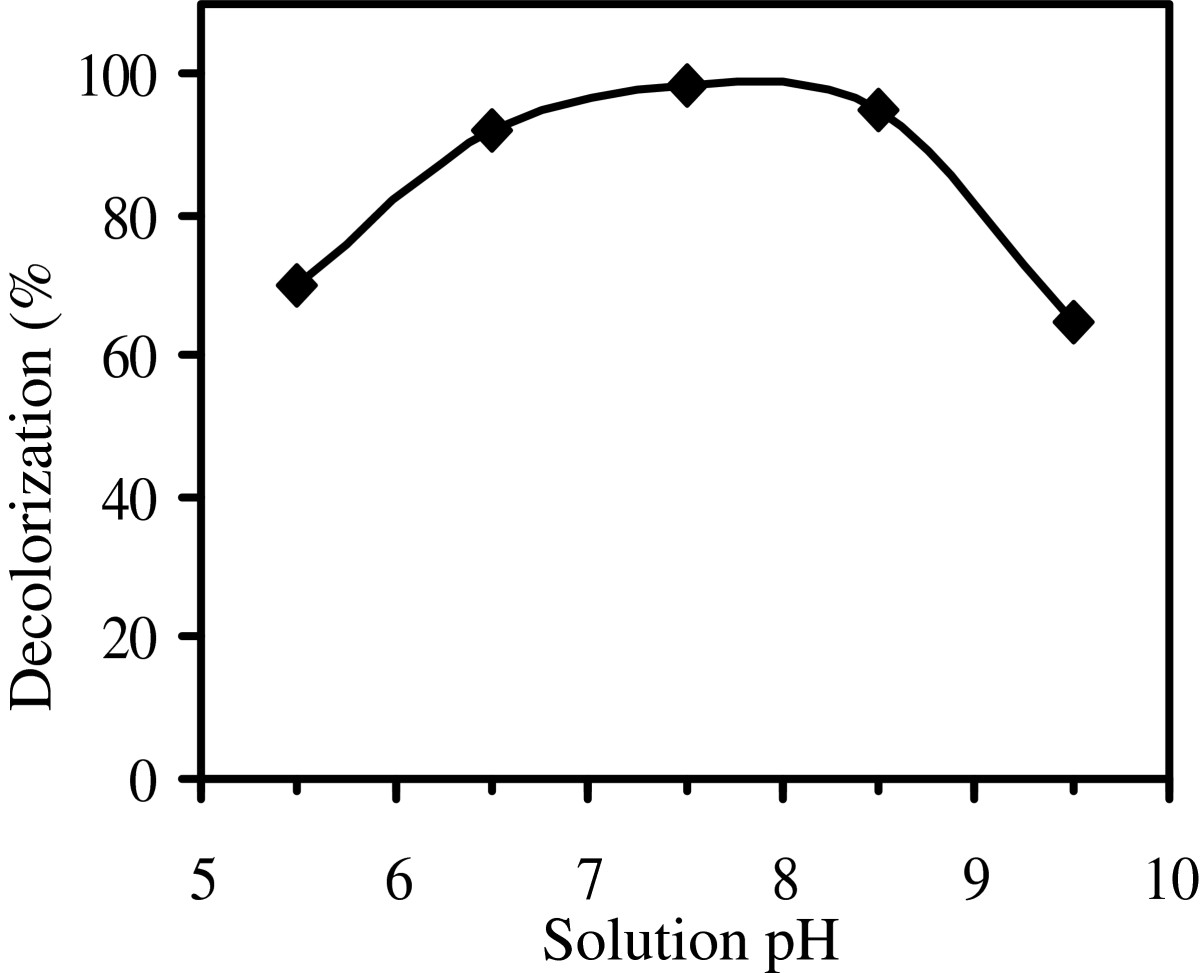
shows that the decolorization efficiency of BGY increases with the increasing solution pH from 6 to 7.5 (maximum decolorization efficiency, 98%, at pH about 7). A further increase of pH beyond 7.5 results in the reduction of decolorization rate. The pH effect on the photodecolorization of the dye in the presence of ZnO-TiO
2
can be explained on the basis of the zero point charge (pH
zpc
) of the nanocomposites The pH
zpc
of pristine ZnO is approximately 8.5 and that for TiO
2
(rutile) is about 5.3; therefore, about 7 could be the resultant pH
zpc
of the nanocomposite. Thus, the surface of the catalyst becomes positively charged at lower pH, but at higher pH, it becomes negatively charged. However, the photocorrosion of ZnO[
32
] may take place at lower pH (< 6.0). All these considerations make pH of the composite suspension around 7 an ideal environment for optimum solar decolorization of BGY.
Figure 6
Effect of initial solution pH on decolorization of BGY.
BGY = 20 mg/L, catalyst loading = 6 g/L, illumination time = 2 h.
Effect of initial dye concentration on the decolorization
Figure
7
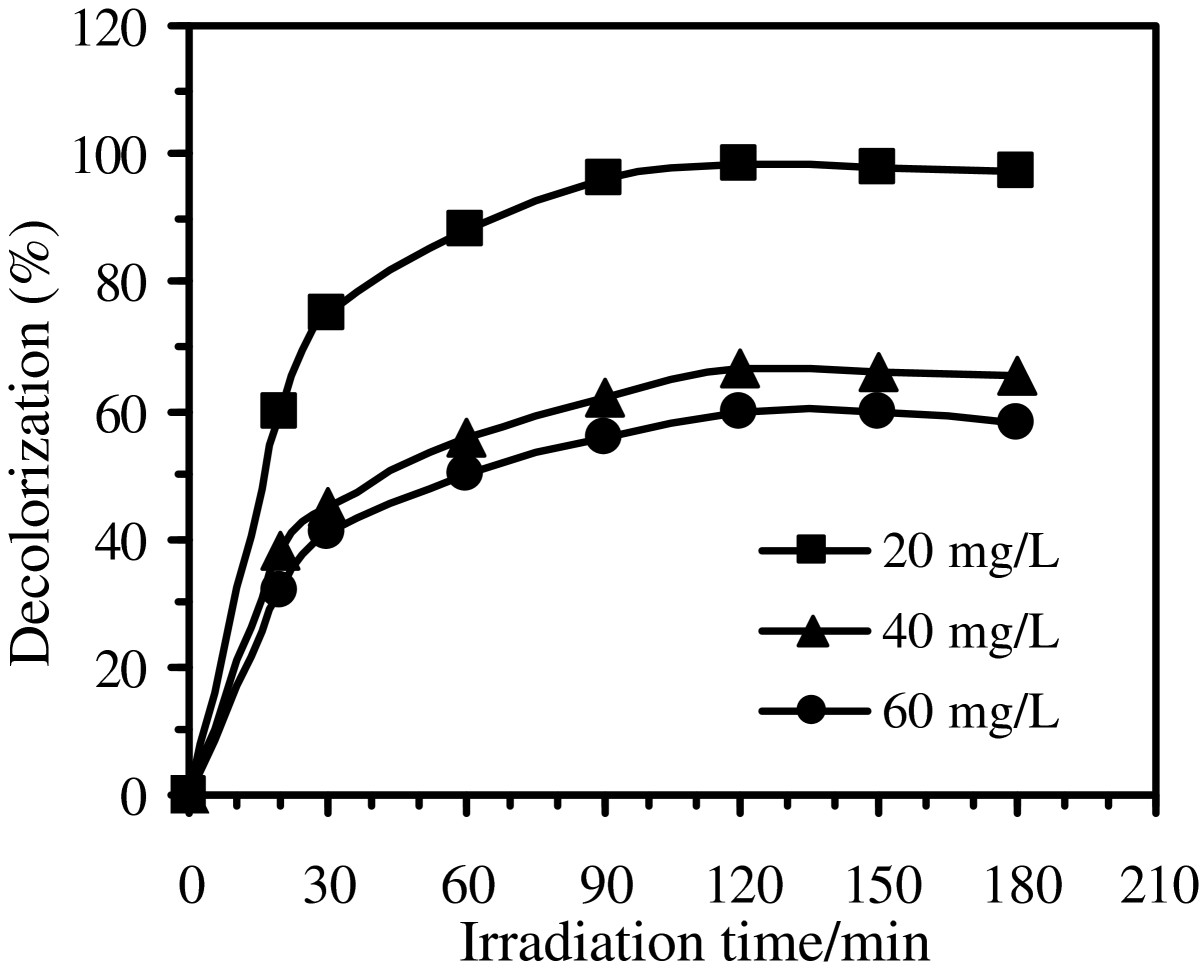
shows the effect of initial dye concentration on the decolorization of BGY. The results suggest that the decolorization efficiency of BGY decreases with increasing initial concentration of the dye. Similar results have been obtained in other studies on photodecolorization of dyes including BGY[
5
–
7
,
34
–
36
]. As the initial concentration of a dye increases, the color of dye solution becomes deeper which results in the reduction of penetration of light to the surface of the catalyst, decreasing the number of excited dye molecules.
Figure 7
Effect of initial dye concentration on decolorization of BGY.
Catalyst loading = 6 g/L, pH around 7; illumination time = 2 h.
At low initial dye concentration, the rate expression is given by the equation below:
−ddyedt=kappdye.
Integration of the above equation yields as follows:
lndye0/dye=kappt
where
kapp
is the pseudo-first-order rate constant. (dye)
o
is the equilibrium concentration of the BGY solution after adsorption, and it is taken as the concentration of dye solution at solar irradiation time ‘
t
= 0’ for kinetic analysis. (dye) is the concentration of BGY at solar irradiation time
t
, and
t
is the solar irradiation time (min).
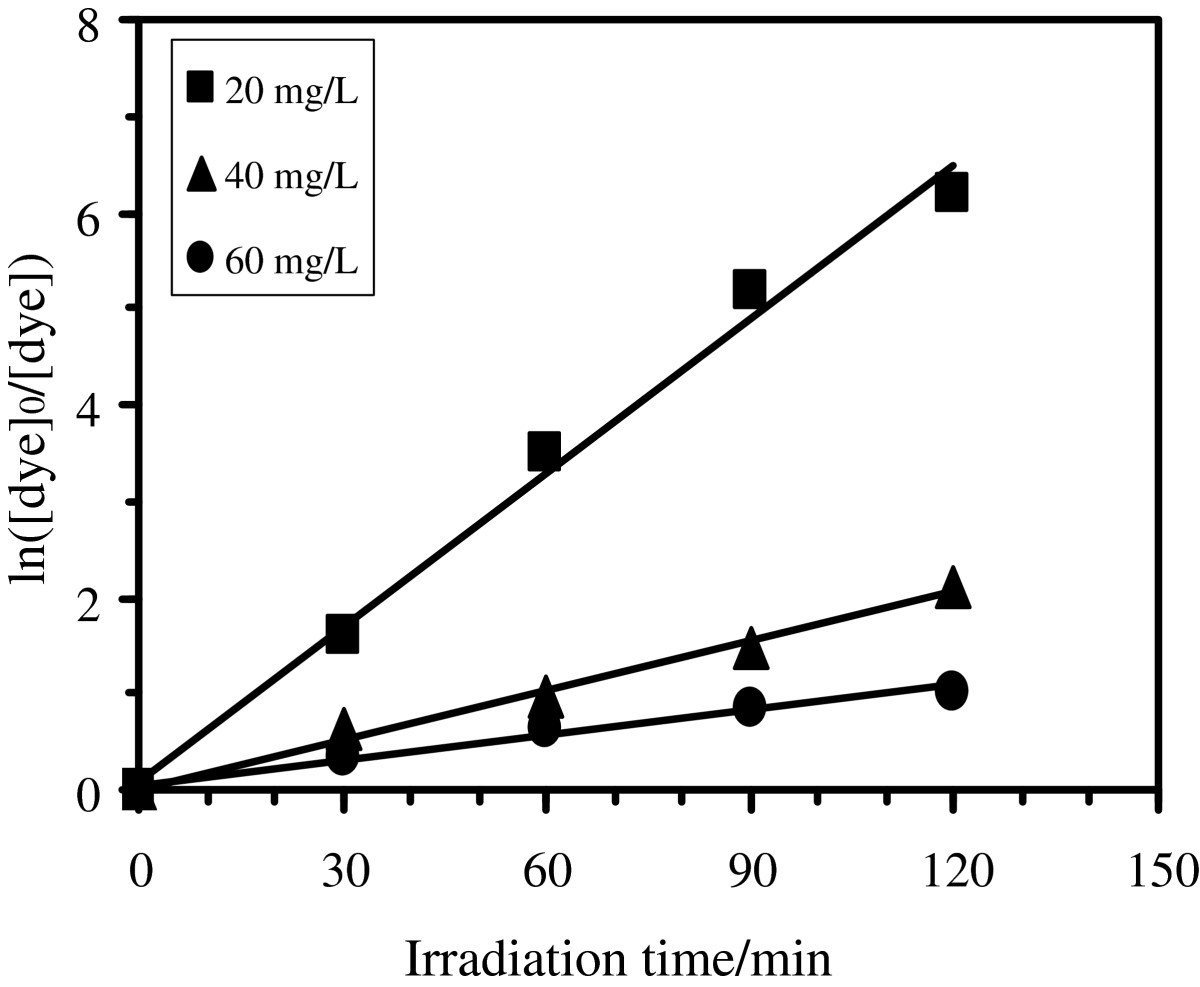
A plot of ln[(dye)
0
/(dye)] versus
t
for the BGY photodecolorization is shown in Figure
8
. When the initial dye concentration changed from 20 to 60 mg/L, the correlation constant (
R2
) for each of the fitted lines are 0.9907, 0.9915, and 0.9842, respectively corresponding to the calculated pseudo-first-order rate constants 0.0533, 0.0169, and 0.0086/min. The decrease in
kapp
can be explained in terms of the less availability of photons as the color of the solution gets more intense[
37
] and the consequent decrease in the number of excited BGY molecules on catalyst surface.
Figure 8
Kinetics of decolorization of BGY for different initial concentrations.
Effect of the additives on the decolorization
In dyeing process, some additives such as surfactants, antistatic agents, salts, etc. are often used. Therefore, wastewaters from dyeing/textile industries contain considerable amount of surfactants, antistatic agent, or salts. Here, sodium dodecyl sulfate (SDS) as anionic surfactant and Triton X-100 (BDH Chemicals Ltd.) as non-ionic surfactant were used as additives to observe their effects on the decolorization efficiency of BGY. Three groups of controlled experiments were carried out under the following conditions (BGY = 20 mg/L; catalyst loading = 6 g/L; pH around 7; irradiation time = 2 h): (1) dye solution without any additives, (2) dye solution with 10
−4
M SDS, and (3) dye solution with 10
−4
M Triton X-100 (BDH Chemicals Ltd.). The results showed that the addition of SDS inhibited decolorization efficiency of BGY; on the other hand, no significant change in decolorization efficiency was observed upon the addition of Triton X-100 (data not shown, BDH Chemicals Ltd.). The retarding effect by SDS can be explained by considering a competitive adsorption of the anionic dye and anionic surfactant ions on the positively charged surface of the photocatalyst.
Photodecolorization of wastewater
The nanocomposite containing 3:1 molar ratio of ZnO/TiO
2
was used to decolorize wastewater of a textile factory under the following conditions: catalyst loading = 6 g/L; pH about 7, and solar irradiation time = 2 h. The textile factory used BGY and Orange G(an anionic dye) for dyeing, and about 80% photodecolorization was achieved (data not shown). Lower decolorization of the wastewater by the ZnO-TiO
2
nanocomposite may be due to the presence of other materials such as surfactants, antistatic agents, salts, etc. which inhibits the decolorization efficiency of the ZnO-TiO
2
nanocomposites.
Conclusions
The feasibility of photocatalytic decolorization of BGY and wastewater of a textile factory, using ZnO-TiO
2
nanocomposite as photocatalyst in the form of suspension by irradiation with solar light, has been investigated. The experimental results show that the ZnO-TiO
2
nanocomposites with ZnO/TiO
2
molar ratios of 3:1 and 1:1 were the most efficient photocatalysts. The optimal conditions for about 98% decolorization of BGY are as follows: catalyst loading = 6 g/L, BGY = 20 mg/L, solution pH around 7, and solar irradiation time = 2 h. The addition of additives, e.g., sodium dodecyl sulfate (SDS), salts, etc. is found to inhibit the photocatalytic decolorization of BGY. The photocatalytic decolorization of the dye with ZnO-TiO
2
nanocomposites obeyed pseudo-first-order kinetics. Finally, it is concluded that the nanocomposites can be used as photocatalyst for the remediation of industrial wastewater containing dyes.
Authors' information
MAH is an associate professor of the Department of Chemistry, University of Dhaka (Bangladesh) and is currently working as a post-doctoral research fellow in the Clean Energy Research Center of the University of Yamanashi (Japan). MTS is a MSc student of the Department of Chemistry, University of Dhaka (Bangladesh). NMB is an assistant professor of the Department of Applied Chemistry and Chemical Engineering, Noakhali Science and Technology University (Bangladesh) and is currently working as a post-doctoral research fellow in the Venture Business Laboratory of Utsunomiya University (Japan). IMII is a professor of the Department of Chemistry, King Abdulaziz University and is acting as the Deputy Director for Technical Affairs in the Center of Excellence in Environmental Studies, King Abdulaziz University (Kingdom of Saudi Arabia). AJM is a supernumerary professor of the Department of Chemistry, University of Dhaka (Bangladesh).
Acknowledgments
The authors thank the MTC Cement Factory, Bangladesh, for providing the muffle furnace facility and the Center for Advanced Research in Sciences, University of Dhaka, Bangladesh, for providing the scanning electron microscope (SEM) measurement.
Competing interests
The authors declare that they have no competing interests.
Authors' contributions
MTS is an undergraduate student, and his work is the basis of the paper. MAH and AJM are the supervisor and co-supervisor, respectively. NMB and IMII have helped with the instrumental analysis and final preparation of the paper. All the authors read and approved the final manuscript.
References
Galindo et al. (2001) Photochemical and photocatalytic degradation of an indigoid dye: a case study of acid blue 74 (AB74) (pp. 47-56) 10.1016/S1010-6030(01)00435-X
Gong et al. (2005) Removal of cationic dyes from aqueous solution by adsorption on peanut hull (pp. 247-250) 10.1016/j.jhazmat.2005.01.029
Mozia et al. (2005) Decomposition of nonionic surfactant on a nitrogen-doped photocatalyst under visible-light irradiation (pp. 195-200) 10.1016/j.apcatb.2004.09.019
Hoffmann et al. (1995) Environmental applications of semiconductor photocatalysis (pp. 69-96) 10.1021/cr00033a004
Mahmood and Islam (2003) ZnO mediated degradation of Brilliant Orange by visible light (pp. 35-46)
Mahmood et al. (2003) Influence of light on the degradation of a dye in homogeneous and heterogeneous media (pp. 57-70)
Habib et al. (2012) Photocatalytic decolorization of Brilliant Golden Yellow in TiO2 and ZnO suspensions (pp. 423-429) 10.1016/j.jscs.2011.02.013
Aramendia et al. (2008) Modification of the photocatalytic activity of Pd/TiO2 and Zn/TiO2 systems through different oxidative and reductive calcination treatments (pp. 88-97) 10.1016/j.apcatb.2007.11.017
Wang et al. (2005) Preparation and photocatalytic activity of ZnO/TiO2/SnO2 mixture (pp. 3500-3506) 10.1016/j.jssc.2005.09.005
Marcì et al. (2001) Preparation, characterization and photocatalytic activity of polycrystalline ZnO/TiO2 systems. 2. Surface, bulk characterization, 4-nitrophenol photodegradation in liquid–solid regime (pp. 1033-1040) 10.1021/jp003173j
Yang et al. (2002) Rapid synthesis of nanocrystalline TiO2/SnO2 binary oxides and their photoinduced decomposition of Methyl Orange (pp. 193-198) 10.1006/jssc.2001.9526
Hu et al. (2003) Photocatalytic degradation of Cationic Blue X-GRL adsorbed on TiO2/SiO2photocatalyst (pp. 131-140) 10.1016/S0926-3373(02)00147-9
Shchukin et al. (2004) TiO2-In2O3 photocatalysts: preparation, characterizations and activity for 2-chlorophenol degradation in water (pp. 423-430) 10.1016/S1010-6030(03)00386-1
Li et al. (2004) Preparation of highly photocatalytic active nano-size TiO2-Cu2O particle composites with a novel electrochemical method (pp. 940-943) 10.1016/j.elecom.2004.06.008
Bandara et al. (2004) TiO2/MgO composite photocatalyst: the role of MgO in photoinduced charge carrier separation (pp. 83-88) 10.1016/j.apcatb.2003.12.021
Li et al. (2001) Photocatalytic activity of WOx-TiO2 under visible light irradiation (pp. 209-217) 10.1016/S1010-6030(01)00446-4
Gouvea et al. (2000) Semiconductor-assisted photocatalytic degradation of reactive dyes in aqueous solution (pp. 433-440) 10.1016/S0045-6535(99)00313-6
Dindar and Icli (2001) Unusual photoreactivity of zinc oxide irradiated by concentrated sunlight (pp. 263-268) 10.1016/S1010-6030(01)00414-2
Behnajady et al. (2006) Kinetic study on photocatalytic degradation of C.I. Acid Yellow 23 by ZnO photocatalyst (pp. 226-232) 10.1016/j.jhazmat.2005.10.022
Ahmed et al. (1996) Syntheses and crystal structures of titanium oxide sulfates (pp. 275-283) 10.3891/acta.chem.scand.50-0275
Hu et al. (1990) Preparation of TiO2ultrafine particles by hydrolysis of titanium alkoxide (pp. 265-268)
Serpone et al. (1995) Exploiting the interparticle electron transfer process in the photocatalysed oxidation of phenol, 2-chlorophenol and pentachlorophenol: chemical evidence for electron and hole transfer between coupled semiconductors (pp. 247-255) 10.1016/1010-6030(94)03906-B
Sukharev and Kershaw (1996) Concerning the role of oxygen in photocatalytic decomposition of salicylic acid in water (pp. 165-169) 10.1016/1010-6030(96)04338-9
Wang et al. (2010) Influence of Zn doping on the photocatalytic property of SrTiO3 (pp. 502-507) 10.1016/S1872-5813(10)60042-4
Lak et al. (2011) Photocatalytic activity of TiO2-capped ZnO nanoparticles (pp. 361-369)
Kim et al. (2011) Ratio dependence of the visible light photocatalytic efficiency for Zn2Ti0.9CryFe[0.1−y]O4: Cr/Fe (0.02 < y < 0.08) photocatalyst synthesized by using a solid state reaction method (pp. 65-70) 10.3938/jkps.59.65
Janitabar-Darzi et al. (2011) Sol–gel periparation of ZnO/Zn2TiO4 nanocomposite for photocatalytic degradation of crystal violet (pp. 524-525)
Fujishima et al. (1999) BKC, Inc.
Kim and Park (2006) Photocatalytic decolorization of Rhodamine B by immobilized TiO2 onto silicone sealant (pp. 133-137) 10.1016/j.cej.2005.10.013
Zhu et al. (2005) Photocatalytic degradation of pesticide pyridaben on TiO2 particles (pp. 95-105) 10.1016/j.molcata.2004.11.010
Bizani et al. (2006) Photocatalytic decolorization and degradation of dye solutions and wastewaters in the presence of titanium dioxide (pp. 85-94) 10.1016/j.jhazmat.2005.11.017
Shimizu et al. (2007) Sonocatalytic degradation of Methylene Blue with TiO2 pellets in water (pp. 184-190) 10.1016/j.ultsonch.2006.04.002
Muruganandham et al. (2006) Solar assisted photocatalytic and photochemical degradation of Reactive Black 5 (pp. 1371-1776) 10.1016/j.jhazmat.2006.03.030
Sahoo et al. (2005) Photocatalytic degradation of Methyl Red dye in aqueous solutions under UV irradiation using Ag+ doped TiO2 (pp. 91-100) 10.1016/j.desal.2005.02.014
Akyol et al. (2004) Photocatalytic decolorization of Remazol Red RR in aqueous ZnO suspensions (pp. 19-24) 10.1016/j.apcatb.2004.05.021
da Silva and Faria (2003) Photochemical and photocatalytic degradation of an azo dye in aqueous solution by UV irradiation (pp. 133-143) 10.1016/S1010-6030(02)00374-X