The development of fly ash-supported CaO derived from mollusk shell of Anadara granosa and Paphia undulata as heterogeneous CaO catalyst in biodiesel synthesis
Chemical Engineering Department, Faculty of Engineering, Diponegoro University, Semarang, 50275, ID
Physic Department, Diponegoro University, Semarang, ID
Abstract
The aim of this study was to develop fly ash-supported CaO catalyst derived from waste mollusk shell of
Anadara granosa and Paphia undulata
for transesterification of palm oil to yield biodiesel. The active precursor Ca(OH)
2
of the catalyst has been developed from calcination of waste mollusk shell, while the mesoporous has been prepared using the wet impregnation method. The results demonstrated that the mollusk shell-derived catalyst could gain the yield of biodiesel of 92 and 94 % for
A. granosa
shell and
P. undulata
shell, respectively. The obtained yield was comparable with the yield of biodiesel gained from CaO catalyst derived from reagent grade CaCO
3
(yield = 94 %). The optimum condition was achieved at catalyst loading of 6 %, reaction temperature of 60 °C and reaction time of 2 h. The reusability study showed that the developed catalysts exhibited higher recycle degree characteristic indicated by 50 % yield reduction after three reuse cycles.
Introduction
Due to the limited sources of fossil oil, biodiesel has been extensively studied as one of alternative fuels [
1
]. Biodiesel is composed of mono-alkyl esters of long-chain fatty acids derived from vegetable oils or animal fats [
2
]. The use of biodiesel will also support the environment sustainability due to its advantages as being biodegradable, renewable, has non-toxic properties [
3
].
Biodiesel is conventionally produced from esterification of edible or non-edible oils with homogenous acid or base catalysts [
4
]. Although homogeneous catalysts can provide high catalytic activity, however, some drawbacks have been reported, such as difficulty in recovery, high losses of product, and also production of toxic water [
5
]. Therefore, the heterogeneous catalysts have been introduced to overcome these drawbacks. The heterogeneous catalyst can be easily recovered from the reaction mixture, making that the heterogeneous catalyst is economically and environmentally preferable against the homogeneous catalyst [
6
]. Several heterogeneous catalysts have been utilized in the biodiesel production, for example, Al
2
O
3
, ZnO, MgO, hydrotalcites, CaO–MoO
3
–SBA-15, CaO–SiO
2
, and CaO–CeO
2
[
7
–
12
]. Among these heterogeneous catalysts, calcium oxide (CaO)-based catalysts have drawn great interest due to their high activities and low cost of preparation [
8
]. The source of CaO can be either generated by decomposition of reagent grade CaCO
3
at high temperatures or derived from natural resources, such as egg shells [
11
], snail shell [
13
], mud crab shell [
14
], and mussel shell [
15
]. To increase the activity, a heterogeneous catalyst requires support materials containing SiO
2
or Al
2
O
3
. One of the potential sources of support materials is fly ash. Fly ash is solid waste of coal combustion which mainly contains of inorganic oxides, such as SiO
2
(41–55 %) and Al
2
O
3
(20–25 %) [
16
]. The presence of large amounts of SiO
2
and Al
2
O
3
has prompted the use of fly ash as a support for catalytically active oxides and metals [
17
].
However, only a few studies have been focused on the utilization of biological resource of CaO impregnated to fly ash. One effort has been reported by Chakraborty et al. [
2
] who developed a heterogenous CaO catalyst derived from egg shells impregnated in fly ash for transesterification of soybean oil. Since waste shells of
Anadara granosa and Paphia undulata
are very abundant in Indonesia, and the shells also contain high CaO contents (>93 %); therefore, the use of these waste shells as heterogenous CaO catalyst is still important subject to be explored. Therefore, the objective of this work was to develop heterogeneous CaO catalyst derived from the waste shells of mollusk
A. granosa
and
P. undulata
and to utilize the catalyst for esterification of palm oil into biodiesel. The CaO catalyst will be impregnated in fly ash, and the activity will be compared with CaO-based reagent grade CaCO
3
.
Materials and methods
Materials
Palm oil and mollusk (
A. granosa
and
P. undulata
) shells were obtained from local market in Semarang, Indonesia. The free fatty acid (FFA) content of the palm oil was 0.16 %. Coal fly ash was collected from Paiton power plant, Indonesia. Methanol and reagent grade CaCO
3
were purchased from Merck.
Catalyst preparation
Prior to preparation, the mollusk shells were cleaned from its impurities. The shells were then dried in an oven at 110 °C for 6 h and were crushed and ground to fine powder then sieved at 100 μm. The fine powder of shell and reagent grade CaCO
3
was calcined at 800 °C for 3 h to generate CaO. Coal fly ash was dried in an oven at 105 °C for 10 h. The fly ash-supported CaO catalyst was prepared according to the wet impregnation method [
18
] which was also described in the previous paper [
19
].
Catalyst characterizations
To determine the crystallinity nature of fly ash-supported CaO catalysts, X-ray diffraction (XRD) patterns for supported catalysts samples were analyzed using Cu-Kα procedure. The analysis was performed at 2
θ
angle ranging from 10° to 90° at a scanning speed of 2° min
−1
. The surface morphology of the developed catalysts was determined using scanning electron microscope (SEM), while crystalline size of catalyst was calculated from the XRD data using Scherrer’s formula [
20
]
D=Kλβcos(2θ).
This equation was developed to calculate the nano crystallite size (
D
) by XRD radiation of wavelength
λ
(nm) from measuring full width at half maximum of peaks (
β
) in radian located at any 2
θ
in the pattern. The Scherrer constant (
K
) = 0.9 as the crystal was to be more spherical shapes.
The properties of catalyst were revealed by FTIR spectroscopy on a Win Bomem 1000 instrument in the region of 4000–400 cm
−1
. Before the recordings, the catalyst samples were exposed to phenol vapors to investigate the basic nature of surface sites, and afterward exposed to vacuum to remove any physically adsorbed vapors. The EDS elemental composition [particularly the calcium (Ca) concentration] was semi-quantitatively expressed in terms of weight percentages using Oxford Instruments INCA 400. In addition, X-ray diffraction (XRD) was also utilized as a quantitative determination of the CaO concentration within the catalysts.
Transesterification process
Methanolysis of refined palm oil was conducted in a 500-mL round bottom flask which was equipped with a reflux condenser and a magnetic stirrer. About 35 mL of palm oil was added into the bottom flask with amount of catalysts of 2–10 % and at constant methanol to oil mole ratio (12:1). The mixture was then stirred for a few minutes to make uniformly mixed oil-catalyst slurry and heated at 70 °C for 2 h. The catalyst was separated from its mixture using a vacuum pump. The mixture of product, methanol, and glycerol was separated in a funnel, and the excess methanol was recovered using a rotary evaporator. The biodiesel product was characterized using gas chromatography (GC).
Reusability cycle was tested through transesterification condition of 6 % catalyst, methanol:oil mole ratios = 12:1, reaction temperature of 60 °C, 2-h reaction time, and 700-rpm stirring speed. After each cycle, the spent catalyst was regenerated using methanol washing and dried in an oven at 110 °C for 12 h.
Gas chromatography analysis
The biodiesel product was analyzed by GC according to European Standard EN 14103:2011. The analysis was carried out using a GC Agilent 7890 Series with a flame ionization detector (FID). The column was HP-INNOWax with dimensions of 30 m × 0.25 mm × 0.25 μm, and helium was used as the carrier gas. The split/splitless inlet temperature was at 250 °C, split flow 100 mL min
−1
, column temperature at 60 °C for 2 min, 10 °C min
−1
to 200 °C, 5 °C min
−1
to 240 °C, and hold 240 °C for 7 min. The detector temperature was at 250 °C. Biodiesel was analyzed by injecting 1 μL of sample into GC, and the total ester content was calculated using the integrated peak areas of the methyl esther identified in the samples.
The measured properties of biodiesel were: (1) kinematic viscosity according to ASTM D 445; (2) density measured according to ASTM D 1298 method; and (3) cetane number (CN) calculated according to a multiple linier regression developed by Piloto-Rodriguez et al. [
21
] as function of the methyl ester composition found in biodiesel.
CN=56.16+0.07La+0.1M+0.15P-0.05Pt+0.23S-0.03O-0.19Li-0.31Ln+0.08Ei+0.18Er-0.1Ot,
where the independent variables represent the FAME composition found in biodiesel: La is the % of lauric,
M
is myristic,
P
is palmitic, Pt is palmitoleic,
S
is steraric,
O
is oleic, Li is Linoleic, Ln is linolenic, Ei is eicosanoic, Er is eruric, and Ot is the sum of the other FAMEs found.
Result and discussion
X-ray diffraction (XRD)
X-ray diffraction analysis has been identified by matching the data with Joint Committee for Powder Diffraction Standard (JCPDS). The characterization of Paiton coal fly ash showed that SiO
2
is in the crystalline phase at 2
θ
= 21.0°; 26.7°; 35.8°, while Al
2
O
3
is in amorphous phase. These compounds are oxide material which can be generally used as a catalyst support (Fig.
1
). The presence of dicalcium silicate (Ca
2
SiO
4
) crystalline phase was observed at 2
θ
= 34° in the catalysts (Table
1
). The formation of dicalcium silicate was due to the formation of dicalcium silicate hydrate (Ca
2
SiO
4
·H2O) through reaction between silica (SiO
2
) and CaO in the presence of water during the wet impregnation preparation process [
2
]
CaO+SiO2+H2O→Ca2SiO4·H2O.
Fig. 1
XRD pattern
a
coal fly ash [Al
2
O
3
(
star
) CaO (
filled upward triangle
) Ca
2
SiO
4
(
filled circle
) Fe
2
O
3
(
filleddownward triangle
) SiO
2
(
filled square
)],
b
fly ash-supported CaO (
Paphia undulata
),
c
fly ash-supported CaO (
Anadara granosa
), and
d
fly ash-supported CaO (CaCO
3
)
Table 1
The result of XRD diffraction and CaO concentration of each component used in the experiment
Compounds
2θ
CaO concentration (%)
Ca(OH)2
SiO2
CaO
Al2O3
Ca2SiO4
Fe2O3
Coal fly ash
–
21.05; 26.80; 35.85
32.28
25.64; 43.14
–
57.58
1.43
Fly ash-supported CaO (CaCO3 grade)
18.07
20.94; 26.63
32.24; 37.39; 53.88; 64.19; 67.41
–
34.10
–
57.31
Fly ash-supported CaO (Anadara granosa)
18.08
20.88; 26.69
32.27; 37.43; 53.92; 64.20; 67.44
–
34.20
–
42.98
Fly ash-supported CaO (Paphia undulata)
18.15
20.88; 26.65
32.26; 37.40; 53.90; 64.17; 67.42
–
34.09
–
42.88
Table
1
also shows the CaO content in the fly ash and catalysts. It shows that CaCO
3
has the highest CaO contents followed by
A. granosa
and
P. undulata
shells.
Scanning electron microcopy (SEM)
Figure
2
shows SEM images of the fly ash-supported CaO catalyst. The fly ash-supported CaO catalyst derived from CaCO
3
grade demonstrates a relatively smaller morphology size of particles compared with
P. undulata
and
A. granosa
, which also subsequently increases its surface area. The fly ash-supported CaO catalyst derived from CaCO
3
had the size distribution less than 30 μm. The fly ash-supported CaO catalyst derived from
P. undulata
shell produces molecular size less than 75 μm, while
A. granosa
shell produces molecular size less than 85 μm. SEM image also shows the structure agglomeration, because the metal oxide formed by heat treatment [
2
].
Fig. 2
SEM images fly ash-supported CaO.
aPaphia undulata
.
bAnadara granosa
.
c
CaCO
3
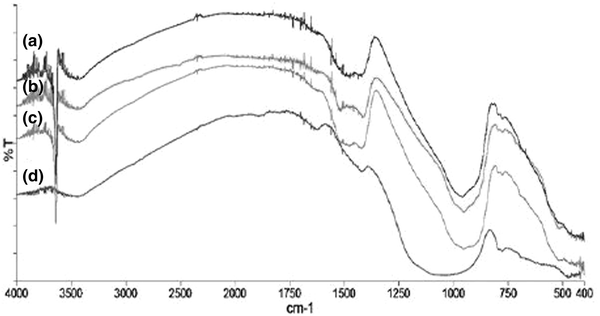
FTIR studies
The FTIR spectra of fly ash-supported CaO catalysts are shown in Fig.
3
. This technique was employed to characterize the surface absorbed species, such as carbonates and hydroxides of CaO supported on the fly ash. The absorption bands at 1419, 774, and 670 cm
−1
were actually CO
32−
ions. The appearance of this adsorption band with similar intensity for all the three catalysts may be attributed to the basic carbonates generated by the adsorption of gaseous CO
2
from atmosphere onto catalysts [
12
]. The adsorption band at 953 cm
−1
was Si–O–Ca bond from Ca
2
SiO
4
that generated from reaction of CaO and SiO
2
. The FTIR band at 3644 cm
−1
was ascribed to the stretching vibrations of surface hydroxyl groups (Ca–OH) and physisorbed moisture. The surface carbonate and hydroxyl species existed due to the catalyst exposure to the air. The FTIR results clearly showed the tendency of CaO to react with moisture and CO
2
in air.
Fig. 3
FTIR spectra of fly ash-supported CaO catalysts:
a
fly ash-supported CaO (CaCO
3
);
b
fly ash-supported CaO (
Anadara granosa
);
c
fly ash-supported CaO (
Paphia undulata
); and
d
coal fly ash
Transesterification
The amount of catalyst used in the transesterification is shown in Fig.
4
. For all heterogeneous catalyst types, the increase in catalyst amount also increases the yield of biodiesel and higher than the yield obtained by the homogenous catalyst (NaOH). This is due to the increase in the active site in the catalysts. The largest yield was shown at the amount of catalyst of 6 %, and afterward, the yield decreases. It is because of the emulsions formation that increases the viscosity of the mixture, which causes difficulty in mixing the reactants, catalysts, and products [
22
,
23
].
Fig. 4
The biodiesel yield obtained from different experiments at the variation of catalyst loading and type of catalyst. The NaOH catalyst represented the esterification using homogenous base catalyst
Comparison of the use of resources CaO on the fly ash-supported CaO catalysts can be seen in Table
1
. The experiment also showed that the mollusk shell-based catalysts are highly very active to catalyze the transesterification of palm oil. All fly ash-supported CaO catalysts produced yields more than 75 % after 2 h of reaction. The fly ash-supported CaO catalyst derived from CaCO
3
and
P. undulata
could gain biodiesel yield up to 94 %, while CaO catalyst derived from
A. granosa
achieved 92 % yield.
It also shows that the particle size has contribution in the transesterification, especially affecting the catalyst activity. The order of size of particles produced in this research is the fly ash-supported CaO catalyst (
A. granosa
) > fly ash-supported CaO catalyst (
P. undulata
) > fly ash-supported CaO catalyst (CaCO
3
). The use of heterogeneous catalysts is influenced by the size of catalyst particles [
11
]. A small particle size of the catalyst has a large surface area and, therefore, producing greater yield. In addition, the heterogeneous fly ash-supported CaO catalyst also forms dicalcium silicate (Ca
2
SiO
4
) which increases the activity of the catalyst.
Biodiesel products
Characterization of biodiesel was conducted using a gas chromatography (GC) Agilent based on method EN14103:2011 [
24
]. The run time of 30 min were used in accordance with the method of EN14103:2011. It was found that the highest content in the biodiesel was methyl oleic and methyl palmitic, while other components were found in small quantities (Table
2
).
Table 2
The physico-chemical properties of biodiesel produced by various types of catalyst
No.
Catalyst
Catalyst loading (%)
Yield (%)
Density (g cm−3)
Viscosity (cSt)
CN
1
Fly ash-supported CaO (CaCO3 grade)
2
83.12 ± 0.65
0.88
3.91
59.96
2
4
91.32 ± 0.73
0.88
4.21
59.90
3
6
94.71 ± 1.54
0.87
4.35
59.92
4
8
90.98 ± 1.68
0.87
3.92
59.81
5
10
90.68 ± 0.92
0.88
0.06
59.96
6
Fly ash-supported CaO (Anadara granosa)
2
75.85 ± 1.93
0.89
4.28
59.93
7
4
88.76 ± 1.72
0.89
4.43
59.88
8
6
92.50 ± 1.25
0.89
4.28
59.87
9
8
83.48 ± 0.82
0.89
4.28
60.07
10
10
81.96 ± 0.62
0.89
4.14
55.76
11
Fly ash-supported CaO (Paphia undulata)
2
83.32 ± 0.43
0.89
3.85
59.80
12
4
90.92 ± 1.24
0.89
4.06
59.84
13
6
94.53 ± 1.15
0.88
4.13
59.73
14
8
92.92 ± 0.92
0.87
3.85
59.88
15
10
85.66 ± 1.63
0.87
3.99
59.92
16
Homogenous catalyst (NaOH)
6
55.22 ± 2.15
0.89
4.86
59.63
The density and viscosity of the obtained biodiesel have already fulfilled the ASTM standard. According to ASTM D-1298, a standard density of biodiesel from 0.82 to 0.90 g cm
−3
and a viscosity of 2.0–5.0 cSt [
25
]. From the results, the biodiesel has the density ranges from 0.87 to 0.89 g cm
−3
with a viscosity of 3.85–4.43 cSt. The predicted cetane number (Eq.
2
) was less than 60.0, indicating that the produced biodiesel was very suitable for engine performance. This cetane number was mainly affected by high composition of methyl oleate (9) and methyl palmitate (C16:0) with contents of 58.44 and 37.17 %, respectively (Table
3
).
Table 3
Composition of fatty acid methyl ester (FAME) in the produced biodiesel
No.
Compounds
% weight
1
Methyl myristate (C14:0)
0.98
2
Methyl palmitate (C16:0)
37.17
3
Methyl stearate (C18:0)
0.50
4
Methyl oleate (9) (C18:1)
58.44
5
Methyl oleate (10) (C18:1)
2.19
6
Methyl linoleate (C18:2)
0.63
As compared with other sources of heterogeneous catalyst, this study showed comparable finding with respect to biodiesel yield (Table
4
). Biodiesel yield obtained from catalyst egg shells, snail shells, and
Meretrix venus
only achieved 92 % [
11
], which was higher than shrimp shell and horn shell (<90 %) [
23
,
26
]. These results indicated that the mollusk shells of
A. granosa
and
P. undulata
have great potential for improving yield biodiesel.
Table 4
Biodiesel yield from various catalyst sources
Source of catalyst
Condition
FAME yield
References
Egg
Temperature = 60 °C, methanol/oil molar ratio = 18:1, catalyst amount = 10 wt %, reaction time = 100 min
92
[11]
Golden apple snail
Temperature = 60 °C, methanol/oil molar ratio = 18:1, catalyst amount = 10 wt %, reaction time = 100 min
92
[11]
Meretrix venus
Temperature = 60 °C, methanol/oil molar ratio = 18:1, catalyst amount = 10 wt %, reaction time = 100 min
85
[11]
Obtuse horn shell
Temperature = 60 °C, methanol/oil molar ratio = 12:1, catalyst amount = 5 wt %, reaction time = 6 h
88
[23]
Shrimp shell
Temperature = 65 °C, methanol/oil molar ratio = 9:1, catalyst amount = 2.5 wt %, reaction time = 3 h
89
[26]
Anadara granosa
Catalyst amount = 6 wt %, methanol/oil molar ratio = 12:1, temperature = 60 °C, reaction time = 120 min
92
This study
Paphia undulata
Catalyst amount = 6 wt %, methanol/oil molar ratio = 12:1, temperature = 60 °C, reaction time = 120 min
94
This study
Reusability study
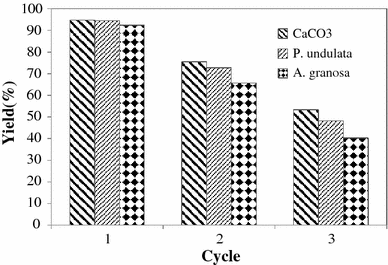
Figure
5
shows that the yield of biodiesel dropped to 53.76, 40.23, and 46.76 % for spent catalysts derived from CaCO
3
,
A. granosa,
and
P. undulata
after the third cycles. The results indicated a slight catalyst deactivation because of the leaching of the CaO active species into the reaction medium [
27
]. The decrease in CaO contents are shown in Table
5
.
Fig. 5
Biodiesel yield during esterification after the first and second catalyst recycles for CaO catalyst derived from CaCO3,
Paphia undulata,
and
Anadara granosa
Table 5
The CaO content of fresh and spent catalysts after the third cycles
Catalyst
CaO contents in fly ash catalyst (%)
CaCO3-based CaO
Paphia undulata-based CaO
Anadara granosa-based CaO
Fresh (before used)
57.31
46.98
43.26
First cycle
34.39
30.66
26.98
Second cycle
10.54
9.31
8.23
Third cycle
7.96
6.48
5.28
The dissolution of CaO into alcoholic phase also causes the deactivation of active sites, and thus, it leads concentration of CaO decrease. Moreover, CaO will also dissolve in products, such as glycerol and biodiesel, and therefore reducing the amount of CaO in the catalyst. The decrease in yield could also be attributed to catalyst deterioration due to poisoning by glycerol and soap present in reaction mixture. The presence of calcium glyceroxide in the spent catalyst could possibly be a factor for its reduced reusability. Calcium glyceroxide is formed through the reaction of CaO and glycerol [
28
].
Figure
6
shows the FTIR analysis of the catalyst after the second recycles. The CaO-based catalyst derived from calcined
P. undulata,A. granosa
shells, and CaCO
3
shows the identical FTIR patterns. The functional group in the catalyst has been detected at the wavelength of 3639.2, 3365.7, 2652.7, 1550.7, and 1463.9, while CaO was detected at 725, 877, 1430, 1785, and 2530 cm
−1
. As compared with Fig.
3
, there is difference in the peaks indicated that CaO in the catalyst reduces. At peaks of 3639.2 and 3365.7 cm
−1
there were vibrations of OH-bonds such as Si–OH or Ca–OH bonds, while absorption around 2652.7 cm
−1
suggesting that SiO
2
was generated. In addition, groups of –C–H and –CH
2
– were indicated by their appearance at 1550.7 and 1463.9 cm
−1
, respectively. These organic groups also show the vibration of –C–H and –CH2– groups, which probably from triglyceride entrapped in the catalysts.
Fig. 6
FTIR spectra of the second recycled catalysts
The XRD pattern of catalyst derived from calcined
P. undulata
and CaCO
3
is shown in Fig.
7
. These diffractograms showed that both recycled catalysts have identical patterns, and CaO compound was detected at 2
θ
= 32, 37, 53, 64, and 67. The largest portions are detected at 2
θ
= 32, 37, while at 2
θ
= 53, 64, and 67, CaO compound is presence in small quantities. This is probably due to reaction of CaO with methanol to form calcium methoxide during esterification reaction.
CaO+CH3OH→Ca(CH3O)2+H2O
Fig. 7
Powder XRD pattern of catalysts after the second recycled.
a
CaCO3 and
bPaphia undulata
The study of the reusability revealed that the mollusk shells of
P. undulata
and
A. granosa
could be effectively utilized as low -cost-supported-based catalyst for biodiesel production.
Conclusion
This study focused on the development of heterogeneous CaO catalyst derived from mollusk shells (
A. granosa and P. undulata
) and CaCO
3
. It was determined that transesterification conditions of 6 wt % catalyst loading, 12:1 methanol to oil mole ratio, 60 °C reaction temperature, 2 h reaction time resulted in biodiesel yield of 92 and 94 %, for CaO from
A. granosa
and
P. undulata
shells, respectively. The biodiesel physicochemical properties, including ester and linolenic acid contents, kinematic viscosity, density, and cetane number, were within the limits specified in ASTM standard. The developed catalyst could also be reused up to three consecutive cycles after regeneration. Overall, the mollusk shells have been potentially demonstrated as low-cost catalyst for transesterification applications.
References
Jaiyen et al. (2015) Comparative study of natural dolomitic rock and waste mixed seashells as heterogeneous catalyst for the methanolysis of palm oil to biodiesel (pp. 433-440) 10.1016/j.renene.2014.08.050
Chakraborty et al. (2010) Transesterification of soybean oil catalyzed by fly ash and egg shell derived solid catalysts (pp. 798-805) 10.1016/j.cej.2010.10.019
Sharma and Singh (2010) A hybrid feedstock for a very efficient preparation of biodiesel (pp. 1267-1273) 10.1016/j.fuproc.2010.04.008
Sharma et al. (2010) High yield and conversion of biodiesel from a nonedible feedstock (Pongamia pinnata) (pp. 242-247) 10.1021/jf903227e
Nair et al. (2012) Synthesis of biodiesel from low FFA waste frying oil using calcium oxide derived from Mereterix as a heterogeneous catalyst (pp. 82-90) 10.1016/j.jclepro.2012.01.039
Xie and Zhao (2013) Production of biodiesel by transesterification of soybean oil using calcium supported Ti oxides as heterogeneous catalysts (pp. 55-62) 10.1016/j.enconman.2013.07.027
Benjapornkulaphong et al. (2009) Al2O3-supported alkali and alkali earth metal oxides for transesterificaton of palm kernel oil and coconut oil (pp. 469-474) 10.1016/j.cej.2008.04.036
Mahdavi and Monajemi (2014) Optimization of operational conditions for biodiesel production from cottonseed oil on CaO–MgO/Al2O3 solid base catalysts (pp. 2286-2292) 10.1016/j.jtice.2014.04.020
Xie and Zhao (2014) Heterogeneous CaO–MoO3–SBA-15 catalysts for biodiesel production from soybean oil (pp. 34-42) 10.1016/j.enconman.2013.11.041
Yu et al. (2011) Transesterification of Pistacia chinensis oil for biodiesel catalyzed by CaO–CeO2 mixed oxides (pp. 1868-1874) 10.1016/j.fuel.2010.11.009
Viriya-empikul et al. (2010) Waste shell of mollusk and egg as biodiesel production catalysts (pp. 3765-3767) 10.1016/j.biortech.2009.12.079
Chen et al. (2015) A biomimetic silicification approach to synthesize CaO–SiO2 catalyst for the transesterification of palm oil into biodiesel (pp. 48-55) 10.1016/j.fuel.2015.02.109
Birla et al. (2012) Kinetics study of synthesis of biodiesel from waste frying oil using a heterogeneous catalyst derived from snail shell (pp. 95-100) 10.1016/j.biortech.2011.11.065
Boey et al. (2009) Biodiesel production via transesterification of palm olein using waste mud crab (Scylla serrata) shell as a heterogeneous catalyst (pp. 6362-6368) 10.1016/j.biortech.2009.07.036
Rezaei et al. (2013) Optimization of biodiesel production using waste muscle shell catalyst (pp. 543-549) 10.1016/j.fuel.2013.03.004
Goodarzi (2006) Characteristics and composition of fly ash from Canadian coal-fired power plants (pp. 1418-1427) 10.1016/j.fuel.2005.11.022
Rode et al. (2012) Copper modified waste fly ash as a promising catalyst for glycerol hydrogenolysis (pp. 31-37) 10.1016/j.cattod.2011.11.038
Ho et al. (2012) Development and characterisation of novel heterogeneous palm oil mill boiler ash-based catalysts for biodiesel production (pp. 158-164) 10.1016/j.biortech.2012.08.099
Hadiyanto et al. (2016) Preparation and characterization of Anadara granosa shell and CaCO3 as heterogeneous catalyst for biodiesel production 11(1) (pp. 21-26) 10.9767/bcrec.11.1.402.21-26
Qin et al. (2009) Facile synthesis of magnetite iron oxide nanoparticles using 1-methyl-2-pyrrolidone as a functional solvent (pp. 130-134) 10.1016/j.colsurfa.2008.11.040
Piloto-Rodriguez et al. (2013) Prediction of cetane number of biodiesel using artificial neural networks and multiple linier regression (pp. 255-261) 10.1016/j.enconman.2012.07.023
Nur et al. (2014) Production of biodiesel from palm oil using modified Malaysian natural dolomites (pp. 738-744) 10.1016/j.enconman.2013.11.012
Lee et al. (2015) Transesterifikasi of palm oil to biodiesel by using waste obtuse horn shell-derived CaO catalyst (pp. 282-288) 10.1016/j.enconman.2014.12.067
McCurry (2012) Agilent Technologies Inc.
Lesbani et al. (2013) Preparation of calcium oxide from Achatina fulica as catalyst for production of biodiesel from waste cooking oil (pp. 176-180)
Yang et al. (2009) Shrimp shell catalyst for biodiesel production 23(8) (pp. 3859-3865) 10.1021/ef900273y
Pasupulety et al. (2013) Production of biodiesel from soybean oil on CaO/Al2O3 solid base catalysts (pp. 189-202) 10.1016/j.apcata.2012.10.006
Ho et al. (2014) Evaluation of palm oil mill fly ash calcium oxide as a heterogeneous base catalyst in biodiesel synthesis (pp. 1167-1178) 10.1016/j.enconman.2014.03.061