Department of Chemical Engineering and Physical Chemistry, Faculty of Sciences, Badajoz, 06006, ES
Department of Chemistry, University of Tras-os-Montes and Alto Douro (UTAD), Vila Real, 5001, PT
Department of Organic and Inorganic Chemistry, Faculty of Sciences, Badajoz, 06006, ES
Abstract
Degradation rates and removal efficiencies of different parabens, namely, methylparaben, ethylparaben, propylparaben, and butylparaben using H
O
/Fe
advanced oxidation process are studied in this work. With the aim of optimizing the removal of parabens from waters through the Fenton process, a factorial central composite orthogonal and rotatable design (FCCORD) was used. H
O
and Fe
ion initial concentrations were selected as independent variables. The experimental procedure planned according to the FCCORD makes it possible to optimize the removal. The occurrence of interactions between these two variables can also be analyzed with the aid of the experimental design. Fenton process provides conversion efficiencies comprising between 85 and 94 % after a reaction time of 48 h, which reveals the appropriateness of this procedure for the removal of parabens from aqueous matrices.
Introduction
Pharmaceuticals and personal care products (PPCPs) constitute a novel group of water pollutants. The presence of these chemicals in ground- and surface water has been repeatedly reported [
1
–
3
]. Many "emerging pollutants" can be regarded as recalcitrant compounds, since they cannot be eliminated in wastewater treatment plants through routine biological, chemical or physical treatment. Parabens is the common name of a wide variety of alkyl esters of p-hydroxybenzoic acid. Many of them find application as ingredients of pharmaceuticals, personal hygiene/care products and cosmetics in general [
4
]. Studies on the causes of breast cancer confirm that these kinds of products can be assimilated by the human body and reach tissues [
5
,
6
]. Hence, the discernment of these pollutants in humans that have been in contact with them in their environments has attracted the interest of the scientific community. For instance, parabens have been found in fluids such as urine [
7
,
8
], milk [
9
], serum [
10
] and semen [
11
,
12
].
Since these chemicals may cause severe damages to health, the development of highly effective removal methods is receiving a great deal of attention in the last years. The use of processes such as adsoprtion [
13
,
14
] or biosorption [
15
] have demonstrated to be effective in the treatment of waters polluted with parabens. The main advantage of this kind of processes is their relatively low cost. However, in adsorption or biosorption the pollutants are extracted from the liquid phase and concentrated on the surface of the solid adsorbent. This causes severe problems related with the wastes generated in the process. The so-called advanced oxidation processes (AOPs) appear as an attractive alternative to solve this problem, since in AOPs the pollutants are degradated to form smaller molecules (ideally CO
and water). AOPs such as ozonation [
16
,
17
] or UV-oxidation [
18
] have also been succesfully applied for the removal of parebens. These processes are highly efficient, their high cost being theri most important disadvantage. On the contrary, Fenton process is a promising technology [
19
,
20
]. The main advantages of this procedure are technological simplicity, excellent results in pollutant removal, inexpensiveness and safety [
21
,
22
]. The chemical basis of the Fenton process lays on the decomposition of H
O
at low pHs in the presence of Fe
ions. The global process consists of several steps:
The main goal of this work is to analyze the feasibility of using the Fenton oxidation process to achieve the simultaneous degradation of four parabens present in aqueous matrices. With this purpose, a statistical design of experiments has been used to analyze the influence of two operational parameters (namely, H
O
and Fe
initial concentrations) on the removal efficiency of four parabens. Optimal treatment conditions have been determined as well.
Methods
Chemicals
Methylparaben (MP, C
H
O
), ethylparaben (EP, C
H
O
), propylparaben (PP, C
H
O
) and butylparaben (BP, C
H
O
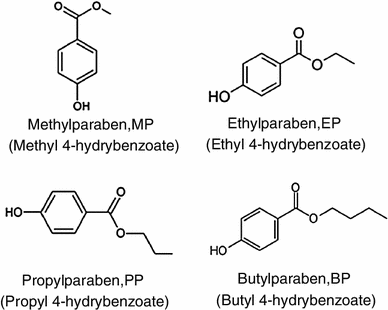
) were purchased from Sigma-Aldrich, with purities above 98 % in all cases. The molecular structures of parabens are illustrated in Fig.
1
. Solutions containing an admixture of the four parabens (5 ppm each) were prepared using high-purity Millipore Milli-Q
water. The pH of the solutions was kept constant by using a HClO
/ClO
buffer. H
O
(33 % w/v) and FeSO
7H
O (analytical grade) were purchased from Merck (White House Station, NJ, USA).
Fig. 1
Molecular structure of target parabens studied
Experimental procedure
All experiments were performed in a 250 mL glass reactor that was placed inside a thermostatic (25
0.5
C) bath provided with a magnetic stirring system. 150 mL of aqueous solution of parabens was used in all experiments. As indicated above, an HClO
/ClO
buffer was used to keep pH constant. The adequate quantity of Fe(II) sulfate was incorporated. Finally, the required amount of hydrogen peroxide was added to make the reaction start.
With the aim of determining the period of time required to reach equilibration, several kinetic experiments were performed. In all cases the reaction was quenched at different time intervals previously set by adding NaHSO
. Equilibration times comprised between 24 and 48 h were determined for the four pollutants. Hence, a reaction time of 48 h was used when performing the different experiments.
Analytical methods
Solutions consisting of an admixture of the four parabens were used. The concentrations of methylparaben, ethylparaben, propylparaben and buthylparaben present in the samples were analyzed simultaneously with the aid of a Waters HPLC chromatograph. A photodiode Array 996 detector and a Waters Nova-Pak C-18 column (5
m, 150 mm × 3.9 mm) were used. Well-defined peaks were obtained for the four chemicals under study, with retention times of 2.2, 2.8, 4.2 and 6.8 min for MP, EP, PP and BP, respectively. For each of the analyses, 100
L of solution was introduced (1 mL/min) into the chromatograph. The mobile phase was constituted by a mixture of methanol:water 60:40, containing 2
10 mol L
phosphoric acid). Isocratic operation mode was chosen, that is, the proportion of the mobile phase was kept constant throughout the experiment.
Design of experiments
The use of an experimental design is an excellent choice to analyze if two or more independent variables—and their possible interactions—exert a statistically significant effect on the response variable. Furthermore, it makes it possible to minimize the number of experiments necessary with such an aim. Optimization of the process is also possible. The application of RSM provides a mathematical relationship between variables and experimental data can be fitted to a polynomial equation as follows [
23
].
where
Y
is the predicted response,
is the offset term,
is the linear effect,
is the first-order interaction effect and
is the squared effect. For the present study, a composite, central, orthogonal and rotatable design of experiment (CCORD) has been used. This kind of experimental design has been widely used in similar works. The number of runs,
N
, is:
where
k
represents the number of independent variables (or factors) and
n
is the number of replicates of the central experiment.
To perform this study, a CCORD was used with two independent variables (namely, the initial concentrations of H
O
and Fe
). The central experiment was replicated eight times,
N
being thus equal to 16.
To be used in the statistical calculations, the natural values of the variables have to be converted into dimensionless codified values. With such a purpose, the following equation was used
where
is the coded value of the
i
th independent variable,
is the natural value of such variable,
is the natural value at the center point and
S
is the value of the step change.
The experimental results were statistically analyzed and the results validated by means of an analysis of variance (ANOVA) procedure performed at a confidence level of 95 %. The values of the removal efficiencies (in %) of the four parabens after a contact time of 48 h were selected to perform the statistical analysis. It was calculated as follows
where
represents the concentration of each of the parabens initially present in solution and
is the final concentration of pollutant determined once the contact time (i.e., 48 h) has elapsed.
As indicated above, the effect of initial concentrations of H
O
and Fe
was analyzed by applying response surface methodology (RSM). Table
1
shows the operational conditions of the statistical design of experiments (DoE), whereas Table
2
summarizes the experimental arrangement behind the DoE and the response obtained in each of the experiments.
Table 1
Operating levels in the removal of parabens
Variable (mol L−1)
Lower level (−1)
Upper level (+1)
Center point (0)
[H2O2]0× 10+4
0.46
2.70
1.58
[Fe2+]0× 10+5
0.46
2.70
1.58
Table 2
Experimental arrangement behind the DoE and response obtained in each of the experiments
Run
Coded [H2O2]0
Coded [Fe2+]0
Yparaben (%)
MP
EP
PP
BP
1
−1
−1
32.8
37.9
39.5
41.5
2
1.41421
0
67.9
74.6
71.8
79.9
3
0
0
72.3
78.1
80.0
82.4
4
−1
1
44.2
48.1
49.2
51.6
5
0
0
71.5
77.9
79.9
82.4
6
0
−1.41421
4.4
5.8
6.6
6.7
7
1
1
95.8
97.7
98.0
98.6
8
0
0
72.3
77.8
79.7
82.0
9
0
0
72.3
77.9
79.8
82.3
10
0
0
72.3
78.0
80.0
82.4
11
0
0
72.7
78.4
80.2
82.7
12
0
0
72.9
78.6
80.4
82.9
13
0
1.41421
84.8
89.1
90.3
91.7
14
0
0
72.3
78.1
80.0
82.4
15
−1.41421
0
6.3
6.5
6.7
7.2
16
1
−1
85.6
91.0
92.3
94.0
Results and discussion
Numerical analysis: analysis of variance report
The analysis of variance test indicates if a given parameter exerts a significant influence on the response variable. Such analysis is summarized in Table
3
. The results shown in this Table indicate that, in all cases, the [
]
and [Fe
]
exhibit a
p
value below 0.05, which means that such factors significantly affect the response variable (Yparabens %) at a confidence level equal to 95 %. The same applies for the square of [H
O
]
excepting for the removal of MP (i.e.,
p
value = 0.0513).
Table 3
Results of the ANOVA tests
Parameter
Sum of squares
Average square
F-ratio
p-value
Methylparaben
A: coded [H2O2]0
4,584.78
4,584.78
20.59
0.0011
B: coded [Fe]0
2,288.35
2,288.35
10.28
0.0094
AA
1,090.44
1,090.44
4.90
0.0513
AB
0.36
0.36
0.00
0.9687
BB
502.439
502.439
2.26
0.1640
Total error
2,227.0
222.7
Total (corr.)
10,693.4
Ethylparaben
A: coded [H2O2]0
4,950.52
4,950.52
19.83
0.0012
B: coded [Fe]0
2,268.14
2,268.14
9.09
0.0130
AA
1,271.33
1,271.33
5.09
0.0476
AB
3.0625
3.0625
0.01
0.9140
BB
670.688
670.688
2.69
0.1322
Total error
2,496.06
249.606
Total (corr.)
11,659.8
Propylparaben
A: coded [H2O2]0
4,688.28
4,688.28
17.50
0.0019
B: coded [Fe]0
2,236.79
2,236.79
8.35
0.0161
AA
1,545.67
1,545.67
5.77
0.0372
AB
4.0
4.0
0.01
0.9052
BB
691.913
691.913
2.58
0.1391
Total error
2,678.68
267.868
Total (corr.)
11,845.3
Buthylparaben
A: coded [H2O2]0
5,116.34
5,116.34
19.32
0.0013
B: coded [Fe]0
2,275.02
2,275.02
8.59
0.0150
AA
1,389.95
1,389.95
5.25
0.0449
AB
7.5625
7.5625
0.03
0.8692
BB
858.007
858.007
3.24
0.1021
Total error
2,648.39
264.839
Total (corr.)
12,295.3
Non-linear polynomial regression was carried out and a equation similar to Eq.
10
was proposed for each of the pollutants. The values of the fitting coefficients obtained for the removal of the four parabens are summarized in Table
4
.
Table 4
Fitting coefficients obtained for the removal of the four parabens
Pollutant
b0
A
B
C
D
E
Methylparaben
72.33
23.94
16.91
−11.68
−0.30
−7.93
Ethylparaben
78.10
24.84
16.84
−12.61
−0.88
−9.16
Propylparaben
80.00
24.21
16.72
−13.90
−1.00
−9.30
Buthylparaben
82.44
25.29
16.86
−13.18
−1.38
−10.36
From the data listed in Table
4
it may be concluded that, in all cases, [H
O
]
and [Fe
]
exhibit a positive (+) sign. This means that both positively affect the response variable. Thus, the larger [H
O
]
and [Fe
]
, the more effective is the removal efficiency. The remaining factors are behind a negative (−) sign in Table
4
. This latter indicates that such factors negatively influence the removal process. Hence, as these factors increase, the removal of the pollutants is hindered. The factors that exert a negative effect on the removal of parabens are the combination of hydrogen peroxide concentration and Fe
ion concentration; [H
O
]
and [Fe
]
.
The correlation factors,
, corresponding to the mentioned equations are 79.2, 78.6, 77.4 and 78.6 %, respectively, which suggests that the proposed model is adequate to describe the experimental results in a reasonable manner. This will be confirmed by the graphical analysis (see next section).
Graphical analysis
The experimental results were modelized according to five factors by using the general Eq.
10
and its particularized form for each of the parabens under study (see Table
4
).
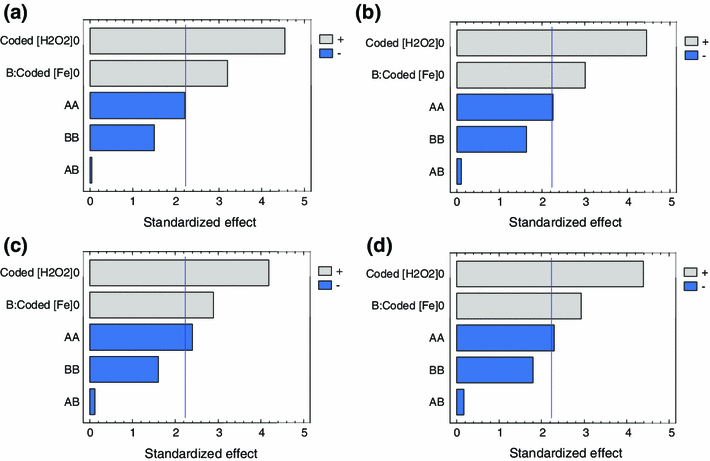
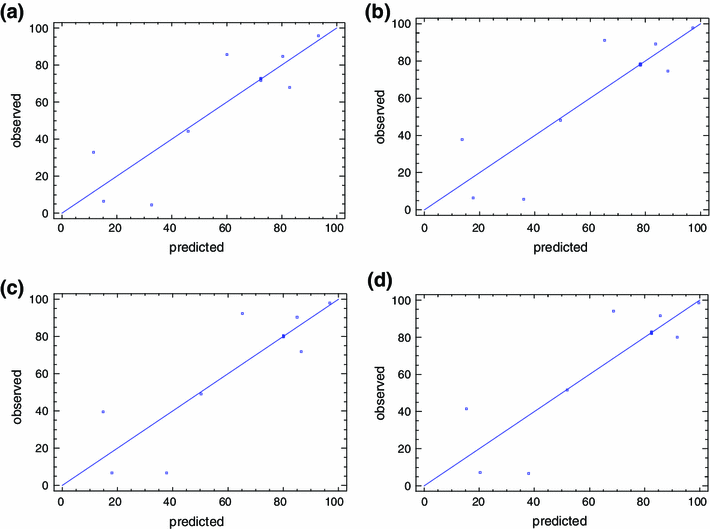
In this section, six different kinds of plots will be presented (i.e., Pareto plot, main effect, interaction between variables, response surface, contour and observed vs. predicted plots).
The Pareto plot (Fig.
2
) graphically represents the results of the ANOVA test. A bar is plotted to depict the standardized effects of the different factors that are included in the analysis, namely, [H
O
]
(
A
) and [Fe
]
(
B
), and all their possible combinations (i.e.,
AA, BB
and
AB
). Gray bars represent the positively affecting factors, whereas blue bars correspond to factors negatively affecting the removal of parabens. As expected, the former appear behind a (+) sign in Table
4
and the later follow a (−) in such table. It is also worth noting the occurrence of a vertical rule at a value around 2. This vertical rule determines the significance level of the ANOVA test at 95 % confidence. Hence, factors reaching this line affect the removal of the different parabens in a significant manner from the statistical standpoint and exhibit a
p
value below 0.05 in Table
3
. The remaining factors do not affect the response variable in a statistically significant manner and exibit
p
values above 0.05 in the ANOVA test.
Fig. 2
Pareto plots: standardized effects for the removal of MP (
a
), EP (
b
), PP (
c
) and BP (
d
)
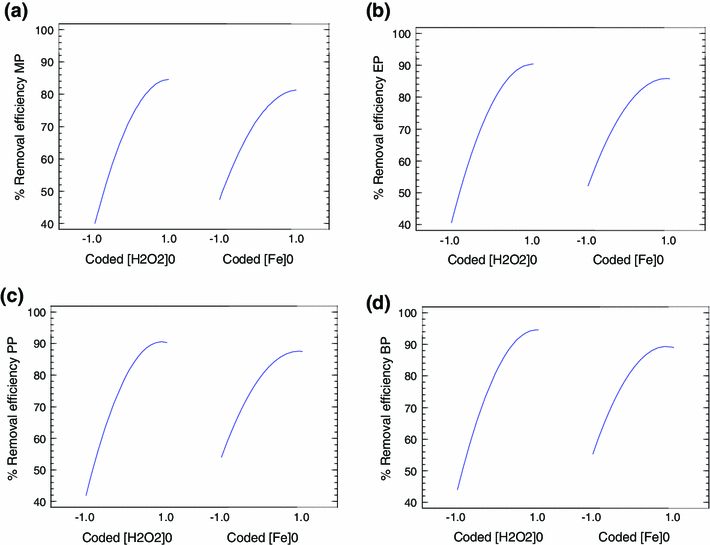
The main effect plots (see Fig.
3
) illustrate the result of altering one of the variables (
A
or
B
), maintaining the other one constant at its central value. In all cases the trend to reach a maximum is clearly pointed out. For both variables such a maximum is achieved when
A
or
B
reach values close to 1. This fact suggests that finding an optimum for the removal of each of the pollutants within the working range is feasible.
Fig. 3
Main effects plots for the removal of MP (
a
), EP (
b
), PP (
c
) and BP (
d
)
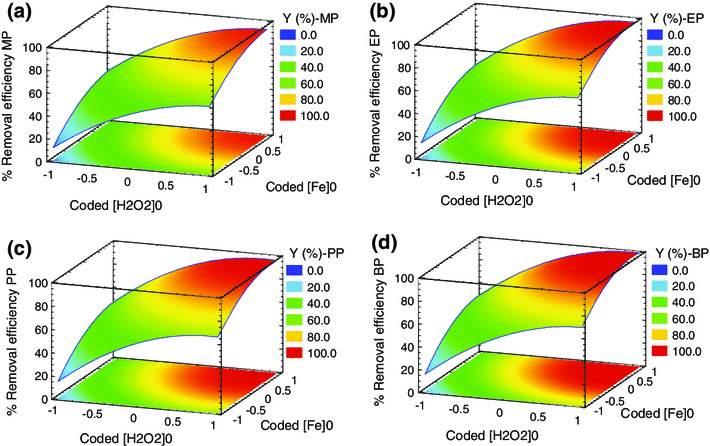
The response surface plot is perhaps the most interesting graph when an RSM analysis is performed. It is a plot of Eq.
10
and makes it possible to evaluate the evolution of the system in a qualitative manner. The response surface plots corresponding to the four pollutants here studied are depicted in Fig.
4
. Contour plots are presented under their respective response surfaces. It can be appreciated that, in all cases, the response plot corresponds to a convex surface within the whole working interval (i.e., from −1 up to +1). Both variables, (namely, [H
O
]
and [Fe
]
) affect the removal efficiency in a similar manner and—as suggested by the main effect plots—it is possible to optimize the removal of each paraben. It has to be taken into consideration that if a maximum is observed in the response surface and/or contour plot, it may be stated that under these particular operational conditions an optimum is achieved. Table
5
summarizes the coded and natural values of each of the variables that define an optimum for each pollutant. In all cases the optimum can be found for positive coded values of [H
O
]
and [Fe
]
.
Fig. 4
Response surface and contour plots for the removal of MP (
a
), EP (
b
), PP (
c
) and BP (
d
)
Table 5
Predicted optimum conditions obtained for the removal of the pollutants. Coded and natural values
OptimumY (%)
Coded values
Natural values
[H2O2]0
[Fe2+]0
[H2O2]0 (mol L-1)
[Fe2+]0 (mol L-1)
Separate optimization
Methylparaben
93.3
1.012
1.048
2.71E−04
2.75E−05
Ethylparaben
97.4
0.956
0.874
2.65E−04
2.56E−05
Propylparaben
97.3
0.840
0.854
2.52E−04
2.54E−05
Buthylparaben
100
0.920
0.753
2.61E−04
2.42E−05
Joint optimization
Methylparaben
93.1
0.930
0.919
2.62E−04
2.61E−04
Ethylparaben
97.3
Propylparaben
97.1
Buthylparaben
100
Finally, the observed vs. predicted plot (Fig.
5
) provides information on the goodness of the fitting of the experimental results to the proposed model. It can be appreciated that the model is able to predict the experimental results reasonably well.
Fig. 5
Observed vs. predicted plots for the removal of MP (
a
), EP (
b
), PP (
c
) and BP (
d
)
Physical meaning of the results
It has already been shown that [H
O
]
is the factor that influences the response variable in a more remarkable manner. A possible explanation to this fact can be deducted from Eq.
1
. The hydrogen peroxide decomposition generates the hydroxyl radical. This process is catalyzed by Fe
in the so-called Fenton process. Remarkably, however, an optimum for the hydrogen peroxide concentration can be appreciated in the main effects plots at values of this factor very close to one. Particularly, the coded and natural values of [H
O
]
that provide an optimal removal efficiency of the four pollutants can be seen in Table
5
. This is foreseeable since an increase in [H
O
]
may promote radicals inactivation (or “scavenging”, see Eq.
1
). This results in the increase of the concentration of the hydroperoxyl radical, a chemical species with a remarkably smaller value of the oxidation potential [
20
,
24
]. Ferrous ion initial concentration is the second variable in importance. According to the modelization here reported, an optimal removal of the pollutants can be achieved under the operational conditions summarized in Table
5
.
Experimental confirmation of the optimum
Four experiments were performed by operating under the theoretically optimal conditions predicted by the model with the aim of determining the presence of a maximum in the removal of the diferent parabens. In all cases, the removal efficiencies of all of the parabens reached nearly 100 %. These results clearly point out that the DOE and RSM strategies here reported are appropriate to analyze the removal of the four pollutants from water by the Fenton process.
Experimental confirmation of the maximum in other aqueous matrices
Two series of experiments were carried out operating at the optimal values of [
]
and [Fe
]
for the removal of the four pollutants. With the aim of analyzing the removal of parabens in real waters, two diferent aqueous matrices, namely river water and swamp water, were selected. For comparison with the experiments performed in Milli-Q™ water, a reaction time of 48 h was selected. Under these experimental conditions, removal efficiencies of parabens were determined reaching values very close to 50 % in river water. On the contrary, conversions ranging from 13 up to 18 % were attained in swamp water.
Optimization of the simultaneous removal of all pollutants
To optimize multiple responses (in this case the simultaneous removal of all four pollutants) the use of the so-called
desirability function
approach is commonly accepted. This procedure is able to determine the operational conditions that give rise to the responses that maximize the desirability function.
Briefly, according to Khasawneh et al. [
25
] for each response
(
x
), a desirability function
(
) assigns numbers between 0 and 1 to the possible values of
, with
(
) = 0 representing a completely undesirable value of
and
(
) = 1 representing a completely desirable or ideal response value. The individual desirabilities are then combined using the geometric mean, which gives the overall desirability
D
:
with
z
denoting the number of responses. Notice that if any response
Y
is completely undesirable d
(
Y
) = 0, then the overall desirability is zero. The desirability function can adopt different expressions if a given response
Y
has to reach a maximum, a minimum or a specific value.
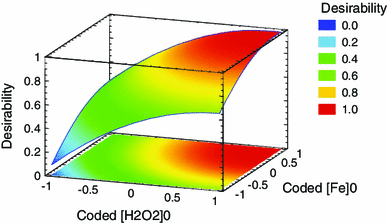
The desirability function corresponding to the process under analysis is depicted in Fig.
6
. It can be easily concluded that it is possible to attain a value of
D
very similar to 1 for coded values of [H
O
]
and [Fe
]
in the close vicinity of 1. This suggests that the optimization of the simultaneous oxidation of the four pollutants is feasible under these experimental conditions. Table
5
also summarizes the coded and real values of [H
O
]
and [Fe
]
that yield to a maximum simultaneous removal of the four pollutants. Such values are 2.62
10
and 2.62
10
M, respectively. Operating under these conditions, at least theoretically, removal percentages of 93.1, 97.3, 97.1 and 100 % can be achieved for MP, EP, PP and BP, respectively.
Fig. 6
Desirability funtion plot for the simultaneous optimization of the removal of MP, EP, PP and BP
To corroborate these theoretical maxima, an experiment has been performed in Milli-Q
water under the above-referred conditions. The removal percentages for the aforesaid pollutants were 93.0, 97.1, 96.9 and 99.8, respectively.
Conclusions
In this work, the removal of four parabens from water by means of Fenton oxidation was optimized with the application of a central, composite, orthogonal and rotatable design of experiments. From the analysis of the experimental data, the following conclusions may be drawn:
The initial concentration of H
O
exerts the most significant effect on the response variable, followed by [Fe
]
.
According to the analysis of variance test, three factors (namely [H
O
]
, [Fe
]
and the squared [H
O
]
) exert a significant influence on the removal efficiency of the pollutants. A second-order polynomial equation has been satisfactorily used to determine the removal efficiency of each chemical. Correlation factors comprising between 0.77 and 0.79 were obtained.
Response surface methodology made it possible to optimize the degradation of the pollutants. When the adequate operation conditions were applied, an almost complete removal of the parabens was achieved.
Simultaneous optimization of the removal of the four pollutants was achieved, with removal efficiencies ranging 93.0–99.8 % operating with initial concentrations of hydrogen peroxide and Fe
ion equal to 2.62
10
and 2.62
10
M, respectively.
In Fenton process, after a reaction time of 48 h, the removal of parabens reached values of conversions efficiency between 85 and 94 % in Milli-Q
water. For river water and swamp water, such parameters reached 50 % and 13–18 %, respectively.
Acknowledgments
Financial support from the Spanish CICyT through research projects CTQ- 2010-14823 and CT-2007-60285/PPQ is gratefully acknowledged. MJM and PP wish to thank the Spanish CICyT for their respective Ph.D. research grants.
Conflict of interest
The authors declare that they have no competing interests.
Authors' contributions
JRD carried out the experimental design, including the selection of the variables and their operational ranges. MJM and PP performed most of the experimental work at the lab as part of their respective Ph.D. Theses. JAP performed the preliminary runs that made it possible to determine the starting point of the optimization process. TG and EMCC carried out the statisitical analysis and the discussion of results.
References
Halling-Sorensen et al. (1998) Occurrence, fate and effects of pharmaceutical substances in the environment: a review 36(2) (pp. 357-393) 10.1016/S0045-6535(97)00354-8
Jones et al. (2001) Human pharmaceuticals in the aquatic environment a review 22(12) (pp. 1383-1394) 10.1080/09593330.2001.11090873
Calamari et al. (2003) Strategic survey of therapeutic drugs in the rivers Po and lambro in Northern Italy 37(7) (pp. 1241-1248) 10.1021/es020158e
Ternes, T.: Emerging substances in water. In: Hanke, G. (ed.) Workshop on Emerging Environmental Pollutants. Key Issues and Challenges, Stresa. European Commission. DG Joint Research Centre. Institute for Environment and Sustainability (IES), Torino pp. 10–11 (2006)
Barr et al. (2012) Measurement of paraben concentrations in human breast tissue at serial locations across the breast from axilla to sternum 32(3) (pp. 219-232) 10.1002/jat.1786
Harvey and Everett (2012) Parabens detection in different zones of the human breast: Consideration of source and implications of findings 32(5) (pp. 305-309) 10.1002/jat.2743
Calafat et al. (2010) Urinary concentrations of four parabens in the U.S. Population: NHANES 2005–2006 118(5) (pp. 679-685) 10.1289/ehp.0901560
Janjua et al. (2008) Urinary excretion of phthalates and paraben after repeated whole-body topical application in humans 31(2) (pp. 118-129) 10.1111/j.1365-2605.2007.00841.x
Schlumpf et al. (2010) Exposure patterns of UV filters, fragrances, parabens, phthalates, organochlor pesticides, PBDEs, and PCBs in human milk: correlation of UV filters with use of cosmetics 81(10) (pp. 1171-1183) 10.1016/j.chemosphere.2010.09.079
Janjua et al. (2007) Systemic uptake of diethyl phthalate, dibutyl phthalate, and butyl paraben following whole-body topical application and reproductive and thyroid hormone levels in humans 41(15) (pp. 5564-5570) 10.1021/es0628755
Meeker et al. (2011) Urinary concentrations of parabens and serum hormone levels, semen quality parameters, and sperm DNA damage 119(2) (pp. 252-257) 10.1289/ehp.1002238
Frederiksen et al. (2011) Parabens in urine, serum and seminal plasma from healthy Danish men determined by liquid chromatography–tandem mass spectrometry (LC–MS/MS) 21(3) (pp. 262-271) 10.1038/jes.2010.6
Shen et al. (2009) Preparation and adsorption properties of polycarboxylate nano Fe3O4 magnetic composite particles 26(4) (pp. 68-73)
Chin et al. (2010) Removal of parabens from aqueous solution using β-cyclodextrin cross-linked polymer 11(9) (pp. 3459-3471) 10.3390/ijms11092459
Perez-Gonzalez et al. (2012) Biological removal of p-cresol, phenol, p-hydroxybenzoate and ammonium using a nitrifying continuous-flow reactor (pp. 194-198) 10.1016/j.biortech.2012.06.052
Tay et al. (2011) Removal of selected endocrine disrupting chemicals and personal care products in surface waters and secondary wastewater by ozonation 83(8) (pp. 684-691) 10.2175/106143011X12989211841179
Hansen et al. (2010) Ozonation of estrogenic chemicals in biologically treated sewage 62(3) (pp. 649-657) 10.2166/wst.2010.919
Hansen, K.; Andersen, H.: Energy effectiveness of direct UV and UV/Htreatment of estrogenic chemicals in biologically treated sewage. Int. J. Photoenergy 1–19 (2012)
de Heredia et al. (2004) Advanced oxidation of cork-processing wastewater using Fenton’s reagent: Kinetics and stoichiometry 79(4) (pp. 407-412) 10.1002/jctb.1002
Domínguez et al. (2012) Fenton + Fenton-like integrated process for carbamazepine degradation: optimizing the system 51(6) (pp. 2531-2538) 10.1021/ie201980p
Lee and Shoda (2008) Removal of COD and color from livestock wastewater by the Fenton method 153(3) (pp. 1314-1319) 10.1016/j.jhazmat.2007.09.097
Wang (2008) A Comparative study of Fenton and Fenton-like reaction kinetics in decolourisation of wastewater 76(3) (pp. 714-720) 10.1016/j.dyepig.2007.01.012
González et al. (2011) Development and optimization of the BDD-electrochemical oxidation of the antibiotic trimethoprim in aqueous solution 280(1–3) (pp. 197-202)
Arslan-Alaton et al. (2009) Treatment of azo dye production wastewaters using Photo-Fenton-like advanced oxidation processes: optimization by response surface methodology 202(2–3) (pp. 142-153) 10.1016/j.jphotochem.2008.11.019
Khasawneh, M.; Bowling, S.; Kaewkuekool, S.; Cho, B.: A cost effective strength-stress reliability modeling and optimization in engineering design. In: Proceedings of the Industrial Engineering Research Conference, Houston, pp. 323–328 (2002)