Department of Material and Environmental Engineering, Hakodate National College of Technology, Hakodate, Hokkaido, 042-8501, JP
Abstract
LiCoPO
4
has been recognized as a promising cathode material for lithium batteries due to its high stability and high operation voltage. However, poor electronic conductivity of LiCoPO
4
prohibits its practical use. A carbon coating can improve electronic conductivity of LiCoPO
4
. A hydrothermal synthesis is a very convenient method because it allows us easy preparation of small particles of carbon-coated LiCoPO
4
; however, an effect of precursor for LiCoPO
4
preparation on the performance of the synthesized LiCoPO
4
has yet to be cleared. In this paper, the effect of Co source for carbon-coated LiCoPO
4
(LiCoPO
4
/C) preparation on performance as a cathode material for Li-ion battery is investigated. The Co source strongly affects the pH value in the starting solution and final products. The single-phase LiCoPO
4
is obtained only when CoSO
4
or CoCl
2
are used as the Co sources. A quality of carbon layer on the LiCoPO
4
is also affected by the Co source. The carbon layer on the LiCoPO
4
synthesized from CoSO
4
contains graphite carbon with high concentration which provides high electronic conductivity compared with that from CoCl
2
. Accordingly, the LiCoPO
4
/C synthesized from CoSO
4
shows a superior performance than that from CoCl
2
due to high-quality carbon layer.
Background
In order to use natural resources such as solar power and wind power, numerous research are done[
1
–
3
]. However, a shortcoming on the usage of the natural resources is its difficulty for stable electricity supply. Therefore, energy storage devices must be developed. Lithium rechargeable batteries have high energy and power densities and have been recognized as the most suitable battery for this purpose. The lithium batteries are composed of mainly cathode, anode, and electrolyte. LiCoO
2
and graphite have been used as cathode and anode, respectively, and organic solvent-resolving Li salt has been used for the electrolyte thus far. Both cathode and anode can intercalate Li ion, i.e., Li ion moves from anode to cathode during the discharge process. In the charge process, the Li ion goes back from cathode to anode.
One of the issues of LiCoO
2
is instability of its crystal structure especially under overcharge state. During the charge process, LiCoO
2
releases Li ion, and Li
1−
x
CoO
2
is formed. The safety circuits in the devices stop charging at
x
= 0.5 (3.9 V). In
x
> 0.5, the structure of LiCoO
2
collapses, and oxygen is released into the electrolyte. This oxygen causes the decomposition of electrolyte by oxidation and sometimes makes serious problems such as fire hazard and battery explosion.
Great attention has been paid to the olivine-type LiMPO
4
(M = Fe, Mn, Ni, Co) cathode materials for lithium-ion batteries in recent years[
4
–
7
]. The olivine materials contain PO
4
group in its structure and this strong P-O bond avoids the release of oxygen. Therefore, it is expected that the olivine materials improve the safety of the lithium batteries. Among the olivine-type materials, LiCoPO
4
has been given much attention owing to its high operation voltage close to 4.8 V vs. Li/Li
+
[
8
], which allows us to fabricate the lithium batteries with high operation voltage and high energy density because the energy density of the battery is estimated by multiplying the current density by the operation voltage. The electrochemical reaction of LiCoPO
4
in the cathode is shown as follows:
LiCoPO4⇄Li++CoPO4+e−.
During the charge process, LiCoPO
4
releases a Li
+
into the electrolyte, and an electron (e
–
) into a current collector (usually Al foil). Co
2+
is oxidized to Co
3+
at the same time. In the discharge process, reverse reaction occurs. The redox voltage of Co is high compared with other olivine materials, and it contributes to the high operation voltage of LiCoPO
4
. According to the equation, immigration of the Li
+
and the electron in the cathode is needed. Therefore, the cathode materials require high Li
+
and electronic conductivity. However, the most serious problem of these olivine-type compounds is low intrinsic Li-ion and electronic conductivities[
9
,
10
]. To improve the Li-ion conductivity, preparation of small particles of the LiMPO
4
which derives a short Li-ion diffusion path is very effective[
11
,
12
]. Drezen et al. claimed that the particle size of LiMnPO
4
prepared by a sol–gel method strongly affected their performance[
13
]. On the other hand, to overcome the low electronic conductivity, electronic conductive carbon-coating on the surface of the particles has been applied in many groups[
11
,
14
–
18
]. Zhou et al. reported that the discharge capacity of LiFePO
4
prepared by the coprecipitation method had an increase of 110 to 147 mAh g
−1
by carbon coating[
19
].
By hydrothermal synthesis, the carbon-coated small particles can be prepared easily with only an addition of a carbon source to starting materials. In fact, Mizuno et al. have succeeded in the preparation of carbon-coated small particles of LiFePO
4
[
20
] and LiMnPO
4
[
7
], and they have exhibited a good performance as the cathode material. In the hydrothermal synthesis, starting materials strongly affect the morphology and performance of the final products. Zhao et al. synthesized LiCoPO
4
from various phosphate sources such as H
3
PO
4
and (NH
4
)
2
HPO
4
through the hydrothermal route and observed a hexagonal prism-like crystal in the range of 10 to approximately 15 μm synthesized from H
3
PO
4
and irregular agglomeration particles with the size of 10 to approximately 40 μm synthesized from (NH
4
)
2
HPO
4
[
21
]. However, studies on different start materials, Li and Co sources, have yet to appear. In order to find a better preparation procedure for LiCoPO
4
, an effect of Li and Co sources on properties of produced LiCoPO
4
should be tested. Therefore, the purpose of this paper is to investigate the effect of the Co source for LiCoPO
4
prepared by the hydrothermal route on its performance as the cathode of lithium-ion battery.
Methods
LiCoPO
4
was synthesized by a hydrothermal process according to previous reports for LiFePO
4
and LiMnPO
4
[
22
–
24
]. Li
3
PO
4
was dissolved into purified water with various Co sources, i.e., CoSO
4
·7H
2
O, CoCl
2
, Co(CH
3
COO)
2
·4H
2
O, Co(NO
3
)
2
·6H
2
O, and Co(OH)
2
. To prevent oxidation of Co
2+
to Co
3+
, this process was performed under N
2
atmosphere. A molar ratio of Li/Co/P was 3:1:1. Carboxy methyl cellulose was used as a carbon source and was put into the precursor solution. A glass-lined Parr reactor with the precursor solution and N
2
gas was sealed in a stainless steel autoclave. After that, the hydrothermal synthesis was performed at 200°C for 3 h with stirring at 680 rpm.
Precipitation was separated centrifugally and then freeze-dried at −50°C for 12 h. Yield was always higher than 95%. Synthesized powder was annealed at 700°C for 1 h under 3% H
2
/Ar flow to convert carbon species to graphite with high electronic conductivity.
To clarify the crystalline phase of the synthesized powder, X-ray diffraction (XRD, RINT-Ultima, Rigaku Co., Shibuya-ku, Japan) with Cu K
α
radiation was used. Raman measurements (NRS-1000, JASCO Ltd., Tokyo, Japan) were carried out at room temperature by a laser radiation of 532 nm. Morphologies of the synthesized powder were observed by means of a scanning electron microscope (SEM, JEOL Ltd., Akishima-shi, Japan).
Performance of a synthesized LiCoPO
4
as a positive electrode was evaluated by a charge–discharge test. A composite LiCoPO
4
electrode was prepared by mixing LiCoPO
4
, Ketjen black, and polyvinylidene difluoride in the weight ratio of 75:15:10 in 1.2 ml of N-methyl pyrrolidone. The LiCoPO
4
electrode was painted onto a thin Al sheet and dried overnight at 85°C under reduced pressure. The LiCoPO
4
composite electrode (14 mm in diameter) was set in a coin cell 2032 with a mixture of ethylene carbonate and ethyl methyl carbonate (volume ratio = 3:7) containing 1 mol·dm
−3
LiPF
6
as an electrolyte and with lithium metal as a negative electrode. The galvanostatic charge/discharge tests of the coin cell with LiCoPO
4
positive electrode were performed using the HJ1001SM8A (Hokuto Denko Ltd., Tokyo, Japan). In the test, the charge process was performed at constant current (CC)-constant voltage (CV) mode, charging at a constant current of 0.1 C until 5.1 V vs. Li/Li
+
, then at a constant voltage of 5.1 V until the current dropped to 0.01 C. A discharge process proceeded at a CC mode of 0.1 C. Cut-off voltages of charge and discharge processes were 5.1 and 3.0 V vs. Li/Li
+
, respectively.
Results and discussion
Results
In the hydrothermal synthesis, it has been well known that pH value in the starting solution influences the phase components and shapes and sizes of particles of the final products[
25
,
26
]. Thus, the pH value in the starting solution was checked at first. The pH values were widely changed depending on the Co sources, i.e., 3.7, 3.7, 4.4, 5.5, and 7.8 in the starting solution containing Co(NO
3
)
2
, CoCl
2
, CoSO
4
, Co(CH
3
COO)
2
, and Co(OH)
2
, respectively.
Figure
1
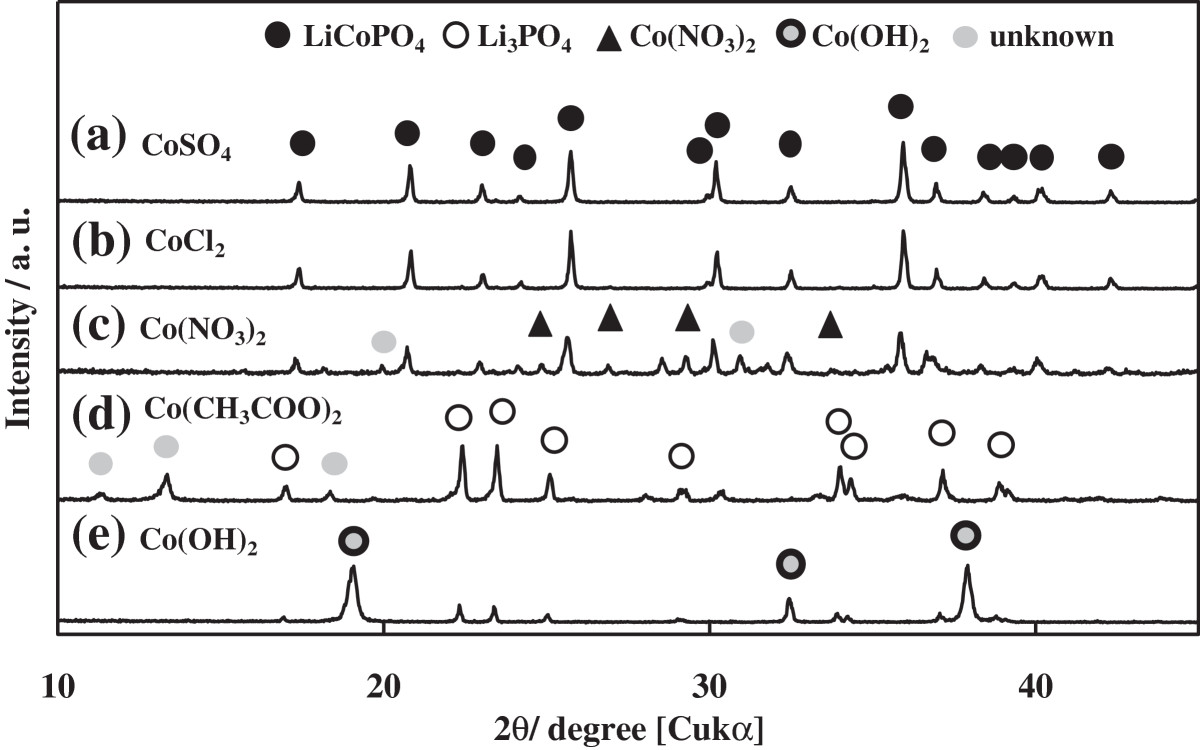
shows XRD patterns of samples synthesized under hydrothermal condition using various Co sources. Obviously, the Co sources strongly influenced the final products. The diffraction peaks were completely different in various Co sources. CoSO
4
and CoCl
2
could produce a single-phase LiCoPO
4
, i.e., the diffraction peaks were consistent with the standard peaks of LiCoPO
4
. On the contrary, only diffraction peaks of starting materials (Li
3
PO
4
and Co(OH)
2
) were detected from Co(OH)
2
, suggesting no reaction under this condition. The product from Co(CH
3
COO)
2
also contained Li
3
PO
4
with some unknown peaks. In the case of Co(NO
3
)
2
, the diffraction peaks of LiCoPO
4
was confirmed. The diffraction peaks of Co(OH)
2
and Co(NO
3
)
2
were also observed.
Figure 1
XRD patterns of hydrothermally synthesized LiCoPO4from various Co sources.(a)
CoSO
4
,
(b)
CoCl
2
,
(c)
Co(NO
3
)
2
,
(d)
Co(CH
3
COO)
2
, and
(e)
Co(OH)
2
.
Pure LiCoPO
4
/C was obtained only from CoSO
4
and CoCl
2
. Thus, LiCoO
4
/C synthesized LiCoPO
4
/C from CoSO
4
and CoCl
2
(denoted as LiCoPO
4
/C(SO
4
) and LiCoPO
4
/C(Cl
2
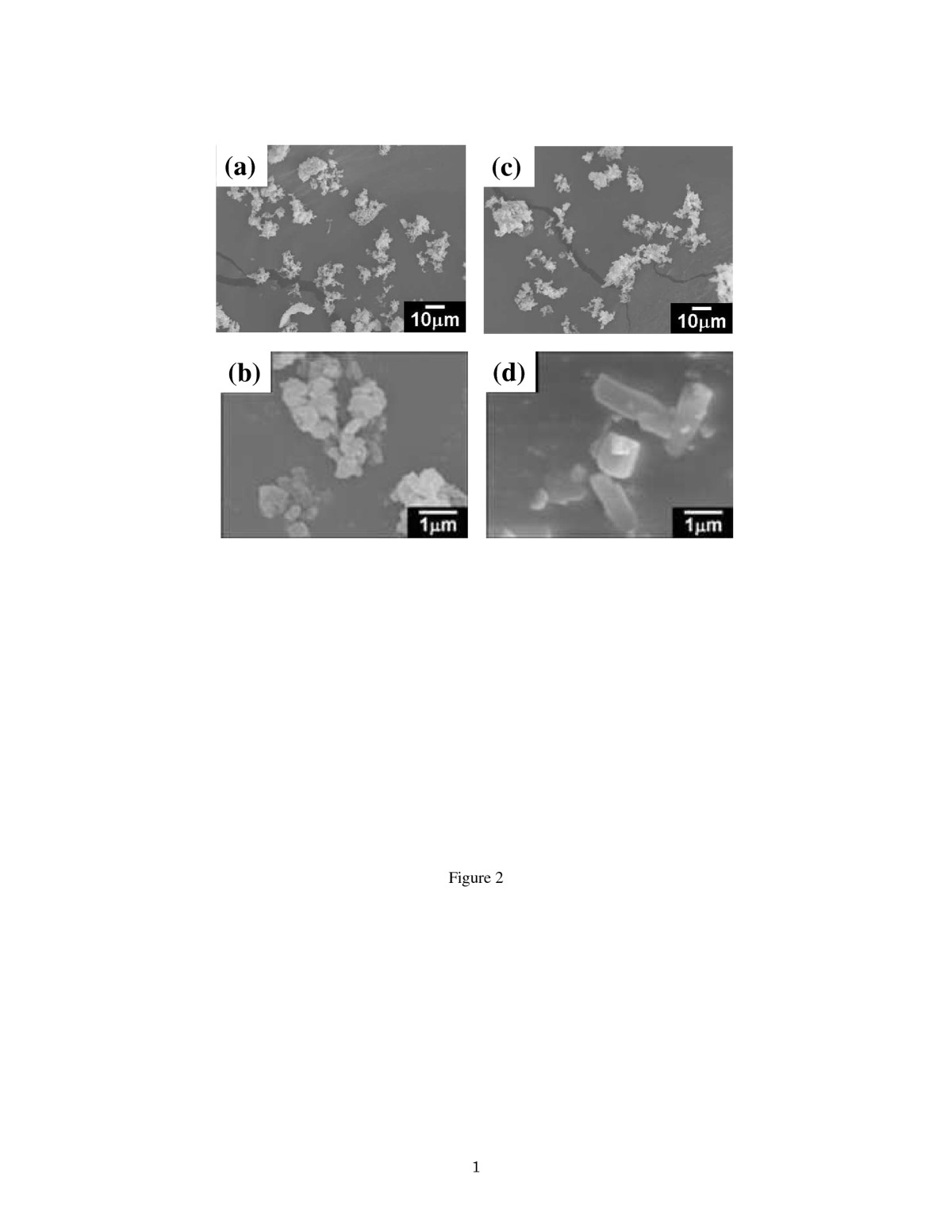
), respectively) were supplied for further analysis. SEM images of synthesized LiCoPO
4
/C are displayed in Figure
2
. In both cases (Figure
2
a,c), the LiCoPO
4
/C particles aggregated each other and formed secondary particles whose sizes were below 20 μm. Interestingly, primary particles had different shapes depending on the Co source. Square-like particles whose sizes were 0.5 to approximately 2 μm were observed in LiCoPO
4
/C(Cl
2
), while the shapes of the primary particles of LiCoPO
4
/C(SO
4
) were irregular, and the sizes were 200 to approximately 500 nm. In both cases, the sizes of primary particles were below 2 μm and small enough as the cathode.
Figure 2
SEM images of hydrothermally synthesized LiCoPO4from various Co sources.(a)
,
(b)
CoSO
4
and
(c)
,
(d)
CoCl
2
.
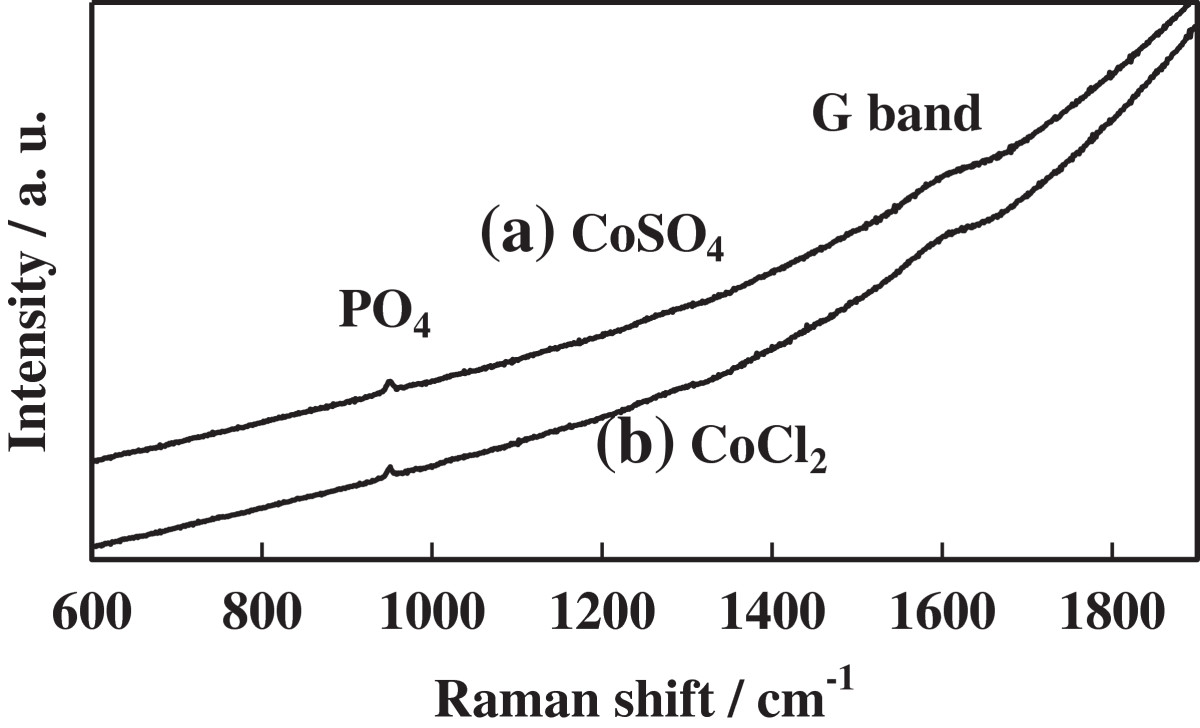
Raman measurement (Figure
3
) was performed to detect small amounts of impurities on the surface of LiCoPO
4
/C, which could not be confirmed in the XRD patterns. Nakano et al. have succeeded in the detection of even small amounts of impurities on the LiFePO
4
synthesized by the hydrothermal process[
20
]. In both the Raman spectra, shown in Figure
3
, a small peak at 948 cm
−1
was observed. This was attributed to the symmetric vibration of the PO
4
group[
27
]. Therefore, it is said that the synthesized powder contained a PO
4
group. As mentioned above, clear diffraction peaks of the LiCoPO
4
were observed in the XRD patterns. The peak at 948 cm
−1
was consistent with the result of the XRD. It is concluded that LiCoPO
4
has been synthesized successfully from CoSO
4
and CoCl
2
. A peak at 1,610 cm
−1
was also observed in both spectra and was assigned to the graphite carbon (G band)[
28
]. This G band is generated by a presence of SP
2
carbon, which has high electronic conductive nature. However, the peak was very weak in both spectra. The carbon amounts of LiCoPO
4
/C(SO
4
) and LiCoPO
4
/C(Cl
2
) determined by thermogravimetry measurement were 0.9 and 3.6 wt.%, respectively. It is sure that carbon species existed but not very sensitive for the Raman measurement.
Figure 3
Raman spectra of hydrothermally synthesized LiCoPO4from various Co sources.(a)
CoSO
4
and
(b)
CoCl
2
.
In a previous paper[
20
], Nakano et al. reported that electronic conductivity of hydrothermally synthesized LiFePO
4
/C was improved by annealing at 700°C in reductive or inert atmosphere. Consequently, the synthesized LiCoPO
4
/C was annealed at 700°C for 1 h under 3% H
2
/Ar flow.
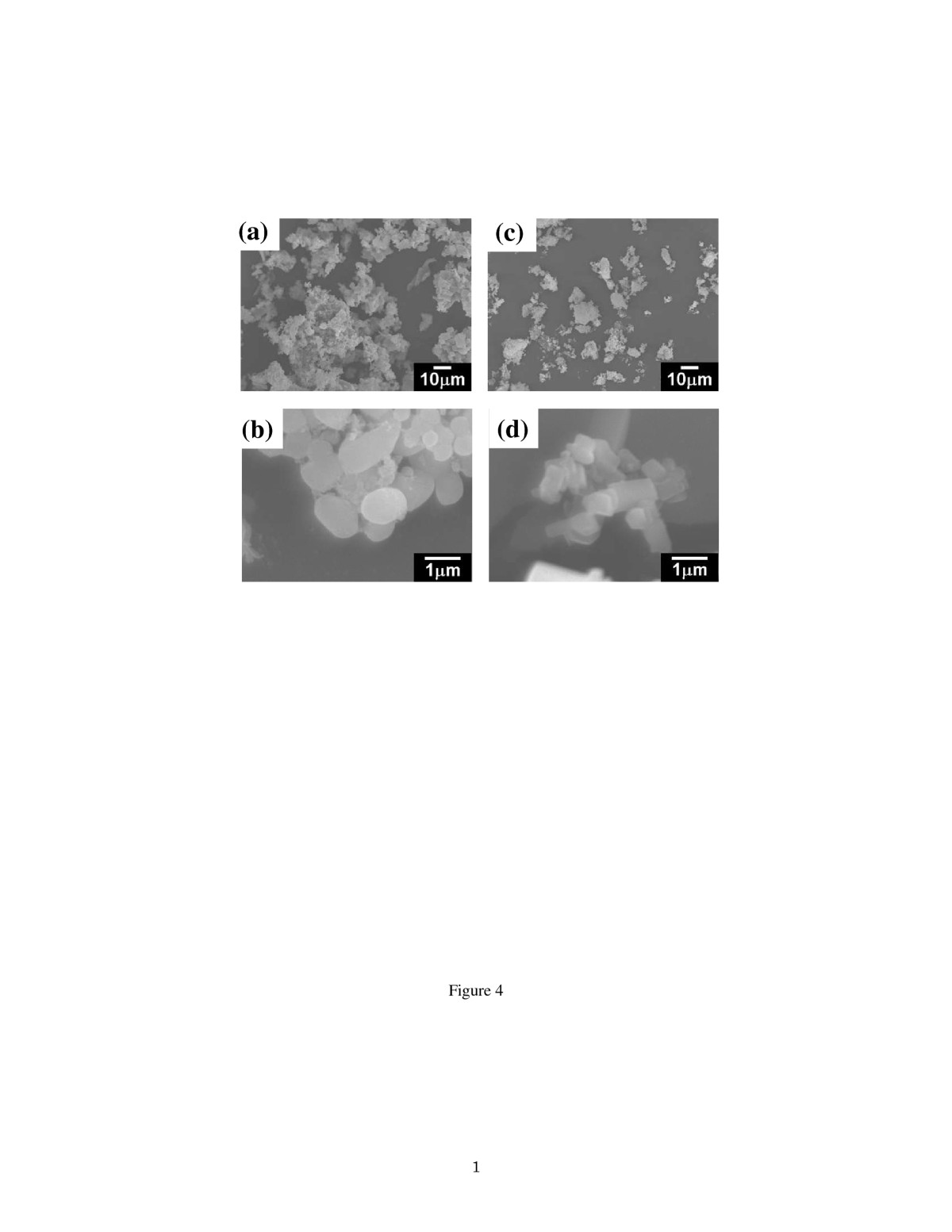
Figure
4
shows SEM images of LiCoPO
4
/C after annealing. LiCoPO
4
particles aggregated each other and formed secondary particles like those before annealing. In the case of LiCoPO
4
/C(Cl
2
), the sizes of the secondary particles were <20 μm, and the size of the primary particle was estimated as 0.5 to approximately 2 μm. The size of primary particles were the same as those before annealing, indicating that the annealing did not affect the particle size of LiCoPO
4
/C(Cl
2
). On the contrary, large secondary particles (<60 μm) were obtained in LiCoPO
4
/C(SO
4
). Additionally, the size of the primary particle increased as 1 to approximately 2 μm, and the particles became round shaped by annealing.
Figure 4
SEM images of hydrothermally synthesized LiCoPO4from various Co sources after annealing. (a)
and
(b)
CoSO
4
and
(c)
and
(d)
CoCl
2
.
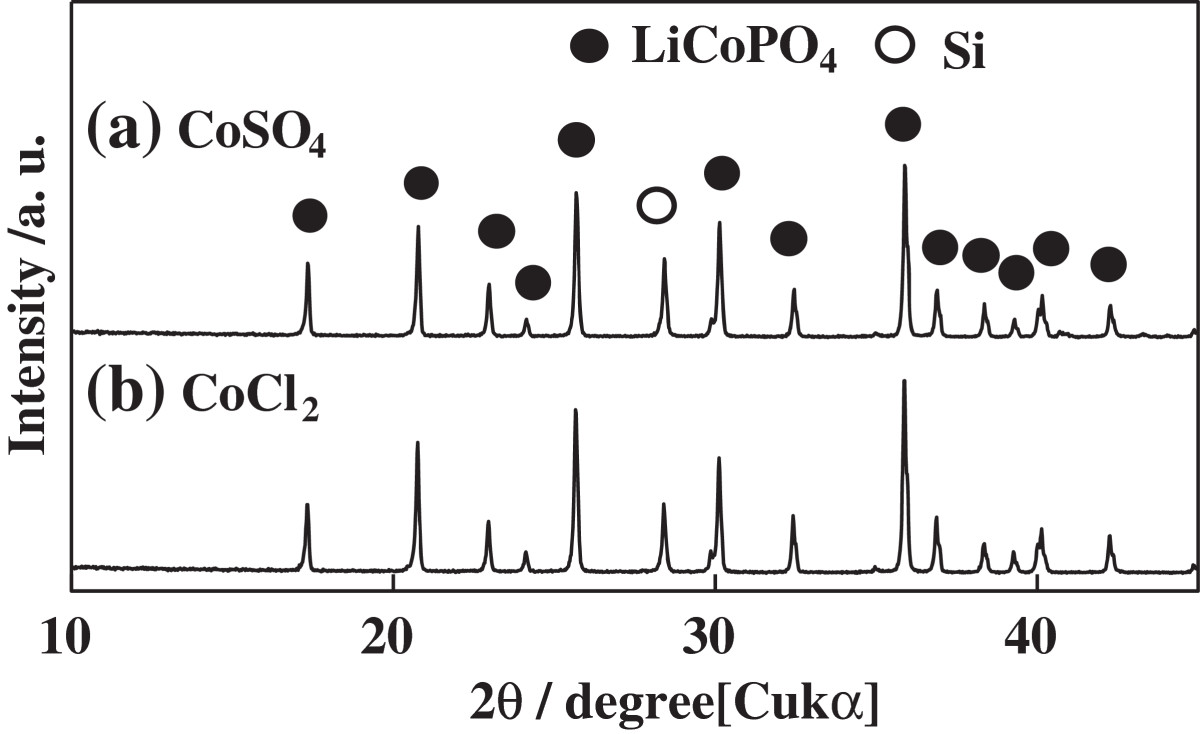
XRD patterns of LiCoPO
4
after annealing are depicted in Figure
5
. All diffraction peaks were attributed to LiCoPO
4
, indicating that the annealing did not produce any impurity phase. In order to estimate lattice parameters of LiCoPO
4
/C, Si internal standard was added in the sample (A peak at 2
θ
= 28.4° is assigned as Si internal standard). Lattice parameters of the LiCoPO
4
estimated using these XRD patterns were revealed in Table
1
. LiCoPO
4
/C(Cl
2
) possessed shorter lattice constant in the
b
-axis direction (5.929 Å in LiCoPO
4
/C(Cl
2
) and 5.935 Å in LiCoPO
4
/C(SO
4
)), but larger ones in the
a-
and
c
-axis directions compared with LiCoPO
4
/C(SO
4
). As a result, a lattice volume of LiCoPO
4
/C(Cl
2
) was 0.40% larger than LiCoPO
4
/C(SO
4
).
Figure 5
XRD patterns of hydrothermally synthesized LiCoPO4from various Co sources after annealing. (a)
CoSO
4
and
(b)
CoCl
2
.
Table 1
Lattice parameters of hydrothermally synthesized LiCoPO4after annealing estimated from Figure5
Co source
a-Axis
b-Axis
c-Axis
Volume
Δ V/V
( Å)
( Å)
( Å)
( Å3)
CoSo4
10.23(2)
5.935(5)
4.708(6)
285.84(6)
-
CoCl2
10.24(5)
5.929(2)
4.727(5)
286.99(0)
+0.40%
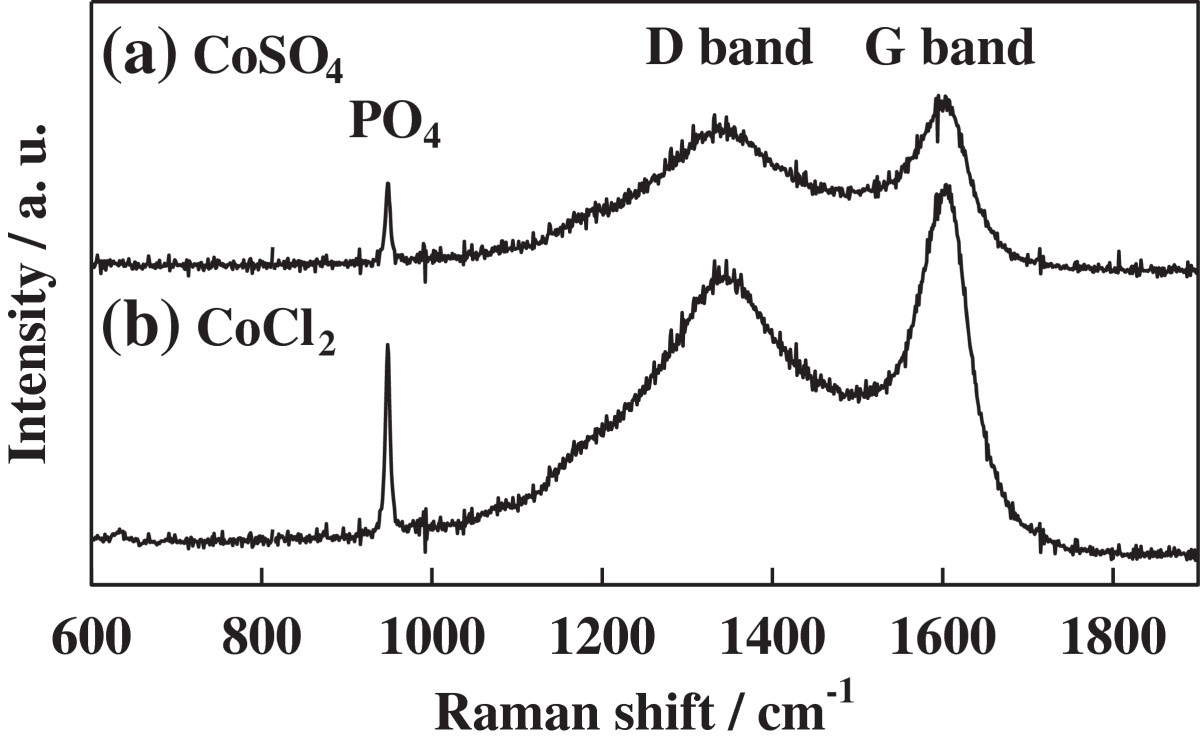
Figure
6
displays the Raman spectra of the LiCoPO
4
after annealing. By annealing, the Raman spectra changed dramatically, especially the Raman shift of 1,200 to approximately 1,700 cm
−1
region. A new peak appeared at 1,345 cm
−1
and was assigned as the disordered carbon (D band)[
28
], which has poor electronic conductivity, and a distinct G band could also be confirmed. The peak area ratios of G to D bands of LiCoPO
4
/C(SO
4
) and LiCoPO
4
/C(Cl
2
) were 1.4 and 0.7, respectively. The peak at 948 cm
−1
was attributed to the symmetric vibration of the PO
4
group as described above. Therefore, it is concluded that LiCoPO
4
structure did not change by annealing.
Figure 6
Raman spectra of hydrothermally synthesized LiCoPO4from various Co sources after annealing. (a)
CoSO
4
and
(b)
CoCl
2
.
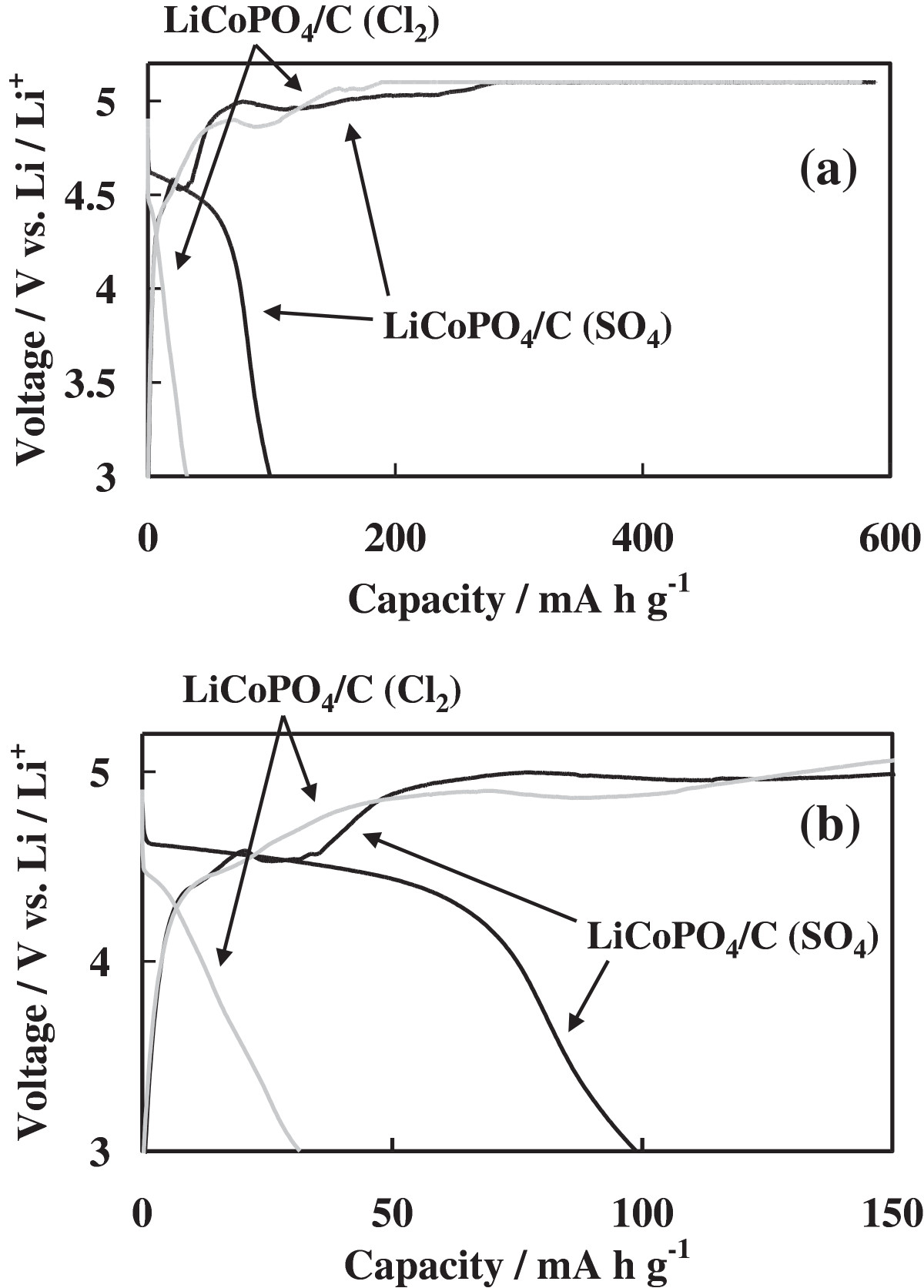
Figure
7
revealed charge and discharge curves of LiCoPO
4
/C(SO
4
) and LiCoPO
4
/C(Cl
2
). Three coin cells were constructed in each sample to check the experimental error. In both cases, the charge capacity was much larger than the theoretical capacity (167 mAh g
−1
)[
6
]. Many authors have reported a decomposition of electrolyte at high voltage like 5.1 V vs. Li/Li
+
[
29
,
30
]. Therefore, the reason for the large charge capacity is attributed to delithiation of the LiCoPO
4
coincident with the decomposition of the electrolyte. A discharge curve of LiCoPO
4
/C(SO
4
) showed a much longer plateau at approximately 4.6 V vs. Li/Li
+
compared with LiCoPO
4
/C(Cl
2
). Discharge capacities of LiCoPO
4
/C(SO
4
) and LiCoPO
4
/C(Cl
2
) were 99 ± 5 and 32 ± 3 mAh g
−1
, respectively. The experimental error was very small. It is obvious that LiCoPO
4
/C(SO
4
) showed better performance as the cathode.
Figure 7
Charge and discharge curves of hydrothermally synthesized LiCoPO4from various Co sources after annealing.
A charge process was performed at a constant current of 0.1 C until 5.1 V vs. Li/Li
+
then at constant voltage of 5.1 V until current dropped to 0.01 C. A discharge process proceeded at a constant current mode at 0.1 C.
(a)
Whole charge and discharge curves;
(b)
detailed charge and discharge curves until capacity of 150 mAh g
−1
.
Discussion
An effect of Co source for hydrothermally synthesized LiCoPO
4
on performance as cathode for the lithium-ion battery was studied.
Single-phase LiCoPO
4
particle was obtained only from CoSO
4
and CoCl
2
. The pH value in the starting solution affected the formation of the final products. Huang et al. reported that the formation of pure LiCoPO
4
phase proceeded at high pH value[
25
]. However, in our experiment, single-phase LiCoPO
4
was obtained only under acidic condition. This discrepancy could be attributed to PO
4
and Li sources. They used LiOH and H
3
PO
4
as Li and PO
4
sources, respectively. On the other hand, I used Li
3
PO
4
as both Li and PO
4
sources. It is thought that solubility of Li
3
PO
4
in the range of weak acidic to alkaline conditions would be low. In fact, diffraction peaks of Li
3
PO
4
(Figure
1
d,e) were observed only in the case of Co(OH)
2
and Co(CH
3
COO)
2
, whose pH values were 7.8 and 5.5, respectively. In these conditions, Li
3
PO
4
could not dissolve in water even under hydrothermal condition. Therefore, Li
3
PO
4
was precipitated on the bottom and could not participate in the reaction. This would be a reason that non-reacted Li
3
PO
4
still remain in the final products. As for Co(NO
3
)
2
, a formation of LiCoPO
4
was confirmed, but some were unknown, and Co(NO
3
)
2
peaks were also observed. The pH value of the starting solution containing Co(NO
3
)
2
was 3.7, same as that of CoCl
2
. Consequently, the counter anion may also play an important role for the formation of LiCoPO
4
, not only the pH value of precursor solution.
After annealing, morphology change of LiCoPO
4
/C(SO
4
) was observed, while no large difference of LiCoPO
4
/C(Cl
2
) particle shape was confirmed. Thermal stability of produced LiCoPO
4
/C particles would also be affected by the Co source.
Discharge capacity of LiCoPO
4
/C(SO
4
) and LiCoPO
4
/C(Cl
2
) were 99 ± 5 and 32 ± 3 mAh g
−1
, respectively. It has been known that Li-ion transport in LiMPO
4
(M = Fe, Mn, Co, Ni) olivine materials occurs along with the
b
-axis[
31
]. The lattice constant in the
b
-axis direction of LiCoPO
4
/C(Cl
2
) was shorter than that of LiCoPO
4
/C(SO
4
) as shown in Table
1
. Additionally, primary particle size of LiCoPO
4
/C(Cl
2
) was smaller than that of LiCoPO
4
/C(SO
4
). From the view of the Li-ion transport in the particles, LiCoPO
4
/C(Cl
2
) has an advantage against LiCoPO
4
/C(SO
4
) due to a short distance of Li-ion transport. Thus, LiCoPO
4
/C(Cl
2
) was expected to demonstrate better electrochemical performance; however, much larger discharge capacity was obtained in LiCoPO
4
/C(SO
4
). This should relate to the quality of carbon layer on the LiCoPO
4
particle, which can provide high electronic conductivity. As shown in the Raman spectra, there are two kinds of carbon, graphite, and disorder carbons, on the LiCoPO
4
. The graphite carbon possesses high electronic conductivity, and the disorder carbon does not. The ratios of the graphite to the disorder carbon of LiCoPO
4
/C(SO
4
) and LiCoPO
4
/C(Cl
2
) were 1.4 and 0.7, respectively. The disorder carbon could not give a high electronic conductivity to the carbon-coating layer on the LiCoPO
4
whereas the graphite carbon could. Therefore, LiCoPO
4
/C(SO
4
) has superior electronic conductivity. This would be a reason why the LiCoPO
4
/C(SO
4
) showed better performance than LiCoPO
4
/C(Cl
2
). It is found that the Co sources affect not only the crystal structure and morphology of LiCoPO
4
but also the nature of the carbon layer, resulting in different cathodic performance among the products. Much attention should be paid for Co source selection to prepare the carbon-coated LiCoPO
4
.
It was reported that the ratio of the graphite to disorder carbon on the LiMnPO
4
depended on the carbon sources[
7
]. Therefore, further improvement of the performance of LiCoPO
4
/C would be possible if suitable carbon source for LiCoPO
4
/C(Cl
2
) was found because LiCoPO
4
/C(Cl
2
) is thought to possess a favorable structure with respect to Li-ion transport. This attempt is now underway, and it will be reported.
Conclusions
The LiCoPO
4
cathode material for lithium batteries were synthesized by hydrothermal method using various Co sources. Crystal structure and morphology of hydrothermally synthesized LiCoPO
4
were strongly affected by the Co source. Single-phase LiCoPO
4
could not be obtained from Co(NO
3
)
2
, Co(OH)
2
, and Co(CH
3
COO)
2
. Only CoCl
2
and CoSO
4
could produce single-phase LiCoPO
4
. Before annealing, LiCoPO
4
was not very sensitive against Raman measurement. After annealing, the carbon species on the LiCoPO
4
particles became active for the Raman measurement and clear G and D bands could be observed. LiCoPO
4
synthesized from CoCl
2
possessed shorter lattice constant along with the
b
-axis than that from CoSO
4
, suggesting favorable Li-ion transport. Additionally, Co source also affected a nature of carbon layer on the LiCoPO
4
after annealing. Ratios of G band to D band in the Raman spectra were 1.4 and 0.7 for LiCoPO
4
/C(SO
4
) and LiCoPO
4
/C(Cl
2
), respectively. The carbon layer on LiCoPO
4
synthesized from CoSO
4
was converted to graphite carbon easily, resulting in the investment of high electronic conductivity to the LiCoPO
4
particle. As a result, LiCoPO
4
synthesized from CoSO
4
revealed better performance compared with that from CoCl
2
although its particle seems to be inferior in terms of Li-ion transport. Further improvement of performance of LiCoPO
4
from CoCl
2
could be possible if high-quality carbon layer could be prepared because particles of LiCoPO
4
from CoCl
2
possess a favorable structure with respect to Li-ion transport.
Authors’ information
Dr. MK graduated in 1996 and received his M.S. in 1998 from Toyohashi University of Technology. After working at Hino Motors as an engine designer from 1998 to 2002, he received a Ph.D. degree in Engineering from the University of Yamanashi in 2006 under the direction of Prof. Watanabe. He studied on hydrogen production and hydrogen purification catalysts for fuel cell application. After receiving the Ph.D., he worked at the University Ulm, Germany, as an Alexander von Humboldt fellow. He researched on the CO oxidation mechanism on Au catalyst mainly using Temporal Analysis of Product (TAP) reactor under Prof. R. J. Behm. Then, he came back to Japan as an associate professor in Tokyo Metropolitan University in 2009 and researched on lithium battery. Now, he is an associate professor at the Department of Material and Environmental Engineering in Hakodate National College of Technology, Japan. He specializes in lithium battery, solid electrolyte, electrochemistry, and heterogeneous catalysts. More than 40 papers with respect to fuel cell, lithium battery, and heterogeneous catalysts have been published under his name.
Acknowledgments
The authors appreciate Rigaku Co, JASCO Ltd, JEOL Ltd, and Hokuto Denko Ltd for their technical support.
Competing interests
The author has no competing interests.
References
Oyedepo et al. (2012) Analysis of wind speed data and wind energy potential in three selected locations in south-east Nigeria10.1186/2251-6832-3-7
Islam (2012) Increasing wind energy penetration level using pumped hydro storage in island micro-grid system10.1186/2251-6832-3-9
Pippo and Luengo (2013) Sugarcane energy use: accounting of feedstock energy considering current agro-industrial trends and their feasibility10.1186/2251-6832-4-10
Kang and Ceder (2009) Battery materials for ultrafast charging and discharging (pp. 190-193) 10.1038/nature07853
Zhou et al. (2004) The Li ion insertion potential of LiMPO4 and LiSiO4 olivines with M = Fe, Mn, Co (pp. 1144-1148) 10.1016/j.elecom.2004.09.007
Kotobuki et al. (2010) Electrochemical properties of hydrothermally synthesised LiCoPO4 as a high voltage cathode material for lithium secondary battery (pp. 12-15) 10.3363/prb.24.12
Mizuno et al. (2009) Effect of carbon source on electrochemical performance of carbon coated LiMnPO4 cathode (pp. 1225-1228) 10.2109/jcersj2.117.1225
Amine et al. (2000) Olivine LiCoPO4 as 4.8V Electrode Material for Lithium Batteires 3(4) 10.1149/1.1390994
Delacourt et al. (2005) Toward understanding of electrical limitations (electronic, ionic) in LiMPO4 (M = Fe, Mn) electrode materials10.1149/1.1884787
Yonemura et al. (2004) Synthesis, characterization, and electrochemical properties of nanocrystalline silver thin films obtained by spray pyrolysis 151(1) 10.1149/1.1773731
Yamada et al. (2001) Optimised LiFePO4 for lithium battery cathodes 148(2) 10.1149/1.1348257
Chen and Dahn (2002) Reducing carbon in LiFePO4/C composite electrodes to maximise specific energy, volumeric energy and tap density 149(9) 10.1149/1.1498255
Huang et al. (2001) Approaching theoretical capacity of LiFePO4 at room temperature at high rates10.1149/1.1396695
Kim et al. (2004) Cycling performance of LiFePO4 cathode material for lithium secondary batteries (pp. 235-239) 10.1016/j.jpowsour.2003.12.058
Dominko et al. (2005) Impact LiFePO4/C composites porosity on their electrochemical performance 152(5) 10.1149/1.1872674
Fey and Liu (2008) Morphological characterization of LiFePO4/C composite cathode materials synthesized via a carboxylic acid route (pp. 807-814) 10.1016/j.jpowsour.2007.09.039
Zhou et al. (2009) Biosynthesis and electrochemical characteristics of LiFePO4/C by microwave processing10.1007/s10008-008-0762-5
Nakano et al. (2008) Hydrothermal synthesis of carbon-coated LiFePO4 and its application to lithium polymer battery 155(12) 10.1149/1.2988048
Zhao et al. (2009) Synthesis and electrochemical performance of LiCoPO4 micros-rods by dispersant-aided hydrothermal method for lithium ion battery10.1007/s12598-009-0023-5
Dokko et al. (2005) Identification of surface impurities of on LiFePO4 particles prepared by a hydrothermal process 152(11) 10.1149/1.2051987
Dokko et al. (2006) Electrochemical reactivity of LiFePO4 prepared by hydrothermal method10.1246/cl.2006.338
Dokko et al. (2007) Electrochemical properties of LiFePO4 prepared via hydrothermal route (pp. 656-659) 10.1016/j.jpowsour.2006.10.027
Huang et al. (2005) Hydrothermal synthesis of LiCoPO4 cathode materials for rechargeable lithium ion battery10.1016/j.matlet.2004.10.049
Yang et al. (2001) Hydrothermal synthesis of lithium iron phosephate cathodes (pp. 505-508) 10.1016/S1388-2481(01)00200-4
Salah et al. (2006) Reduction Fe3+ of impurities in LiFePO4 from pyrolysis organic precursor used for carbon deposition 153(9) 10.1149/1.2213527
Kotobuki et al. (2011) Improved performance of hydrothermally synthesized LiMnPO4 by Mg doping10.5796/electrochemistry.79.467
Aurbach et al. (1999) New insights into the interactions between electrode materials and electrolyte solutions for advanced nonaqueous batteries (pp. 95-111) 10.1016/S0378-7753(99)00187-1
Talyosef et al. (2005) The study of LiNi0.5Mn1.5O4 5-V cathodes for Li-ion batteries. J (pp. 664-669) 10.1016/j.jpowsour.2005.03.064
Morgan et al. (2004) Li conductivity in LixMPO4 (M = Fe, Mn, Co, Ni) olivine materials 7(2) 10.1149/1.1633511