Results and discussion
Review of wind LCA studies
There are numerous studies [ 5 – 33 ] that evaluated the life cycle environmental impacts of using wind energy for electricity generation. One has to define the system boundary conditions (that includes details on the activities or processes to be considered in the analysis) and a functional unit of measure (that enables quantification of the net environmental impacts from carrying out an activity or a process as defined within the LCA system boundary conditions) when performing a LCA.
The majority of the aforementioned studies [ 6 – 14 , 17 – 19 , 21 – 24 , 26 – 33 ] performed the conventional LCA of wind electricity generation systems by defining the system boundary conditions to include the raw material extraction, material processing, component manufacturing process, transportation, assembly and installation, operation and maintenance, and end-of-life process (decommissioning, recycling/reuse, and final disposal) activities. Two studies [ 15 , 16 ] excluded the activity of end of life cycle scenario from the system boundary conditions mentioned above in relation to the majority of the wind electricity generation system LCA studies. A couple of the reviewed LCA studies [ 20 , 25 ] were noted to use the input–output analysis with system boundaries varying with the material inputs considered in the respective studies. The remaining study [ 5 ] combined the conventional LCA and the input–output LCA approaches to develop a hybrid LCA approach for analyzing the life cycle impacts of wind electricity generation systems.
The common functional unit of measure adopted by the majority of the wind LCA studies is grams of carbon dioxide equivalent per kilowatt hour (gCO 2 e/kWh) of electricity produced. Accordingly, this study also adopts the functional unit of measure for GHG emissions to be gCO 2 e/kWh of electricity produced.
Table
1
provides a summary of the wind electricity generation system categorization [unique category codes generated from the combination of the three classification systems—axis of rotation (HAWT, VAWT), installed location (ON, OFF), electricity production capacity (S, I, L)] along with the corresponding GHG emissions (in gCO
2
e/kWh) and energy payback time (EPBT, expressed in years) periods for the reviewed wind LCA studies. Table
1
also provides additional site-specific details that included the capacity factor (CF, expressed in %), the power rating (PR, expressed in MW), and the geographical location (GL) for the installed wind electricity generation systems. The EPBT is the time period for which a wind system should operate to recover an equivalent amount of energy spent in the production and operation of the installed wind electricity generation system. CF is the ratio of the average power generated to the rated peak power. One study [
15
] noted that the site conditions and the characteristics of the wind turbine determine the CF, and the variation in GHG emissions of wind electricity generation systems is dependent on the CF, the lifetime of the infrastructure, and the rated power. PR is the amount of electrical power that is produced under standard operating conditions. One study [
38
] noted the PR to be varying proportionally with the product of the rotor area and the cube of the wind velocity at a given hub elevation.
GHG emissions and EPBT periods for wind electricity generation systems Source Categorization GHG emissions (gCO2e/kWh) EPBT (years) Additional features Type of wind turbine Installed location Electricity production capacity Unique category code CF (%); PR (MW); GL Lenzen and Wachsmann [ HAWT ON L HAWT-ON-L 45 NA PR = 0.6; GL = Germany (Germany production; coastal region having tower height of 44 m) HAWT ON L HAWT-ON-L 48 NA PR = 0.6; GL = Germany (Germany production; coastal region having tower height of 55 m) HAWT ON L HAWT-ON-L 61 NA PR = 0.6; GL = Germany (Germany production; near coastal having tower height of 55 m) HAWT ON L HAWT-ON-L 81 NA PR = 0.6; GL = Germany (Germany production; inland with tower height of 55 m) HAWT ON L HAWT-ON-L 77 NA PR = 0.6; GL = Germany (Germany production; inland with tower height of 65 m) HAWT ON L HAWT-ON-L 15 NA PR = 0.6; GL = Brazil (Germany production; coastal region having tower height of 44 m) HAWT ON L HAWT-ON-L 16 NA PR = 0.6; GL = Brazil (Germany production; coastal region having tower height of 55 m) HAWT ON L HAWT-ON-L 20 NA PR = 0.6; GL = Brazil (Germany production; near coastal having tower height of 55 m) HAWT ON L HAWT-ON-L 27 NA PR = 0.6; GL = Brazil (Germany production; inland with tower height of 55 m) HAWT ON L HAWT-ON-L 26 NA PR = 0.6; GL = Brazil (Germany production; inland with tower height of 65 m) HAWT ON L HAWT-ON-L 8 NA PR = 0.6; GL = Brazil (Germany and Brazil production; coastal region having tower height of 44 m) HAWT ON L HAWT-ON-L 8 NA PR = 0.6; GL = Brazil (Germany and Brazil production; coastal region having tower height of 55 m) HAWT ON L HAWT-ON-L 10 NA PR = 0.6; GL = Brazil (Germany and Brazil production; near coastal having tower height of 55 m) HAWT ON L HAWT-ON-L 13 NA PR = 0.6; GL = Brazil (Germany and Brazil production; inland with tower height of 55 m) HAWT ON L HAWT-ON-L 12 NA PR = 0.6; GL = Brazil (Germany and Brazil production; inland with tower height of 65 m) HAWT ON L HAWT-ON-L 3 NA PR = 0.6; GL = Brazil (Brazil production; coastal region having tower height of 44 m) HAWT ON L HAWT-ON-L 3 NA PR = 0.6; GL = Brazil (Brazil production; coastal region having tower height of 55 m) HAWT ON L HAWT-ON-L 3 NA PR = 0.6; GL = Brazil (Brazil production; near coastal having tower height of 55 m) HAWT ON L HAWT-ON-L 4 NA PR = 0.6; GL = Brazil (Brazil production; inland with tower height of 55 m) HAWT ON L HAWT-ON-L 4 NA PR = 0.6; GL = Brazil (Brazil production; inland with tower height of 65 m) HAWT ON L HAWT-ON-L 2 NA PR = 0.6; GL = Brazil (Brazil production, recycled steel; coastal region having tower height of 44 m) HAWT ON L HAWT-ON-L 2 NA PR = 0.6; GL = Brazil (Brazil production, recycled steel; coastal region having tower height of 55 m) HAWT ON L HAWT-ON-L 2 NA PR = 0.6; GL = Brazil (Brazil production, recycled steel; near coastal having tower height of 55 m) HAWT ON L HAWT-ON-L 3 NA PR = 0.6; GL = Brazil (Brazil production, recycled steel; inland with tower height of 55 m) HAWT ON L HAWT-ON-L 3 NA PR = 0.6; GL = Brazil (Brazil production, recycled steel; inland with tower height of 65 m) Rydh et al. [ HAWT ON I HAWT-ON-I 7.2 0.33 CF = 26; PR = 1.8 (8 × 0.225); GL = Gronhogen, Sweden; renovation option for end-of-life scenario HAWT ON L HAWT-ON-L 7.3 0.22 CF = 35; PR = 8 (4 × 2); GL = Gronhogen, Sweden; replacement option for end-of-life scenario HAWT ON I HAWT-ON-I 11 0.32 CF = 26; PR = 1.8 (8 × 0.225); GL = Gronhogen, Sweden; relocation option for end-of-life scenario HAWT ON I HAWT-ON-I 11 0.32 CF = 26; PR = 1.8 (8 × 0.225); GL = Gronhogen, Sweden; recycling option for end-of-life scenario Khan et al. [ HAWT ON L HAWT-ON-L 41.08 0.62 PR = 0.5; GL = Canada Pehnt [ HAWT ON L HAWT-ON-L 10.2 NA PR = 1.5, GL = Germany HAWT OFF L HAWT-OFF-L 8.9 NA PR = 2.5, GL = North Sea, Germany Ardente et al. [ HAWT ON L HAWT-ON-L 14.8 NA CF = 19; PR = 7.26 (11 × 0.66); GL = Sicily, Italy Guezuraga et al. [ HAWT ON L HAWT-ON-L 9.73 0.65 PR = 2 HAWT ON L HAWT-ON-L 8.82 0.64 PR = 1.8 Kabir et al. [ HAWT ON S HAWT-ON-S 42.7 1.4 CF = 23; PR = 0.1 (20 × 0.005); GL = Alberta, Canada HAWT ON S HAWT-ON-S 25.1 0.8 CF = 22; PR = 0.1 (5 × 0.02); GL = Alberta, Canada HAWT ON I HAWT-ON-I 17.8 0.6 CF = 24; PR = 0.1 (1 × 0.1); GL = Alberta, Canada Oebels and Pacca [ HAWT ON L HAWT-ON-L 7.1 NA CF = 34.25; PR = 21 (14 × 1.5); GL = Brazil Schleisner [ HAWT OFF L HAWT-OFF-L 16.5 0.39 CF = 29; PR = 5 (10 × 0.5); GL = Fjaldene, Denmark HAWT ON L HAWT-ON-L 9.7 0.26 CF = 25; PR = 9 (18 × 0.5); GL = Tunu Knob, Denmark Weinzettel et al. [ HAWT OFF L HAWT-OFF-L 3.2 NA CF = 53; PR = 5 HAWT OFF L HAWT-OFF-L 3.8 NA CF = 30; PR = 2 Jungbluth et al. [ HAWT ON L HAWT-ON-L 11 NA CF = 14/20; PR = 0.8; GL = Europe HAWT OFF L HAWT-OFF-L 13 NA CF = 30; PR = 2; GL = Baltic Sea, Europe Dones et al. [ HAWT ON L HAWT-ON-L 9.7 NA CF = 20; PR = 0.8; GL = Europe HAWT OFF L HAWT-OFF-L 12.2 NA CF = 30; PR = 2; GL = Europe Hondo [ HAWT ON L HAWT-ON-L 29.5 NA CF = 20; PR = 0.3; GL = Japan HAWT ON L HAWT-ON-L 20.3 NA CF = 20; PR = 0.4; GL = Japan Jacobson [ HAWT ON L HAWT-ON-L 2.8 0.13 CF = 29.4; PR = 5 HAWT ON L HAWT-ON-L 7.4 0.36 CF = 42.5; PR = 5 Greening and Azapagic [ HAWT ON S HAWT-ON-S 48.2 NA PR = 0.006; GL = UK Pacca [ HAWT ON L HAWT-ON-L 17 NA CF = 24; PR = 0.6; GL = Utah, USA (after 10 years) HAWT ON L HAWT-ON-L 15 NA CF = 24; PR = 0.6; GL = Utah, USA (after 20 years) HAWT ON L HAWT-ON-L 8 NA CF = 24; PR = 0.6; GL = Utah, USA (after 30 years) HAWT ON L HAWT-ON-L 6 NA CF = 24; PR = 0.6; GL = Utah, USA (after 40 years) Rule et al. [ HAWT ON L HAWT-ON-L 3 NA CF = 39; PR = 90.75 (55 × 1.65); GL = Te Apiti, New Zealand McCulloch et al. [ HAWT ON L HAWT-ON-L 13 NA CF = 20; PR = 0.6; GL = Alberta, Canada Dolan [ HAWT OFF L HAWT-OFF-L 24 NA CF = 30; PR = 1.8; GL = Florida, USA Chen et al. [ HAWT ON L HAWT-ON-L 7.19 0.94 PR = 30 (24 × 1.25); GL = Yulin City, China Voorspools et al. [ HAWT ON L HAWT-ON-L 9 NA CF = 34; PR = 0.6; GL = Belgium (coastal region) HAWT ON L HAWT-ON-L 25 NA CF = 11; PR = 0.6; GL = Belgium (inland region) Crawford [ HAWT ON L HAWT-ON-L 10.79 NA CF = 34; PR = 0.85; GL = Victoria, Australia HAWT ON L HAWT-ON-L 10.79 NA CF = 33; PR = 3; GL = Victoria, Australia White [ HAWT ON L HAWT-ON-L 14 NA CF = 25.6; PR = 25 (73 × 0.3425); GL = Buffalo Ridge, Minnesota, USA HAWT ON L HAWT-ON-L 18 NA CF = 28.6; PR = 10.725 (143 × 0.75); GL = Lake Benton, Minnesota, USA HAWT ON L HAWT-ON-L 34 NA CF = 19.9; PR = 1.2 (2 × 0.6); GL = Glenmore, Wisconsin, USA Lee and Tzeng [ HAWT ON L HAWT-ON-L 3.6 0.11 CF = 30.9; PR = 2.847; GL = Taiwan Pehnt et al. [ HAWT OFF L HAWT-OFF-L 21.58 NA PR = 5; GL = North Sea, Germany Martínez et al. [ HAWT ON L HAWT-ON-L 6.58 0.58 CF = 23; PR = 2; GL = Munilla, Spain Tremeac and Meunier [ VAWT ON S VAWT-ON-S 46.4 6.5 PR = 0.00025; GL = France HAWT ON L HAWT-ON-L 15.8 1.7 PR = 4.5; GL = France Garrett and Rønde [ HAWT ON L HAWT-ON-L 7.7 0.25 PR = 50 (25 × 2) Rajaei and Tinjum [ HAWT ON L HAWT-ON-L 16.9 1.01 CF = 25; PR = 162 (90 × 1.8); GL = Wisconsin, USATable 1
Based on the review of 29 wind electricity generation LCA studies (refer to Table 1 ), one may note that the HAWT-ON-L ( N = 58) wind electricity generation systems were more in number compared to HAWT-OFF-L ( N = 8), HAWT-ON-I ( N = 4), HAWT-ON-S ( N = 3), and VAWT-ON-S ( N = 1) wind electricity generation systems. There were no LCA studies on the use of HAWT-OFF-S, HAWT-OFF-I, VAWT-ON-I, VAWT-ON-L, VAWT-OFF-S, VAWT-OFF-I, and VAWT-OFF-L wind electricity generation systems. This is because the VAWTs are limited in their use to generate electricity only at a small scale (making the VAWTs inappropriate for intermediate and large scale electricity generation) and the offshore-based wind electricity generation systems require higher costs of installation and are designed for large scale electricity production to maximize the available higher wind speeds on water bodies (making the use of offshore-based HAWTs unsuitable for small and intermediate scale electricity generation). From Table 1 , one may also note that the HAWT electricity generation systems ( N = 73) were more in number compared to the VAWTs ( N = 1), onshore-based electricity generation systems ( N = 66) were more in number compared to the offshore-based electricity generation systems ( N = 8), and large scale wind electricity generation systems ( N = 66) were more in number compared to the small scale wind electricity generation systems ( N = 4) and the intermediate scale wind electricity generation systems ( N = 4).
While the life cycle stages of materials production, manufacture, and production of wind turbines accounted for approximately 90% of the total GHGs emitted, the life cycle phases of transportation, disassembly and renovation/maintenance contributed less GHG emissions of the order of approximately 5–8% [ 6 , 34 , 35 ]. For the small wind electricity generation systems, the life cycle processes of wind turbine production, transportation, and installation were identified to be the significant influential factors affecting GHG emissions [ 11 ]. From Table 1 , one may note that the GHG emissions from wind electricity generation systems decreased with an increase in the CF [ 14 ], the life cycle time period considerations [ 20 ], and the power rating [ 8 , 14 , 17 , 31 ]. Similar observations were made by another study [ 15 ] that noted the environmental performance of wind electricity generation systems to increase with an increase in the CF, the lifetime of the infrastructure, and the rated power. A couple of the reviewed LCA studies [ 14 , 31 ] also noted that the option of recycling during decommissioning (end-of-life scenario) provided a significant positive effect on the environmental performance of wind electricity generation systems.
Statistical evaluation of wind LCA studies
Figure
1
provides a graphical representation of the (a) error bars [mean ± 95% confidence interval (CI) statistics] and (b) box plots [quartiles + outlier statistics] for GHG emissions from the different wind electricity generation systems reviewed in this study. Table
2
provides a statistical summary of the life cycle GHG emissions with details on the sample size (
N
), mean (
X
) ± standard deviation (SD), minimum (Min.), maximum (Max.), standard error of the mean (SE), quartile 1 (Q1), quartile 2 or median (Q2), and quartile 3 (Q3) for the different wind electricity generation systems reviewed in this study.
GHG emissions from wind electricity generation systems:
a
mean ± 95% CI
error bars
and
b
quartile
box plots GHG emission (gCO
2
e/kWh) statistics from wind electricity generation systems Wind system type Min. Max. SE Q1 Q2 Q3 HAWT-ON-S 3 38.67 ± 12.07 25.1 48.2 6.97 25.1 42.7 48.2 HAWT-ON-I 4 11.75 ± 4.41 7.2 17.8 2.21 7.2 11 11 HAWT-ON-L 58 15.98 ± 17.12 2 81 2.25 6.58 10.1 17 HAWT-OFF-L 8 12.9 ± 7.61 3.2 24 2.69 3.8 12.6 16.5 VAWT-ON-S 1 46.4 ± 0 46.4 46.4 0 46.4 46.4 46.4Fig. 1
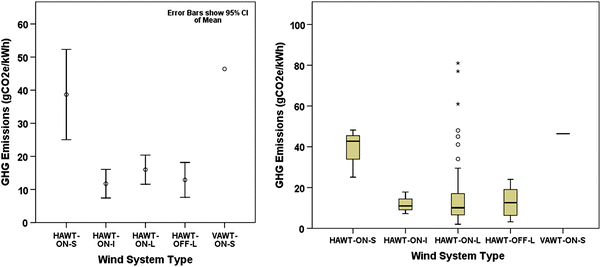
Table 2
From Fig. 1 a and Table 2 , one may note that the mean life cycle GHG emissions obtained from the use of HAWT-ON-S, HAWT-ON-I, HAWT-ON-L, HAWT-OFF-L, and VAWT-ON-S wind electricity generation systems are 38.67, 11.75, 15.98, 12.9, and 46.4 gCO 2 e/kWh, respectively. The minimum GHGs are emitted from the HAWT-OFF-L and the HAWT-ON-L wind electricity generation systems. One may infer that the large wind electricity generation systems are more environmental-friendly than the intermediate and the small wind electricity generation systems. Similar observations were made by one study [ 15 ] that noted an improvement in the environmental performance of wind electricity generation systems with increasing installed electricity generation capacity, the reason being attributed to the effect of scaling (decreased material consumption per kWh of electricity produced). The use of large scale wind turbines also benefits by reducing the required footprint area per unit of rated output [ 26 ]. The mean life cycle GHG emissions were noted to be higher in the case of onshore wind electricity generation systems than the offshore wind electricity generation systems (refer to Fig. 1 a; Table 2 ). This observation may be attributed to the variation in the scale of economies (considering offshore wind electricity generation system installations are considerably larger than the onshore wind electricity generation systems) and the possibly higher GHG emissions associated with the construction phase activities such as the destruction of forest or peat land habitats for onshore wind electricity generation systems [ 34 , 35 ]. The very high average annual wind speeds occurring in offshore locations account for the superiority in the environmental performance of offshore turbines in comparison to the onshore units, despite the relatively lower environmental performance of offshore turbines than their onshore counterparts with the same CFs [ 15 ].
From Fig. 1 b, one may note the degree of variation in GHG emissions was less for HAWT-ON-I wind electricity generation systems when compared to the HAWT-OFF-L, HAWT-ON-S and HAWT-ON-L wind electricity generation systems. The relatively higher variations in the GHG emissions for HAWT-ON-S wind electricity generation systems may be attributed to the considerable differences in the turbine PRs (0.005–0.02 MW) within the limited case representations ( N = 3). The considerably higher variations in the HAWT-ON-L wind electricity generation system GHG emissions may be attributed to the combination of considerable differences in the turbine PRs (0.3–4.5 MW) and the CFs (11–42.5) across the ample case representations ( N = 58). The reasonably higher variations in the GHG emissions for HAWT-OFF-L wind electricity generation systems may also be attributed to the combination of differences in the turbine PRs (0.5–5 MW) and the CFs (29–53) for the specified case representations ( N = 8). The GHG emissions tend to generally decrease with an increase in the CF and the turbine PR [ 16 ]. The median GHG emissions were the lowest for HAWT-ON-L, followed by HAWT-ON-I, HAWT-OFF-L, and HAWT-ON-S (refer to Fig. 1 b; Table 2 ). More LCA studies utilizing VAWT-ON-S wind electricity generation systems are to be considered before one generalizes the influence of VAWT-ON-S on the life cycle GHG emissions (note that the mean life cycle GHG emission statistics of VAWT-ON-S wind electricity generation systems in this study were based on a sample size equal to one).
Figure
2
provides a graphical representation of the (a) error bars [mean ± 95% confidence interval (CI) statistics] and (b) box plots (quartiles + outlier statistics) for EPBT periods from the different wind electricity generation system categories reviewed in this study. Table
3
provides a statistical summary of the EPBT periods for the different wind electricity generation system categories reviewed in this study. From Fig.
2
a and Table
3
, one may note that the mean EPBT period was the highest for VAWT-ON-S (6.5 years), followed by HAWT-ON-S (1.1 years), HAWT-ON-L (0.58 years), and HAWT-ON-I/HAWT-OFF-L (0.39 years). These results indicate that the EPBT periods followed a similar trend to that observed in GHG emissions, i.e., the EPBTs decreased with an increase in the electricity production capacity, VAWTs had the highest EPBT periods and offshore-based large scale HAWT power generation systems had the minimum EPBT period. From Fig.
2
b and Table
3
, one may note that the median statistic showed a different pattern to that observed in the mean EPBT periods for different wind electricity generation systems, with VAWT-ON-S being the highest (6.5 years), followed by HAWT-ON-S (1.1 years), HAWT-ON-L (0.58 years), HAWT-OFF-L (0.39 years), and HAWT-ON-I (0.33 years).
EPBT periods for wind electricity generation systems:
a
mean ± 95% CI
error bars
and
b
quartile
box plots EPBT period (years) statistics for wind electricity generation systems Wind system type Min. Max. SE Q1 Q2 Q3 HAWT-ON-S 2 1.1 ± 0.42 0.8 1.4 0.3 0.8 1.1 1.4 HAWT-ON-I 4 0.39 ± 0.14 0.32 0.6 0.07 0.32 0.33 0.33 HAWT-ON-L 13 0.58 ± 0.45 0.11 1.7 0.12 0.25 0.58 0.65 HAWT-OFF-L 1 0.39 ± 0 0.39 0.39 0 0.39 0.39 0.39 VAWT-ON-S 1 6.5 ± 0 6.5 6.5 0 6.5 6.5 6.5Fig. 2
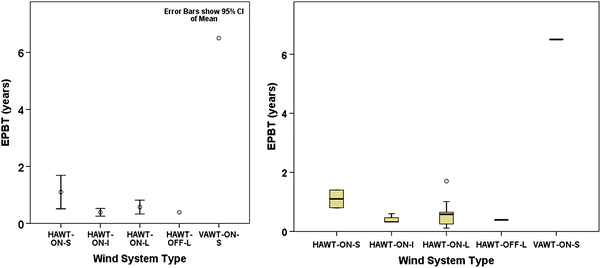
Table 3